



















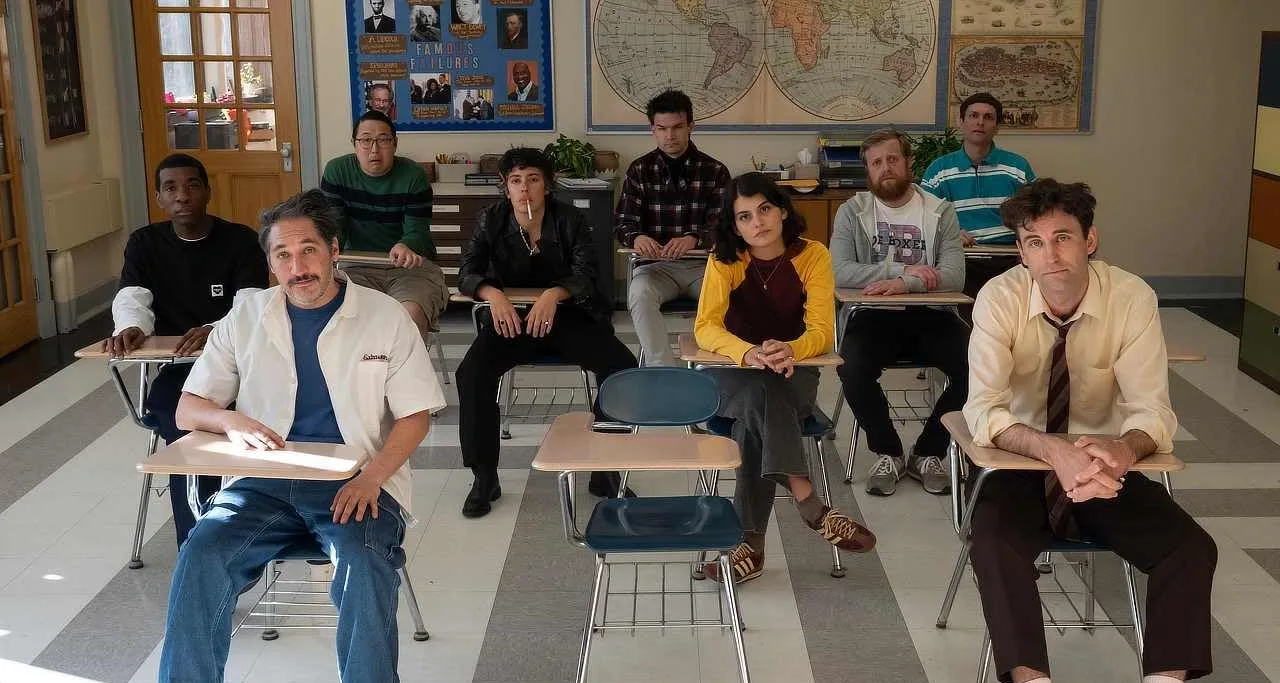

High school comedy has always carried a faint odor of imprisonment. Lockers, bells, cafeteria hierarchies, gym floors polished to a punitive shine. Never Change! takes that old architecture seriously, then stuffs it with people old enough to have mortgages, divorces, failed bars, dead ambitions, and the weary knowledge that adulthood did not deliver the clean escape brochure.
Directed by Marty Schousboe and written by John Reynolds, who also plays Sunny, the film begins with a wonderfully stupid premise: the 2008 graduating class of North Meadows High never technically finished school after a tornado cut their senior year short. Now, in their mid-thirties, they must return for two weeks to validate their diplomas. It is bureaucracy as cosmic punishment. Kafka with vape smoke.
The conceit gives the film a sturdy comic frame. Adults are forced through teenage rituals again, and the joke is not merely that they look wrong in the hallways. It is that the hallways still know them.
Hallway Geometry
Schousboe’s direction is at its sharpest once the story reaches North Meadows High. Before that, the film strains to explain itself, opening with a news-montage setup that plays too broadly, like a sketch searching for a camera angle. The pacing stalls because the premise is funnier than the delivery. It needs bodies in classrooms, faces under fluorescent lights, old grudges passing each other at locker height.
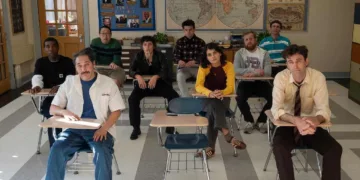
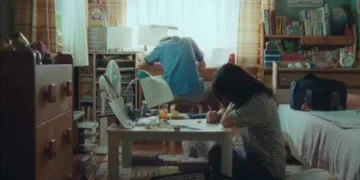
Once the returning class enters the school, the film finds its visual joke. The frame keeps placing these adults inside spaces designed to make everyone feel seventeen and ridiculous. A desk becomes a small act of humiliation. A hallway becomes a moral corridor. The lighting is flat, institutional, and faintly cruel, which is the correct choice. High school should never be lit like a dream. It should look like a place where your worst haircut achieved historical permanence.
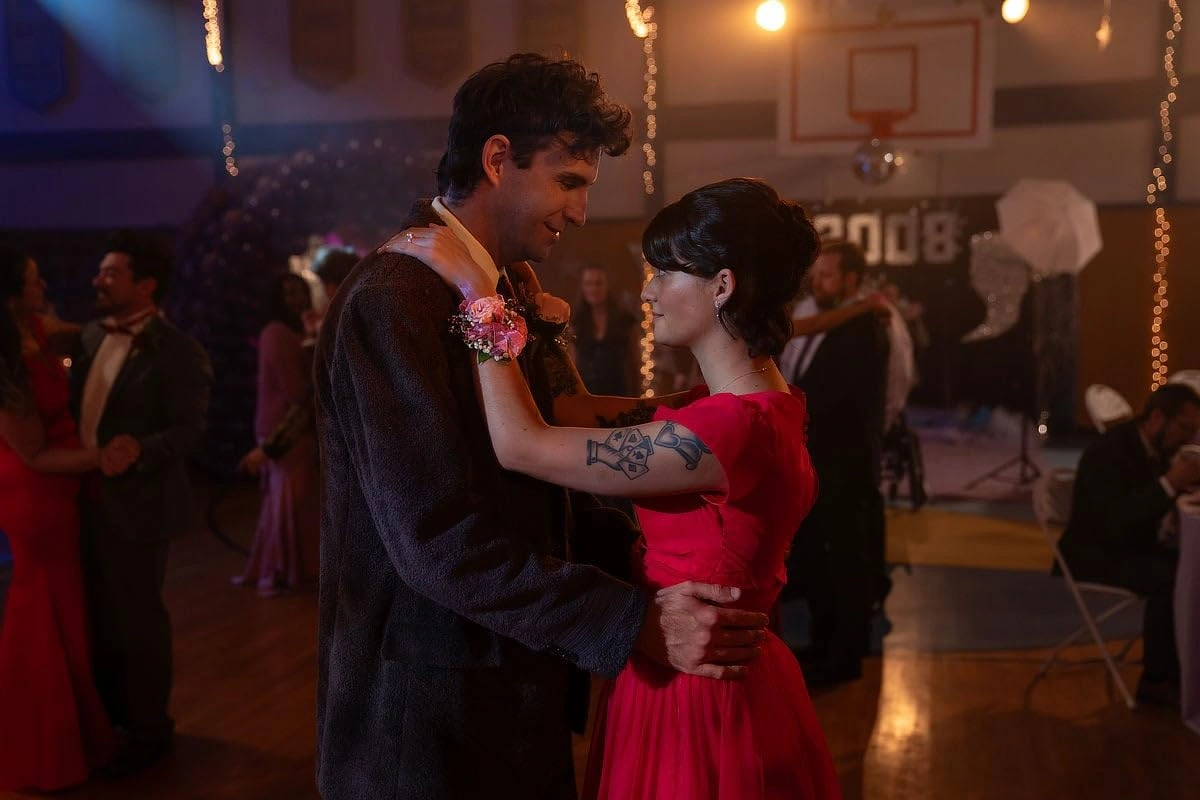
The comedy works best in these contained social arrangements. A big test, a prom, a classroom rule suddenly applied to people with back pain and emotional damage. The house party hosted by a student whose parents are dead is the film’s cleanest absurdist gag because it twists a classic teen-comedy ritual into something macabre without stopping to underline the joke. The party knows it is wrong. That helps.
The weaker gags announce themselves with too much volume. The film leans on profanity, crude sexual bits, random alien material, terrorist jokes, and a few non sequiturs that feel less anarchic than tossed in from another draft. Chaos can be a style. Here, it sometimes becomes a filing system nobody maintained.
Sunny, Katie, and the Time Capsule of Bad Choices
The film’s emotional structure rests on Sunny and Katie, played by Reynolds and Sofia Black-D’Elia with a sincerity that often rescues scenes from collapsing into pure noise. They were high-school sweethearts, and the return to North Meadows reopens an attraction that neither of them has fully buried. A time-capsule marriage certificate, once teenage nonsense, becomes a legal and romantic complication. It is a silly plot device with a neat thematic function: the past does not need to be profound to remain binding.
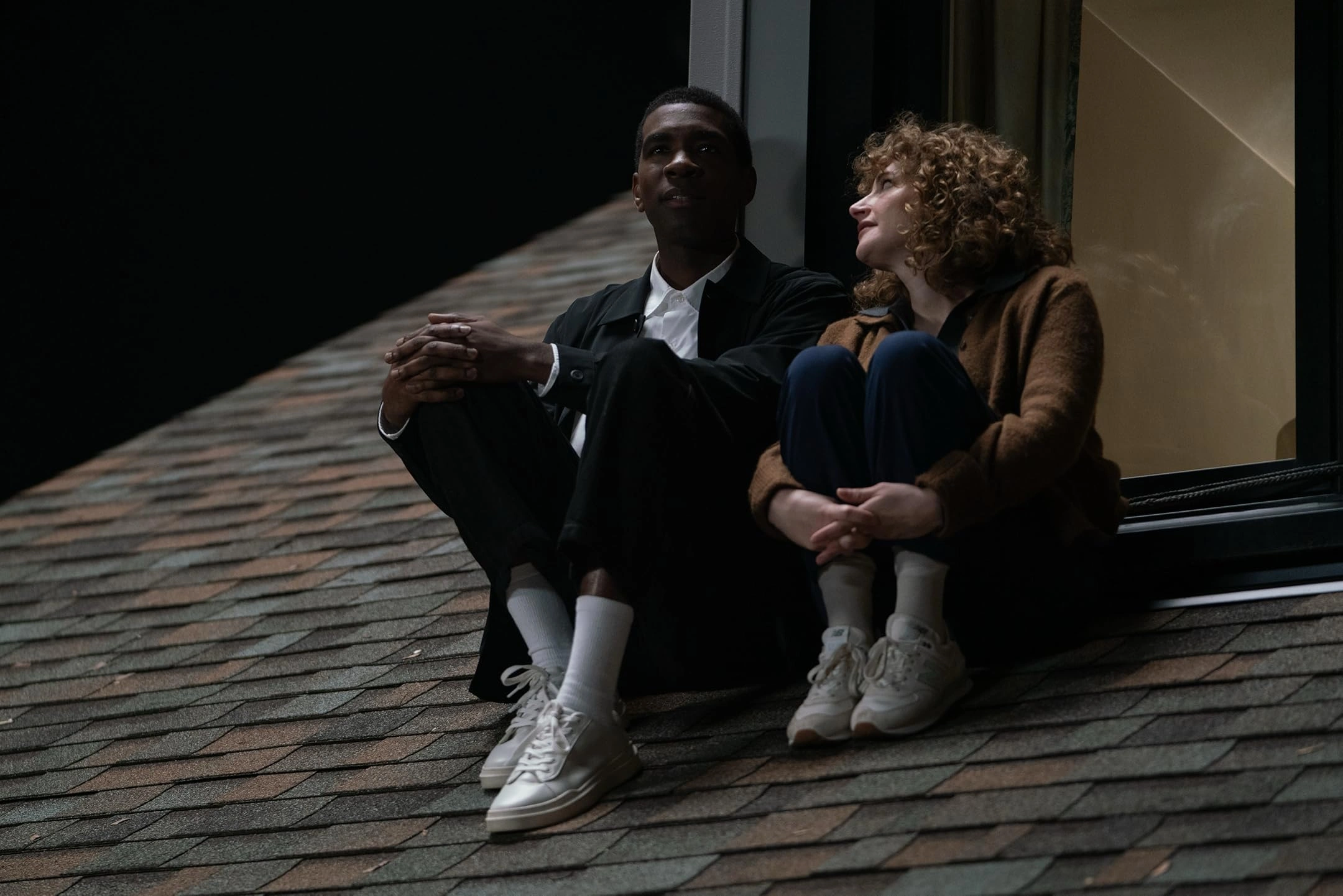
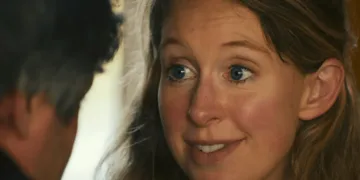
Sunny is written as a man who has stepped away from his own life without announcing it. Reynolds plays him with a dampened comic energy, as though the jock confidence of his teenage years curdled into avoidance. Katie has become a news personality, which gives her adult life the appearance of control. Black-D’Elia is strongest when that control starts to flicker, especially in scenes where Katie’s public composure meets the private embarrassment of being returned to the version of herself she thought she had edited out.
Their scenes locate the film’s best question: what happens when the person who remembers your first self meets the person you became by accident? The answer, according to Never Change!, is messy flirtation, poor judgment, and a faint ache underneath the joke.
Jo Firestone’s Amelia gives that ache its most precise comic shape. Her adult divorce and confrontation with her former Young Republican identity could have been throwaway biographical clutter, yet Firestone plays Amelia as someone hearing her own history read aloud in court. Panic sits on her face, then shame, then a strange tenderness. Watch the way she seems to brace before ordinary conversation. The performance understands that embarrassment is a physical condition.
Carmen Christopher’s Tedi, with his run-down bar, wife, children, and feud with Ron, belongs to the film’s broader comic register. He is useful because he shows adulthood as teenage impulse with logistics attached. Gary Richardson’s Curtis, haunted by alien-contact weirdness, is a stranger fit. His “Watch this” scene lands because Richardson commits to the bit with frightening purity. The subplot around him is less persuasive. The film keeps trying to open a trapdoor into another genre.
The Staff Room of the Damned
A strong ensemble keeps Never Change! alive when the script starts grabbing at anything within reach. Ana Gasteyer’s Principal Nadler is a perfect comic instrument for this world, a woman tasked with turning nonsense into policy. Her authority has the brittle glow of someone who knows the school board has handed her a grenade and a clipboard.
Topher Grace appears as Mr. Whiley, a drama teacher forced to restage the play he wrote in high school, a piece that may contain evidence of serial-killer ambition. Grace is smartly used. He does not elbow his way into the film. He drifts through it with mild, unsettling charm, making the school-theater subplot feel like a fever dream produced by a very underfunded arts department.
Maria Thayer’s Ms. Jankey material, built around a sex-ed teacher eager for legally adult students, shows the film at its laziest. The joke is clear before the scene has finished entering the room, then the movie keeps it there, hoping discomfort will ferment into laughter. It mostly just sits.
Never Change! belongs to the streaming-comedy age, with its loose ensemble shape, friend-group energy, and willingness to let funny performers chase strange impulses across a modest canvas. That looseness gives the film some of its charm. It also gives it bruises. The best moments come from dry remarks, social reversals, and tiny behavioral relapses. The worst come when the movie mistakes shock for comic architecture.
Still, there is something oddly touching in its central punishment. These characters are sent back to school to finish a diploma, yet the real unfinished work is emotional. North Meadows does not heal them. It exposes the old wiring behind the adult mask. Fluorescent lights are honest that way.
The American comedy feature Never Change! celebrated its world premiere at the Tribeca Festival on June 9, 2026, quickly generating buzz ahead of its wide digital launch. The movie follows the members of a high school graduating class who are forced by an unexpected legal loophole to return to their old classrooms in their mid-30s, sparking an chaotic blend of adult midlife baggage and unresolved teenage angst. Audiences can look for the film streaming exclusively on Hulu starting on June 17, 2026.
Where to Watch Never Change! (2026) Online

Full Credits
Title: Never Change!
Distributor: Hulu
Release date: June 9, 2026 (Tribeca Festival), June 17, 2026 (United States Digital Release)
Running time: 98 minutes
Director: Marty Schousboe
Writers: John Reynolds, Marty Schousboe
Producers and Executive Producers: Jason Woliner, Jeremy Garelick, Will Phelps, Nicholas Hatton, Jon Watts, Jason Zaro, Billy Rosenberg
Cast: John Reynolds, Sofia Black-D’Elia, Carmen Christopher, Jo Firestone, Rudy Pankow, Topher Grace, Jackie Cruz, Ana Gasteyer, Patti Harrison, Zach Cherry, Gary Richardson, Sunita Mani, Billy Bryk, Ayden Mayeri, Joe Pera
Director of Photography (Cinematographer): Matt Clegg
Editors: Whit Conway
Composer: Mike Malarkey
The Review
Never Change!
Never Change! has a strong comic trap, a game ensemble, and flashes of real emotional damage under its fluorescent stupidity. Reynolds, Black-D’Elia, Firestone, Gasteyer, and Grace find texture where the script often reaches for volume. The crude bits, alien detours, and shock jokes weaken the architecture, but the film’s best scenes understand high school as a place where adulthood goes to be humiliated. Messy, funny in patches, oddly tender when it stops shouting.
PROS
- Smart adult-returning-to-school premise
- Strong Reynolds and Black-D’Elia chemistry
- Jo Firestone’s anxious comic precision
- Funny use of Topher Grace
- Sharp fluorescent school setting
CONS
- Slow opening montage
- Crude jokes wear thin
- Random alien and serial-killer detours
- Some tasteless throwaway bits
- Comedy often mistakes noise for rhythm