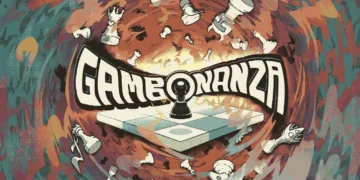























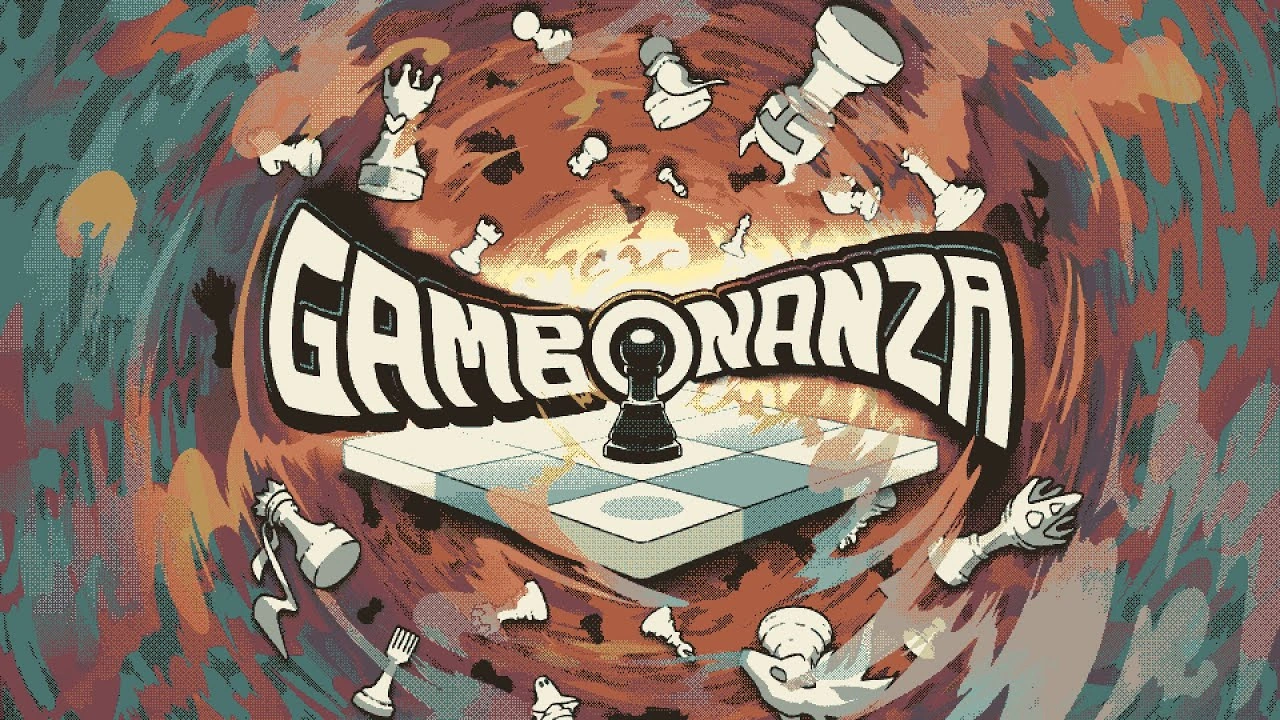

Chess has crossed borders for centuries because it travels well. Its language is abstract enough to survive translation, yet strict enough to carry local myths of intellect, discipline, rivalry, and status. Gambonanza, from Blukulélé, takes that ancient grammar and feeds it into a modern roguelite machine, producing a game that feels both familiar and slightly impolite. It respects the movement of the pieces, then casually tells the king to stop acting special.
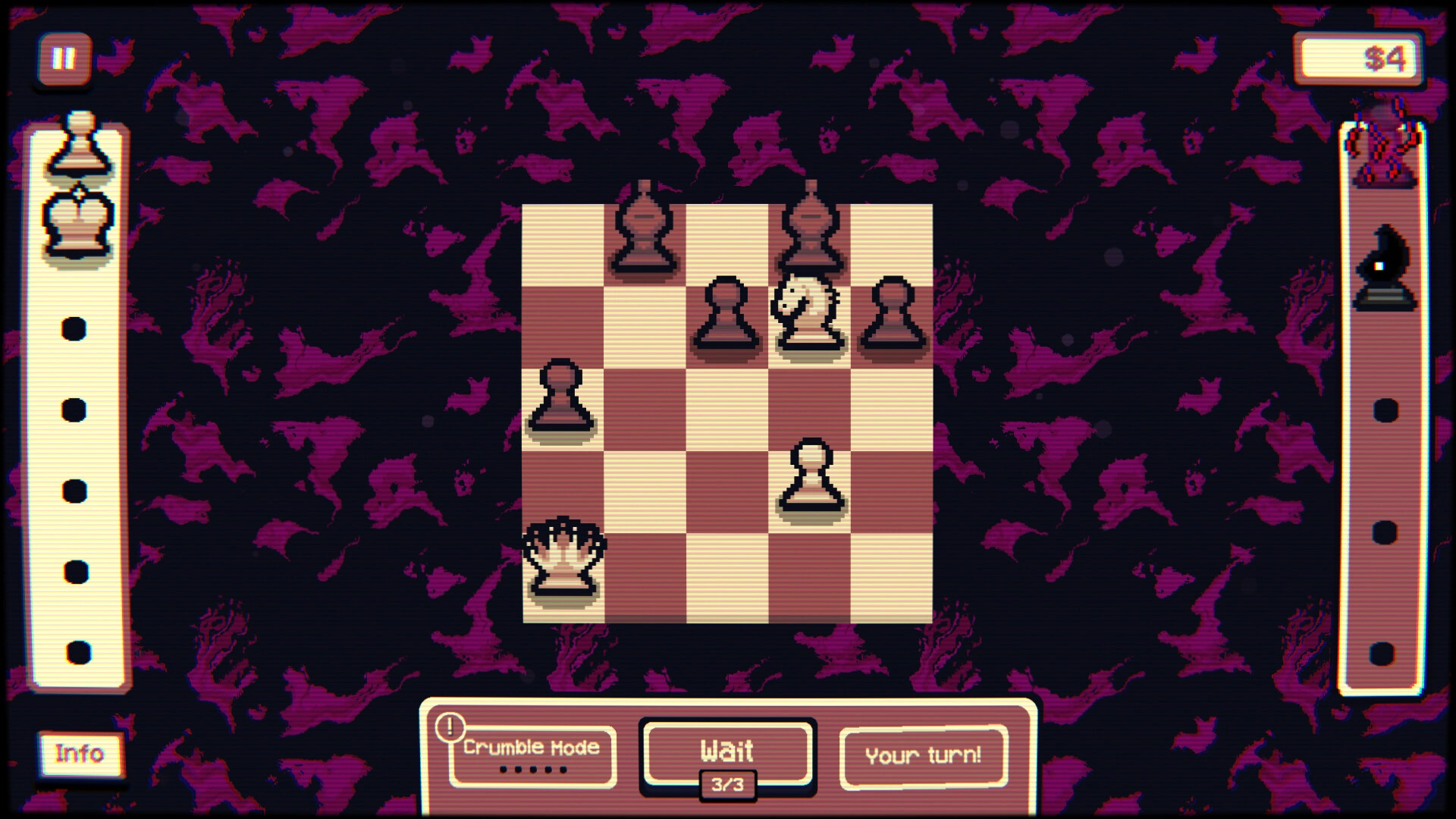
The goal here is not checkmate. You clear every enemy piece from the board. That single change gives Gambonanza its identity. The 5×5 opening board compresses chess into a tight tactical puzzle, with only three pieces available at the start and a stock of reserves waiting off-board. Shops, random piece tokens, casino-like purchases, special tiles, and rule-breaking Gambits shape each run.
The result is clever, brisk, and often addictive. It is also uneven. Gambonanza has the confidence to rethink one of the world’s most recognizable games, yet its repetition, AI behavior, and difficulty spikes can make that confidence wobble.
Chess as Folk Tradition, Roguelite as Modern Ritual
One of the sharper pleasures of Gambonanza comes from watching old chess habits lose their authority. The rook still moves like a rook. Bishops still cut across diagonals. Knights still leap with that strange little L-shaped arrogance. The queen remains dangerous, pawns still inch forward, and kings still carry symbolic weight in the player’s mind. Then the game strips away the sacred ending. A king is simply another piece waiting to be taken.
That matters because chess, across many cultures, has long been treated as a model of hierarchy. Kings, queens, soldiers, sacrifice, positional control, patience. Gambonanza turns that hierarchy into a scavenger hunt of survival and capture. It is less a duel of monarchs than a small war of attrition, closer in spirit to tactics games and puzzle battlers than formal chess.
The 5×5 board helps this transformation. With so little space, every move has immediate consequence. Opening theory becomes less useful than spatial instinct. You are not playing from memory so much as reading pressure, threat, and opportunity. After each boss phase, the board gains another row, and the widening space changes the emotional texture of play. Early fights feel like knife work in a phone booth. Later ones allow larger traps, longer threats, and nastier mistakes.
The deployment limit deepens that pressure. Starting with three pieces forces you to think like a coach, a gambler, and a battlefield quartermaster at once. A queen can dominate, but losing it can wound the run’s economy. A pawn may look humble, yet its promotion potential makes it one of the game’s most satisfying comeback tools. The stock system, which lets you land reserve pieces during combat at the cost of a turn, gives the game a bench-management rhythm. It is chess filtered through sports tactics, board-game improvisation, and roguelite resource anxiety.
The accessibility tools deserve credit. Threat previews and attack-range indicators make the board legible without flattening the challenge. This is where Gambonanza speaks well to a global audience. Chess expertise helps, but the game invites casual players into its logic through clean visual communication. It does not ask everyone to enter through the old gate of memorized openings.
Gambits, Shops, and the Pleasure of Controlled Chaos
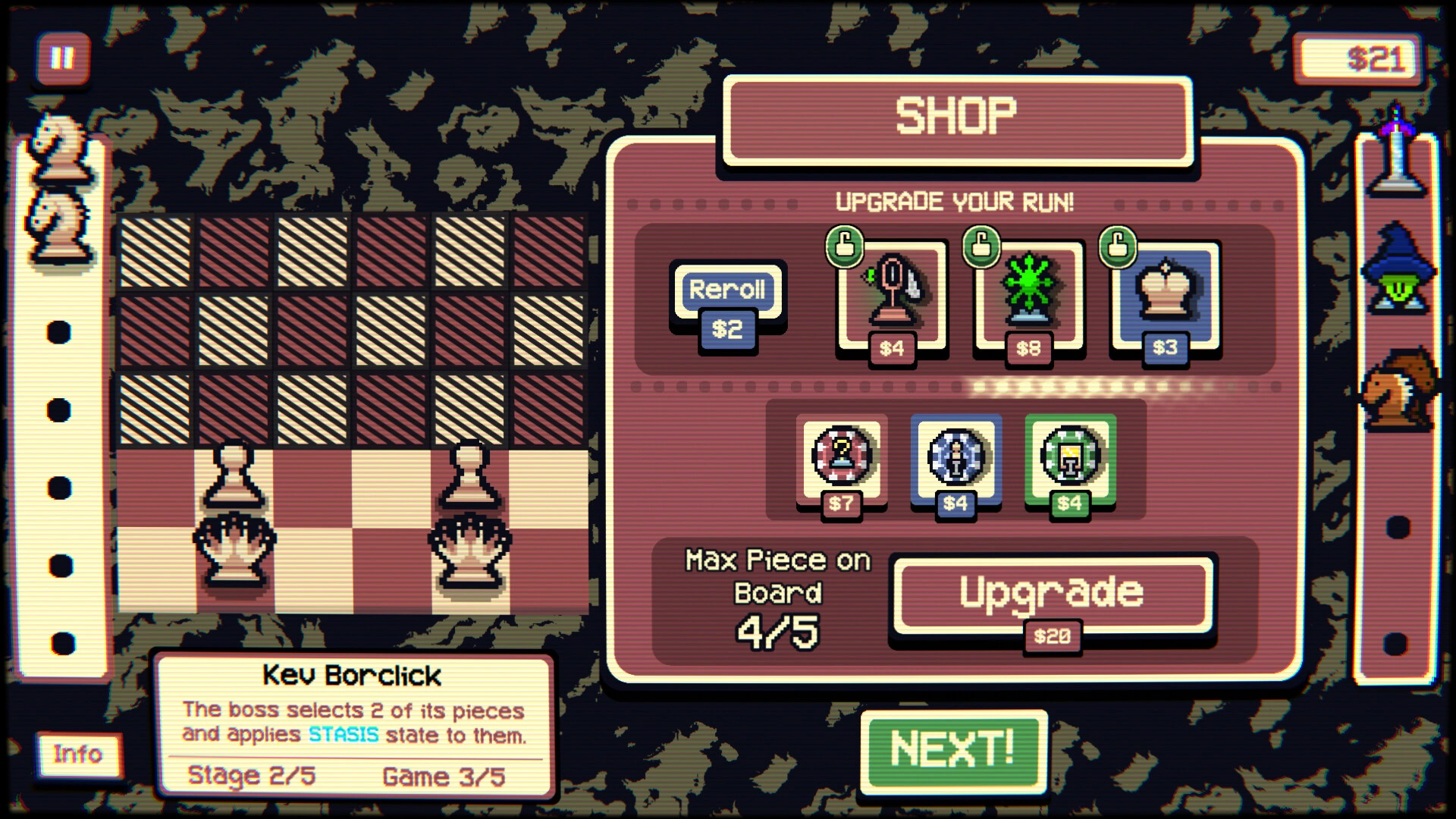
The shop is where Gambonanza shifts from chess variant to roguelite engine. Between rounds, money earned from captures and victories can be spent on new pieces, random tokens, deployment upgrades, board tiles, and Gambits. This creates the run’s personality. Two players may face the same board formation, yet their toolkits can turn the encounter into completely different stories.
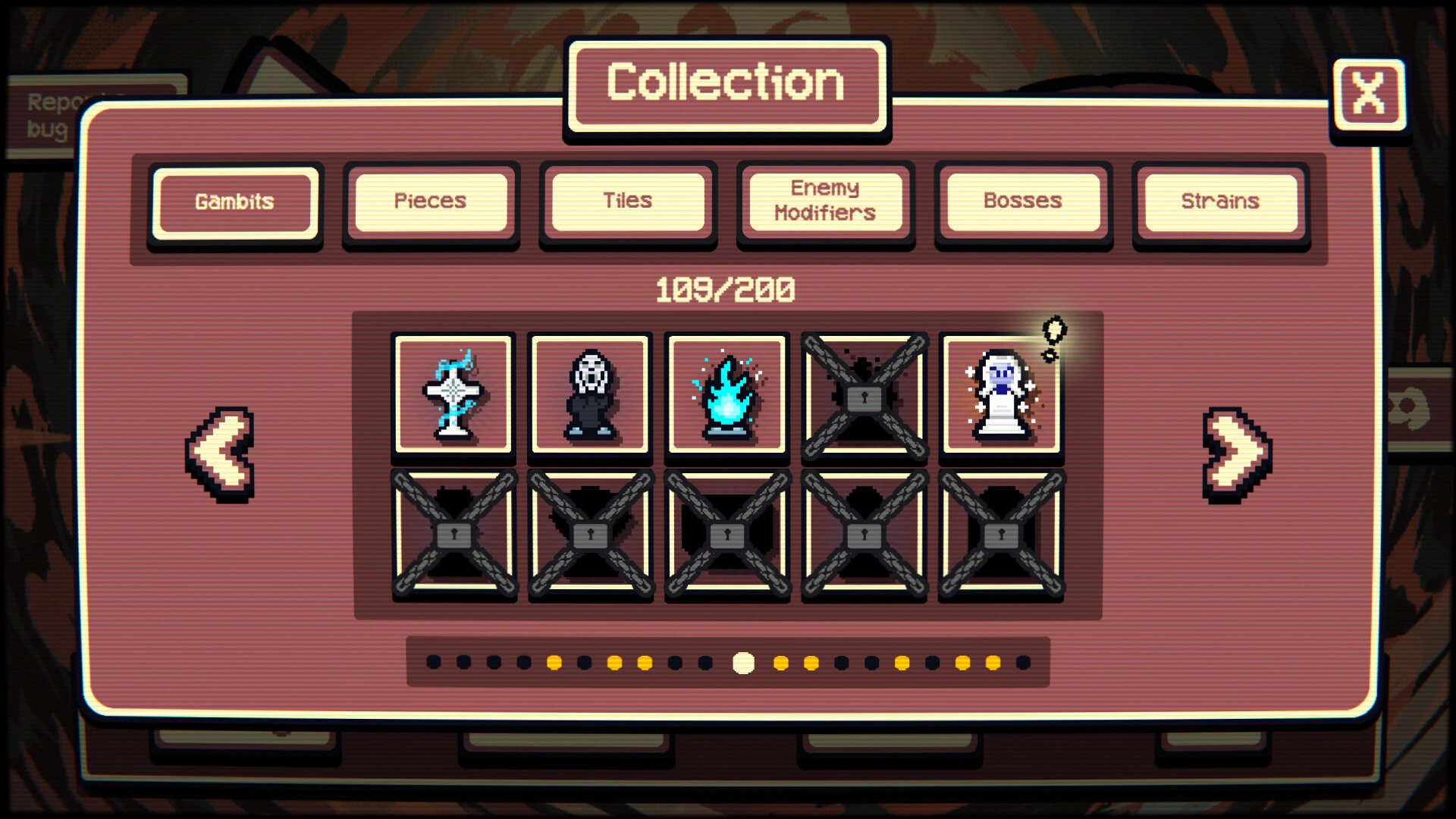
Gambits are the main attraction. Inspired by chess openings and tactical ideas, they act as global modifiers that bend the rules of movement, economy, and tempo. A bishop might gain queen-like reach. A specific capture might skip the enemy’s turn. Landing a piece from stock might generate money. One Gambit may place extra pawns into your stock, while another can promote those pawns the moment they land. Suddenly, a modest reserve unit becomes a queen-shaped emergency button.
This is where Gambonanza finds its strongest link between mechanics and narrative. Roguelites often build stories through accumulation. There may be little plot in the traditional sense, yet every run becomes a tale of lucky bargains, bad sacrifices, desperate repairs, and absurd power spikes. A failed run is not empty if it teaches you which combinations can sing. A strong build feels like a cultural remix of chess itself, where a centuries-old ruleset meets the modern joy of breaking systems on purpose.
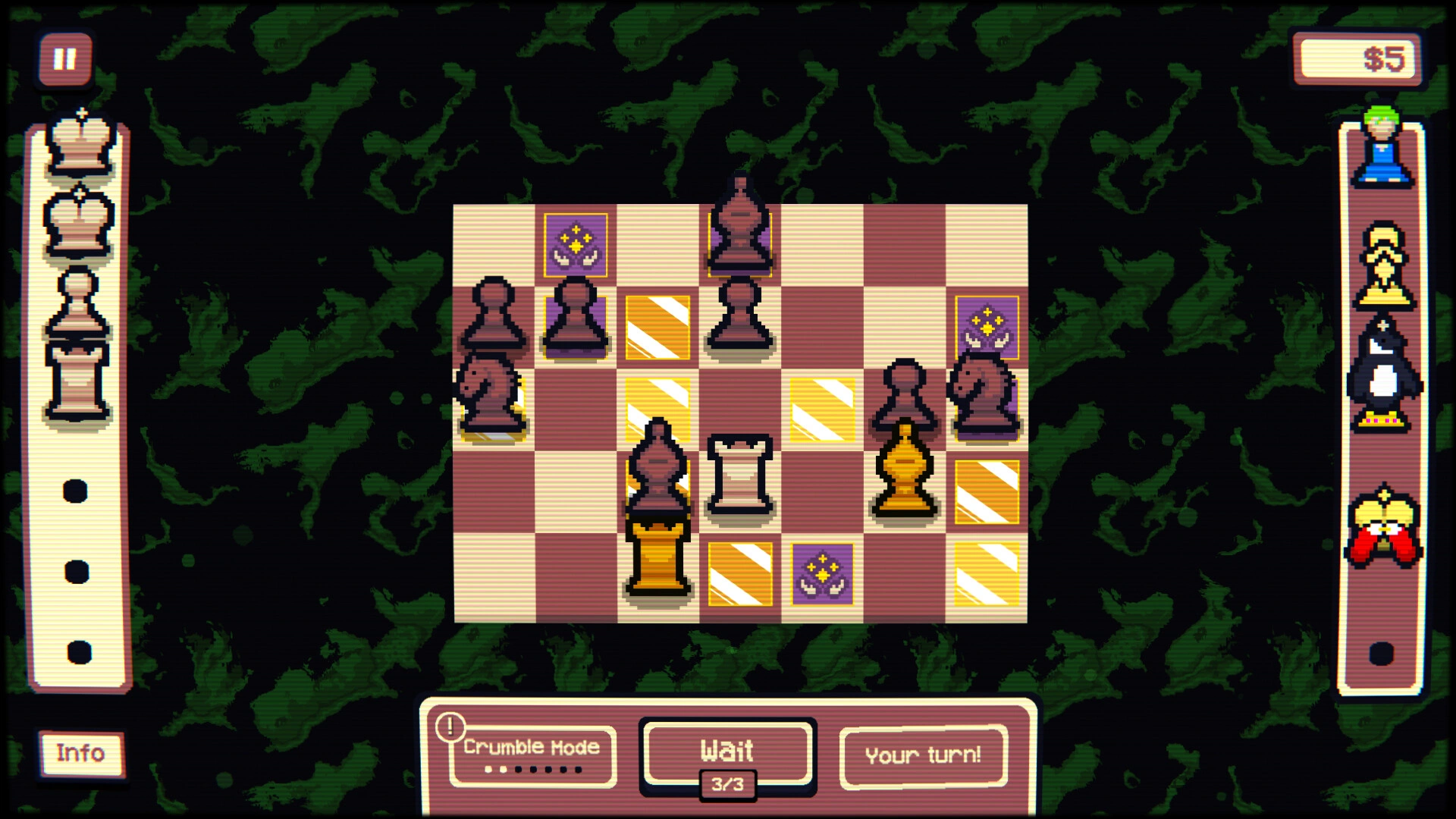
Special tiles add another layer of strategy. Blessing tiles can return captured pieces to stock instead of removing them from play, allowing calculated trades that would be reckless under normal conditions. Tile placement can become a defensive engine or a way to bait enemy pieces into costly exchanges. At its best, the board stops feeling like a fixed arena and starts behaving like a constructed argument.
Progression supports this experimentation. New Gambits unlock through achievements such as captures or selling modifiers, giving failed attempts some forward motion. The issue is pacing. Early runs may feel thin before the stronger options enter circulation. The game asks for patience before it fully opens, and that request will land differently depending on the player. Some will appreciate the slow education. Others may feel stuck in rehearsal.
AI, Bosses, and the Fragile Shape of Challenge
Gambonanza can be strangely hard to judge because its difficulty often feels split between design and accident. Early encounters can be simple enough to solve through familiar patterns. Then the game tightens suddenly, especially once strains add harsher conditions after a successful run. Restrictions on shops, piece pools, or turn order can push the player into a harsher tactical economy. The escalation has teeth, but the curve is jagged.
The AI sits at the center of that jaggedness. Sometimes it behaves like a distracted tourist wandering into traffic. It will ignore obvious danger, step past traps, or surrender material in ways that make careful planning feel almost theatrical. Then, without warning, it can punish a lazy move with a brutal fork or capture. This creates a peculiar emotional rhythm. You may win and feel less like a mastermind than the beneficiary of enemy confusion. You may lose and feel as if the game briefly remembered how chess works.
That inconsistency becomes sharper around boss fights. Bosses arrive every five matches and bring gimmicks that disrupt the normal flow. Some randomize your starting pieces. Some interfere with stock access. Elite pieces cannot be captured until everything else is gone.
Extra invincible pieces can force awkward waiting games and sacrifice-heavy routes. These ideas give the game personality, and the chess-celebrity parody in the boss roster adds playful cultural texture. The problem is balance. A gimmick that feels manageable early can become exhausting later on a wider board with a larger enemy force.
The crumble mechanic is more successful in concept. After several turns without a capture, tiles begin falling away, taking any piece on them into the void. This system punishes stalling and keeps matches brisk, which suits the game’s compact structure. It also reflects a modern design instinct seen across many puzzle roguelites: deny comfort, force commitment, make hesitation costly.
Yet crumble can feel arbitrary when the wrong square is marked at the wrong time. Later difficulty levels remove extra tiles, turning pressure into chaos. The mechanic works best when it sharpens urgency. It works less well when it punishes a position the player had little chance to foresee.
Retro Screens, Casino Symbols, and a Borrowed Mood
Visually, Gambonanza has an easy charm. Its retro, lo-fi, CRT-like style gives the board a soft electronic glow, the kind that evokes arcade cabinets, late-night strategy software, and the shared global nostalgia of old screens. The animations are crisp, the board stays readable, and small touches give the pieces a surprising amount of life. Alert markers pop above threatened pieces. Capturing streaks make units feel temporarily mythic. Nothing here overwhelms the player’s ability to read the board.
The sound has a similar first impression. The music is relaxed, catchy, and casual in a way that supports the game’s short-match rhythm. After many runs, though, its limited range becomes harder to ignore. Menus, shops, battles, and boss encounters lean too heavily on the same musical identity. A tune that begins as a pleasant companion can start to feel trapped in the room with you.
The casino theme is where Gambonanza feels most conflicted. Slots, random tokens, shop rituals, and chance-based purchases all fit the roguelite loop. They give each run the texture of risk and temptation. Yet the gambling identity often sits on the surface rather than fusing fully with chess. The game understands probability as a system, but its casino imagery can feel like costume rather than philosophy.
Still, the thematic mixture is culturally revealing. A classical strategy game, historically tied to patience and intellectual prestige, is reframed through the language of quick runs, random rewards, and escalating modifiers. That is very much a modern gaming instinct. Tradition is not discarded. It is processed, monetized fictionally, randomized, and made replayable. There is something funny and a little bleak in that.
Repetition, Social Play, and the Question of Longevity
The biggest threat to Gambonanza is repetition. Early enemy formations recur often enough that runs can begin to feel rehearsed. For some players, that will be a clear weakness. Roguelites thrive on surprise, and a familiar opening stretch can dull the appetite for another attempt.
There is a counterargument. Fixed or semi-fixed boards allow players to learn encounters like puzzles. You can refine openings, test different piece deployments, and measure how a new Gambit changes a known situation. In that sense, repetition becomes study. The game borrows from chess culture again, where repeated positions and patterns are part of mastery.
The long-term appeal improves after a completed run unlocks new difficulty levels and layouts. The game becomes richer once its systems stop introducing themselves and start pushing back. That said, the road to that point may test players who expect immediate variety.
Its addictive pull is real. Short matches make mistakes easy to avenge. Unlocks keep the horizon active. A strong build can produce wonderful little cascades: a pawn lands, promotes, captures, triggers a bonus, skips a turn, and turns a doomed board into a sudden victory. These moments give Gambonanza its spark.
It also has an unexpected social quality. Though designed as a single-player game, it works surprisingly well as a shared puzzle. Two people can sit together, debate moves, argue over shop purchases, and suffer the consequences with equal dramatic seriousness. Streamers could find similar energy with an audience calling out tactics. Chess has always been public in some sense, from park tables to tournament halls. Gambonanza taps into that communal tradition without formally building a co-op mode.
The ideal player is a roguelite fan who enjoys build crafting, a casual chess player curious about tactical puzzles, or a strategy fan who likes limited resources and risky improvisation. Expert chess players seeking a sharp opponent may find the AI too erratic. Players who dislike randomness may bristle at shops, bosses, and collapsing tiles.
Gambonanza is clever, accessible, and often exciting, with enough tactical invention to justify its strange experiment. Its best moments make chess feel newly playful without draining it of consequence. Its weakest moments expose thin variety, wobbly balance, and an identity that could cut deeper. For a game about calculated risk, that feels oddly fitting.
The Review
Gambonanza
Gambonanza turns chess into a sharp roguelite puzzle with clever Gambits, readable tactics, and a lively retro style. Its best runs make every pawn, capture, and shop choice feel meaningful, while its weaker stretches suffer from repeated board layouts, uneven boss balance, and erratic AI. The gambling theme could cut deeper, and the music repeats too often, yet the core loop remains smart, tense, and easy to return to.
PROS
- Clever chess-based roguelite structure
- Strong Gambit synergies
- Accessible tactical tools
- Charming retro visuals
- Short, addictive matches
- Fun pawn promotion strategies
- Surprisingly good shared-play potential
CONS
- Repetitive early board layouts
- Inconsistent enemy AI
- Uneven boss balance
- Casino theme feels surface-level
- Limited soundtrack grows tiring
- Some difficulty spikes feel abrupt