


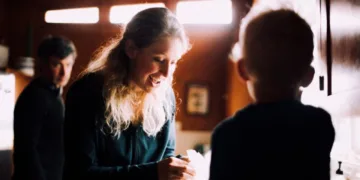



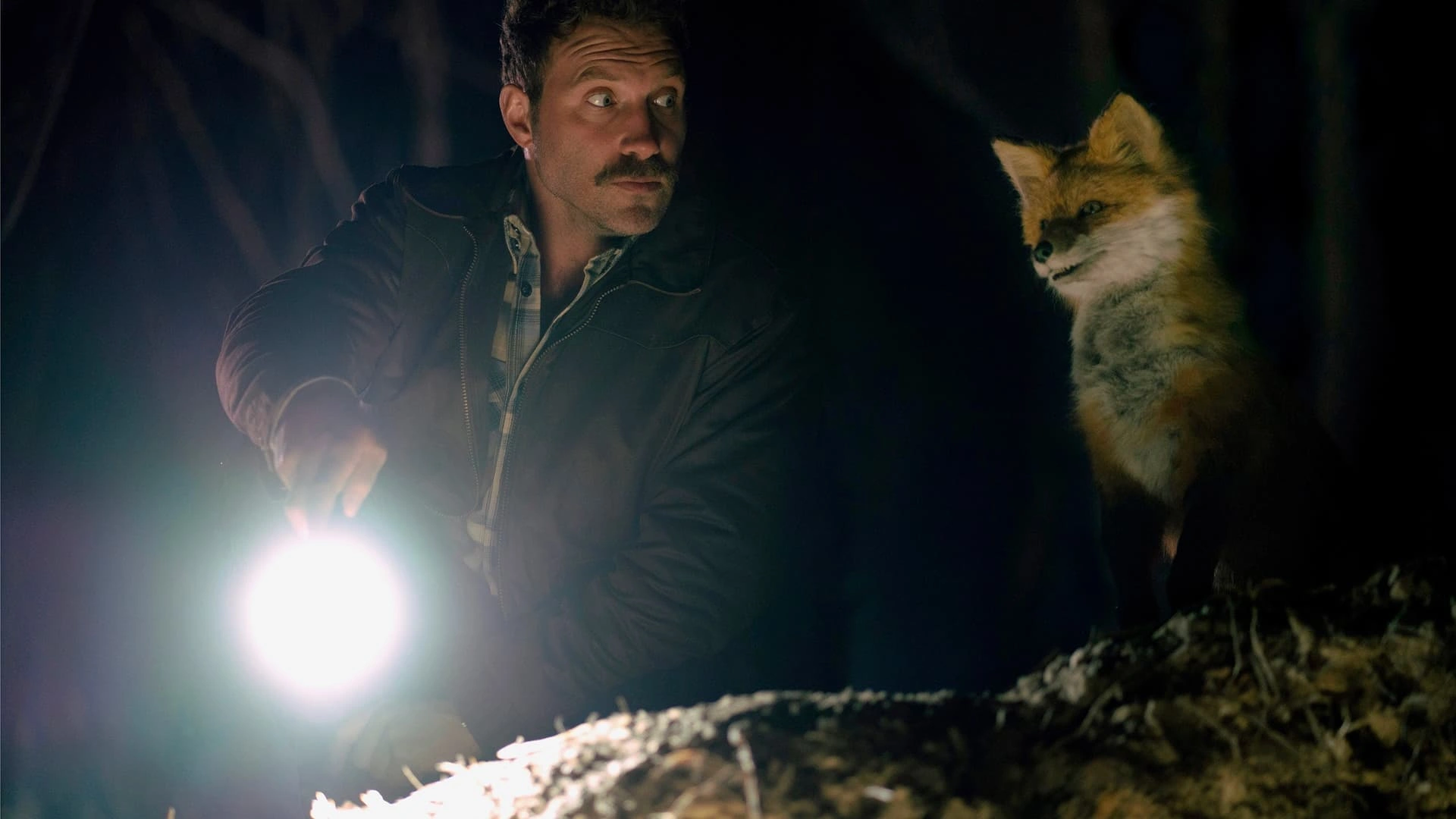

The Fox belongs to that peculiar strain of Australian black comedy where the land feels ancient, the people seem trapped, and the animals may be the only honest citizens around. Written and directed by Dario Russo, the film plants its absurdist premise in a small rural town where romantic misery curdles into magical violence. Jai Courtney plays Nick, the wealthy farmer’s son whose size suggests force and whose soul suggests wet cardboard left near a sink. He loves Kori, played by Emily Browning, with a dull possessiveness that he mistakes for devotion.
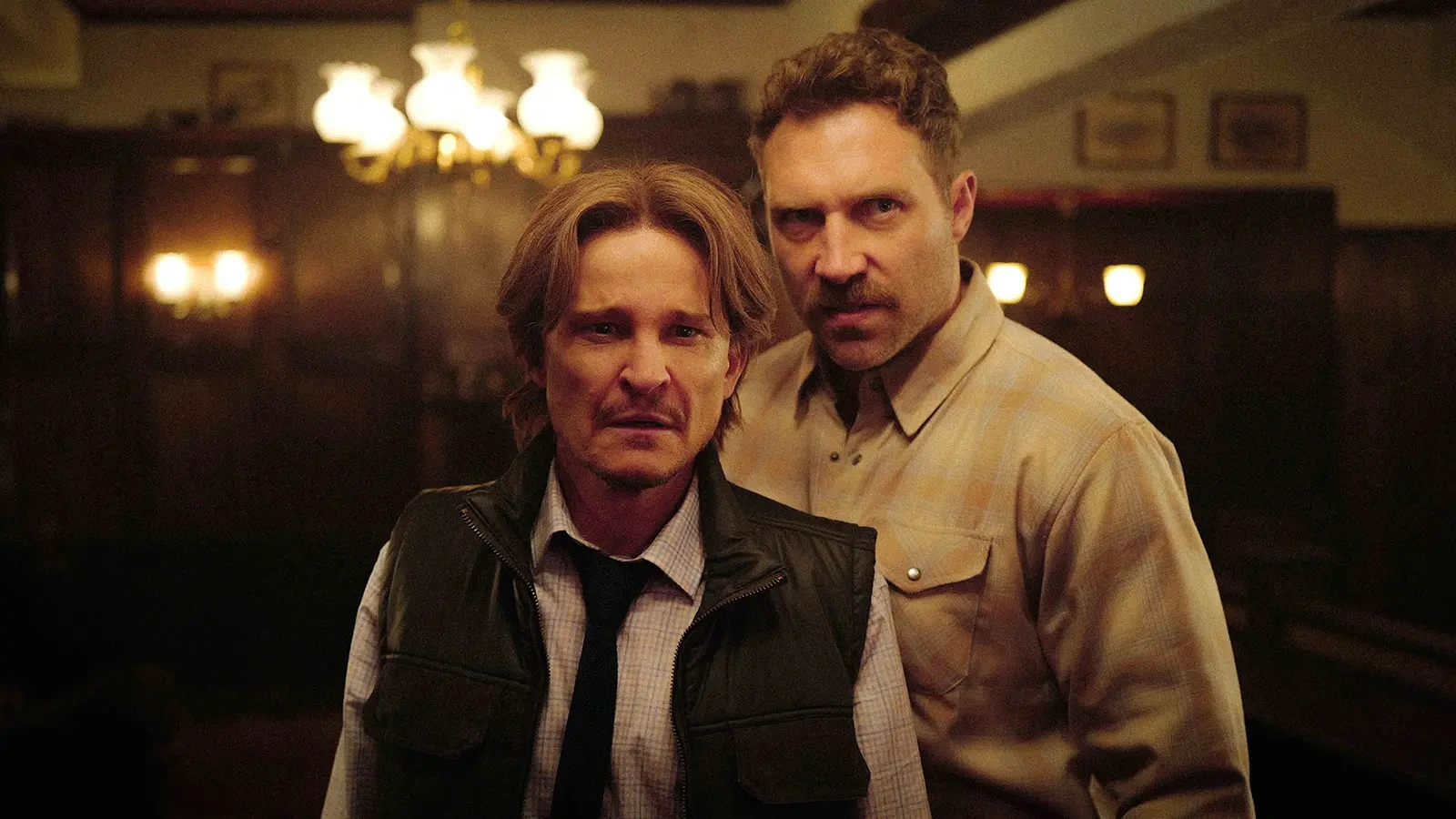
Kori, meanwhile, is already trying to escape him through an affair with her married boss Derek, played by Damon Herriman. Derek’s wife Diana, played by Claudia Doumit, is also Kori’s best friend. It is a love square built from boredom, cowardice, lust, and bad timing.
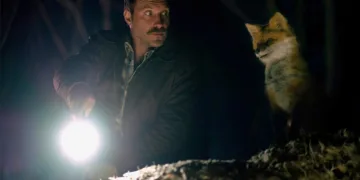
Then a talking fox enters the picture, voiced with crisp malice by Olivia Colman. She tells Nick that a mysterious hole can remake Kori into the perfect partner. He believes her. Bad idea. Historically speaking, men with holes and theories rarely improve society.
Control, Cowardice, and the Magic Hole
The central image of The Fox is crude, funny, and philosophically ugly: a hole in the earth where a person can be deposited and returned in altered form, reshaped according to another person’s desire. It turns emotional coercion into landscape. The film’s best idea is that control never presents itself as domination to the person seeking it. It arrives disguised as repair.
Nick does not think he is destroying Kori. He thinks he is saving love. That makes him pathetic, dangerous, and painfully recognizable. His moral failure comes through passivity. He accepts the simplest instruction offered to him because thinking would require pain. Nick is the kind of man who lets a talking predator do the ethics for him, which may be cinema’s finest new category of idiot: the outsource-masculinist.
Diana’s role complicates the satire. Betrayed by Derek and Kori, she joins Nick’s plan, turning grief into punishment. Her participation gives the film a nastier social edge. Revenge here does not clarify the truth. It deforms everyone around it.
Russo’s animals understand this better than the humans. The fox, the magpie, and the surrounding wildlife see human romance as a ridiculous system of ritual humiliation. That perspective links the film to old fables, yet its anxieties feel modern: the fear of abandonment, the fantasy of partner optimization, the marketplace logic of intimacy. In an age of curated profiles and algorithmic romance, The Fox imagines the final consumer product: a lover rebuilt to specification. The joke is sharp. Then it keeps going.
Once Kori returns from the hole, the film sometimes repeats its thesis rather than developing it. Human beings are selfish. Desire is stupid. Relationships rot when people refuse honesty. Fine. True enough. Also, a little exhausting after the fourth reminder.
Bodies, Beasts, and Bad Love
Jai Courtney gives Nick a strange, useful softness. The role plays against his usual physical image. Nick is broad, heavy, and visually intimidating, yet Courtney makes him seem emotionally porous, almost childlike in his confusion. He reacts to supernatural chaos with the expression of a man trying to understand a parking meter. It is funny, yes, yet there is a wounded vacancy in him that keeps the character from becoming a pure cartoon.
Emily Browning has the harder job. Before Kori’s transformation, she communicates a whole relationship’s decay through glances: a look at greasy food, a pause before answering, the dead-eyed patience of someone already gone. After the hole, her performance becomes feral theatre. Kori returns naked, muddy, eager, strange, and wrong. Browning leans into the physical absurdity without losing the horror underneath it.
That horror matters, because the film’s gender politics are thorny. The image of a woman remade into a submissive sexual creature is meant to disturb, yet the movie sometimes lingers in the discomfort without sharpening its critique. It knows the fantasy is grotesque. It does not always know how far to stand from it. There are moments where the satire bites; there are others where it gnaws the same bone and looks pleased with itself.
Damon Herriman’s Derek adds comic panic to the moral debris. He is vanity in human form, a man shocked to learn that betrayal has consequences. Claudia Doumit gives Diana a chilly volatility, making her less victim than co-conspirator in a chain of emotional vandalism. Miranda Otto appears too briefly, bringing a louche comic charge that suggests a whole stranger film hiding in the margins.
Talking Animals, Sour Music, and a World Slightly Off Its Hinges
Russo’s strongest directorial choice is his refusal to overexplain the world. Animals talk. People accept it. The magpie gossips. The fox manipulates. Rural Australia becomes a mythic bureaucracy of beasts, each with its own petty agenda. This flat acceptance gives the comedy its driest flavor. No one screams, “That fox is talking!” They are too busy ruining their lives.
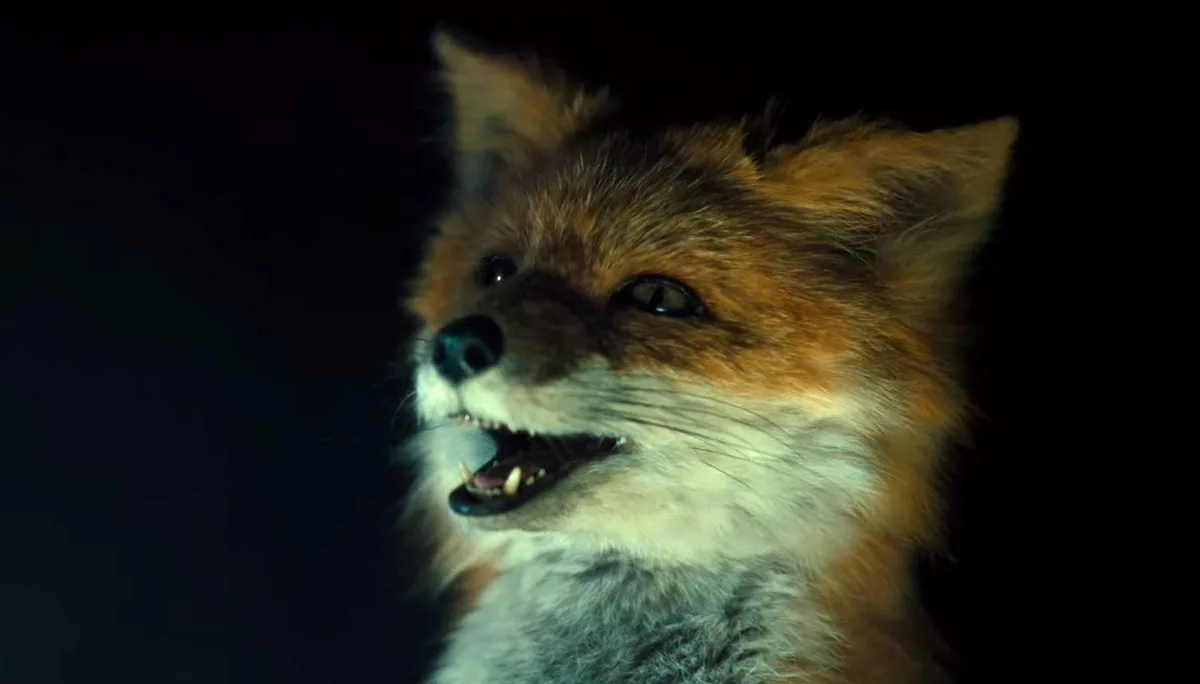
The practical puppetry gives The Fox much of its charm. The animals are artificial in a tactile, slightly awkward way, and that awkwardness works. Their mouths do not need perfect realism. Their presence feels better because it is imperfect, like a children’s show that escaped into adult despair.
Olivia Colman’s fox is the film’s finest symbolic device: elegant, predatory, amused by human weakness. Her voice turns every sentence into a little trap. Sam Neill’s magpie brings a rougher comic rhythm, a nosy rural commentator who treats catastrophe as neighborhood chatter. Together, they make the animal world feel ancient and petty, which is also a fair description of civilization.
Russo’s score, full of nervous brass and skittish strings, gives the film a twitchy pulse. The editing keeps the early sections moving with confidence, yet the middle stretch feels thinner than the premise deserves. For a film built around a magic hole, The Fox can be oddly cautious. Its concept promises full folkloric madness, then settles into a sour domestic spiral with flashes of true weirdness.
Still, there is value in that sourness. The Fox is imaginative, mean, funny in jagged bursts, and anchored by actors willing to look ridiculous for a serious idea. Its satire does not always cut deep, but it leaves scratches. Sometimes that is enough to draw blood.
The Fox is an Australian black comedy fantasy film that is scheduled to be released theatrically across Australia by Madman Entertainment on October 29, 2026, following its initial world debut at the Adelaide Film Festival and its international premiere at the SXSW Festival earlier this year. Written and directed by Dario Russo, the narrative follows an affable hunter who discovers his fiancée has been unfaithful. His life takes a bizarre turn when he captures a magical, talking creature that presents a dark proposal to transform his partner into the perfect companion and grant him control over the natural world. Global cinema enthusiasts eager to experience this highly imaginative indie production can track its screenings on the international film festival circuit ahead of its wider commercial release.
Full Credits
Title: The Fox
Distributor: Madman Entertainment
Release date: October 29, 2026
Running time: 90 minutes
Director: Dario Russo
Writers: Dario Russo
Producers and Executive Producers: Kristina Ceyton, Samantha Jennings, Carly Maple
Cast: Jai Courtney, Emily Browning, Damon Herriman, Claudia Doumit, Zlatko Burić, Miranda Otto, Frankie J. Holden, Heather Mitchell, Kim Gyngell, Peter O’Brien, Sam Neill, Olivia Colman
Director of Photography (Cinematographer): Matthew Chuang
Editors: Dario Russo
Composer: Dario Russo
The Review
The Fox
The Fox is a sour, imaginative black comedy with a wicked premise, strong performances, and a wonderfully strange animal chorus. Its satire of control, insecurity, and romantic cowardice has real bite, though the story sometimes circles its central joke for too long. Dario Russo’s film is uneven, but its oddball confidence and tactile weirdness make it hard to dismiss.
PROS
- Jai Courtney gives a funny, vulnerable performance
- Emily Browning fully commits to the film’s strangest demands
- Olivia Colman and Sam Neill add sharp comic flavor
- Practical puppetry gives the animal scenes real charm
- Strong central metaphor about control and desire
CONS
- Satire can feel repetitive
- Gender dynamics are intentionally uncomfortable, yet not always fully examined
- Middle stretch loses some momentum
- The concept promises wilder escalation than the film delivers
- Some supporting characters feel underused