





























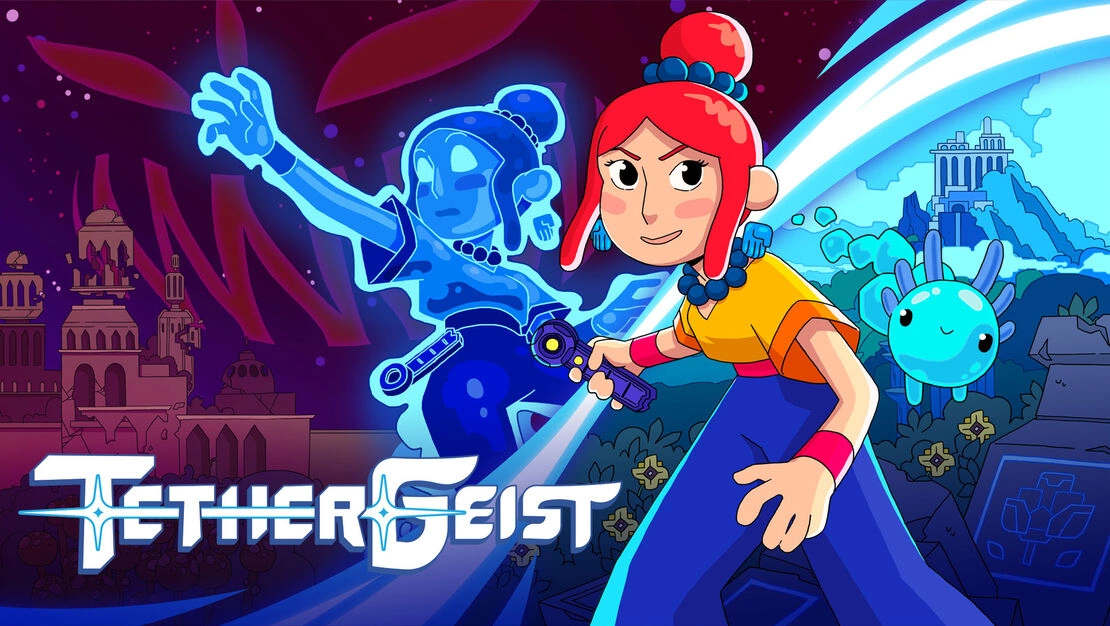

TetherGeist is a precision platformer about doing things the hard way, then discovering that the hard way can still be a valid path. Mae is a young Mountain Shaman from a culture where astral projection is ordinary enough to be tied to a rite of passage. During the Binding, shamans separate spirit from body and travel to the Fount of Souls. Mae cannot follow that route. Her spirit companion, Bao, remains tethered to her, restricting her projection to short bursts.
That limitation gives the game its emotional charge and its mechanical identity. Mae cannot float across the world like her peers, so she walks, jumps, wall-jumps, projects, teleports, fails, and tries again. There is no combat here, no upgrade tree trying to pad out the design, no RPG-style stat growth to soften the edges. TetherGeist is built from movement, hazards, checkpoints, and rooms that treat platforming like a physical logic problem.
The influence of Celeste is clear in the screen-by-screen structure and the emotional framing of a young woman climbing toward self-definition. Still, TetherGeist finds its own voice through Bao, turning restriction into a system of expressive, demanding traversal.
The Tether as Tool, Test, and Language
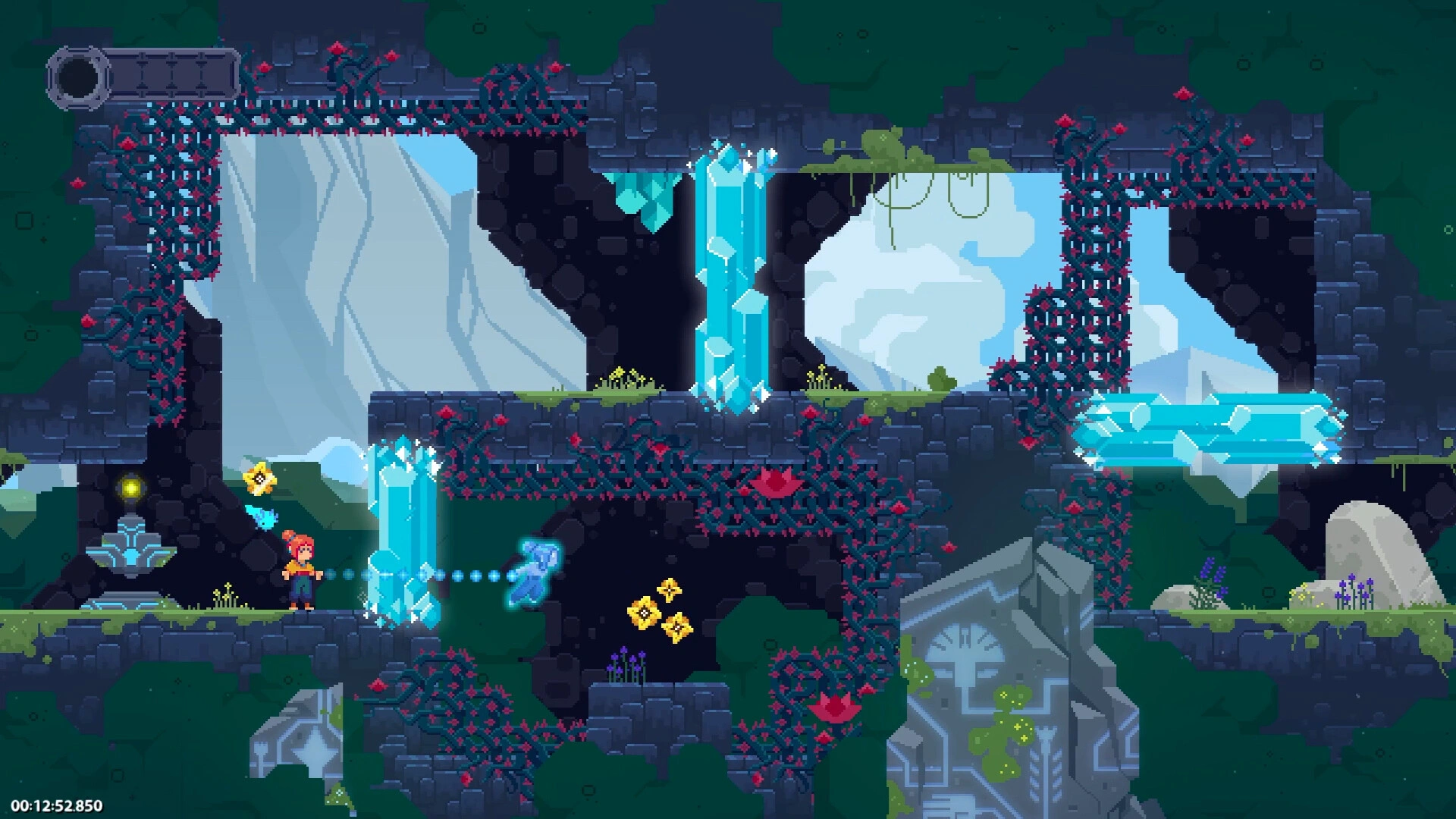
Mae’s basic moves are familiar at first: run, jump, wall-jump, survive. The game becomes itself once Bao enters the equation. By projecting her spirit a short distance, Mae can teleport through gaps, past thorny hazards, or into narrow pockets of safety. Pressing the projection button slows time, creating a brief tactical pause where the player can aim with care. That tiny delay matters. It gives TetherGeist the feel of a game that asks for reflexes and planning in the same breath.
The Azae system expands this idea across the whole adventure. Azae are single-use spirit powers placed inside levels, and each one changes how the player reads space. The basic version offers a short teleport. Another fires Bao forward like an orb, bouncing off walls and passing through thorns before Mae blinks to its position. A dash-style Azae can break obstacles or rebound from surfaces. Mushroom-based powers pull or launch Mae at strict angles. Speed boosts let her cross dangerous ground that would punish hesitation.
The cleverness lies in how rarely these powers sit alone for long. Each world introduces a new Azae with patience, lets the player learn its rules, then starts layering it with portals, switches, moving platforms, red zones that erase the spirit, purple zones that block projection, spikes, vines, and breakable walls. The best rooms feel like compact engineering puzzles. You scan the layout, identify the intended order of pickups, decide when to spend each charge, then use wall jumps and small movements to bridge the gaps between spiritual bursts.
This is where TetherGeist most strongly links mechanic and theme. Mae’s limitation does not vanish. The player learns to operate inside it with confidence. She cannot move like everyone else, so the game teaches another grammar of movement.
The tradeoff is rigidity. Many rooms have a narrow solution path, with Azae placed like signposts. That clarity keeps confusion low, yet it can make success feel prescribed. The player’s choice usually lives in execution rather than route selection. Hardcore players and speedrunners will likely find cracks in the design, but the standard playthrough often asks you to perform the answer the level has already written.
Failure, Flowers, and the Shape of Mastery
TetherGeist is difficult in the way good precision platformers tend to be difficult: direct, repeatable, and obsessed with small improvements. You will die constantly. The game expects that. Instant respawns and generous checkpoints keep failure from becoming punishment in the traditional sense. A room might crush you twenty times, then suddenly click because your hands have absorbed what your eyes were still negotiating.
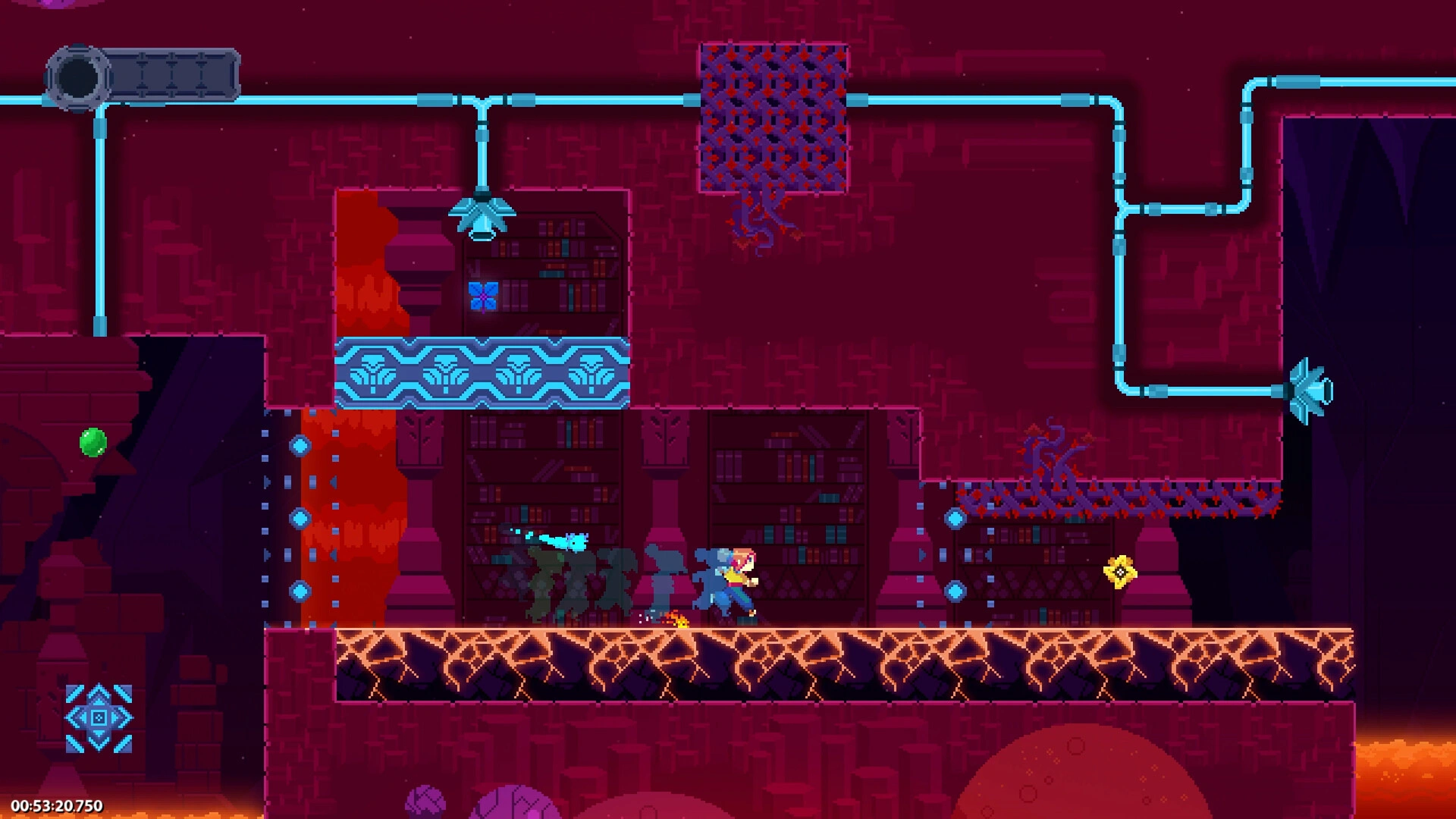
That loop creates a strong sense of consequence without relying on branching dialogue or moral choices. Your decisions happen second by second. Spend the wrong Azae too early, take a jump at a weak angle, miss a wall by a pixel, and the screen resets. The consequence is immediate, clean, and readable. In that sense, TetherGeist has the discipline of Super Meat Boy and the emotional pacing of Celeste, with its own spirit-projection vocabulary layered on top.
There are moments where the precision crosses into irritation. The mushroom movement, in particular, can feel harsher because it allows less time for correction than other powers. Some longer sequences ask for near-perfect execution across several linked actions, so a mistake near the end can mean repeating a chain you have already proven you understand. During faster movement, the camera can occasionally feel a step behind Mae, which hurts in a game where visual information is survival.
The Atropa Blossoms add a second layer of commitment. These red collectibles are scattered through hidden passages, towns, and demanding side routes, with over 200 to find. Some are tied to deeper completion goals and possibly the true ending, so they carry narrative weight for players who want Mae’s pilgrimage to feel fully resolved. The section-by-section tracker helps make cleanup manageable, while optional timers and advanced movement techniques give skilled players reasons to return.
A World That Understands Its Metaphor
The story works best when it lets the platforming carry the theme. Mae’s tether is treated by many people around her as a deficiency. Some pity her. Some advise caution. Some see a cure as the obvious answer. Mae’s journey pushes against that assumption through action. She reaches places through patience, adaptation, stubbornness, and clever use of the tools available to her.
That makes TetherGeist a thoughtful game about disability and self-acceptance, especially because it avoids turning Mae into a passive symbol. She is capable, sometimes frustrated, often funny, and clearly tired of being measured by someone else’s method of travel. Foyal gives the story a useful counterpoint, reflecting a fear-driven response to limitation and the desire to be fixed. The contrast between Mae and Foyal gives the narrative its sharpest thematic edge.
The towns between platforming stages add warmth to the world. They offer NPCs with local rituals, strange habits, and small problems Mae can help solve. One standout example involves Monty, a town crier losing his eyesight after a ceremony with a worm effigy goes wrong. The setup is absurd, yet the resolution becomes gently humane, centered on dignity, changing roles, and letting someone remain part of a community after their abilities shift.
The writing can be charming, silly, and sincere, helped by giant frogs, pineapple-obsessed aliens, ancient spirits, and expressive portraits. It can also feel thinner than the mechanics deserve. Mae’s personal growth is clear in concept, yet sometimes flatter in practice. The dialogue leans on modern slang that can clash with the fantasy setting, making some conversations feel less rooted in the world.
Visually, TetherGeist is colorful and inviting, with cute character art, varied environments, and smooth animation that keeps the action readable. The music is less likely to linger, though the sound effects tied to spirit movement give each Azae a satisfying punch. Minor visual bugs, including occasional screen tearing, can distract for a moment. They do little to weaken a platformer whose strongest storytelling happens every time Mae turns a tether into a way forward.
The Review
TetherGeist
TetherGeist turns limitation into exhilarating motion, pairing Mae’s tethered spirit with clever, punishing platforming that rewards patience and precision. Its Azae powers keep traversal inventive, its collectibles give experts plenty to chase, and its disability theme lands best through play. Some rigid room solutions, uneven dialogue, minor visual bugs, and less memorable music hold it back from genre greatness, yet its movement is strong enough to carry the pilgrimage.
PROS
- Excellent precision platforming
- Inventive Azae abilities
- Smart checkpointing
- Strong gameplay-theme connection
- Rewarding collectibles and speedrun potential
CONS
- Some overly rigid rooms
- Occasional camera issues
- Dialogue can clash with the fantasy world
- Music lacks staying power
- Minor visual bugs