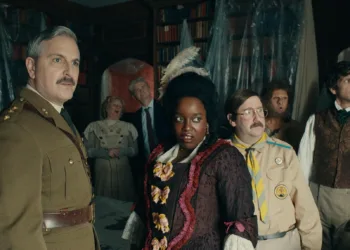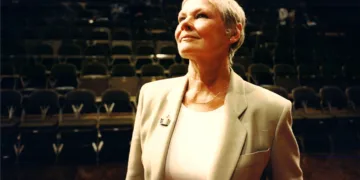








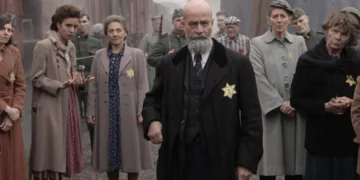





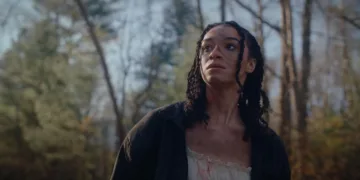









The Optimist is a Holocaust drama rooted in the true experiences of Herbert Heller, a Czech Jewish survivor who spent most of his life refusing to open the darkest rooms of memory. Writer-director Finn Taylor frames Herbert’s past through an unexpected connection with Abby, a troubled teenage girl assigned to help record his testimony. That setup gives the film its emotional charge: one person nearing death must decide how much silence has cost him, and another, much younger, must decide if guilt can be survived.
The film moves across early-2000s California, Herbert’s youth in Nazi-occupied Prague, and the camps of Terezin and Auschwitz-Birkenau. Its title carries a sting. Optimism here is no cheerful slogan. It is inheritance, defense mechanism, moral risk, and sometimes a beautiful lie. The film is most affecting when it treats survival as something that can save a life, then leave that life sealed from others.
Memory, Guilt, and a Fractured Timeline
Taylor builds the drama around trust, and that choice gives The Optimist a strong emotional spine. Herbert’s conversations with Abby are the film’s quiet engine. He does not simply unload history onto her. He notices her pain, waits for it, and gently makes room for it. Their bond keeps the story from becoming a one-way lesson in suffering.
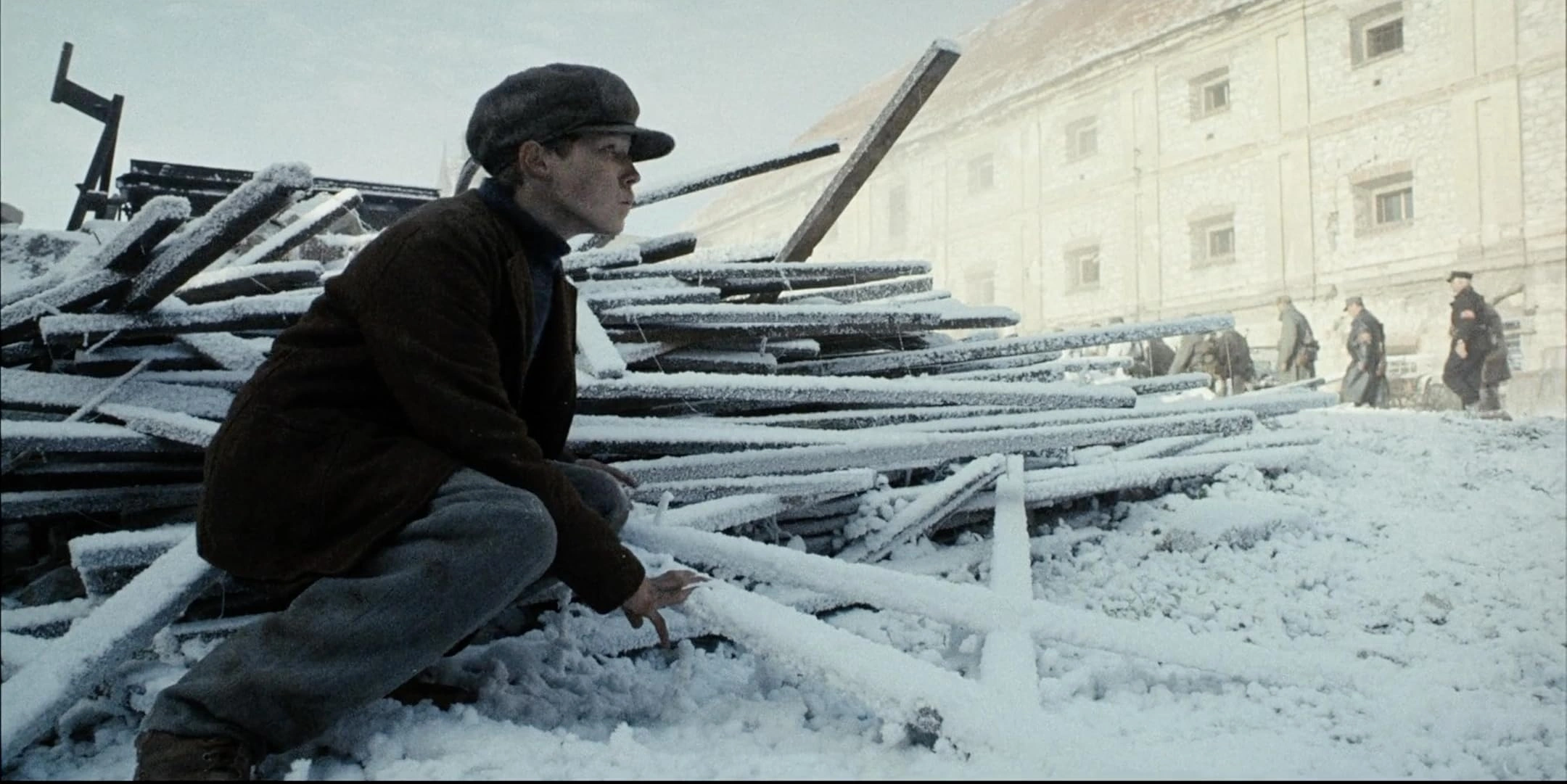
Herbert’s father, Karel, is the key to the film’s hardest idea. His belief that decency and reason will win carries warmth in Prague, where family life still has shape, humor, and ritual. Once deportation begins, that same faith becomes harder to watch. His hope protects young Herbert for a time, yet it also keeps the family tethered to a world that is already vanishing. The film asks a clear, painful question: when does optimism become courage, and when does it become refusal?
Abby’s story runs beside Herbert’s without asking for equal historical weight. She carries addiction, family damage, bullying, suicidal thoughts, and guilt tied to Sabrina’s death. The comparison works because the film is less interested in measuring pain than in showing how shame isolates people.
The nonlinear structure gives these ideas shape, cutting between testimony, wartime memory, and Abby’s recent trauma. Some echoes land with grace. Others feel abrupt, especially when a scene gathers force and the edit pulls away too soon. The structure is ambitious, sometimes clumsy, and clearly central to Taylor’s view of memory as interruption.
Performances That Hold the Film Together
Stephen Lang gives The Optimist its most grounded presence. Known for a screen body that often suggests force and command, he softens himself here into a man whose strength has turned inward. His Herbert walks with aged momentum, as if the body remembers youth before the joints object. The voice matters too: careful, weighted, alert to the damage that speech can cause.

Lang never reduces Herbert to a monument of survival. He gives him warmth, guarded humor, stubbornness, and a deep fear of burdening others with what he endured. That restraint keeps the film honest during its more instructional passages.
Elsie Fisher brings Abby a bruised, wary intelligence. Her body language suggests someone who has learned to occupy less space before the world demands it from her. She avoids easy catharsis, which makes her scenes with Lang feel earned. Their chemistry depends on hesitation, small shifts, and the slow recognition that listening can be an act of rescue.
Luke David Blumm is equally vital as young Herbert. He gives the past tense a pulse: fear, alertness, stubborn life. Slavko Sobin’s Karel begins with charm and paternal magic, then gradually becomes a tragic study in hope under pressure. Stella Stocker and the supporting cast give the family scenes enough warmth that their collapse carries real force.
Craft, History, and the Limits of Sincerity
Taylor directs with sincerity and care, sometimes with too much guidance. The Optimist works best when it trusts faces, pauses, and silence. Herbert and Abby sitting together can hold the screen without extra emphasis. At times, the film underlines its meanings about secrecy, guilt, and healing so clearly that the drama feels guided by a highlighter.
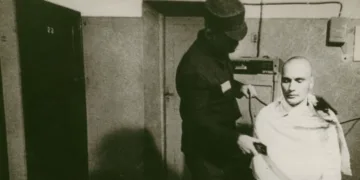
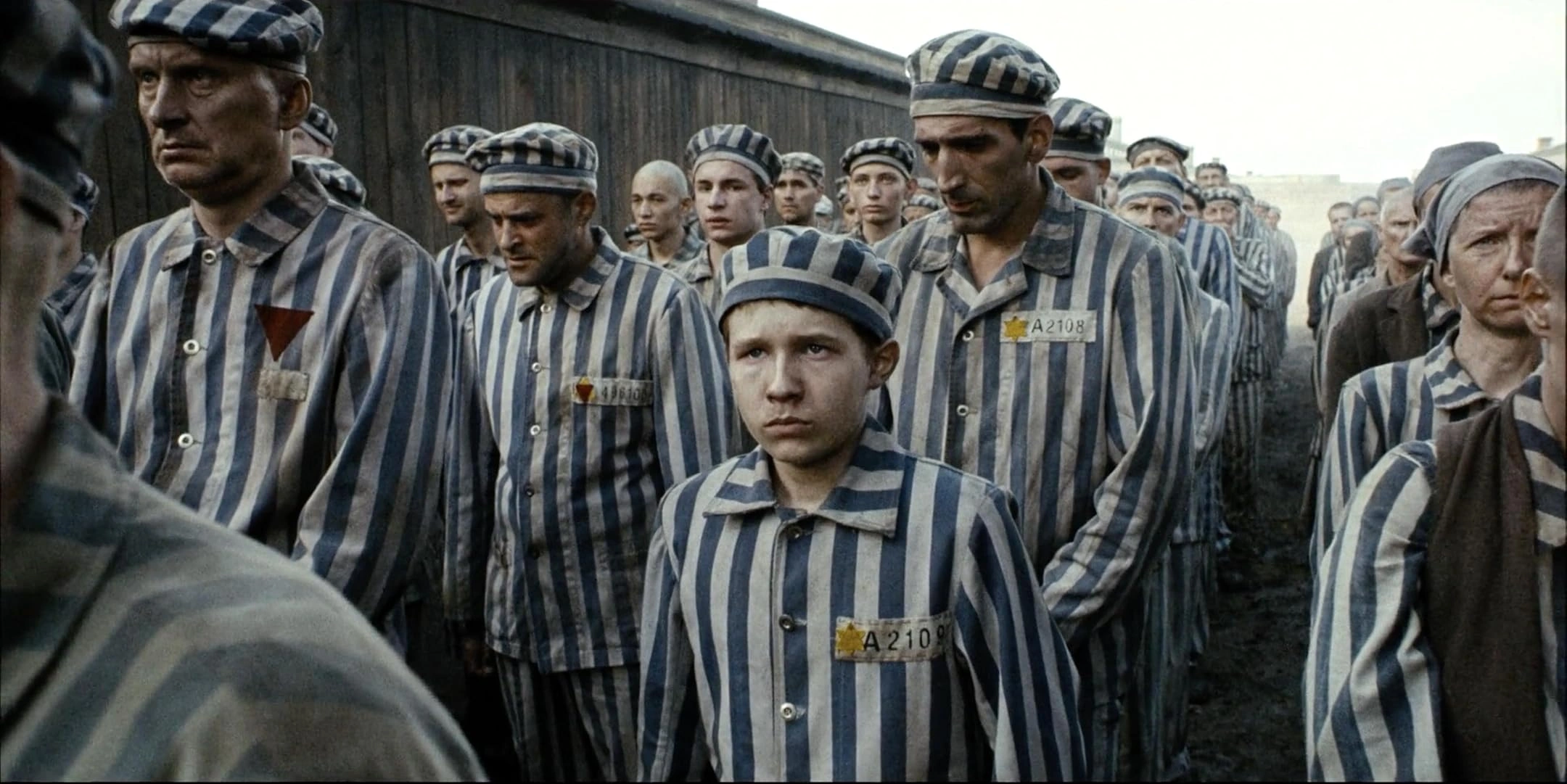
The Holocaust sequences avoid graphic spectacle, which is one of the film’s wiser decisions. Terror arrives through accumulation: the loss of school, friends, home, dignity, family safety, and finally any illusion that civilization will protect the vulnerable. Terezin and Auschwitz-Birkenau are presented through historical detail and emotional pressure rather than shock tactics. That restraint makes the degradation feel intimate.
Visually, the film has passages of real beauty. Young Herbert’s return to a damaged Prague carries a haunted, almost dreamlike charge, capturing a city morally disfigured by occupation. Some musical choices seem risky on paper, especially the use of a modern song against wartime imagery, yet the contrast can produce a strange emotional clarity. I have always liked films that take a swing with music rather than treating the soundtrack like wallpaper, and Taylor’s instincts occasionally pay off.
The Optimist is imperfect, sometimes clunky, and too eager to explain what its strongest scenes already express. Still, it has soul. Its best moments understand that survival is never finished in the body alone. It must pass through speech, memory, and the fragile mercy of being heard.
The Optimist: The Bravest Act Is Truth is an American biographical drama feature film that was released in select theaters nationwide by Trafalgar Releasing on March 11, 2026. Directed and written by Finn Taylor, the narrative chronicles the life of real Holocaust survivor Herbert Heller, who carries the burden of a decades-long secret regarding his escape from the Auschwitz-Birkenau death march at age fifteen. His path toward healing begins when he forms an unexpected, intergenerational connection with a troubled teenage volunteer who encourages him to finally share his wartime memories. Audiences can catch special community screenings hosted at institutions like the Museum of Tolerance, while wider commercial theatrical showtimes are available at major nationwide chains including Cinemark Theatres.
Where to Watch The Optimist (2023) Online
Full Credits
Title: The Optimist: The Bravest Act Is Truth
Distributor: Trafalgar Releasing
Release date: March 11, 2026
Running time: 112 minutes
Director: Finn Taylor
Writers: Finn Taylor
Producers and Executive Producers: Jeanine Thomas, Todd Slater
Cast: Stephen Lang, Elsie Fisher, Luke David Blumm, Leah Pipes, Ben Geurens, Ursula Parker, Slavko Sobin, Stella Stocker, Oskar Hes, Robin Weigert, Jan Mareš, Anežka Rusevová, Václav Jiráček, Jaromír Nosek, Stephanie Heiner, Josh Schell, Albie Brown
Director of Photography (Cinematographer): Antonio Riestra, Alexander Surkala
Editors: Olina Kaufmanová
Composer: Jenny Scheinman
The Review
The Optimist
The Optimist is uneven in construction, with a fractured timeline that sometimes interrupts its strongest scenes, but its emotional sincerity is difficult to dismiss. Stephen Lang, Elsie Fisher, and Luke David Blumm give the film a tender human center, turning a story of trauma and secrecy into a measured study of survival through speech. Its teaching instinct can blunt the drama, yet its best moments are deeply felt.
PROS
- Strong, restrained performance from Stephen Lang
- Sensitive chemistry between Lang and Elsie Fisher
- Luke David Blumm gives young Herbert real emotional force
- Thoughtful treatment of memory, guilt, and survival
- Holocaust sequences avoid empty shock value
CONS
- Nonlinear structure can feel clunky
- Some emotional lessons are overstated
- Abby’s subplot occasionally disrupts the rhythm
- Editing sometimes cuts away from powerful moments too soon