































Agent Zero is a lean French spy-action thriller with revenge in its bloodstream and institutional rot in its bones. Guillaume de Fontenay’s film follows Badh, also known as Alma Siracine, a former DGSE black-ops agent played by Marine Vacth with glacial control and a blade’s sense of purpose.
After a mission in Raqqa collapses into near-death and moral exhaustion, Badh leaves the field behind. Seven years later, she lives in Essaouira, Morocco, with her husband Ilias, a police officer whose ordinary decency feels almost radical inside this world of handlers, assets, and sanctioned criminals.
That fragile peace is shattered when Ilias is targeted in a shooting. Badh’s response is immediate, brutal, and frighteningly efficient. Her pursuit of the attackers leads to Manour Khoury, a Moroccan arms dealer protected by French intelligence because his information remains useful. The premise is familiar: the retired killer pulled back into violence. The texture is sharper. Here, vengeance becomes a corridor leading straight into the fluorescent machinery of state hypocrisy.
A Face Carved Out of Silence
Marine Vacth gives Agent Zero its most persuasive argument for attention. Her performance is built from restraint: narrowed eyes, measured breath, shoulders held with the discipline of someone who has survived by wasting nothing. Badh does not perform rage for the audience. She files it away, converts it into motion, and acts.
That stillness matters. In private scenes with Ilias, Vacth allows warmth to surface in small increments, which gives the later violence a human cost. The film, admittedly, keeps Ilias too close to function. His attack motivates the narrative, yet he remains partially sketched, a moral wound rather than a full dramatic partner. Still, the early domestic passages in Morocco carry enough tenderness to make Badh’s return to the field feel like a relapse into an older self.
Nora, a loyal friend to the couple, gives Badh’s civilian life a warmer circumference. She suggests a world of chosen kinship outside official systems, where care exists without paperwork or surveillance. Joanna Walter, played with dry severity by Emmanuelle Bercot, provides the opposing principle. She is not a cackling villain. She is worse: a professional. Her choices are cleanly articulated, bureaucratically plausible, and spiritually rancid. The horror lies in how little effort cruelty requires once it becomes policy.
The Spy Game as Moral Accounting
The film’s espionage plot works best when it treats intelligence work as a ledger of compromised souls. Khoury is useful, so Khoury is protected. People die, reports are filed, and the machinery keeps humming with all the warmth of a faulty refrigerator. This is where Agent Zero brushes against noir. The old chiaroscuro of alleyways and Venetian blinds has been updated into surveillance rooms, burner channels, coded websites, and diplomatic deniability. The shadows are no longer painted on the wall. They are procedural.
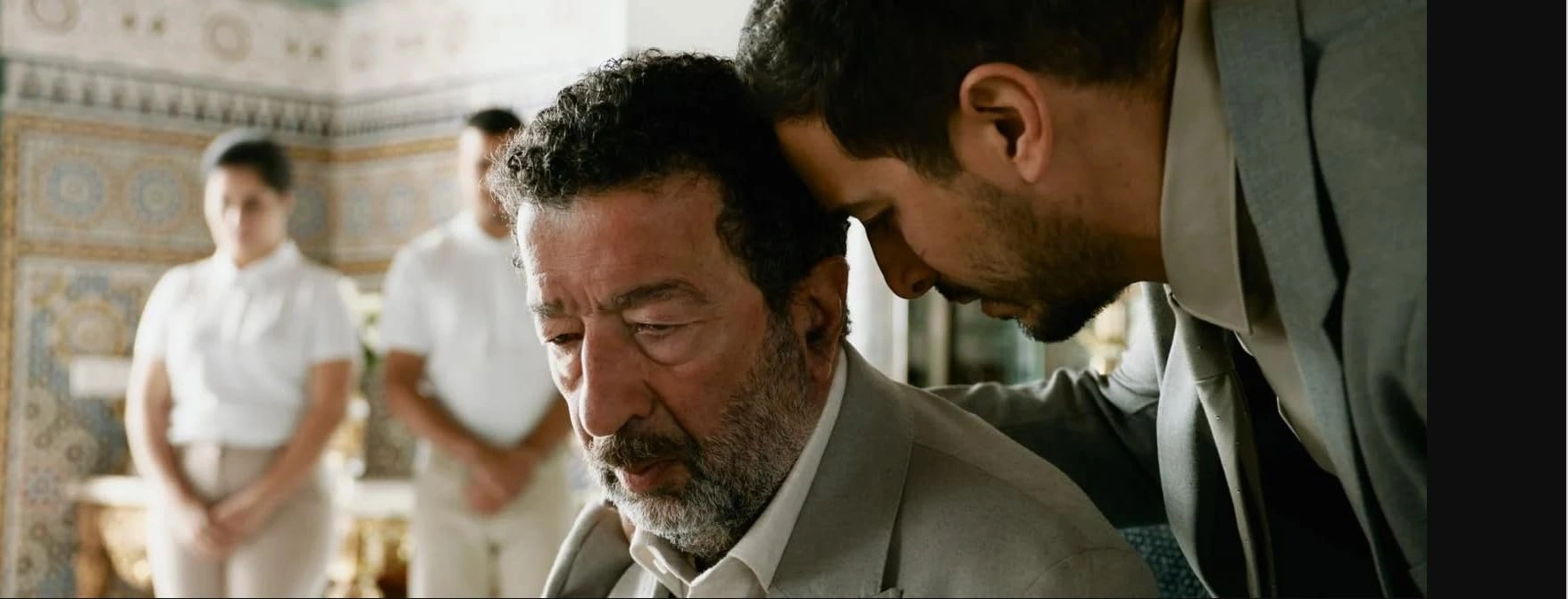
Badh’s crisis is partly philosophical. Is she free once she leaves the agency, or has the agency already written the limits of her life? Her identity as wife, friend, and exile competes with the reflexes of the operative. The film’s tension comes from watching those selves collide. She wants to protect what remains of her private world, yet every decision pulls her closer to the logic she fled.
The political ideas have force. Agent Zero suggests that Western power often survives by outsourcing violence, then congratulating itself on clean hands. Khoury’s protection exposes a system where moral language exists mainly for public use.
The script, however, sometimes gestures where it should cut deeper. Colonial residue, counterterrorism cynicism, and state-sponsored disorder all hover around the narrative, but the film’s briskness leaves some of those questions underdeveloped. It keeps moving. The mind occasionally wants it to stay still.
Shaking the Frame, Sharpening the World
De Fontenay gives Agent Zero a strong geographical pulse. Essaouira’s coastal light, narrow streets, and lived-in interiors create a tactile world around Badh’s temporary peace. Morocco is not treated solely as backdrop or danger zone. Domestic spaces, local businesses, port areas, and open roads form a visual grammar of fragile refuge. Paris, by comparison, feels sterile, sealed, and morally refrigerated. Quite French intelligence of it.
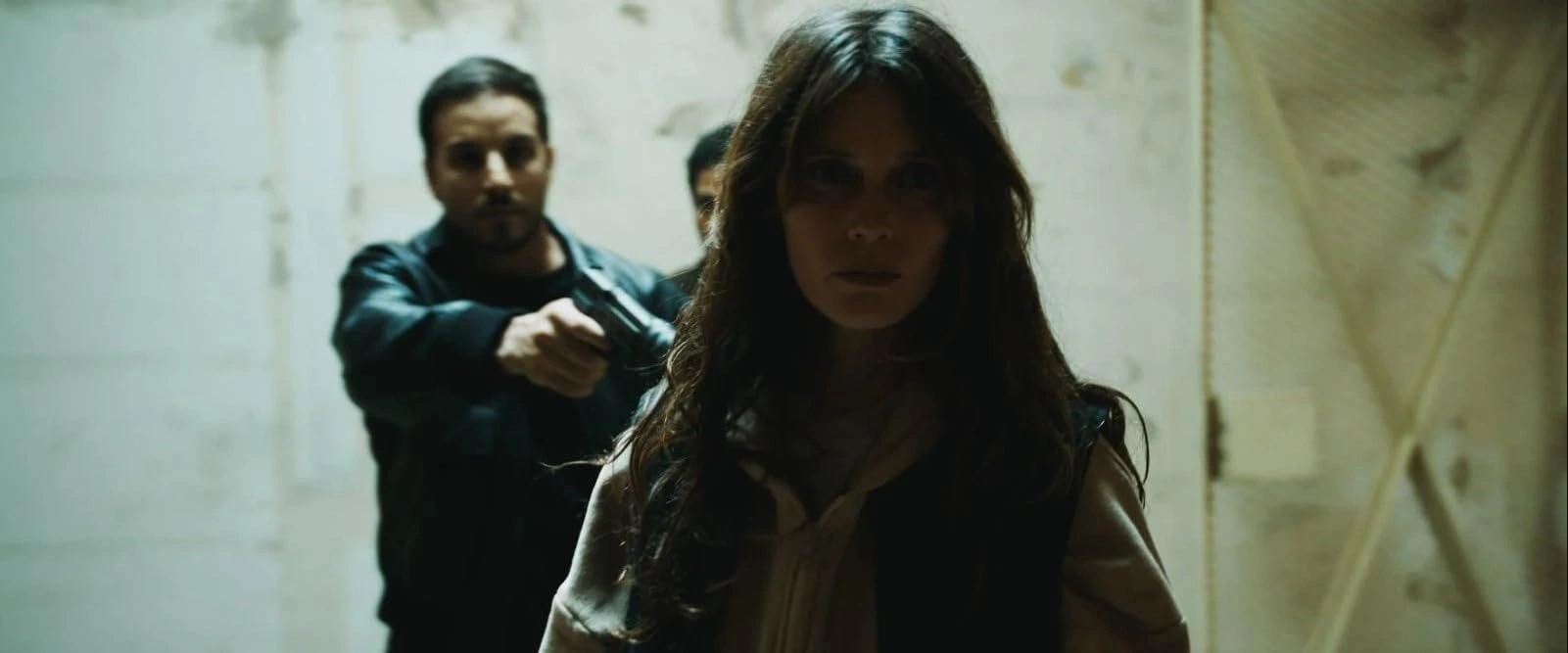
The cinematography often favors immediacy, with handheld camera movement pressing close to bodies in motion. In quieter moments, the framing carries a noir-adjacent severity: faces caught in partial shadow, figures isolated by doorways, institutional rooms drained of warmth. Lighting underscores the film’s central split between human connection and strategic calculation. Morocco gets texture and breath. The intelligence world gets glass, steel, and emotional malnutrition.
The action is less consistent. Badh’s fighting style is practical, fast, and convincing, especially because Vacth sells physical thought rather than athletic display. She moves like someone solving a problem under extreme pressure. The motorcycle chase has genuine momentum, and several close-quarters encounters carry a hard, bruising energy. Yet the camera can become too nervous for its own good. Rapid cutting and unstable handheld work sometimes blur spatial logic, which weakens impact. Chaos can heighten danger, but confusion is a cheaper effect.
The sound design helps recover some of that lost clarity. Engines, footsteps, impacts, and sudden silences tighten the viewer’s body before the plot fully catches up. The pacing is clipped, almost austere, which keeps the film from sagging. It also makes the ending feel abrupt, as if the story exits before its political aftertaste fully settles. Agent Zero remains a compact thriller with a severe lead performance, vivid locations, and sharp flashes of moral intelligence, while its staging and script occasionally leave richer possibilities visible in the margins.
Agent Zero, also known by its European release title Badh, is a French action espionage thriller that debuted in North American markets on March 13, 2026, through digital distributor Well Go USA Entertainment. The story follows a former elite intelligence agent who has built a quiet life in Morocco, only to be dragged back into her deadly trade after her policeman partner is gunned down by a criminal cartel. Driven by survival, she tracks down those responsible while uncovering deep betrayals rooted in her own dark history with the French secret service. Home audiences can buy or rent this fast-paced independent thriller across premium streaming storefronts including Amazon Prime Video, Apple TV, and Fandango at Home.
Where to Watch Agent Zero (2025) Online










Full Credits
Title: Agent Zero
Distributor: Well Go USA Entertainment
Release date: March 13, 2026
Rating: R
Running time: 84 minutes
Director: Guillaume de Fontenay
Writers: Francine Cathelain, Alexandre Coquelle, Matthieu Le Naour
Producers and Executive Producers: Marc-Etienne Schwartz, Marc Stanimirovic
Cast: Marine Vacth, Emmanuelle Bercot, Slimane Dazi, Niels Schneider, Grégoire Colin, Lionel Abelanski, Samy Seghir, Younes Afroukh
Director of Photography (Cinematographer): Pierre Cottereau
Editors: Mathilde Van de Moortel
Composer: Audrey Ismael
The Review
Agent Zero
Agent Zero is a taut, politically alert spy thriller carried by Marine Vacth’s severe, magnetic lead performance. Its action can lose shape through restless camerawork, and its political ideas deserve deeper excavation, yet the film has enough grit, location texture, and moral unease to stand above routine revenge fare. It is compact, chilly, and bruising, with flashes of noir fatalism beneath the gunfire.
PROS
- Marine Vacth’s controlled, convincing lead performance
- Strong Moroccan locations and atmospheric contrast with Paris
- Sharp ideas about intelligence work and moral compromise
- Efficient pacing and practical action beats
- Joanna Walter makes a chilling institutional antagonist
CONS
- Shaky camerawork weakens some action scenes
- Ilias feels underdeveloped as an emotional anchor
- Political themes could have been explored with greater force
- Ending feels abrupt
- Some genre beats are familiar







