






















![Kingdom Hearts Collection [I-III] Review](https://gazettely.com/wp-content/uploads/2026/10/Kingdom-Hearts-Collection-I-III-1-360x180.webp "Kingdom Hearts Collection [I-III] Review: KHII Holds Steady as Newer Entries Fluctuate 37")



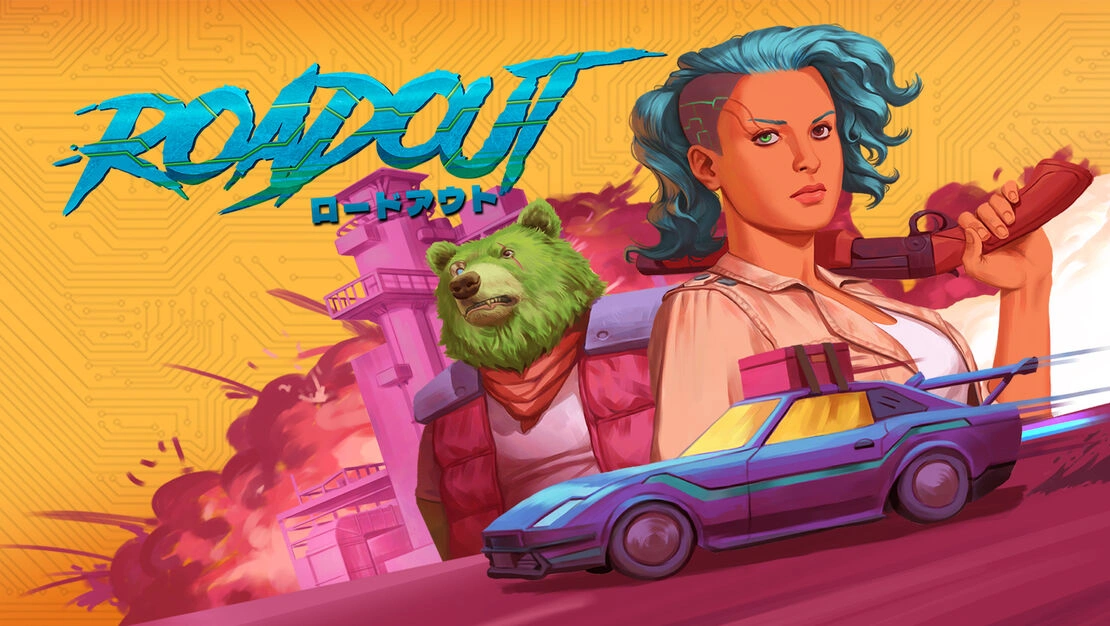

RoadOut has the restless energy of a game built from several cultural memories of the wasteland: cyberpunk paranoia, western mercenary fiction, top-down arcade driving, metroidvania lock-and-key design, and the dust-choked survival fantasy that has followed post-apocalyptic media from Mad Max to Fallout. DANGEN Entertainment and Rastrolabs Game Studio frame it as a story-driven action RPG, yet its identity keeps shifting between bunker raids, car combat, racing, crafting, faction work, and open-zone exploration.
You play as Claire, a brash mercenary trying to stay alive in The Dead Zone, an artificial biome scarred by rival powers and technological decay. Her jobs begin with familiar genre labor: deliveries, sabotage, contracts, hired violence. Then a stolen package, a damaged car, and the shadow of an evil A.I. pull her toward larger questions about memory, identity, and control.
That range gives RoadOut its appeal. It feels scrappy, stylish, and eager to test the limits of its own systems. It also feels crowded. The game has a strong engine of ideas, yet some parts rattle when the road gets rough.
Factions, Memory, and the Politics of Survival
Claire is the right kind of protagonist for this world: abrasive, brave, transactional, and allergic to authority. She does not enter The Dead Zone as a chosen savior. She is a worker in a violent economy, taking black market jobs because survival has been reduced to labor under pressure. That premise gives RoadOut a sharper edge than a standard hero’s errand. Claire’s morality is practical, sometimes ugly, and often believable.
The inciting job goes wrong after her vehicle is damaged and the cargo is stolen. From there, the story expands into a mystery built around hidden truths, strange technology, and shifting loyalties. The game’s treatment of identity carries a cyberpunk lineage, recalling works where personhood becomes unstable under corporate, artificial, or militarized systems. There are echoes of Blade Runner’s anxiety over manufactured selves, filtered through a rough indie RPG structure rather than a sleek noir frame.
Claire’s relationships help anchor that pressure. Ted brings warmth and protection, functioning as a fatherly presence without softening Claire into sentimentality. Doctor Shelby is harder to read, surrounded by secrecy and withheld knowledge. The supporting cast gives settlements a social pulse, which matters in a game where the map can otherwise feel like hostile space interrupted by scattered pockets of commerce and rumor.
The faction system gives that world a political grammar. WasteHeads, SaibaKuran, and Order of the New Code are competing powers, each shaping how Claire is treated. Reputation changes access to merchants, tattoo artists, and enemy behavior. It is a smart mechanic because it turns social allegiance into material consequence. The weakness lies in repetition. Too many faction jobs lean on defending or reclaiming bases, making political conflict feel like a loop of chores after the initial spark fades.
Combat, Cars, and Systems Fighting for Space
The main loop has a strong rhythm on paper. Claire accepts a job, drives across dangerous terrain, enters a building or bunker, fights through enemies, solves puzzles, collects resources, upgrades herself, repairs her car, and heads back into the wasteland. RoadOut keeps asking the player to move between body and machine, between interior combat and exterior travel. That is its most interesting design tension.
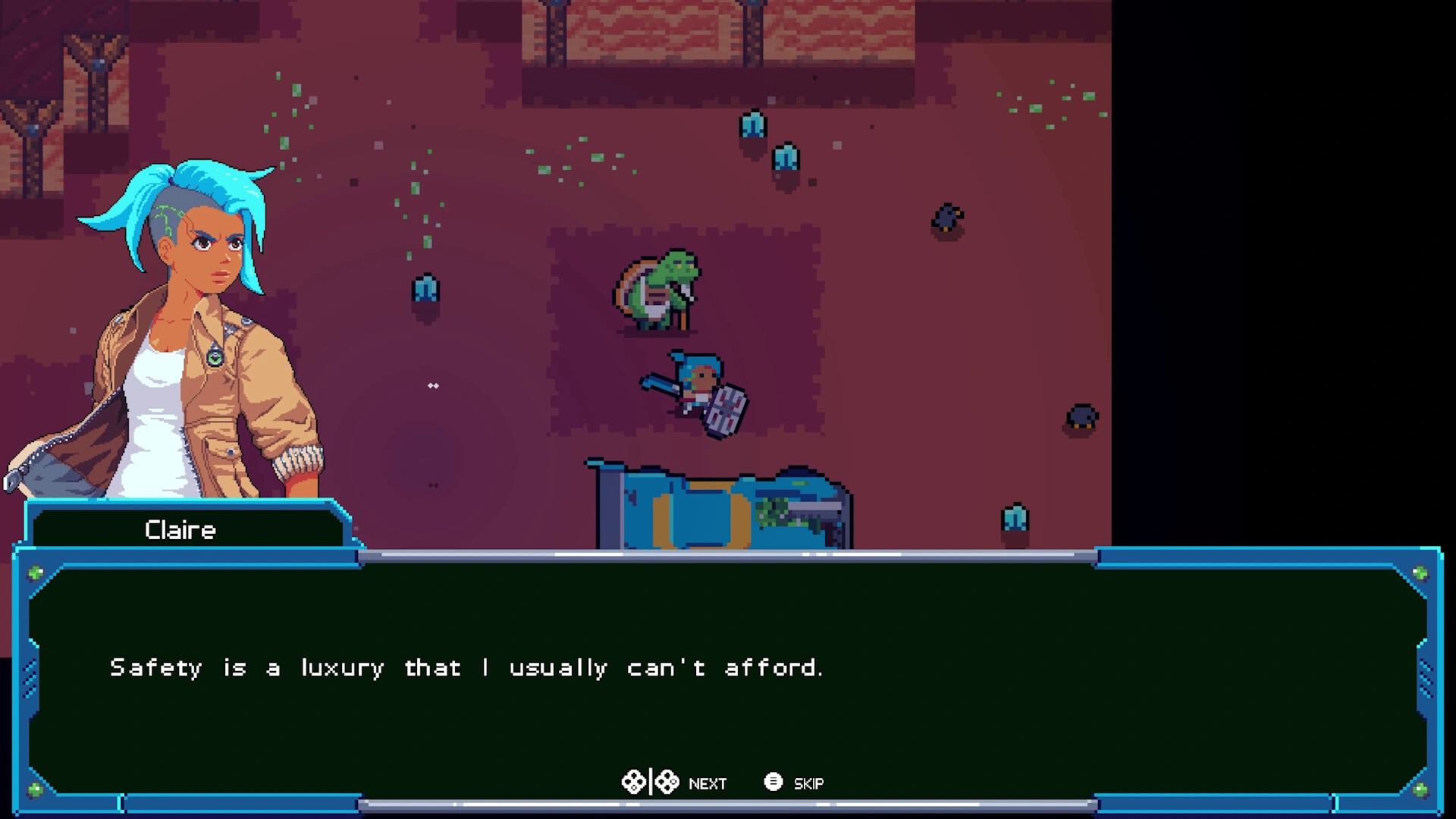
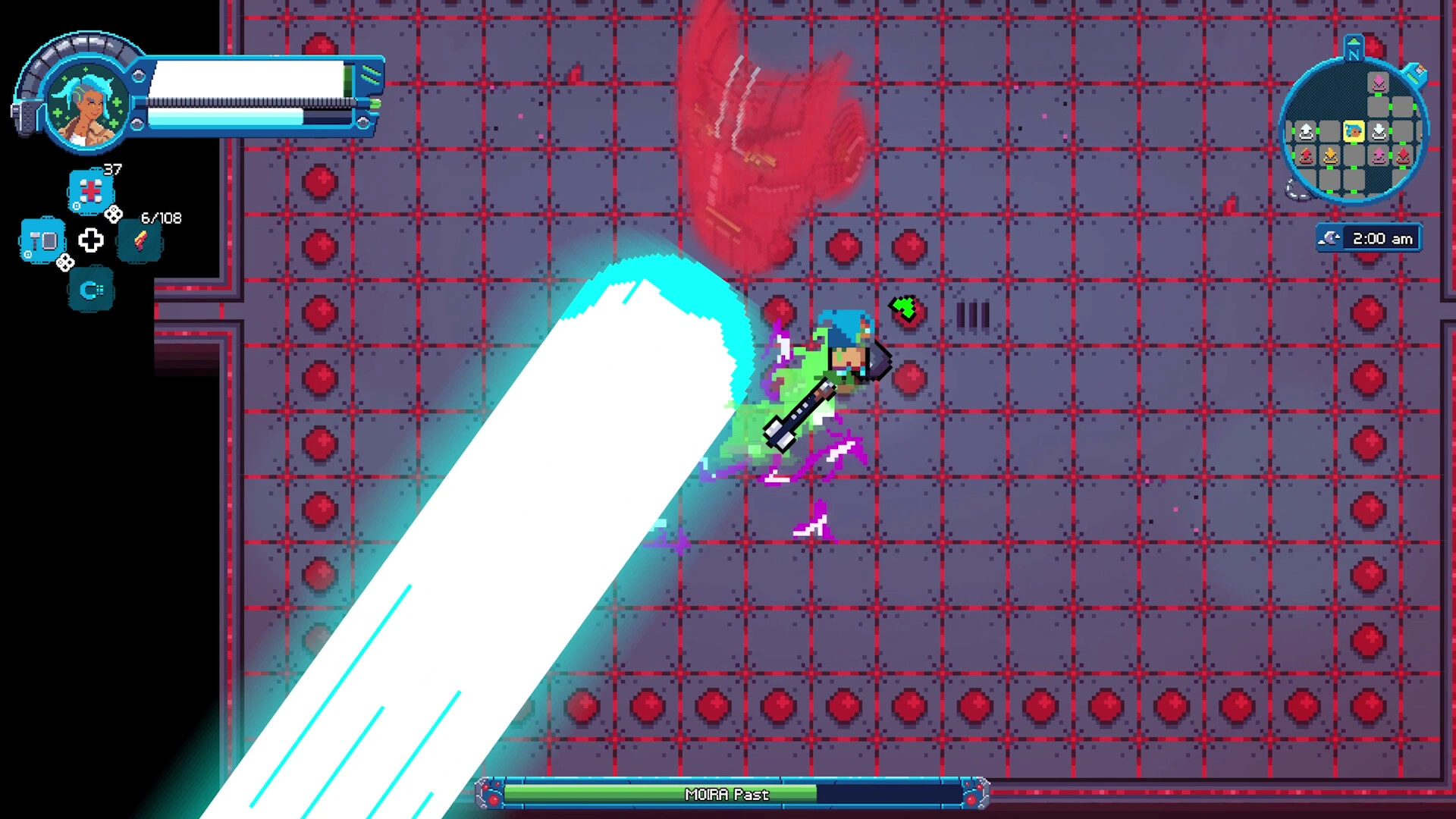
Combat gives Claire several tools. Melee attacks hit hard and can break obstacles. Charged strikes add weight. Shields offer defense and counterplay. Guns, including weapons like the .45 revolver, change the tempo by giving players space. Dashing and item use keep encounters from turning static. Bosses can be demanding because their patterns grow nastier as their health drops, forcing tactical adjustment rather than simple attrition.
Yet combat also exposes RoadOut’s awkwardness. The camera can rotate in 90-degree turns, a clever idea for finding hidden switches, panels, and puzzle routes. It gives interiors a spatial gimmick that feels closer to puzzle-box design than standard twin-stick action. The trouble is aiming. Stopping to line up attacks interrupts the flow players may expect from this style of combat. The game uses both sticks, but it does not always provide the fluid control language that term suggests.
The dungeon spaces follow the same pattern. Early interiors promise careful design, with secrets, locked rooms, switches, hazards, and arena encounters. After enough repetition, the puzzle vocabulary stops expanding at the pace the game needs. The result is enjoyable in short stretches, then thinner under longer play sessions.
Driving is often livelier. Claire’s car gives RoadOut a personality that separates it from many retro-styled action RPGs. The wasteland contains enemy gangs, aggressive wildlife, miasma clouds, sandstorms, hazards, races, derby events, and battle arenas. Weaponized racing gives the game a nice arcade bite, pulling from early Grand Theft Auto and old top-down racers while adding RPG reward loops. The ability to blast through a race rather than politely compete suits Claire perfectly.
The map design can undermine that fun. The minimap struggles to communicate terrain clearly, so long drives can end in mountains, water, chasms, or a missed fork several screens back. Death in the car is harsher than death indoors, sometimes sending players far back after a vehicle explosion. That imbalance makes the wasteland feel dangerous, which fits the fiction, but it can also feel needlessly punishing.
Progression is one of the stronger bridges between theme and mechanics. Crafting is quick, useful, and generous with materials. Bartering turns bones, scraps, fluids, and odd resources into practical survival tools. The tattoo system is especially memorable: Claire’s upgrades are inked into her body through faction-linked access, making character growth feel physical, painful, and socially negotiated.
Neon Dust, Synth Bass, and Rough Edges
RoadOut looks best when it leans into atmosphere. Its pixel art gives the exterior wasteland a dirty cyberpunk glow, where ruined roads, toxic skies, and hostile settlements carry a strong sense of place. Dialogue portraits have enough personality to sell the cast, and cutscenes occasionally hit a striking pulp-comic register. Interior spaces and some human character details are less refined, creating a visual unevenness that matches the game’s mechanical inconsistency.
The soundtrack is a major asset. Its 80s synth pulse, heavy bass, and grimy electronic drive suit the fantasy of burning through a poisoned desert with bullets loaded and trouble waiting beyond the next ridge. Music gives the driving sections momentum and helps the world feel larger than the screen can show.
RoadOut’s ambition is easy to admire. It wants RPG progression, faction politics, top-down combat, rotating-camera puzzles, racing, crafting, boss fights, weather hazards, car damage, and story twists to share the same road. Few of those parts are empty.
Several are genuinely fun. The issue is polish and focus. UI elements such as active slots and weapon switching can feel unclear for too long. Some boss arenas appear to contain safe spots that weaken the intended challenge. Faction tasks repeat. Combat has snap and friction in nearly equal measure.
Still, RoadOut has character. It reflects a global indie tendency to remix familiar genre languages rather than obey one inherited form. Japanese action RPG structure, American road dystopia, cyberpunk identity fiction, and arcade racing DNA all pass through its machinery. The result is messy, sometimes frustrating, often flavorful, and never anonymous.
The Review
RoadOut
RoadOut is a messy, energetic action RPG with a strong story, stylish wasteland mood, and clever ideas spread across driving, faction work, combat, crafting, and exploration. Its best moments come from Claire’s tense road trips, sharp cyberpunk atmosphere, and identity-driven narrative. Its weaker moments come from repetitive faction tasks, unclear UI, uneven map design, and combat systems that can feel less smooth than expected.
PROS
- Strong story with meaningful identity themes
- Claire is a memorable protagonist
- Driving sections have style and danger
- Tattoo upgrade system feels fresh
- Excellent synth-heavy soundtrack
- Atmospheric pixel art and world design
CONS
- Faction missions become repetitive
- Minimap can be frustrating
- Aiming and camera controls feel awkward
- UI needs clearer explanations
- Some interiors lack visual detail
- Car death checkpoints can feel punishing