














![Kingdom Hearts Collection [I-III] Review](https://gazettely.com/wp-content/uploads/2026/10/Kingdom-Hearts-Collection-I-III-1-360x180.webp "Kingdom Hearts Collection [I-III] Review: KHII Holds Steady as Newer Entries Fluctuate 40")
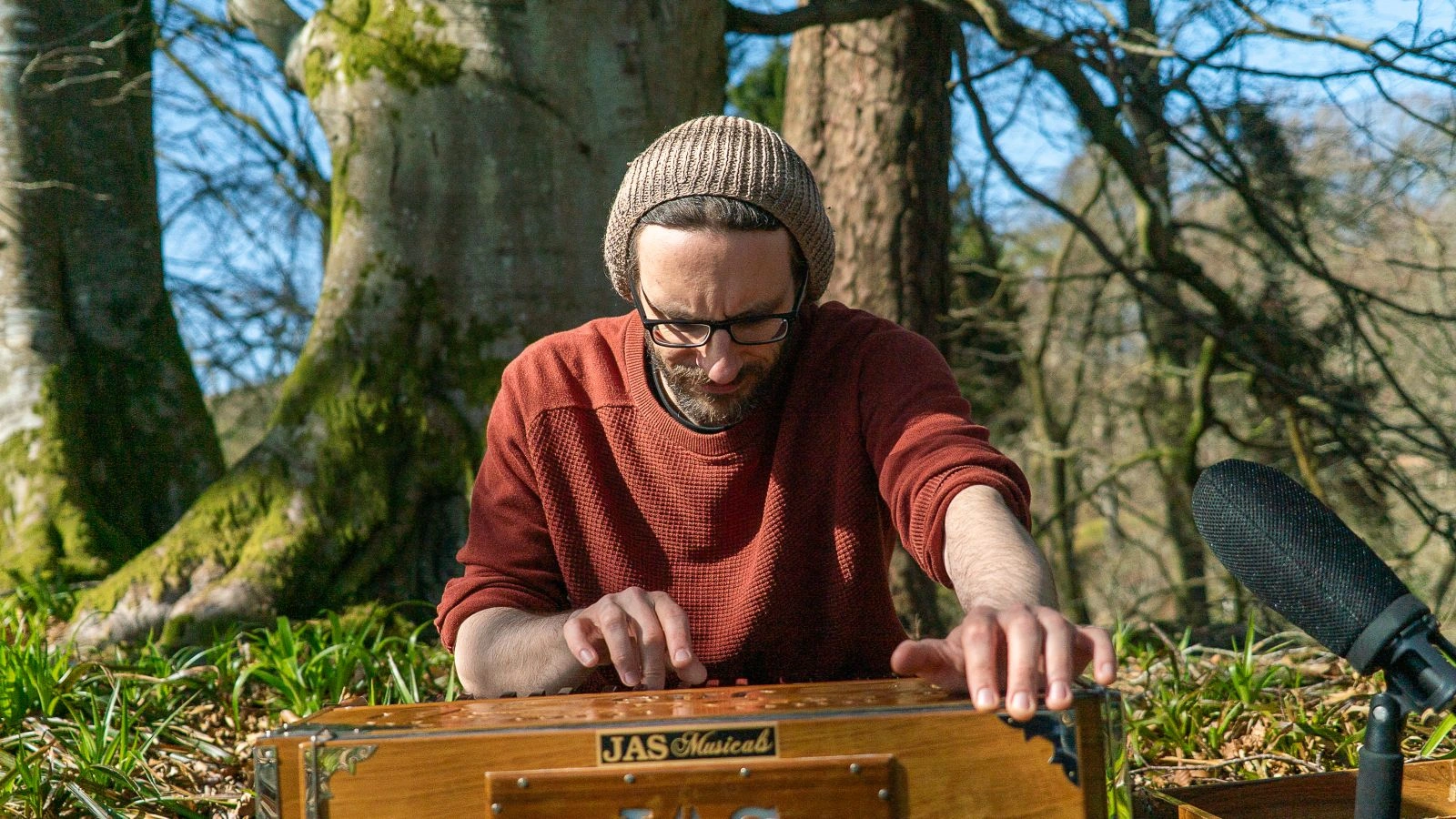

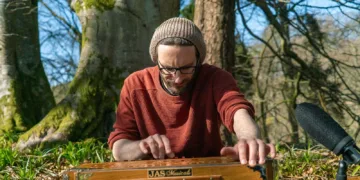
Psalms Of The People listens to a culture trying to keep breathing. Jack Archer’s gentle observational documentary follows Rob MacNeacail, a Gaelic psalm singer, musician, sound designer, and tender custodian of a fragile tradition. The film moves with him through Scotland and Ireland, from Carlops to Lewis, Skye, Belfast, County Cork, and other Gaelic-linked spaces, gathering voices that might otherwise fade into archival dust.
Rob’s late father, the poet Aonghas MacNeacail, hovers through the film like weather. His portraits, writings, and memory give Rob’s travels a private ache. The documentary carries that grief softly, refusing melodrama. Song becomes a form of mourning, yet also a refusal of silence.
This is a modest film, warm in its human texture and lyrical in its attachment to place. It treats Gaelic psalm singing as living heritage, not as museum glass. Its deepest question is simple and severe: what survives when language, faith, and family begin to vanish?
A Man Listening for His Father
Rob MacNeacail gives the film its pulse. He is excitable, kind, a little ungainly, and wholly sincere. Archer watches him without irony, which matters. Rob could easily be framed as eccentric color, the enthusiastic guide with biscuit crumbs and bright eyes. Instead, the film lets his oddness become part of his grace. He is open to people, open to sound, open to embarrassment. That openness makes him moving.

His work at Garvald, a care community for adults with learning disabilities, deepens this portrait. His bond with his sister Galina is handled with delicacy, free from sentimental pressure. These scenes show care as practice rather than performance. Rob’s patience with others feels related to his musical life: listen first, respond later, leave space for the voice that arrives late.
The death of Aonghas MacNeacail gives Rob’s mission its sorrowing undertow. His father is not treated as a biographical footnote. He is present in rooms, images, paper, memory. Rob’s devotion to psalm singing feels born from that absence. He does not speak like a cultural campaigner reciting a case. He behaves like someone trying to keep conversation open with the dead.
His sound designer’s curiosity gives the film an unusual shimmer. Birds, hollow trees, ambient hums, the low mechanical life of ordinary spaces: Rob hears music everywhere. The world, for him, is never mute. Perhaps that is why silence seems so frightening here.
The Shape of a Shared Breath
Gaelic psalm singing is explained through experience rather than lecture. A precentor leads a line, then the group answers. Each singer follows at a personal pace, with slight variations in pitch, rhythm, and feeling. No instrument guides them. The result swells and loosens like tidewater. It can feel ancient, mournful, and strangely physical, as if the room itself has learned to breathe.
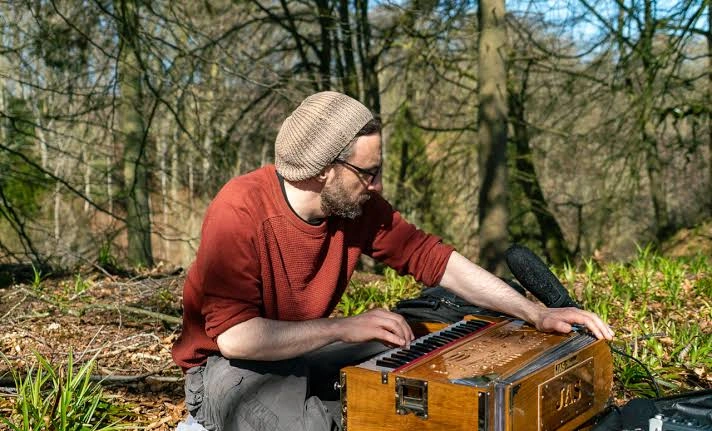
Archer understands that this sound cannot be reduced to description. He gives it time. The voices overlap, separate, return, drift forward. The form allows individual presence inside a communal body. That idea gives the film its strongest metaphor. Community here does not mean uniformity. It means the courage to sing beside another person without forcing the same line into the same shape.
Place becomes part of that music. Carlops has a borderland quiet. Lewis and Skye carry sea light and open air. Belfast brings political shadows the film notices only faintly. County Cork and Argyll widen the map of Gaelic kinship and memory. Church halls, rural roads, rain, dawn skies, green spaces, and bright interiors gather around the singing until landscape feels like a second chorus.
The film’s warmth comes from its people. Children try to lead. Older singers carry memory in their throats. Beginners enter without shame. Experts offer guidance without turning the practice into a locked room. Religious belief is present, yet Rob’s approach makes space for secular wonder too. In these moments, psalm singing becomes a shelter against the existential cold: one human voice calling, many human voices answering.
The Beauty and the Silence Around It
Archer’s direction is patient, affectionate, and lightly lyrical. He avoids intrusive narration, letting encounters create rhythm. The film trusts Rob’s travels, conversations, and performances to build meaning through accumulation. Its finest passages are sonic rather than explanatory. The songs carry grief, fellowship, devotion, and cultural anxiety with greater force than spoken analysis could manage.
The sound work is vital. Rob’s own fascination with found noise seems to guide the film’s ear. Birds, weather, room tone, and human breath create a porous world where music is never fully separate from daily life. The camera shares that gentleness. It looks at dawn light, rain-darkened ground, church interiors, faces in song, and the tender clutter of personal rooms.
Yet the film’s restraint has a cost. It gives limited historical grounding for Gaelic psalm singing, the pressures faced by the Gaelic language, Protestant inheritance, sectarian fracture, and the politics surrounding Irish and Scottish language communities. Belfast, especially, carries tensions that ask for sharper engagement. The film prefers warmth to confrontation, intimacy to argument.
That choice is understandable. It also narrows the film’s force. Psalms Of The People protects Rob’s mission from becoming a thesis, and that protection gives the documentary much of its tenderness. Still, the harder history remains nearby, like a locked chapel at the edge of the frame. What remains is a film rich in sound, care, and fragile beauty, lifted by communal singing and haunted by everything it leaves unsaid.
Psalms Of The People, originally titled Sailm nan Daoine, is a British observational music documentary that celebrated its world premiere at the Glasgow Film Festival on March 1, 2026, ahead of its broadcast rollout on BBC Alba. The lyrical film tracks eccentric Scottish musician and precentor Rob MacNeacail as he embarks on a soul-searching road trip across rural communities in Scotland and Ireland to record and preserve the ancient, collective practice of traditional Gaelic psalm singing. By capturing collaborative call-and-response performances and weaving them together with ambient natural soundscapes, the production approaches this rich vocal heritage as a fiercely alive tool for contemporary community connection. Audiences looking to experience the documentary can track its regional screenings across the international non-fiction film festival circuit or stream it via BBC iPlayer following its broadcast distribution.
Full Credits
Title: Psalms Of The People
Distributor: Hopscotch Films, BBC Alba
Release date: March 1, 2026
Rating: PG
Running time: 84 minutes
Director: Jack Archer
Writers: Jack Archer
Producers and Executive Producers: John Archer, Calum McConnell
Cast: Rob MacNeacail
Director of Photography (Cinematographer): Jack Archer, Anna Garvin, Martyn Robertson
Editors: James Alcock
Composer: Rob MacNeacail
The Review
Psalms Of The People
Psalms Of The People is a tender, sound-rich documentary that finds deep feeling in shared voices. Its intimacy gives Rob MacNeacail’s mission rare emotional clarity, turning grief, language, and communal song into a quiet act of cultural care. The film’s patience and musical passages are deeply affecting, even when its reluctance to confront religious and political history leaves parts of the subject underlit.
PROS
- Beautifully captured Gaelic psalm singing
- Warm, endearing central subject
- Strong sense of place and community
- Moving link between grief, memory, and song
- Patient, lyrical documentary style
CONS
- Limited historical context
- Avoids sharper religious and political tensions
- Some viewers may want firmer narrative momentum
- Cultural stakes could be explored with greater depth