







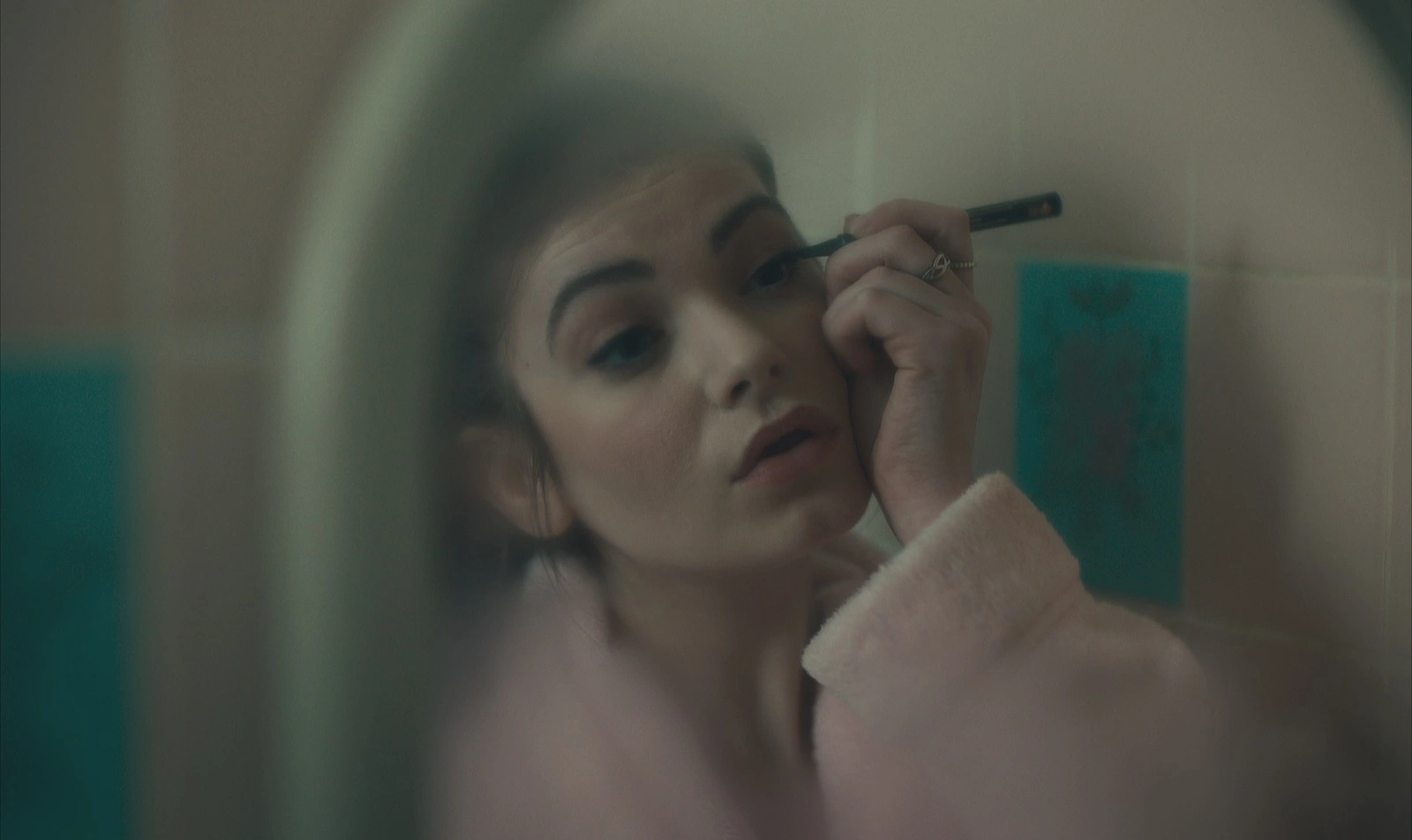

Blaenau Ffestiniog looks like a place built from endurance: grey stone, low skies, slate tips pressing against the town like old debts. Marc Evans’ Effi o Blaenau, co-written with Gary Owen and adapted from Owen’s stage work Iphigenia in Splott, understands that setting can carry story before plot has even found its shoes.
Effi, played by Leisa Gwenllian, lives in this North Wales landscape with a mouth like broken glass and a survival instinct that often looks like self-sabotage. She drinks hard, fights loudly, posts herself with defiant glamour, and seems determined to outrun every soft feeling before it catches her. A night out with her friend Leanne leads to Lee, an injured former soldier whose charm briefly opens a door Effi did not expect. Then comes pregnancy, rejection, and a brutal encounter with systems too strained to offer care in the form she needs.
The film is Welsh-language, fiercely local, and grounded in a community marked by vanished industry. Its scope is intimate, yet its anger reaches far beyond one woman’s crisis.
Effi, Weaponized
Effi is introduced as difficult company, which is part of the film’s gamble. She is abrasive, vulgar, funny, tiring, magnetic, and often impossible to defend. Her hangovers have their own narrative arc. Her arguments with her grandmother Meg feel like old routines with fresh bruises. Her connection with Kev, a soft-hearted local dealer, carries a sad comic edge: he clearly wants to be needed, and Effi mostly wants to be left alone until she does not.
Evans and Owen structure her character carefully. The early scenes invite judgment, then make that judgment feel lazy. Effi’s recklessness is not excused, yet it is given shape. She has grown up in a place where ambition curdles into boredom, tenderness is treated like a tactical error, and pleasure arrives cheap because the future looks expensive.
Her meeting with Lee reveals a different register. Effi does not treat his disability with pity or squeamish politeness. She meets it head-on, bluntly, almost clumsily, and somehow with grace. That scene matters because it shows the compassion hidden inside her aggression. She can wound with language, then offer kindness without announcing it. Gwenllian plays those shifts with startling control.
After the pregnancy, Effi’s hard shell cracks in unpredictable ways. She is never reduced to saintly suffering. She remains selfish, brave, wounded, generous, and chaotic. That messiness is the point. Her maturity has been present all along; life has simply given it no safe room to stand up straight.
The Grammar of Place
Blaenau Ffestiniog is not background scenery. It is the film’s grammar. The slate tips, boarded-up spaces, empty streets, and heavy skies shape every beat of Effi’s story. Eira Wyn Jones’ cinematography avoids poverty tourism, a trap many social dramas tumble into with noble intentions and muddy boots. The camera stays close to Effi without cornering her for our sympathy. It watches her perform confidence, then catches the little failures in that performance.
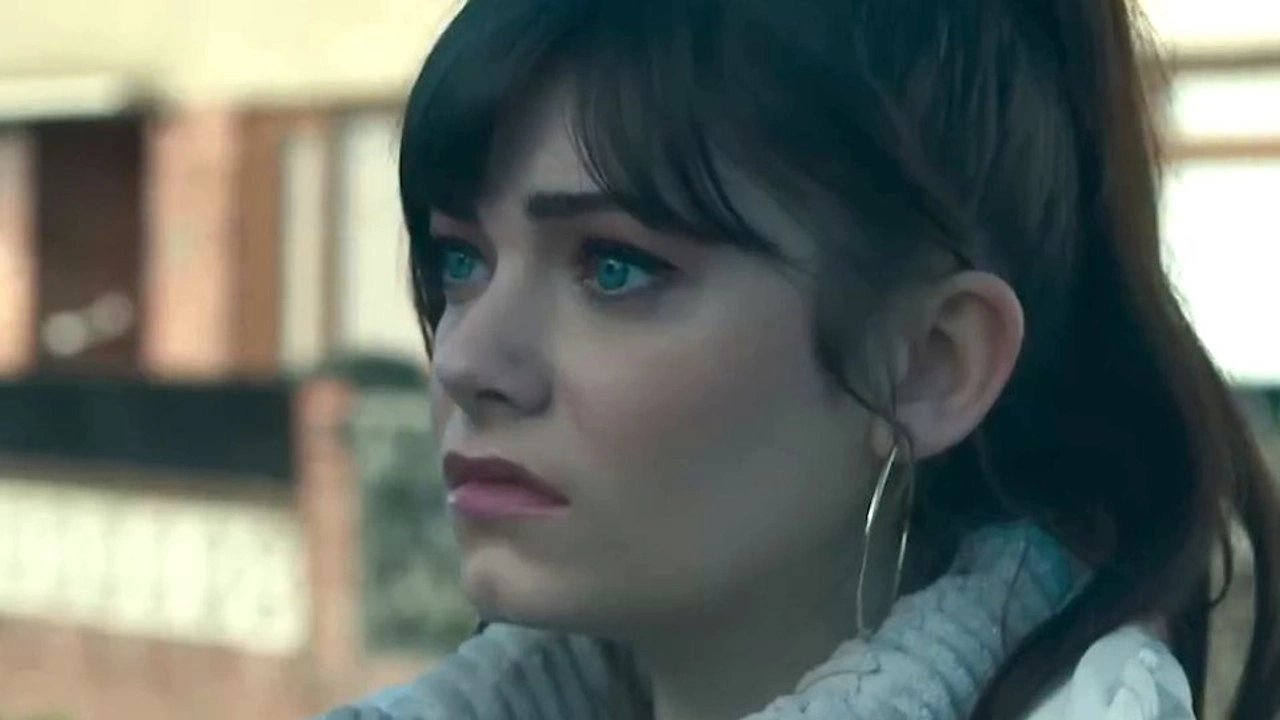
The town’s industrial past sits inside the film like an inherited injury. This is a place where work disappeared, institutions thinned out, and people learned to turn hardness into local dialect. The film’s use of Welsh deepens that specificity. The language carries bite, rhythm, profanity, and sudden tenderness. It gives Effi’s anger music, even when she is saying something spectacularly foul.
Moving the story from Cardiff to Welsh-speaking North Wales also changes its pressure points. The film becomes a study of cultural survival along with personal survival. It does not turn politics into speeches. The politics are in the bus stop, the nightclub, the hospital corridor, the grandmother’s patience running out. They are in the way everyone seems to know everyone else’s business, and nobody has enough power to change much of it.
Tragedy Without Marble Statues
The Iphigenia connection gives Effi o Blaenau its tragic architecture, yet Evans wisely keeps the myth under the floorboards rather than pinning it to every wall. Effi’s body and future become the price paid for decisions made elsewhere: austerity, military damage, class neglect, and a healthcare system stretched past human kindness.
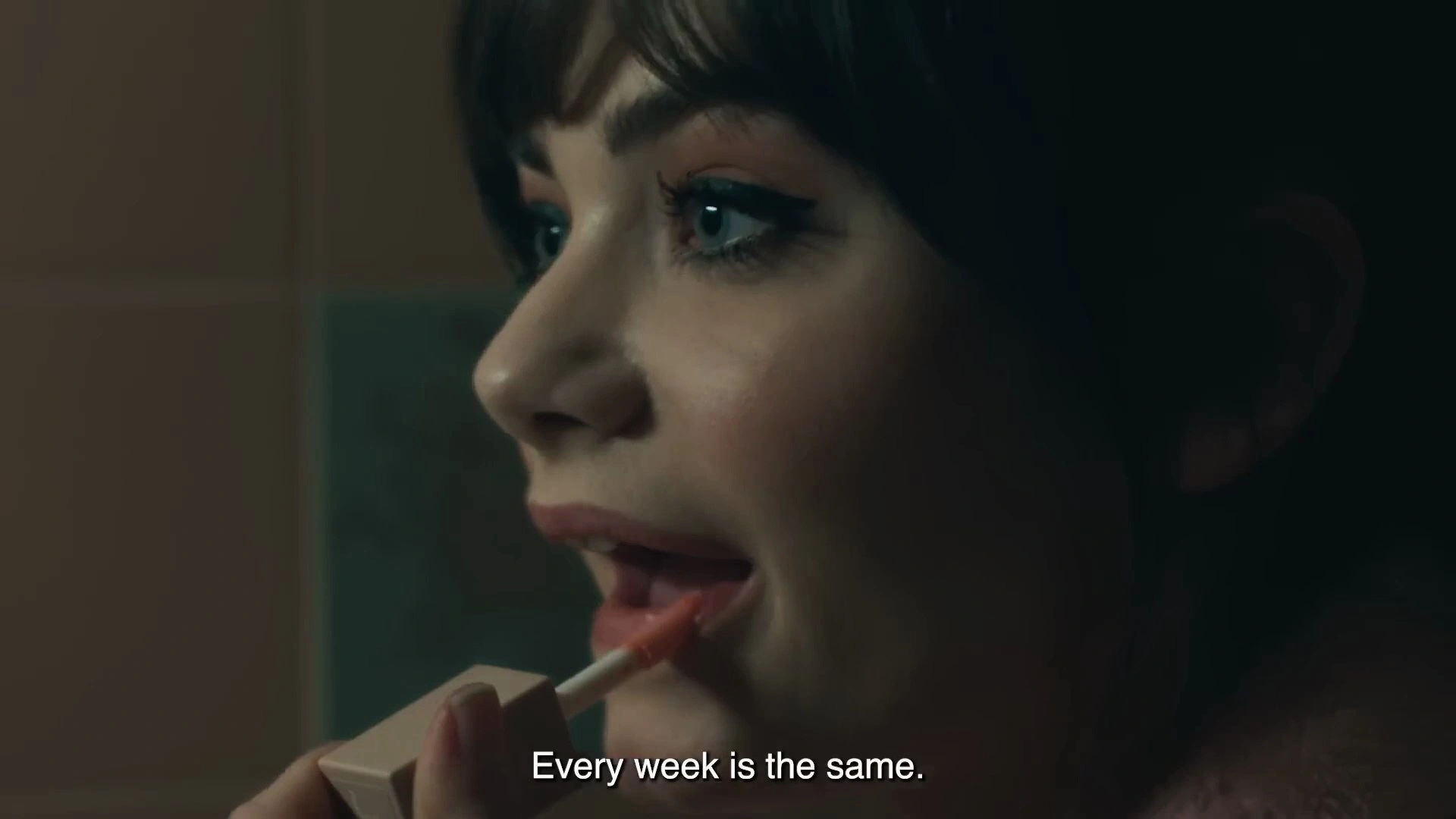
The film’s strongest dramatic choice is that it rarely gives us a clean villain. Lee behaves badly, yes, but the larger cruelty is structural. The hospital staff are not monsters. They are exhausted people inside a depleted machine.
That makes the hospital section painful in a specific way. Effi needs care, attention, and time. The system gives her procedure, delay, and emotional blunt force. The sequence can edge toward bluntness, and a few moments spell out her transformation with less trust in the audience than the film has earned. Social realism sometimes mistakes volume for precision. Here, the stronger scenes are the quieter ones, where Gwenllian’s face does the work a speech might have ruined.
Gwenllian is the film’s great engine. She moves from swagger to panic, from filthy comedy to open grief, from social media pose to exposed terror without making the shifts feel mechanical. Carys Gwilym gives Meg frustration and care in the same breath. Nel Rhys Lewis’ Leanne brings friendship that has clearly survived plenty of bad nights. Owen Alun gives Kev a bruised sweetness, and Tom Rhys Harries makes Lee believable as both escape fantasy and human disappointment.
Effi o Blaenau is at its sharpest when it refuses to tidy Effi into an inspirational figure. She is rough, alive, contradictory, and hard to love in the easy way. The film loves her anyway, which may be its most radical storytelling choice.
The Welsh-language drama Effi o Blaenau had its world premiere at the Glasgow Film Festival on March 3, 2026, and is set for general release in UK cinemas on June 19, 2026, with a television broadcast on S4C planned for later in the year. The film follows Effi, a fiercely independent young woman navigating poverty, a sudden pregnancy, and a strained local healthcare system in an isolated North Wales slate-mining town. You can catch this social-realist feature in theaters across the UK and Ireland during its theatrical run, or tune into the Welsh public broadcaster S4C for its streaming and television debut.
Full Credits
Title: Effi o Blaenau
Distributor: MetFilm Distribution, S4C
Release date: March 3, 2026 (Glasgow Film Festival), June 19, 2026 (UK Theatrical Release)
Running time: 90 minutes
Director: Marc Evans
Writers: Gary Owen, Marc Evans
Producers and Executive Producers: Branwen Cennard, Cat Cooper, Gwenllian Gravelle
Cast: Leisa Gwenllian, Tom Rhys Harries, Owen Alun, Nel Rhys Lewis, Carys Gwilym
Director of Photography (Cinematographer): Eira Wyn Jones
Editors: Elen Pierce Lewis
Composer: None Credited
The Review
Effi o Blaenau
Effi o Blaenau is a raw, sharply focused Welsh-language drama anchored by Leisa Gwenllian’s fearless performance. Marc Evans shapes Effi’s story with care, using place, language, and social pressure to expose a life boxed in by neglect. Some turns feel a little direct, yet the film’s emotional force rarely weakens. It is tough, intimate, angry, and humane.
PROS
- Outstanding lead performance from Leisa Gwenllian
- Strong sense of place and Welsh identity
- Emotionally powerful handling of class, healthcare, and sacrifice
- Sharp character writing with real moral complexity
- Cinematography that feels intimate without becoming exploitative
CONS
- A few dramatic beats feel overly obvious
- Some supporting characters could use deeper development
- The hospital material occasionally leans into blunt messaging
- Effi’s abrasiveness may test some viewers early on