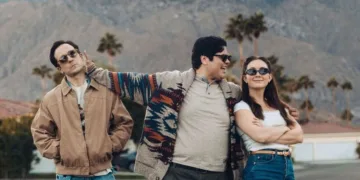

























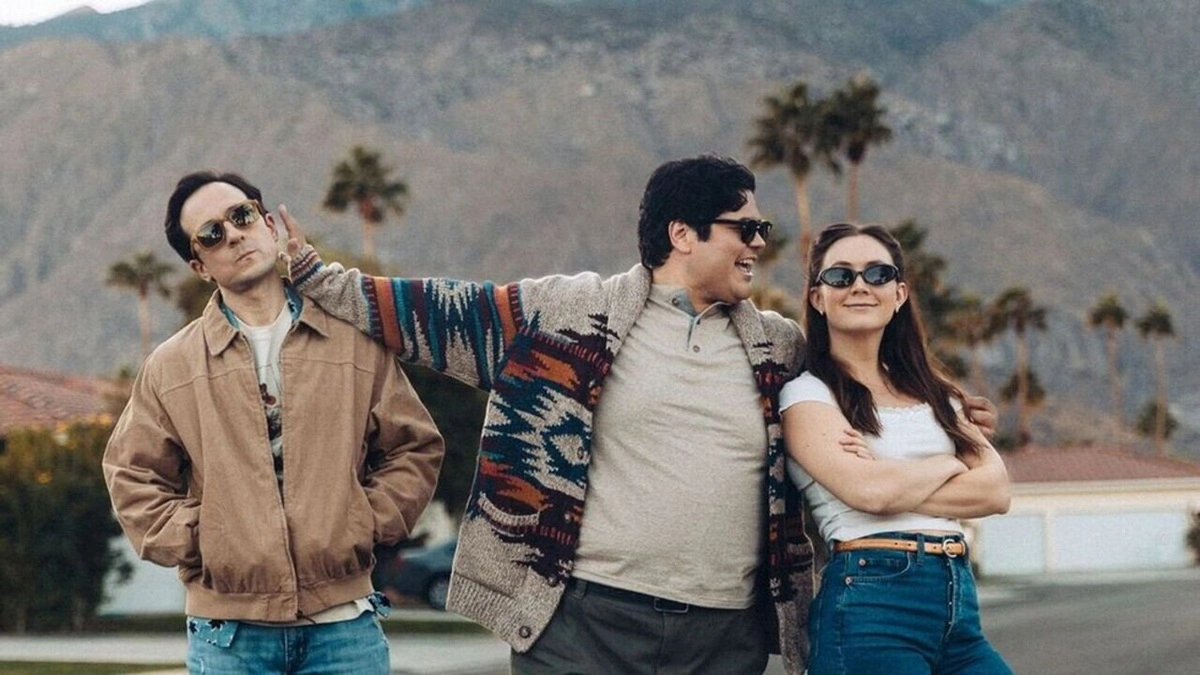

Alex Wall and Will Sterling’s That Friend belongs to a very American comic tradition: the road-adjacent disaster comedy where private discomfort becomes public spectacle. Henry, played by Josh Brener, wants a Palm Springs weekend with Penny, played by Billie Lourd. The plan promises romance, climate-controlled escape, and maybe a clean adult conversation about where their relationship is heading. Then Paul arrives.
Harvey Guillén plays Paul as the friend who treats every boundary like a locked door he can charmingly break. After his Joshua Tree plans collapse, he wedges himself into Henry and Penny’s trip, carrying a pack of drug-laced cigarettes called the “Magical Mystery Tour.”
Penny unknowingly smokes one, then hands the pack to Spencer, a passing Gen Z traveler bound for a bonfire. The film’s desert geography turns into a map of consequences, each stop asking how far loyalty should stretch before it becomes self-harm with better anecdotes.
The premise has instant recognizability. Across cultures, most people know the friend who never learned the difference between intimacy and access. What gives That Friend its American flavor is the way it stages that anxiety through mobility, substances, and the fantasy of escape. Los Angeles to Palm Springs becomes less a trip than a pressure chamber with snacks.
Paul, Henry, and the Performance of Maturity
Guillén gives Paul a flamboyant, needy charge that can be funny in small bursts. His body seems to enter a room before his judgment does. When Paul realizes the cigarettes have spread beyond Penny, Guillén plays the panic with a strange mix of guilt and theatrical self-preservation, like a man apologizing while still hoping everyone admires the story later.
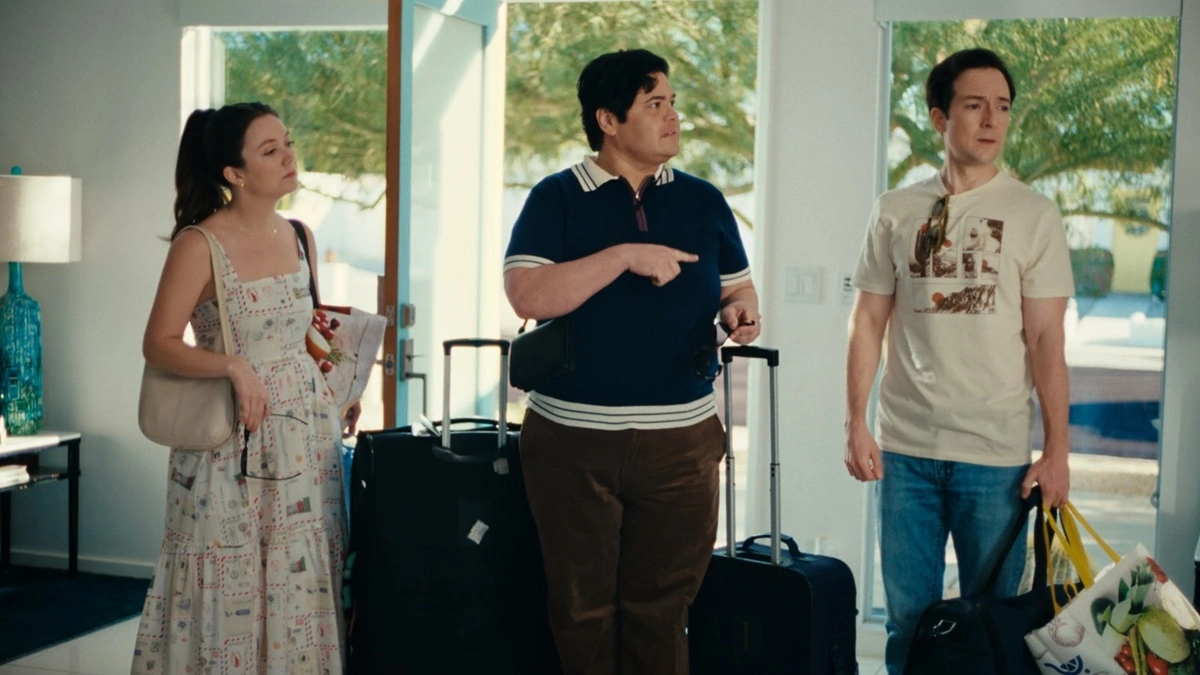
That performance is also the film’s biggest risk. Paul’s chaos depends on volume, raunch, and social obliviousness, and the movie often asks the audience to find exhaustion adorable. Some viewers will. Guillén locates a soft bruise under Paul’s messiness, the fear of becoming optional to someone who once made him feel essential. Yet several jokes rely on Paul saying too much, pushing too hard, or turning another person’s discomfort into his stage. That rhythm gets thin.
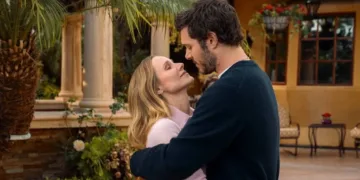
Brener’s Henry is more interesting because the film does not let him hide inside reasonableness. He looks at Paul with the weary disgust of a man who has decided adulthood means constant tasteful irritation. His relationship with Penny has its own imbalance, especially when her possible Miami job exposes how tightly Henry has wrapped himself around her future. Paul may be invasive, but Henry’s judgment has its own toxicity. The film works best when it sees friendship as a two-person failure: one man refuses to grow up, the other mistakes withdrawal for growth.
Lourd gives Penny a warmer register. She is patient without becoming passive, especially once the weekend starts revealing Henry’s evasions. Miles Gutierrez-Riley’s Spencer adds a looser comic spark, drifting through the plot like someone from a sharper, weirder desert movie.
Drug Comedy Without Enough Shape
The laced-cigarette plot gives That Friend its engine, and also its ceiling. The film keeps returning to people tripping, panicking, stumbling into strange encounters, and trying to contain damage that keeps multiplying. The desert setting helps. Open roads, vacation houses, bonfire culture, and Palm Springs leisure all make the chaos feel slightly sunburned, a farce sweating through its shirt.
The trouble is that the drug material often behaves like escalation without invention. Penny smoking before she knows what is inside the cigarette gives the story a proper jolt. Spencer taking the pack toward a bonfire raises the stakes cleanly. After that, too many gags lean on the same rhythm: someone is altered, someone yells, someone reacts with disbelief. The movie wants the woozy looseness of a stoner farce, but its best ideas are emotional, not chemical.
American buddy comedies often turn irritation into affection through ordeal. Planes, Trains and Automobiles lets annoyance peel back into loneliness. The Hangover uses absurdity as a mystery structure, with each discovery pushing the plot forward. That Friend has a smaller indie scale, which could have worked in its favor. Its mess feels closer to an actual disastrous weekend than a studio comedy machine. Still, the set pieces need sharper comic architecture. A joke about accidental dosing cannot simply repeat its premise at higher volume.
Friendship After the Party Ends
The strongest version of That Friend is hiding under the louder one. Beneath the drug trips and desert detours sits a precise question about adult friendship: what happens when the person who knows your old self becomes unbearable to your present life? Paul clings to history like a passport. Henry wants the moral credit of loyalty without the daily labor of care. Penny’s Miami opportunity then sharpens the issue, because Henry is being pulled toward a future he cannot fully control while Paul keeps dragging him toward a past he no longer respects.
That is where Wall and Sterling find their most truthful material. Outgrowing someone can feel virtuous from the inside and cruel from the outside. Paul’s worst behavior does not erase his hurt. Henry’s maturity does not make him kind. The film understands this tension in flashes, especially in the way Henry’s face tightens whenever Paul embarrasses him, less like anger than shame by association.
The ending resists the easiest reconciliation, which gives the film a tougher final taste than its broader comedy suggests. It asks the characters to accept damage rather than decorate it with a group hug. That choice has force, though the film has spent so much time on drug-fueled disorder that the emotional landing feels a little rushed.
That Friend has the material for a sharper comedy of American adulthood, where friendship, romance, mobility, and self-invention all collide in the desert heat. Too often, it settles for noise when the silence after a ruined weekend would have said enough.
The American independent comedy feature That Friend celebrated its world premiere at the Tribeca Festival on June 8, 2026, screening as part of the Spotlight Narrative program. The plot follows a man named Henry whose planned romantic weekend getaway to Palm Springs with his new girlfriend, Penny, escalates into unhinged chaos when his bombastic, party-animal best friend, Paul, unexpectedly crashes the trip. Because the project is fresh off its festival debut and currently represented by CAA Film Sales, it has not yet secured a wide commercial streaming or theatrical release, meaning audiences can track its availability at upcoming regional film showcases.
Where to Watch That Friend (2025) Online










Full Credits
Title: That Friend
Distributor: CAA Film Sales
Release date: June 8, 2026
Running time: 87 minutes
Director: Alex Wall, Will Sterling
Writers: Alex Wall, Will Sterling
Producers and Executive Producers: Will Sterling, Alex Wall, Ryan Tillotson, Billie Lourd, Josh Brener, Harvey Guillén, Retta, Troy Hoffman, Stephen Markley, Levi Chambers
Cast: Harvey Guillén, Josh Brener, Billie Lourd, Miles Gutierrez-Riley, Neil Brown Jr., Retta, Lauren Lapkus, Rose Abdoo, Mary Holland
Director of Photography (Cinematographer): Michael Amico
Editors: Josh Land, Kristi Lugo
Composer: Dillon Baldassero
The Review
That Friend
That Friend finds real discomfort in the friendship that survives past its healthiest point, with Harvey Guillén, Josh Brener, and Billie Lourd giving the desert farce a human pulse. Its problem is comic shape: the laced-cigarette chaos repeats itself too often, turning social panic into noise. Wall and Sterling are sharper when they study Henry’s judgment, Paul’s neediness, and Penny’s future than when they chase drug-trip gags across Palm Springs. A messy, observant comedy with too many blunt jokes.
PROS
- Strong friendship premise
- Guillén’s wounded comic energy
- Brener’s tense, judgmental Henry
- Lourd gives Penny warmth
- Ending resists easy comfort
CONS
- Repetitive drug-trip gags
- Paul can become grating
- Emotional landing feels rushed
- Uneven comic timing
- Farce often gets too loud