





























Mud, metal, birds, fog, and rusted military architecture become the grammar of an alien report in Pablo Behrens’ London’s Last Wilderness, an experimental documentary that turns the Thames estuary into a speculative ruin without moving it an inch from reality. The conceit is simple and risky: an unseen extraterrestrial observer studies the estuary from above and from the water, sending back clipped reports on coordinates, altitude, speed, and signs of apparent catastrophe.
The film’s trick is one of defamiliarisation. A stretch of Britain often treated as industrial leftover space becomes a zone of mystery, part habitat, part dump, part battlefield, part prophecy. Behrens does not need to invent a future apocalypse. He finds enough evidence in ship graveyards, wartime forts, poisoned waters, and concrete defences already standing in the present tense. That is also where the film’s tension lives. Its images are frequently eloquent. Its words keep interrupting them.
The Estuary as Alien Evidence
The strongest passages in London’s Last Wilderness belong to the drone photography. From above, the Thames estuary loses its usual civic function and becomes a scarred natural system, full of strange correspondences between animal life and human debris.
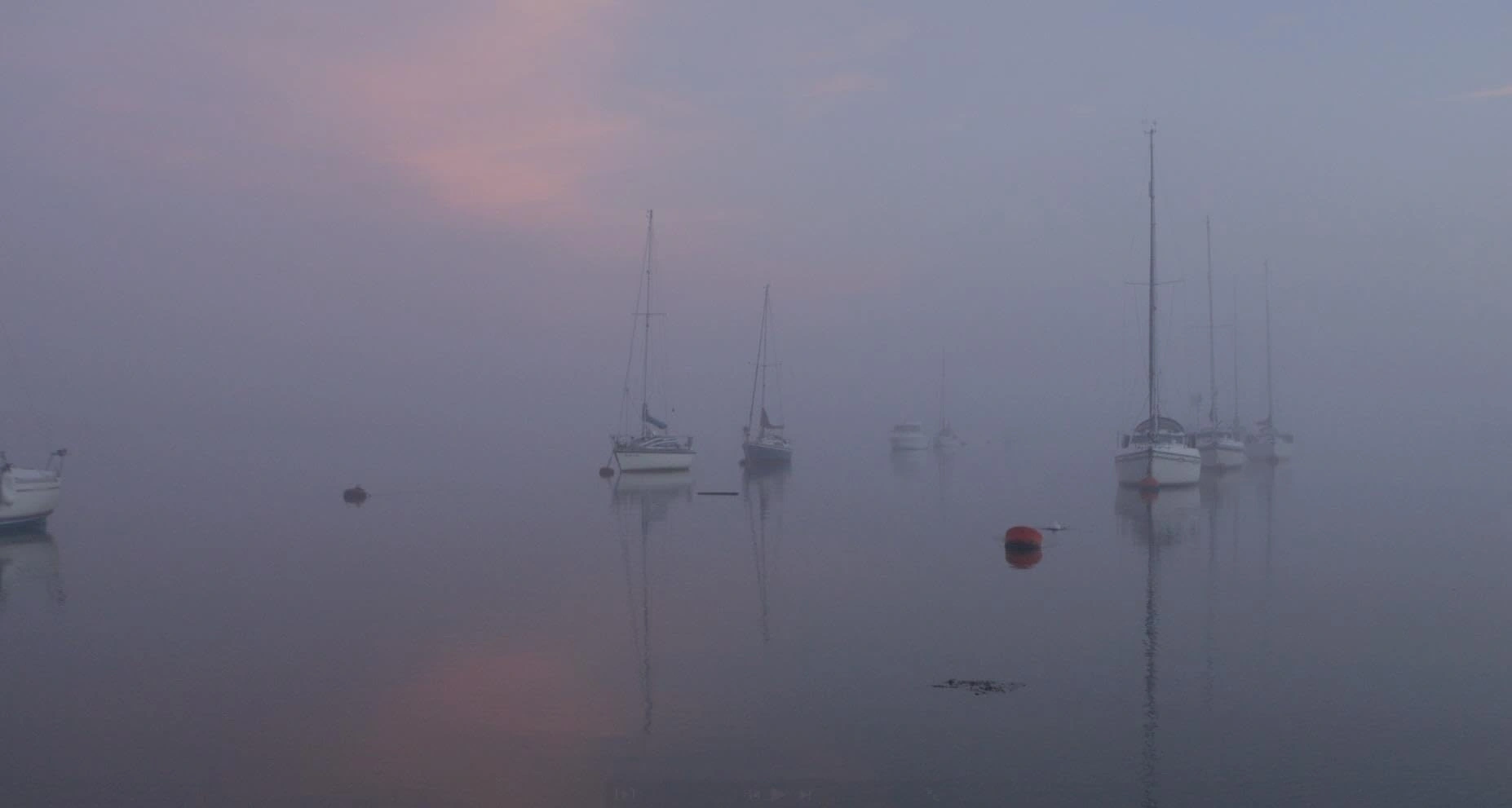
Birds pick through oozing mudflats with calm precision. Abandoned hulls sit in the water like ceremonial objects from a culture that forgot its own rituals. Fog softens pylons and industrial silhouettes until they look less built than exhumed.
Behrens has a sharp eye for spaces that carry history without arranging themselves neatly into heritage. The Maunsell sea forts off the Kent coast are the film’s great visual coup: rusted wartime towers on thin steel legs, absurd and menacing, like walking machines that stopped mid-invasion. They require no embellishment. Seen through the alien gaze, they already contain war memory, British eccentricity, and science-fiction dread.
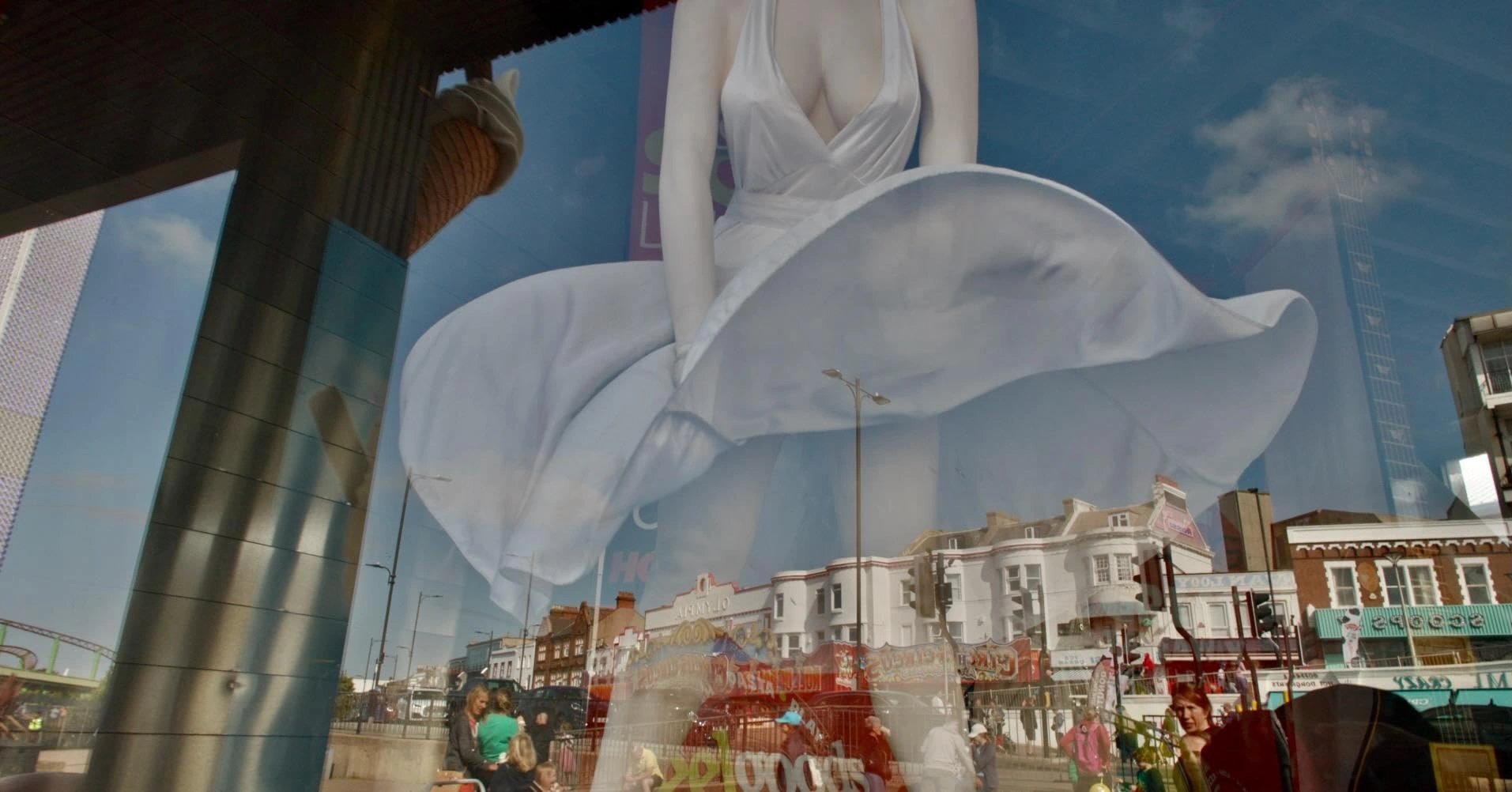
The shoreline images work in a quieter register. Redbrick housing estates, exhausted fairground rides, and sunburnt teenagers splashing in suspect water pull the film back toward the living present. These moments are valuable because they puncture the fantasy. They also expose a weakness in the frame. Once ordinary people enter the image, the alien premise begins to wobble. The estuary becomes local again, stubbornly social, resistant to being reduced to post-human scenery.
A Clever Device That Talks Too Much
The alien-report structure gives Behrens a useful way to read familiar geography as archaeology. Coordinates flash across the screen. Scratchy mission-control voices speak across distance. Typed observations appear like field notes being assembled in real time.
The explorer repeatedly misreads wrecks, forts, burial sites, and industrial waste as evidence of a centuries-long war, and the mistake carries a dark satirical charge. Human damage, viewed from outside, looks less like progress than continuous conflict.
The problem is that the device keeps explaining its own discovery. Some of the captions arrive with a flatness that breaks the spell, especially when the explorer spells out what the structures might mean. The film wants the language to sound estranged, clinical, and awed, yet several lines land as over-written or under-imagined. Calling London “The Citadel” is the kind of flourish that sounds grand on paper and smaller once placed over actual footage of the city.
The voice work compounds that stiffness. Marcus Darivas gives the alien observer a slow, sombre monotone that suits the early passages, where mist and wreckage do much of the dramatic work. Repeated across the film, the performance settles into one emotional temperature. Dread becomes a drone of its own. The female voice, used as a distant counterpart, suggests a wider mission, yet the exchange rarely develops into a richer dramatic relationship. The film is most persuasive when the alien seems genuinely baffled rather than poetically certain.
Sound, Pollution, and the Politics of Looking
Bartosz Szpak’s score, joined with the sound design by Max Behrens and Brendan Feeney, gives the estuary a presence that the narration sometimes flattens. Radio beeps, signal noise, and unsynchronised commentary create the sense of a transmission passing through water, weather, and corrupted memory. Over images of wrecks and fog, the soundscape makes the Thames feel less like a location than a receiver, absorbing the violence of industry, war, dumping, and civic neglect.
That environmental charge gives London’s Last Wilderness its cultural bite. The film arrives at a time when British water safety has become a public scandal rather than a niche concern, and Behrens’ estuary looks like a ledger of what modern life prefers to send downstream. The shots of teenagers in the water are almost comic in their casualness, then faintly horrifying. The river has been normalised as both playground and disposal route.
The wildlife could have carried more of the film’s argument. Migrating birds, mudflat creatures, and tidal rhythms suggest a life system enduring human carelessness without becoming sentimental evidence of renewal. Behrens notices them, yet his alien frame is more fascinated by ruins than by survival. That imbalance matters because the title promises wilderness, and the film often treats wilderness as atmosphere rather than ecology.
At roughly an hour, the film still strains against repetition. Drone flight, ominous report, typed coordinate, ruin, dread: the pattern becomes easy to anticipate. Yet the best images resist that narrowing effect. A red sky behind industrial structures. A fort standing like a failed god. Fog turning the estuary into an unfinished thought. In those moments, London’s Last Wilderness finds a severe beauty in a place Britain has trained itself not to see.
The British environmental documentary London’s Last Wilderness rolled out across select United Kingdom cinemas on April 24, 2026, before launching globally on digital streaming and premium video-on-demand platforms via Random Media on May 26, 2026. Directed and shot by Pablo Behrens over the course of four years, the experimental eco-thriller adopts a science fiction framework by capturing the vast, untamed terrain of the Greater Thames Estuary entirely through the perspective of an alien visitor exploring a seemingly post-apocalyptic civilization. The unscripted footage moves seamlessly from land, sea, and sky to expose the delicate balance between industrial cargo routes, historic sea forts, and the vulnerable regional ecosystems currently fighting severe climate threats and urban pollution.
Where to Watch London’s Last Wilderness (2026) Online




Full Credits
Title: London’s Last Wilderness
Distributor: Random Media, Burning Films Ltd.
Release date: April 24, 2026 (United Kingdom Cinema Release), May 26, 2026 (Digital Streaming Release)
Rating: 12A (United Kingdom)
Running time: 61 minutes
Director: Pablo Behrens
Writers: Pablo Behrens
Producers and Executive Producers: Pablo Behrens, Emilio Oribe, Eduardo Comas, Jaime Ferrer, Ulises Sabato
Cast: Marcus Darivas, Anastasia Pillar
Director of Photography (Cinematographer): Pablo Behrens, Alex Ochman, Matt Chapman
Editors: Pablo Behrens, Alex Ochman
Composer: Bartosz Szpak, Ms Kumar
The Review
London’s Last Wilderness
London’s Last Wilderness turns the Thames estuary into a haunted cultural x-ray, finding war memory, ecological neglect, and eerie beauty in mudflats, wrecks, forts, fog, and poisoned water. Pablo Behrens’ images often speak with severe force, especially around the Maunsell sea forts and mist-covered industrial ruins. The alien narration, with its stiff voice work and over-written captions, sometimes weakens the mystery it means to deepen. Still, the film gives an ignored landscape a strange, accusing gaze.
PROS
- Striking drone photography
- Haunting estuary imagery
- Strong ecological charge
- Eerie sound design
- Memorable Maunsell forts sequence
CONS
- Heavy-handed narration
- Stiff alien voice work
- Repetitive middle stretch
- Wildlife underused
- Human scenes weaken the frame







