



















![Kingdom Hearts Collection [I-III] Review](https://gazettely.com/wp-content/uploads/2026/10/Kingdom-Hearts-Collection-I-III-1-360x180.webp "Kingdom Hearts Collection [I-III] Review: KHII Holds Steady as Newer Entries Fluctuate 40")
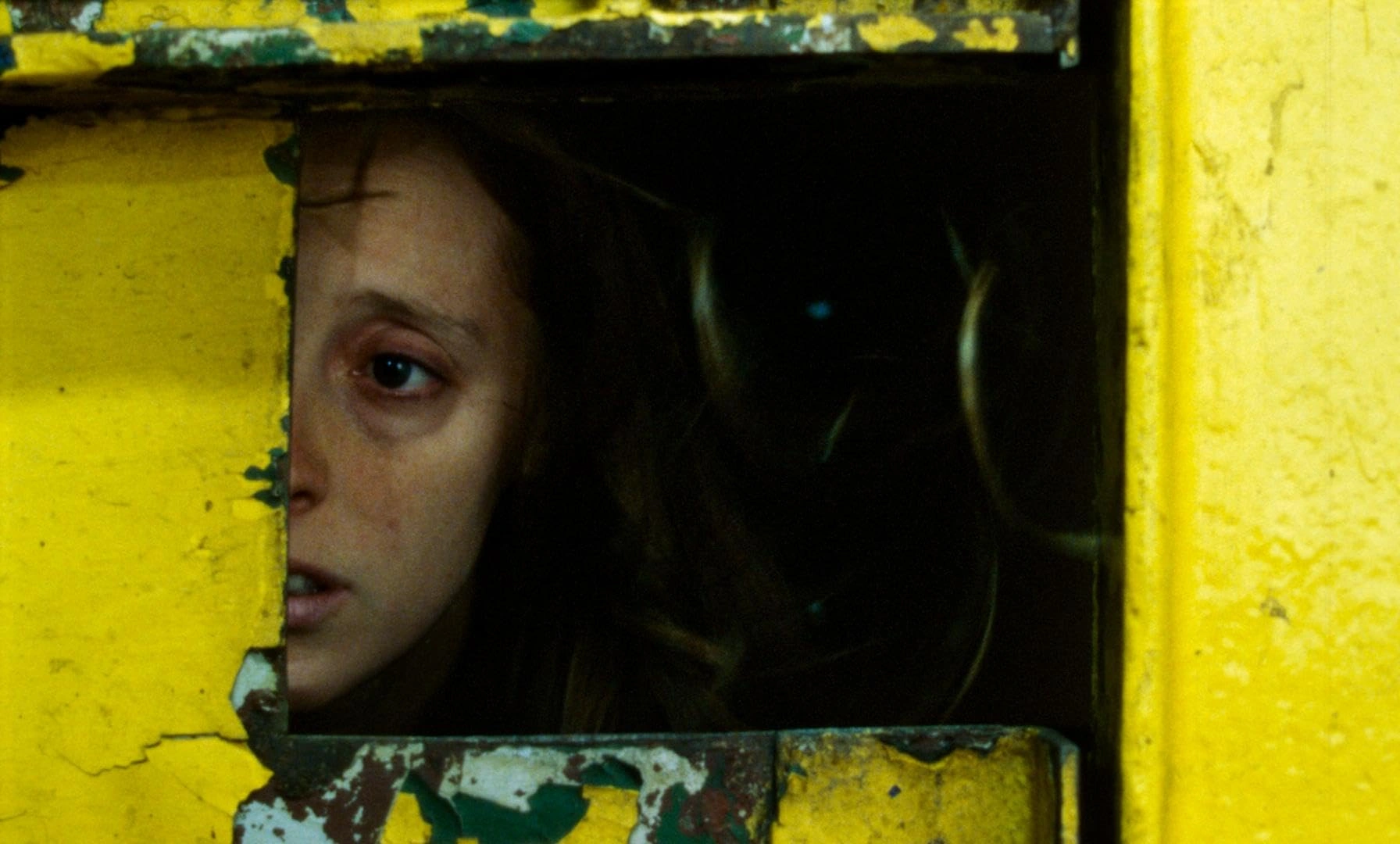

The wind in Tierra del Fuego does a great deal of acting before any person gets a proper scene. Sofía Petersen’s Olivia understands that isolation can be built from sound before plot, from a room before dialogue, from a hut that seems less like shelter than a small geometric spell placed against the end of the world.
Petersen’s first feature follows Olivia, played by Tina Sconochini, a young woman living with her aging father in a small A-frame home near the mountains. He leaves each day for his job at a slaughterhouse. She sleeps through daylight, collects insects, pins them to cards, and moves through domestic routines with a childlike distance from ordinary time. Their life is narrow, private, and strange. Then the father disappears, and Olivia goes looking for him.
That plot description makes the film sound tidier than it is. Olivia is less a mystery than a series of exposures. A woman who has been kept inside a tiny world steps into a larger one, and the larger one offers no clear instructions. For a story surgeon, this creates the film’s main problem and its main strength. The narrative spine is simple. The vertebrae are harder to locate.
A House Built From Ritual
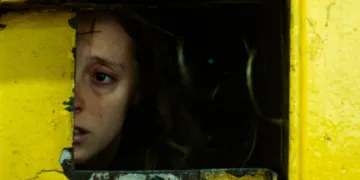
The opening stretch is the film’s most controlled passage because Petersen makes Olivia’s confinement legible before explaining anything about her. Close-ups of spoons, watch faces, insects, fire, and Olivia’s eye turn the hut into a place where every object has been over-handled by solitude. Candlelight softens the walls, tea becomes a ceremony, and the father’s daily exit carries the weight of a rule neither character needs to name.
Sconochini plays Olivia with a physical stillness that keeps the performance from becoming a puzzle box. She does not give us a tidy diagnosis. Olivia sleeps through much of the day, struggles with time, and often seems to respond to the world a second late, as if sound must travel farther to reach her. The script’s refusal to define her condition is useful at first. It lets her behavior belong to the film’s strange logic rather than a medical label.
The father, played by nonprofessional Dario del Carmen Haro Santana, is gruff without becoming cruel. His conversations with Olivia about the end of the world, freezing, and fire are bleak in a matter-of-fact way, which may be the most convincing kind of bleakness. The film does not sentimentalize their bond. He is caretaker, jailer, parent, habit. Sometimes the difference is academic.
This early section works because the domestic world has rules. Olivia sleeps. The father leaves. The wind presses against the house. The insects are pinned in place. Petersen knows exactly where everyone belongs, which makes the later disruption feel like a structural break rather than a routine plot turn.
The Search That Refuses to Behave Like a Search
Once Olivia’s father vanishes, the film moves into looser, stranger territory. Olivia goes to the slaughterhouse, yet she does not search in the ordinary dramatic sense. She does not interrogate workers, demand help, or push the story forward with visible urgency. She drifts through the building like someone who has entered the wrong dream and decided not to wake anyone.
That choice is faithful to the character, but it costs the film momentum. A protagonist can be passive and still pull a story into shape through desire, fear, or resistance. Here, Olivia often seems acted upon by the film’s set pieces. The workers assemble to tell her that the past is the past, a choral gesture that turns the slaughterhouse into folk theater. It is striking, but it also points to the film’s habit of substituting ritual for progression. The scene lands as an image, then declines to become a turn.
The slaughterhouse material is the film’s most difficult creative decision. Petersen shows cows herded, stunned, and killed in graphic detail. The footage is too extended to function as background texture. It becomes a thesis statement, then keeps talking after the point has been made. The image of Olivia’s white boots marked with blood is far stronger because it compresses the idea: innocence, contamination, initiation, and violence placed in one frame. That is cinema doing the work. The prolonged killing does some of the work, then starts leaning on shock.
Mari, played by Carolina Tejeda, gives the middle section its clearest human counterweight. Her tenderness toward Olivia can be read several ways: friendship, protection, desire, substitute family. The ambiguity fits a film about a woman who has never been given clean categories for love. Their intimate scenes work best when Petersen allows small gestures to carry the bond, rather than pressing the moment toward symbolic importance.
Episodes Without a Spine
The film’s middle passage becomes a picaresque of odd encounters: slaughterhouse workers breaking into song on a bus, a midnight swim, an artist wrapped in a strange final ritual, and a bar scene where Olivia dances alone to “Alma de diamante” by Spinetta Jade. Each scene has a clear surface identity. Together, they remain stubbornly episodic.
The bus scene is one of Petersen’s sharper inventions because it briefly gives the working world a collective voice. These men are not simply background figures from an industrial setting. They become a chorus, and the song turns ordinary transit into a passage between states of being. It is absurd, solemn, and awkward in a productive way.
The bar dance is even better because Sconochini finally lets Olivia’s body speak in a language unavailable to her elsewhere. The men in the room watch with middle-aged nonchalance, which makes the scene stranger than if they had reacted with open shock. Olivia’s movement is not polished liberation. It is effort, release, and social misfire at once. The moment has confidence because it lets the performance carry the emotional shift without asking dialogue to explain it.
Still, the film has a recurring problem with duration. Several scenes continue past their dramatic charge. Slow cinema needs pressure inside the stillness. At its best, Olivia has that pressure: the hut, the wind, the blood on the boots, the dance. At weaker points, the film mistakes extension for depth. The difference is not pace alone. It is dramatic accumulation. A long take can tighten a scene. It can also leave the actors stranded in artful weather.
16mm Beauty and Narrative Fog
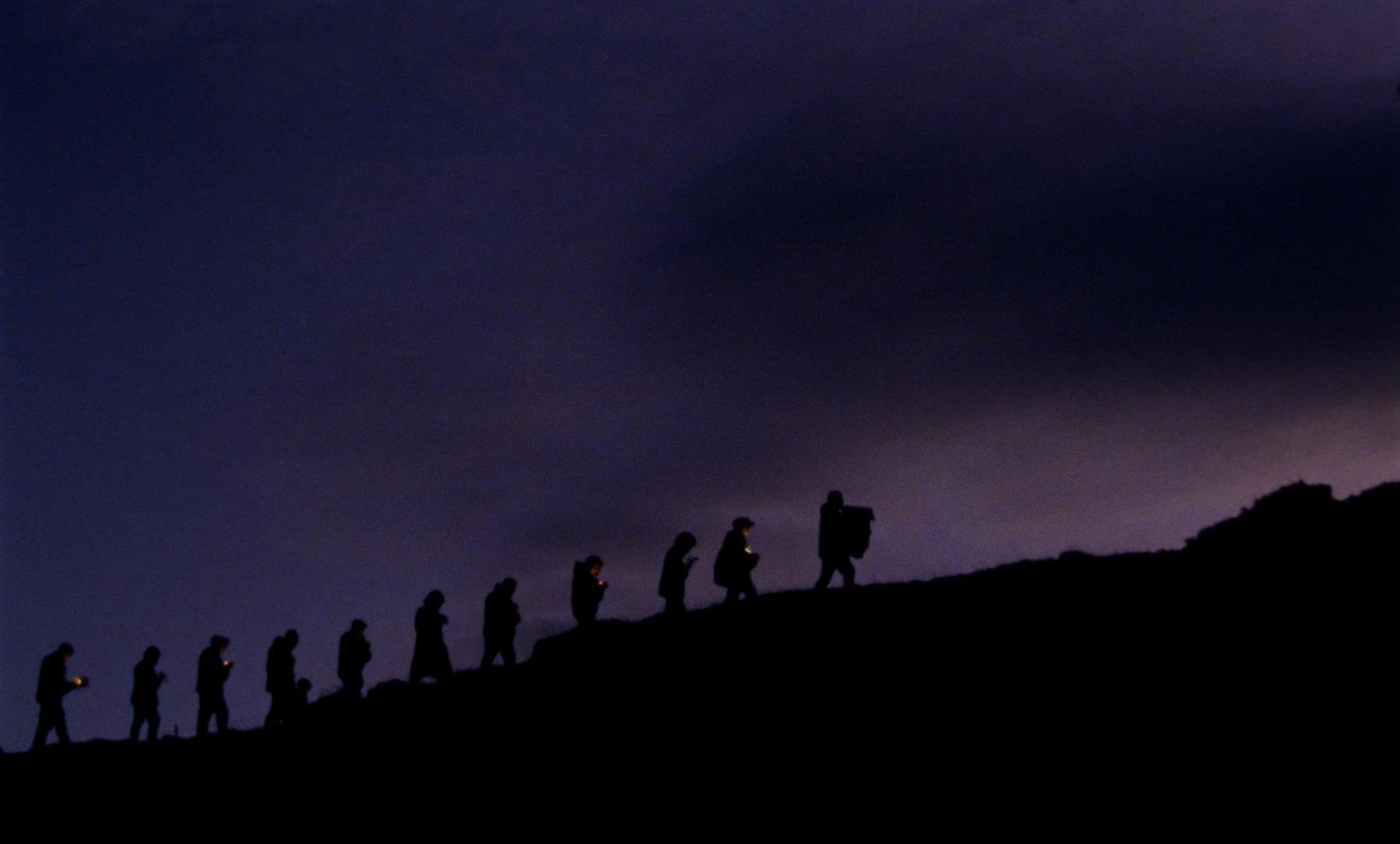
Owain Wilshaw’s 16mm Kodak Ektachrome cinematography gives Olivia its most reliable structure. The early images carry deep blues, oranges, candlelit interiors, and dense shadows, making the hut feel mythic without turning it decorative. Later daylight scenes shift toward a bleached harshness, as if the world outside Olivia’s home has drained the color from safety.
Petersen and Wilshaw are especially good at using light as a story cue. The house feels enclosed because the darkness gathers around it. The slaughterhouse feels exposed because the space has nowhere to hide its violence. The fields and roads of Tierra del Fuego are photographed less as scenic grandeur than as an open system Olivia cannot read.
Sound works with similar precision. Wind, thunder, silence, and Utsav Lal’s humming score create an atmosphere of loneliness that arrives before the film names grief. The score does not push emotion so much as hover near it. That restraint matters, since the script often holds Olivia at a distance.
The craft is impressive. The storytelling is less secure. Petersen has a strong eye for images that suggest psychic states, but she is less persuasive at building those images into an evolving arc. Olivia leaves the hut, enters the slaughterhouse, meets Mari, encounters rituals, dances alone, and keeps moving through a world that has already decided to be opaque. Some viewers will find that opacity hypnotic. Others will feel the film hibernating inside its own gloom, waiting for meaning to arrive with a flashlight and a clipboard. It never does. That may be the design. It is still a risk.
Olivia is severe, beautiful, and often frustrating, with a central performance that gives its silences a fragile human shape. Petersen’s gift for mood is undeniable, especially in the opening domestic passages and the later dance sequence. Her control of narrative rhythm is less certain. The film leaves behind images that linger: an insect pinned to card, blood on white boots, a woman dancing alone while the room refuses to change for her. That is enough to mark Petersen as a filmmaker with a real cinematic eye. It is not always enough to carry two hours of grief through the wind.
The psychological thriller Olivia originally completed production under Bruised Productions and Devil’s Breath Films before securing global digital distribution through TriCoast Entertainment. The dark, suspenseful feature made its official streaming debut on platforms including Amazon Prime Video and Apple TV on April 17, 2026. The plot centers on a former child prodigy cellist diagnosed with Dissociative Identity Disorder (DID) who is kept pathologically isolated by her controlling husband and therapist on a remote, desolate island. As his psychological manipulation intensifies, her fragmented alternate personalities must work together to find a way to break free from his dangerous grip.
Full Credits
Title: Olivia
Distributor: TriCoast Entertainment, Prime Video
Release date: April 17, 2026 (United States Streaming Release)
Rating: 16+
Running time: 87 minutes
Director: Felipe Morell
Writers: Felipe Morell
Producers and Executive Producers: Steve Brazil, Felipe Morell, Pasha Patriki
Cast: Sebastian Spence, Sara Mitich, Dianne Aguilar, Gwendolyn Dashnay, Gary Brennan
Director of Photography (Cinematographer): Pasha Patriki
Editors: Mike Gallant, Raul Kingtai
The Review
Olivia
Olivia has a real cinematic eye and a fragile, committed performance from Tina Sconochini, but its story often loses shape inside its own rituals. Sofía Petersen builds unforgettable images, from blood on white boots to Olivia dancing alone in a bar, yet the film’s long stretches of opacity and graphic slaughterhouse footage strain its emotional design. A severe, memorable debut, and a frustrating one.
PROS
- Tina Sconochini’s fragile lead performance
- Striking 16mm cinematography
- Strong opening domestic atmosphere
- Memorable bar dance sequence
- Precise use of wind and silence
CONS
- Repetitive pacing
- Thin narrative spine
- Graphic slaughterhouse footage overextended
- Symbolism sometimes stalls the story
- Olivia often feels too passive