





























A psychiatrist tearing up his notes at a patient’s request is a tiny gesture of professional courtesy until James Tucker turns it into a trap. Basic Psych, directed by Melissa Martin, understands the thriller value of a private room where one man talks and another man must decide how much danger the words contain. That setup belongs to a long American tradition of profession-based suspense, where law, medicine, policing, and family duty collide in offices with tasteful lamps and bad locks.
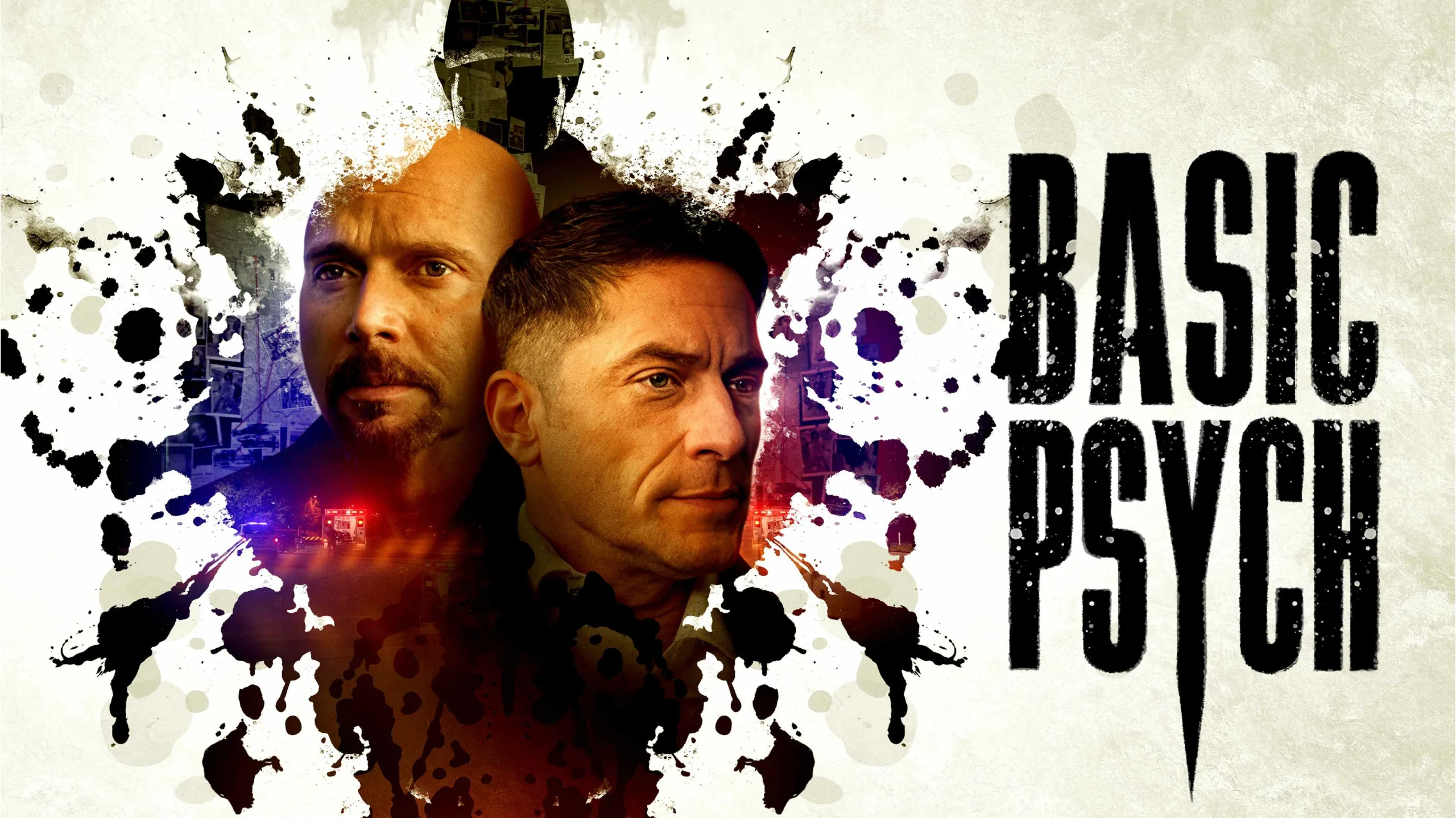
The film begins on Halloween night in suburban Pennsylvania, with Dr. Eugene Mallo handing out candy before a hooded gunman steps inside and kills him. From there, the story shifts to Dr. Stuart Prince, played by Michael Cerveris, a psychiatrist with a glass-artist wife, Sisi, and a daughter, Reagan, who needs her father’s advice for a school journalism project. His new patient, David Conrad’s Dan Riviello, pays in cash, refuses written notes, and claims responsibility for the Oakland Park murders.
This is where Basic Psych first pretends to be a confidentiality thriller. Stuart hears a confession, suspects further violence, and faces the strict professional limits around reporting a patient who admits past crimes without naming an immediate target.
The film makes those rules part of the suspense. It is less interested in courtroom realism than in the moral vanity attached to expertise. Stuart believes he can handle damaged men because he has done it before with Carl Clemons, a killer who has become a functioning bar owner. The movie then asks how thin that confidence becomes once the threat steps outside the office.
Two Fathers in the Same Dark Room
The film’s strongest structural idea is the mirroring of Stuart and Dan through fatherhood. Stuart cooks breakfast, reassures Reagan, and performs domestic steadiness with the clean rhythm of a man who knows he is being watched by his own idea of virtue. Dan arrives as the obvious mess: angry with his ex-wife Wendy, frightening his daughter Carly with bursts of temper, and wearing paranoia like a second coat. The plot gradually shifts those positions. Dan starts to gather himself. Stuart starts to scatter.
Cerveris plays Stuart’s control with useful blankness. In the early therapy sessions, he listens to Dan with the detached posture of a man trained to absorb instability without absorbing blame. Later, that same stillness becomes suspect. His calm reaction to danger, his self-prescribed pills, his break-ins, and his choice to hire Alvin Eggers to “solve” his problem all begin to look less like desperation and closer to exposure.
Conrad’s Dan is a rougher instrument, yet the roughness helps. In the office scenes, his twitchy defensiveness makes him easy to accuse. In scenes with Carly, he reveals something warmer and damaged, which complicates the film’s central assumption.
His use of aliases, his movement through psychiatric lectures, and his connection with student Hillary Baseman make him look like a predator orbiting Stuart’s life. The trick is that the film counts on the audience recognizing the type too quickly.
Siena Goines gives Sisi a charge the film badly needs. The home studio, the glasswork, and the later blowtorch confrontation let her occupy danger physically rather than waiting for men to explain it. Reagan and Carly, by comparison, can feel stiff in scenes meant to soften their fathers. The idea is clear, yet the delivery sometimes lands flat.
A Familiar American Package
For all its hidden machinery, Basic Psych looks and sounds like a modest cable thriller, the kind of American genre object built for living rooms rather than dark auditoriums. That is not an insult. The film’s plainness becomes part of its disguise.
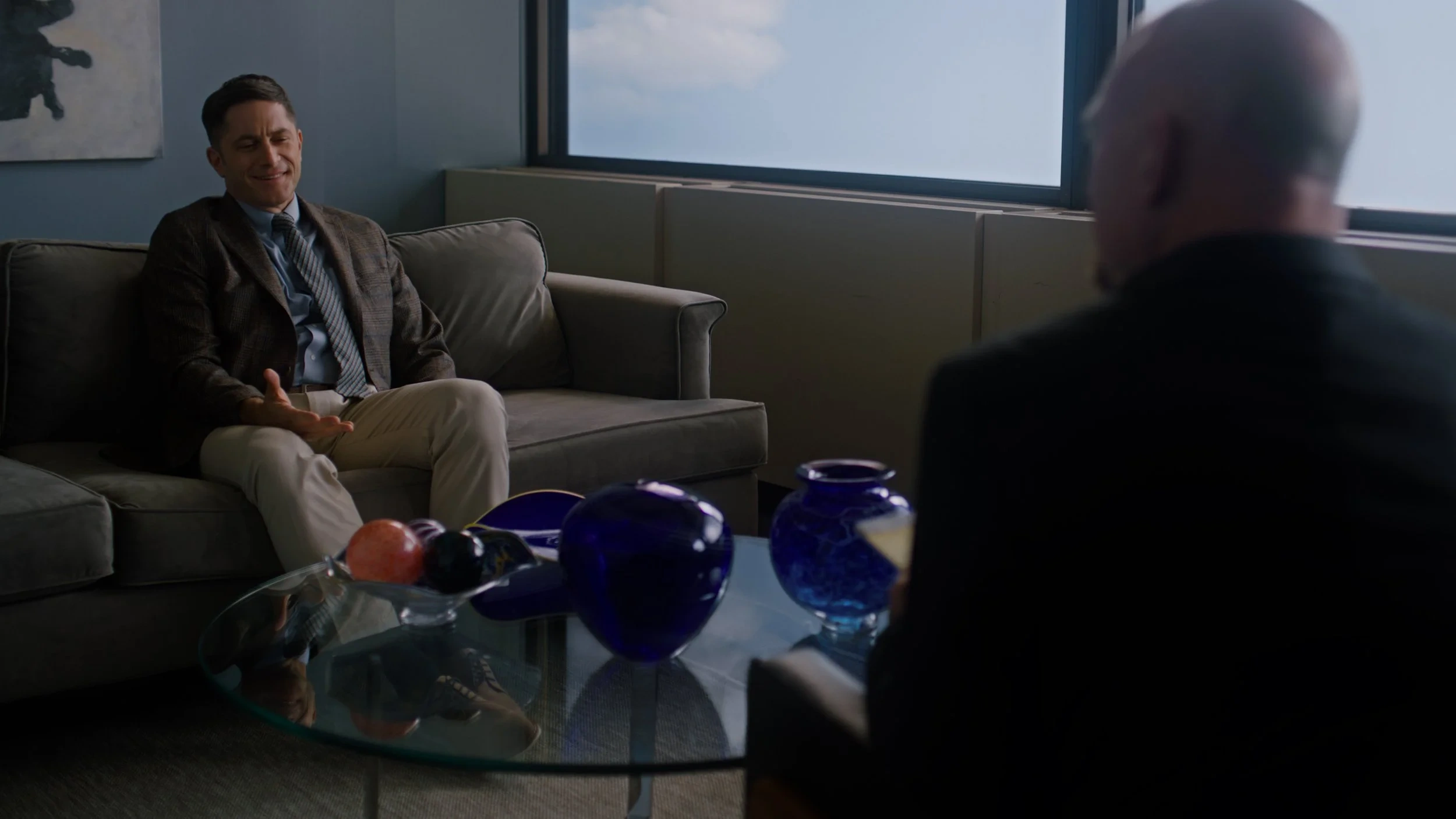
Jeff Garton’s cinematography favors steady setups over expressive unease, and Tom Dubensky’s editing uses dip-to-black and crossfade transitions that make the film feel closer to episodic television than cinema. The visual language is direct, sometimes too direct, with night scenes that can become muddy on a small screen.
Melissa Martin’s direction is strongest during sudden violence: the Halloween shooting, the brief kills that keep the psychiatrist-murder pattern alive, and Sisi’s confrontations with Dan. She does not turn the frame into a puzzle box. She lets Tucker’s script do that work. This choice keeps the film from feeling visually overdesigned, though it also leaves some scenes with a flatness that the story has to fight through.
Robert Traugh’s score is harder to defend and easier to understand. It pushes feeling too insistently, telling the audience when to tense up and when to suspect someone. Yet that overstatement has a secondary use. It lulls the viewer into reading the film as a simpler chase between a sane doctor and a dangerous patient. The music becomes a fake map, loud enough to distract from the road.
That fake map is very American in its anxieties. The respectable family man, the disturbed outsider, the professional code, the gun, the house under threat: the film arranges familiar cultural objects and then swaps their moral labels. It has the shape of a “protect your family” thriller, yet its nastier interest lies in how easily protection becomes performance.
The Twist and the Loose Screws
The final reveal works because the film plants its evidence without polishing the whole machine. Stuart’s near-affair with Hillary, his concealed violence, his secret medication, and his eerie poise around danger all gain new weight after the mystery is explained. The film invites a second viewing less through elegance than through embarrassment. The clues were there. The wrong man looked guilty in the right way.
The explanation, though, arrives in a rush. Some viewers may need to rewind to track the exact arrangement of aliases, murders, motives, and cover stories. Other seams remain visible: characters recover too quickly from burns, a second-story fall, and gunshot wounds; obvious conversations are delayed for plot convenience; the reporter Traci Richter often connects dots already visible elsewhere; and the repeated lewd remarks aimed at or about underage girls feel like blunt villain signage.
Still, Tucker’s screenplay has a mean little gift for using genre assumptions against the viewer. Basic Psych may wear the clothes of a weekend rental, with uneven support work and a television-grade finish, but it knows how to misdirect. Its cheapest surfaces hide its cruelest joke: the sane doctor was always the performance, and the performance was good enough to fool the room.
Basic Psych carries the plain clothes of an American cable thriller, then uses that modest surface as camouflage for a sharp act of misdirection. Melissa Martin’s film has visible seams: flat visual passages, rushed explanation, and side characters that serve the machinery too openly. Yet Michael Cerveris, David Conrad, and Siena Goines keep the pressure alive, and James Tucker’s script knows how to turn genre habit into a trap. Cheap room, good trick.
Where to Watch Basic Psych (2025) Online









Full Credits
Title: Basic Psych
Distributor: Film Movement, Filmhub
Release date: November 14, 2024 (Three Rivers Film Festival), January 10, 2025 (Limited Release), April 21, 2026 (Digital HD Release)
Rating: PG-13 / Unrated
Running time: 101 minutes
Director: Melissa Martin
Writers: James Tucker
Producers and Executive Producers: James Tucker, Melissa Martin, Michael Cerveris
Cast: Michael Cerveris, David Conrad, Siena Goines, Cotter Smith, Jayla Bashur, Amy B. Marsalis, Lorenzo Zottoli
Director of Photography (Cinematographer): John Rice
Editors: Michael J. Hegle
Composer: Thomas J. Bergersen
The Review
Basic Psych
Basic Psych carries the plain clothes of an American cable thriller, then uses that modest surface as camouflage for a sharp act of misdirection. Melissa Martin’s film has visible seams: flat visual passages, rushed explanation, and side characters that serve the machinery too openly. Yet Michael Cerveris, David Conrad, and Siena Goines keep the pressure alive, and James Tucker’s script knows how to turn genre habit into a trap. Cheap room, good trick.
PROS
- Strong central misdirection
- Cerveris’ controlled unraveling
- Conrad’s unstable duality
- Goines’ forceful Sisi
- Smart fatherhood mirror structure
CONS
- Rushed final explanation
- Uneven supporting performances
- Flat visual style
- Over-insistent score
- Blunt villain signaling