

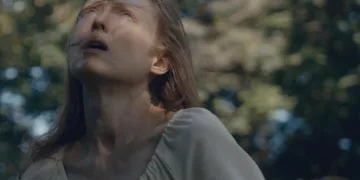
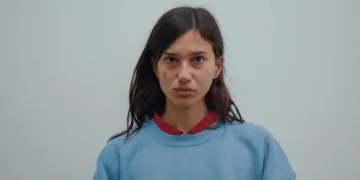






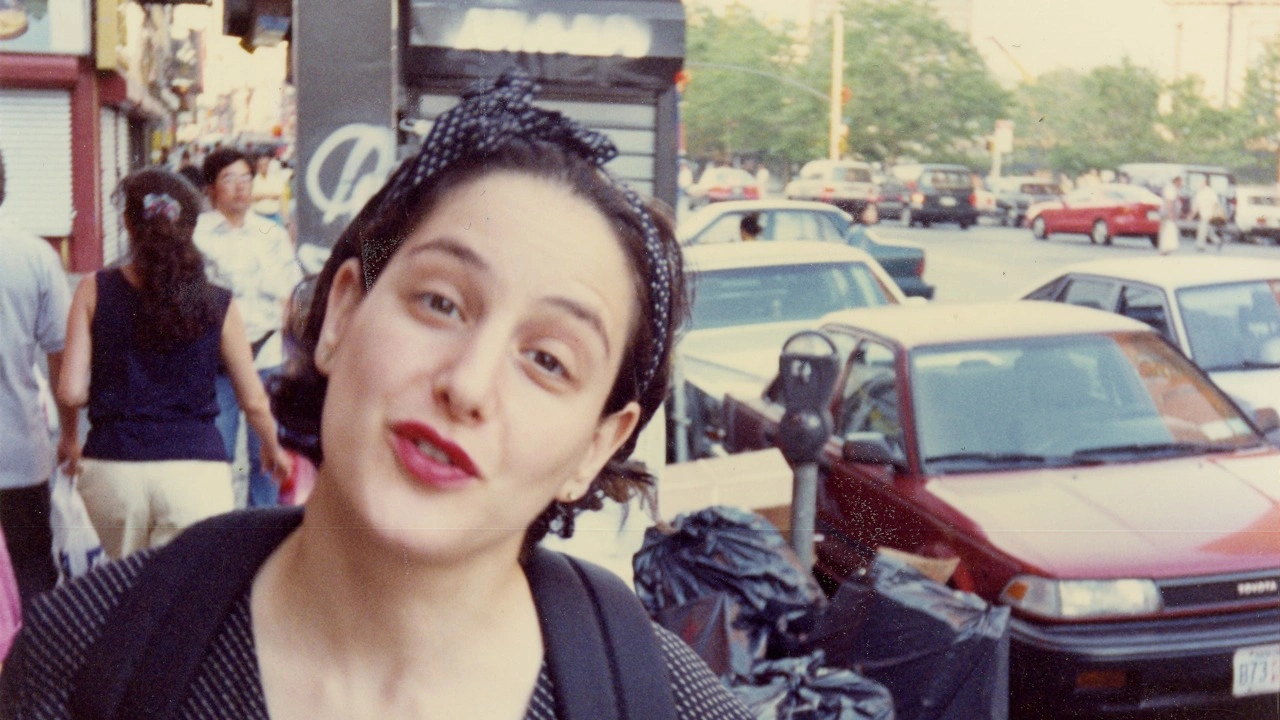

A dead friend’s handwriting can feel louder than a voice. Alan Berliner understands this, and Benita is built from that painful knowledge: scraps, drawings, photographs, film fragments, diary lines, half-finished thoughts, all arranged around the life and death of Benita Raphan, the experimental filmmaker and artist who died by suicide in 2021.
The film could have become a solemn biographical file, neat dates pinned to a board. Berliner chooses a stranger, riskier form. He narrates as friend, witness, and uncertain investigator, asking how well he really knew Raphan. That question gives the documentary its ache. It does not simply ask who she was. It asks how a person can be loved, remembered, admired, and still remain partially unreachable.
Raphan’s own materials dominate the film’s texture. Her animated images, handwritten notes, photographs, and unfinished dog project do much of the speaking. Berliner does not bury her under explanation. He lets her flicker.
A Mind Moving Sideways
Raphan’s life, as the film presents it, never settled into the clean line biography tends to prefer. She moved through New York’s punk and new wave scene, photographed musicians, studied at the Royal College of Art, spent years in Paris, worked in graphic design, taught at the School of Visual Arts, and made short films about figures whose minds seemed to live outside ordinary rooms.
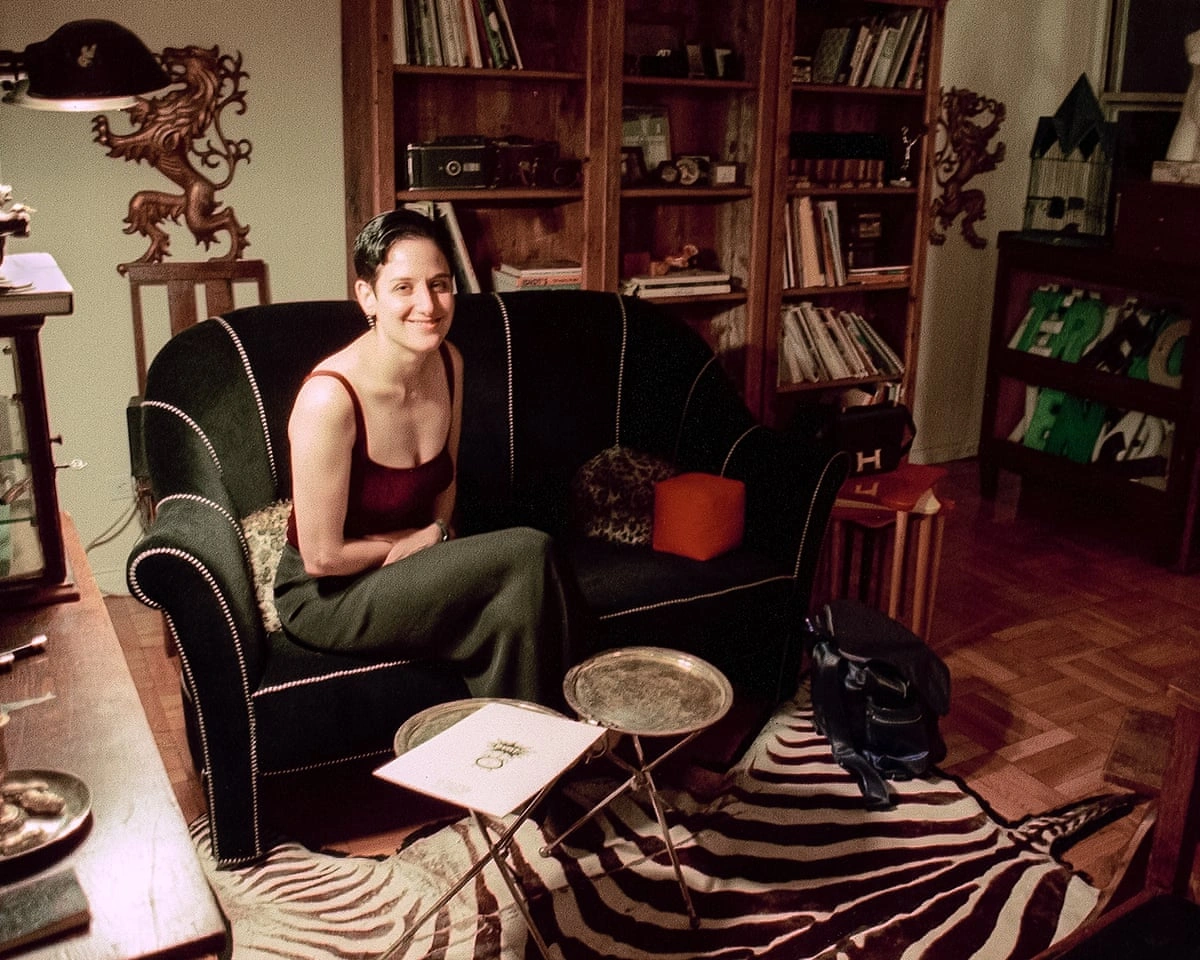
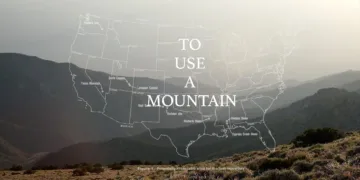
John Nash, Emily Dickinson, Helen Keller, Buckminster Fuller: these were not random subjects for her. Berliner’s montage suggests that Raphan recognized something in them, a tension between brilliance and isolation, between invention and private suffering.
Also Read





The film is most persuasive when it lets that connection appear through rhythm rather than statement. A fragment from one of her shorts, a notebook line, a friend describing her nervous energy, and suddenly the pattern is visible.
Her mother’s description of her as an “irregular verb” is one of the film’s most exact phrases. It sounds affectionate, funny, and wounded at once. Raphan was not easily conjugated. She could inspire students, frustrate employers, enchant friends, disappear into work, and still seem slightly out of reach to the people who cared for her. That slipperiness is the film’s truth.
The Archive as a Haunted Room
Berliner works like someone sorting through a room after a death, touching each object with care and fear. The documentary’s best passages come from this contact between his grief and Raphan’s archive. A handwritten note does not sit still. A photograph opens into music. A film clip feels like a message recorded for nobody and everybody.
The detail that there is no photograph of Berliner and Raphan together lands with quiet force. It is a small absence, almost banal, and that is why it hurts. Friendship often exists without evidence. Years pass, conversations accumulate, affection becomes ordinary, and then one day the record is empty in exactly the place where proof feels necessary.
The editing follows that wound. It does not move like a standard timeline, and at times that becomes a weakness. Raphan’s early filmmaking years are too lightly mapped. Some stretches of her career arrive like islands seen through fog.
The move from her earlier shorts to the Guggenheim-supported dog project leaves questions behind: what changed in those missing years, what hardened, what softened, what failed her? The film’s looseness honors her spirit, but it also keeps parts of her life blurred.
Dogs, Loneliness, and the Pandemic Interior
Raphan’s devotion to rescued dogs gives Benita its most fragile emotional thread. Her unfinished film about canine consciousness begins as an artist’s inquiry into perception, then shifts under the weight of the pandemic into something sadder, stranger, and closer to confession. What is it like to be a dog? What is it like to need without shame? What is it like to love a creature that does not ask you to explain yourself?
Berliner and Raphan’s friends connect her final decline to depression, anxiety, and the isolation of Covid-19. The documentary handles this material with tenderness, yet the discomfort never leaves. To study a person’s private notes after suicide is to stand at the edge of trespass. The film knows this. It does not treat her death as a mystery to be solved, which saves it from cruelty.
Still, the sections about her mental health can feel emotionally overwhelming without giving the viewer deeper understanding. That may be the point, or it may be the limit of the film. Grief often mistakes proximity for knowledge. Berliner is honest enough to show that closeness did not protect him from not knowing.
A Kind Film With Unanswered Rooms
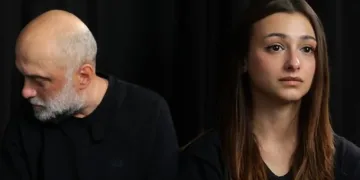
Benita is strongest as an act of care. Berliner’s narration has the tremor of someone trying to do right by a friend who can no longer correct him. The interviews with family, friends, collaborators, and former partners create a chorus of partial portraits: talented, odd, sensitive, difficult, funny, brilliant, lonely. Nobody owns the final version of her.
The film’s craft mirrors that refusal. Its images drift, overlap, and dissolve, carrying the feel of Raphan’s own experimental work without merely copying it. Sound and music move through the archival material like memory passing through an empty apartment. A voice remains, then fades. A dog looks into the camera. A note waits on the screen for one extra second.
What remains is not certainty. It is a tender arrangement of fragments around a person who cannot be returned to the world, only approached. Some documentaries illuminate a life. This one sits beside the dark and lets the dark keep part of its name.
The intimate feature-length documentary Benita celebrated its highly anticipated world premiere at the DOC NYC film festival on November 14, 2025, before expanding its footprint to international documentary hubs like Bertha DocHouse. Directed by the acclaimed, Emmy-winning documentarian Alan Berliner, this moving project serves as a posthumous creative partnership honoring his late friend and colleague, the New York experimental filmmaker Benita Raphan, who tragically passed away during the isolation of the COVID-19 pandemic. By piecing together a massive personal archive of notebooks, sketches, home movies, and data drives, the production shapes an elegant, deeply bittersweet portrait that honors her artistic brilliance while directly confronting the harsh realities of loneliness and mental health struggles.
Full Credits
Title: Benita
Distributor: Experiments in Time, Light & Motion, DOC NYC, Bertha DocHouse
Release date: November 14, 2025 (World Premiere at DOC NYC)
Rating: 15 (Bertha DocHouse)
Running time: 81 minutes
Director: Alan Berliner
Writers: Alan Berliner
Producers and Executive Producers: Alan Berliner, Yoni Golijov, Mark Obenhaus
Cast: Benita Raphan, Alan Berliner
Director of Photography (Cinematographer): Benita Raphan, Connor K. Smith
Editors: Alan Berliner
Composer: Robert Miller
The Review
Benita
Benita is a tender, wounded act of preservation, shaped from notes, images, dogs, unfinished films, and the silence left by Benita Raphan’s death. Alan Berliner’s documentary can lose biographical clarity, especially around her early work and career gaps, yet its emotional honesty gives those absences weight. The film does not solve Raphan. It sits near her. That humility is its deepest grace.
PROS
- Tender archival approach
- Strong emotional honesty
- Raphan’s own art breathes
- Moving dog project thread
- Refuses easy answers
CONS
- Uneven timeline
- Career gaps remain foggy
- Some mental health passages feel thin
- Biography lacks full shape