

























Seven years is a strange interval for a fighting game to ask for a second first impression. Dead or Alive 6: Last Round arrives as a polished return to Team Ninja’s 2019 entry, carrying the familiar weight of the series’ “Last Round” label: a final pass, a fuller roster, a cleaner platform for players who missed the original release.
For a franchise that helped define 3D fighting in the late 1990s, that label carries history. Dead or Alive 5 Last Round felt like a meaningful consolidation of a game that had grown over time. This one feels less decisive.
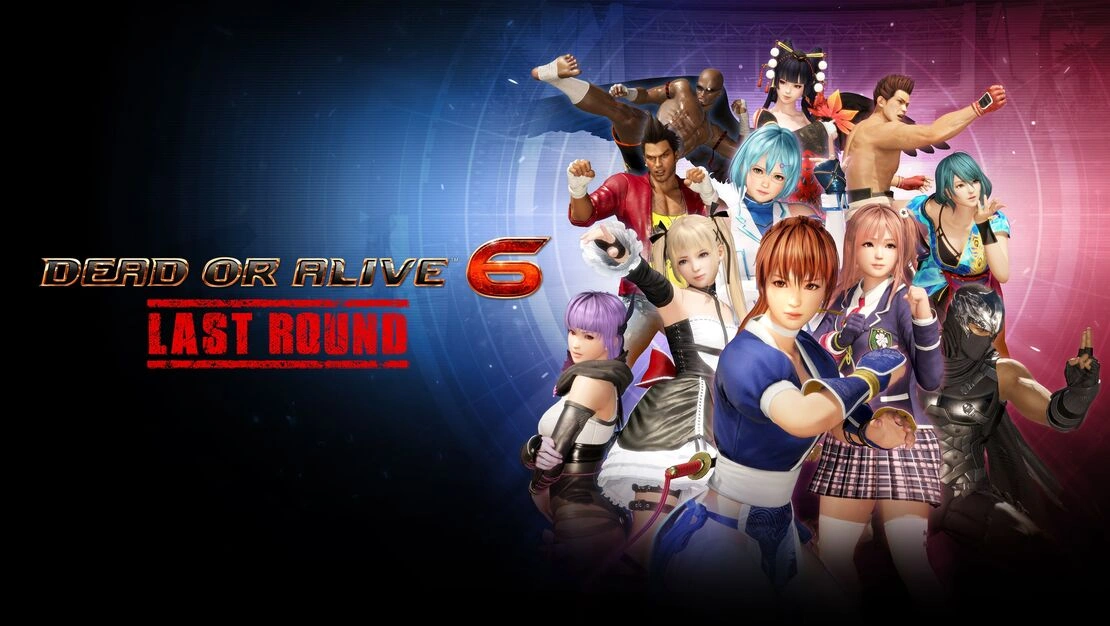
The new package includes visual upgrades, a photo mode, non-crossover DLC fighters such as Nyotengu, Phase-4, Momiji, Rachel, and Tamaki, and some new costumes for select characters. Mai Shiranui and Kula Diamond remain paid extras, which immediately weakens the idea that this is the final word on DOA6. The more useful question is not, “Is this still a good fighting game?” It is. The question is how much of a new case Last Round makes for itself.
The Triangle Still Works
The fighting remains the cleanest argument in the game’s favor. Dead or Alive has always built its identity around the triangle system: strikes beat throws, throws beat holds, and holds beat strikes. In practice, this gives every exchange a readable tactical pressure. If Kasumi rushes in with a fast string, the defender can punish a predictable follow-up with a hold. If a player leans too heavily on holds, a grappler like Bass can make that habit painful with a throw.
That system still gives DOA6 a different rhythm from Tekken. The match is less about long-range footsies and wall carry, and more about reading pressure in close quarters. The best rounds become a contest of nerve. Do you finish the string, delay it, grab, or risk the counter? A successful hold feels especially satisfying because it turns defense into a statement. You did not block by accident. You read the opponent.
The newer accessibility tools still fit better than they first seemed in 2019. Fatal Rush lets newcomers trigger stylish combos with a simple input, while Break Blow and Break Hold give meter a clear purpose. None of these erase the older mind game. They give casual players a way into it. Veterans can still separate themselves through timing, character knowledge, and an understanding of stage hazards.
The arenas matter too. Being knocked into a danger zone is never just a visual flourish. It changes spacing, momentum, and sometimes the entire feel of a round. That sense of bodies hitting environments with real consequence remains one of the series’ strongest signatures.
A Familiar Roster, A Thin Upgrade
The roster is varied enough to remind you why Dead or Alive survived this long. Ayane and Kasumi still bring the speed and sharp directional movement that made the ninja side of the cast so appealing. Ryu Hayabusa gives the series its old Ninja Gaiden connection, while Momiji and Rachel reinforce how much that shared lineage has shaped the franchise’s identity. Bass fills the heavyweight grappler role cleanly, and Diego still reads as one of the more grounded modern additions.

For players arriving fresh, this is a strong lineup. For anyone who already played DOA6 and kept up with its DLC, the roster does not feel transformed. The included non-crossover characters are welcome, but they are familiar additions folded into a late re-release. The absence of Mai and Kula from the base package is harder to ignore because crossover fighters are exactly the kind of content that makes a final edition feel complete.
The customization system carries the same split personality. The dressing room offers hairstyles, glasses, accessories, and a healthy number of outfits. DOA Quest still helps unlock costume parts through short objectives, and reduced requirements make that loop less punishing than it used to be.
Then the store reminds you what era of Dead or Alive you are playing. Too many seasonal and colorful outfits sit behind paid DLC, including Christmas, summer, and Halloween sets. For a new buyer, that may register as optional excess. For a returning fan, it feels like the same old bill presented with a nicer envelope.
Story Mode Stays Lost
The story mode remains the weakest part of the package. Its character-specific episodes are arranged in a segmented structure that should let the cast breathe, but the menu flow makes the narrative feel chopped into scattered pieces. Scenes unlock in a way that turns basic continuity into homework. One fight leads into another perspective, then another, without a strong dramatic line to pull the player through.

The writing gives the characters reasons to fight, which is the old fighting-game minimum, but the genre has moved since that was enough. Mortal Kombat showed how a cinematic campaign can give matches pace, stakes, and spectacle. DOA6 rarely finds that rhythm.
Too many scenes feel like setup for a bout rather than drama that happens to end in one. The voice acting does not help. Ryu, in particular, can sound oddly stiff, which is unfortunate for a character who should carry mythic weight inside this universe.
The fights themselves are often too easy to create tension. Opponents wait, absorb pressure, and collapse before the story has a chance to sell danger. Arcade, Time Attack, Survival, Versus, Training, and Combo Challenges are better places to spend time. Training mode, especially, gives the game the clarity its story lacks, since it teaches timing, combos, and counters with direct purpose.
Presentation and the Missing Modern Pieces
The visual upgrade is real, but uneven. The Oboro lighting system improves water effects and gives supported stages a richer, cleaner look in 4K. Animations still carry the snap that makes DOA6 attractive in motion. The problem is that not every stage supports the new lighting at launch, so the game sometimes feels caught between a proper remaster and a selective touch-up. Texture detail can also reveal the age of the 2019 base game, especially beside newer fighters.
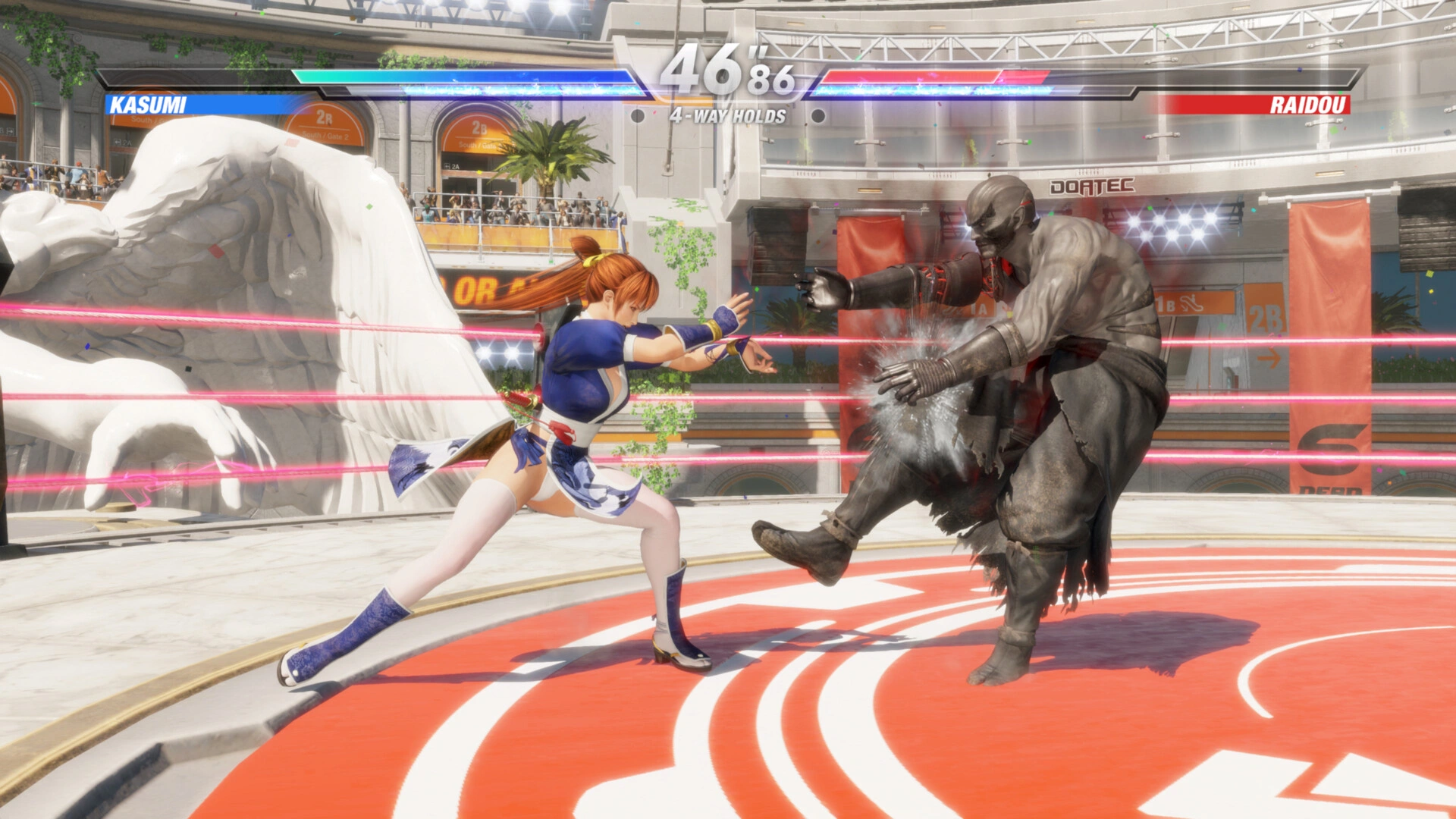
Photo mode is the best new feature. It suits this franchise better than most, with options for expressions, sweat, poses, and camera angles that let players capture the exact second a kick lands or a character recoils from a wall hit. It is generous, detailed, and clearly built for fans who care about the cast as much as the competition.
What it cannot fix is the online gap. No rollback netcode and no crossplay are major omissions for a fighting game release in 2026. The existing online play can function, but the genre has moved toward stronger standards of stability and community reach. A game asking players to return after seven years needed those features to feel current.
Dead or Alive 6: Last Round still has terrific match feel. The strikes land cleanly, the holds create drama, and the arenas give every round a physical charge. The frustrating part is how much of the surrounding package feels hesitant, as if Team Ninja remembered the strength of the combat but forgot that a final edition should close the case.
The Review
Dead or Alive 6: Last Round
Dead or Alive 6: Last Round keeps the strongest part of the 2019 fighter intact: fast, readable, impactful combat built around the series’ triangle system, smart counters, and dynamic arenas. For new players, this is still a lively entry point into one of 3D fighting’s most distinctive families. For returning players, the re-release feels strangely hesitant. Photo mode, limited visual upgrades, and bundled non-crossover fighters help, but no rollback netcode, no crossplay, paid crossover DLC, and a dreadful story mode leave it short of a true final edition.
PROS
- Sharp triangle combat system
- Strong counter mechanics
- Varied roster styles
- Useful training modes
- Deep photo mode
CONS
- Weak story mode
- No rollback netcode
- No crossplay
- Paid cosmetic bloat
- Thin upgrade for veterans