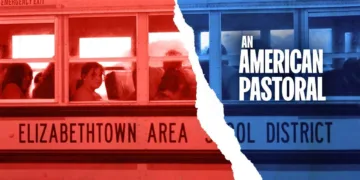






















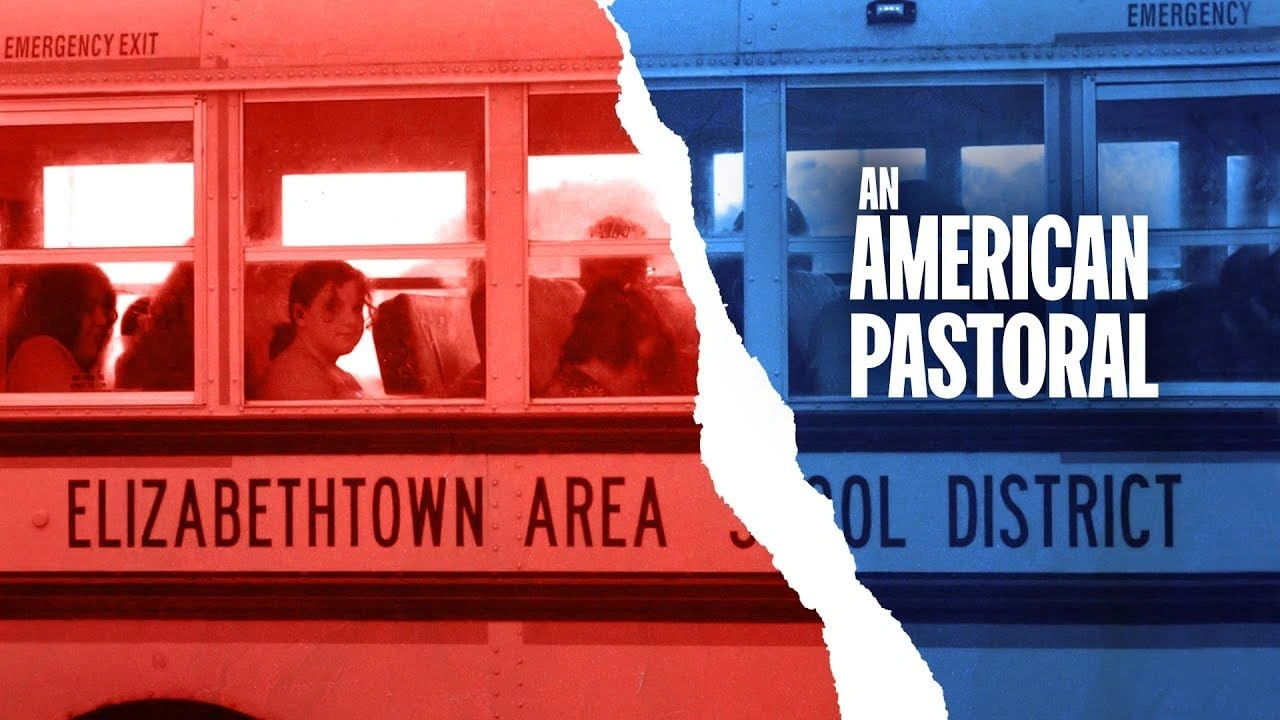

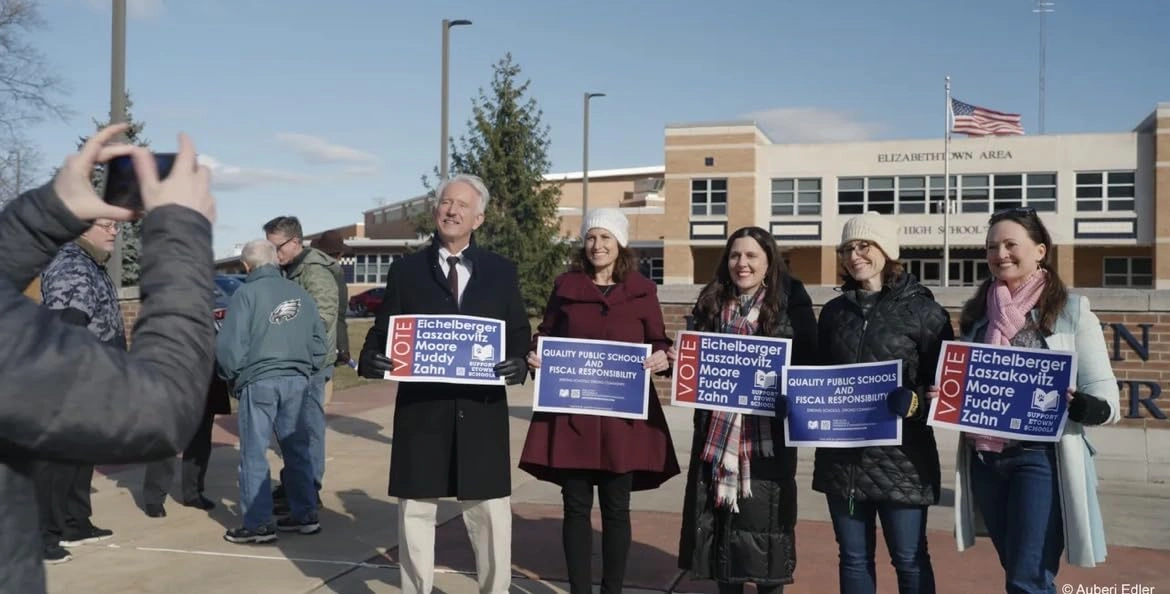
Elizabethtown’s 2023 school board election should feel small, almost deliberately ordinary: lawn signs, canvassing, polite doorstep pitches, public comments under fluorescent lights. Auberi Edler’s An American Pastoral makes it feel like a pressure gauge. The documentary watches five open seats in a conservative Pennsylvania district turn into a fight over books, gender, faith, guns, pandemic resentment, and who gets to define safety for children.
Edler, a French filmmaker working here without narration or direct interviews, follows the local race from spring campaigning to the new board’s arrival. The structure is patient, built from meetings, church gatherings, classrooms, campaign planning sessions, and rallies. That patience matters. The film’s emotional force comes from seeing how easily national paranoia enters a school hallway, then sits there like it belongs.
The Election Becomes the Mechanism
The clearest tension is not Democrat against Republican in any simple sense. Elizabethtown is heavily Republican, so the fight becomes stranger and sadder: Democrats try to win seats while also supporting moderate Republicans against a harder slate backed by the local party. That endorsed Republican slate leans into familiar culture-war language, warning residents about “sexual” books, gender identity, and schools as places of supposed corruption.
Tina Wilson gives the film one of its most revealing arcs. She says pandemic masking changed her politics, moving her away from the Democratic Party and toward the worldview her husband had already embraced, including openness to Alex Jones. Edler does not underline the moment. She lets Wilson say it plainly, which makes the shift feel less like a dramatic conversion than a door opening quietly in the wrong direction.
James Emery and Danielle Lindemuth sharpen the picture. Around a backyard fire, January 6 is treated with the ease of local gossip. Lindemuth recalls chartering buses to Washington, D.C. Emery says he regrets leaving with his teenage son when the violence started instead of staying closer to the Capitol breach. The scene is chilling because nobody performs villainy. They talk like neighbors remembering a road trip.
Across from them are figures like Kristy Moore, who canvasses with visible worry, warning voters about what the board could become. Her fear has a different texture from the fear used by the hardline candidates. It is less rehearsed, less marketable. She is trying to protect students who may not get a vote in the systems reshaping their daily lives.
Where the Language Comes From
Edler’s strongest move is showing that Elizabethtown is not generating this rhetoric in isolation. The film visits a John Birch Society meeting where Alex Newman describes public schools as hostile to Christ. It also leaves Pennsylvania for a Virginia Beach gathering connected to the First Landing 1607 Project, where James Emery works security while national conservative figures speak in apocalyptic tones.
Those scenes could have felt like detours. They do not, because the language travels back home. When Fr. James Altman rages against transgender people and tells his audience to “crush” school board opponents, the violence of the wording lands beside local debates about library books and student identity. The gap between a national stage and a school board meeting starts to collapse.
The film understands emotion as a transmission system. Fear begins as a speech, becomes a campaign line, then becomes policy language. You can feel the movement in how candidates talk at doors, how church groups frame public schools, and how parents arrive at meetings already armed with phrases that sound borrowed from cable panels and online clips.
A women’s firearms workshop adds another charge. An instructor shows a video of a six-year-old handling a gun, and one attendee casually mentions her husband making a firearm. Placed near a classroom discussion about school shootings, the scene becomes hard to shake. Edler and editor Barbara Bascou do not need to explain the contradiction. Students talk about surviving gun violence; adults nearby practice a fantasy of control through weapons.
The Camera Lets the Dread Accumulate
An American Pastoral is almost two hours, but it rarely feels slack because each room changes the emotional temperature. A classroom feels fragile. A church meeting feels certain. A campaign session feels exhausted before it starts. A cattle fair table where book-ban opponents are challenged over displayed titles turns into a small test of civic stamina.
Edler’s camera is calm, sometimes so calm that the rhetoric around it seems to grow louder by itself. Empty high school hallways glow under cold fluorescent light. LifeGate Church’s parking lot sits in darkness while dead leaves scrape across the asphalt. Rural roads and tidy lawns give the film its “pastoral” surface, while the framing keeps finding unease in places designed to look settled.
That outsider’s eye matters. Edler does not treat the town as a freak show, and she does not flatten everyone into symbols. She notices the comfort of the setting, the familiarity of the living rooms, the community rituals, the Eagles gear, the cattle fair, the ordinary friendliness that survives in the same spaces as political cruelty. The emotional horror comes from that closeness. These are not distant extremists on a screen. They are people who can win a vote on Tuesday and decide what happens in a classroom by Wednesday.
The students remain the film’s painful absence. A gay and transgender student group appears, and their presence gives the election real stakes, but the adults dominate the soundscape. That choice reflects the political reality, since the people most affected by school board decisions are often the least empowered inside them. It also leaves a ache the film never fully fills.
Siegfried Canto’s sparse guitar score gives the driving passages a mournful pull without pushing the footage into melodrama. The music understands what the camera already knows: the town is beautiful, and beauty does not protect anyone.
An American Pastoral leaves its deepest mark through accumulation. A door knock, a sermon, a classroom question, a gun lesson, a board meeting, another door knock. Nothing arrives as a single rupture. The dread comes from repetition, from watching public life absorb one alarming sentence at a time until the school board no longer feels local at all.
The award-winning political documentary An American Pastoral premiered at the International Documentary Film Festival Amsterdam (IDFA) before its official United States theatrical and premium digital streaming launch by Film Movement on February 13, 2026. Audiences can watch the non-fiction feature at home on major video-on-demand networks, including Amazon Prime Video and Apple TV. The fly-on-the-wall narrative chronicles a high-stakes 2023 school board election in rural Elizabethtown, Pennsylvania, exploring how a routine local community race became a flashpoint for a larger national culture war over book bans, Christian nationalism, and the separation of church and state.
Full Credits
Title: An American Pastoral
Distributor: Film Movement
Release date: November 2024 (IDFA World Premiere), February 13, 2026 (United States Digital Release)
Running time: 118 minutes
Director: Auberi Edler
Writers: Auberi Edler
Producers and Executive Producers: Anne Charbonnel, Perrine Feminier, Anne Grolleron, Serge Lalou
Cast: James C. Emery, Kristy Moore, Tina M. Wilson, Runkle, Fuddy
Director of Photography (Cinematographer): Auberi Edler
Editors: Barbara Bascou
Composer: Siegfried Canto
The Review
An American Pastoral
An American Pastoral turns a school board election into a slow, anxious study of civic life under pressure. Its power comes from placement: a classroom talk on shootings cutting into a gun workshop, LifeGate’s night parking lot, campaign smiles curdling into conspiracy. Auberi Edler rarely pushes, and that restraint makes the dread land harder. The film can feel almost too calm around violent rhetoric, but its patience lets Elizabethtown reveal itself one meeting, sermon, and canvassing stop at a time.
PROS
- Patient observational style
- Sharp, unsettling editing
- Strong local political detail
- Haunting small-town imagery
- Real emotional stakes for students
CONS
- Youth voices remain limited
- Near two-hour length may test some viewers
- Restraint can soften immediate outrage