









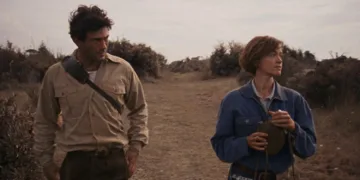
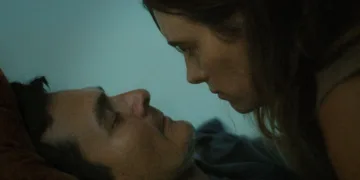








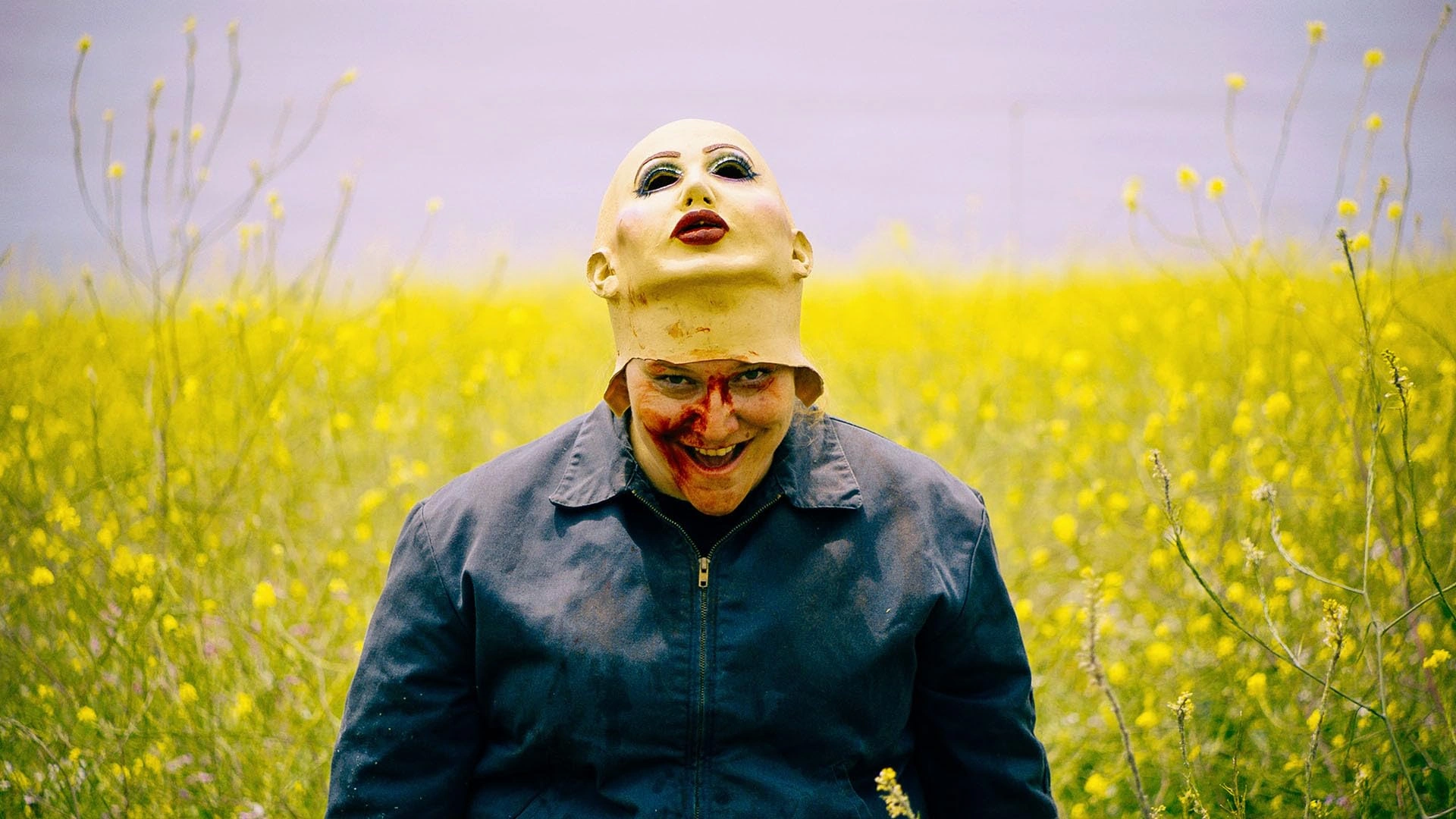

The rope snapping under Frankie Ramirez’s weight is the film’s ugliest joke, and the moment its revenge fantasy curdles into something meaner. Pierre Tsigaridis takes a familiar slasher arrangement, an isolated killer, a mask, a body count, a grime-streaked apartment, and rebuilds it around humiliation rather than appetite.
Frankie is a plus-size singer-songwriter in Los Angeles, played by Dina Silva, who co-writes with Tsigaridis. She has talent, but every door she knocks on seems to have a scale behind it. Executives hear the songs and talk about the body. Strangers sneer. Her mother’s old cruelty keeps speaking in her head.
The film’s low-budget seams are visible from space in places. Bruises vanish. Scenes lurch. Some supporting characters enter as if they wandered in from a different exploitation movie. The surprise is how often that looseness works for the story.
Frankie, Maniac Woman has the shape of a slasher, but its engine is closer to a prolonged nervous collapse. Frankie does not snap once. Her collapse lasts roughly a year, which gives the film its nastiest structural idea: murder becomes a habit she keeps trying to interrupt, then keeps returning to with less resistance each time.
The Killer Has a Spine
Frankie is most interesting when the film refuses to make her rage neat. She kills men who humiliate or exploit her, and those deaths carry the blunt satisfaction revenge cinema knows how to sell. Then she turns on thin, conventionally attractive women, and the film gets harder to cheer for in the right way. Her violence is aimed at a system, but bodies are easier to reach than systems. That is the tragedy the screenplay understands.
The best example is the victim who turns out to admire Frankie’s music. A lazier film would make every target a cartoon of cruelty, giving the audience moral permission to enjoy the carnage without friction. Here, Frankie’s regret matters. It complicates the rampage without absolving her. She wants to stop, or at least wants to want to stop, which is a different thing and far less useful.
Jerome, the mysterious man who pushes her toward violence, works because the film does not pin him down too cleanly. He may be a supernatural tempter, a hallucination, or the part of Frankie that has learned to speak in commands. The Mother functions the same way from the opposite direction, turning childhood shame into a living room argument with no exit. When those scenes go surreal, they are not random flourishes. They are Frankie’s backstory refusing to stay in the past.
Dina Silva Keeps the Body Count Human
Silva’s performance is the film’s main structural support. That matters in a movie this scattered. She has to play Frankie as awkward, wounded, funny, terrifying, needy, and absurd, sometimes within the same scene, and she rarely lets the shifts feel like costume changes. Watch the way she reacts before the violence arrives. The insults land first in her face. Her body tightens. The answer comes later, with a weapon.
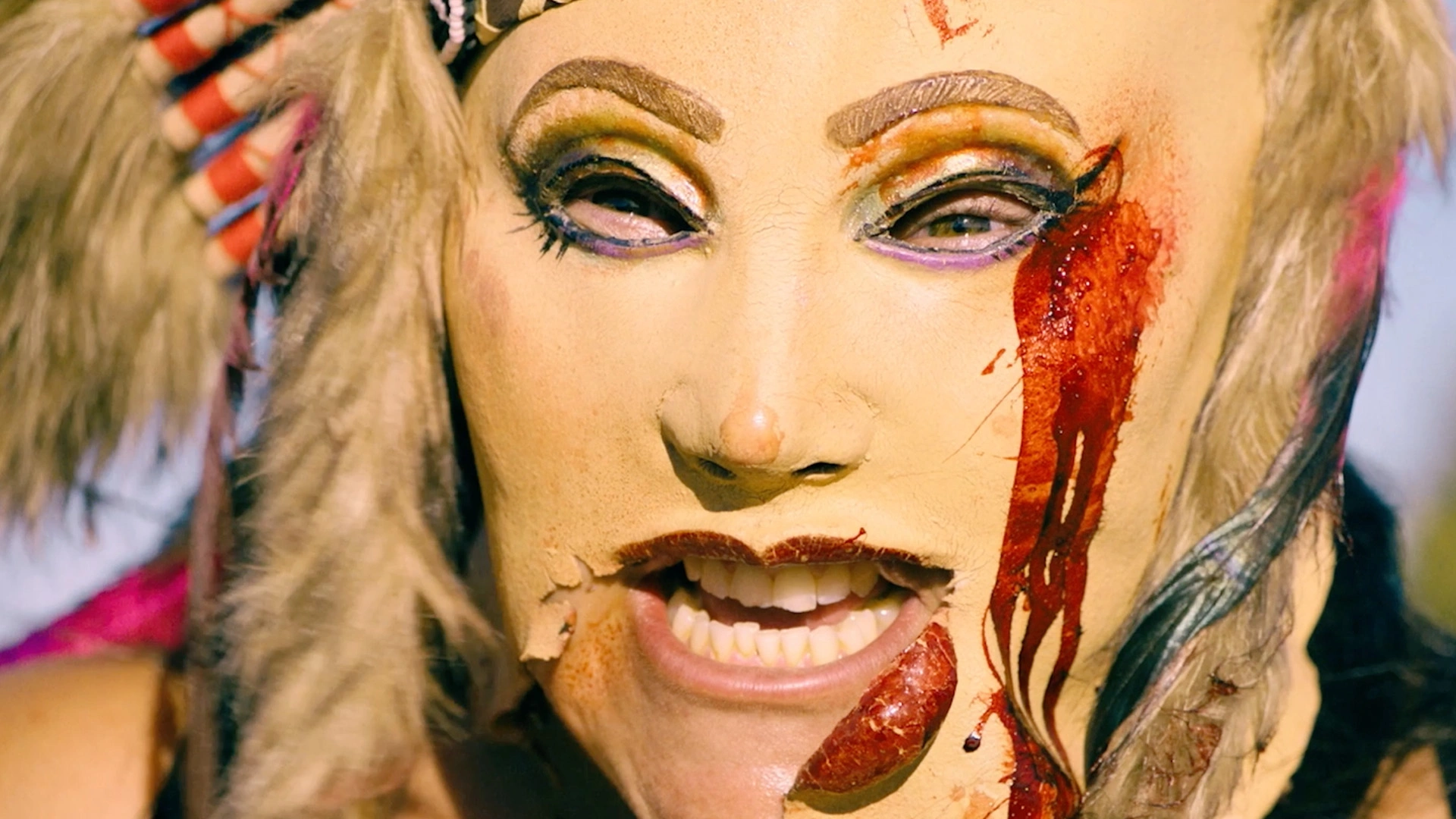
The film keeps finding grim little contradictions for her to play. Frankie can hide body parts and still answer a manager’s call like a working artist trying not to miss her shot. She can stalk victims while craving the ordinary pleasure of being seen as beautiful. She can enjoy the power of the mask, then seem frightened by the person wearing it. Those contradictions give the performance texture.
The supporting cast is more uneven by design and by limitation. Gabriella and Sarah bring grounded reactions to Frankie’s behavior, which helps keep some scenes from floating away. Jerome and The Mother belong to a different register, heightened and theatrical, turning conversations into internal combat.
The models who take Frankie in as a kind of rescue project give the film one of its sharper social knots: they benefit from the beauty standard that harms her, yet they are trapped by it too. The movie does not always handle that tension gracefully. It does at least see it.
Blood, Jokes, and Bad Decisions
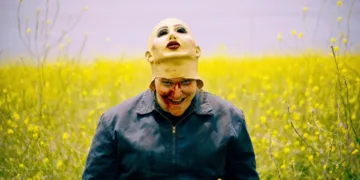
The gore is blunt, nasty, and blessedly unpolished. Severed limbs, entrails, rotting body parts, and an apartment that must smell like a public health violation give the film its grindhouse credentials. Frankie’s mask, acquired after a facial wound, becomes less an accessory than a running record of her transformation. The costume keeps changing because the person behind it keeps changing.
Some kills have the pleasing stupidity of good exploitation cinema. Guitars meet skulls. Bodies are reduced to problems of storage. A reluctant shrooms trip sends Frankie into costumed violence, pushing the film into a comic nightmare where logic has left a note saying it may return after lunch. Several scenes appear to kill her or end the story, and she keeps coming back with the persistence of a franchise villain who missed the paperwork.
The humor is not decoration. It is part of the damage. Frankie’s inner dialogue is full of jumbled insults, bitter quips, and self-hatred twisted into punchlines. Some of it is genuinely funny. Some of it hurts because the joke has already been made against her by everyone else. Tsigaridis and Silva understand that shame often sounds ridiculous from the outside and catastrophic from within.
Rough Edges, Real Teeth
Tsigaridis shoots the film with a dirty immediacy that suits the material. Interiors feel cramped and used. The camera lingers long enough for discomfort to thicken, then the editing jolts forward as if the movie has lost patience with its own restraint. Matheo Techer’s score supports that feverish quality, and Silva’s songs are important because they prove Frankie’s ambition is not delusion. She can sing. The industry’s rejection stings because the talent is audible.
The flaws are real. The continuity errors distract. The narrative sometimes confuses instability with momentum. Some men are written with all the subtlety of a brick through a window, which may be emotionally accurate to Frankie’s world but still flattens the dramatic field. Yet the film’s mess has authorship behind it. It is not clean, polite, or fully controlled. Neither is Frankie. The film earns the bruise, then forgets where it put it.
The independent horror comedy Frankie, Maniac Woman debuted at Grimmfest in October 2025 prior to its limited theatrical rollout by Two Witches Films on April 24, 2026. Audiences can view the movie in select cinema locations, with an upcoming video on demand release slated across major digital storefronts. The bloody, satirical story follows Frankie Ramirez, an aspiring singer songwriter in Los Angeles who encounters persistent childhood trauma and toxic fat shaming from the local music scene until she finally snaps and launches a violent murder spree against her detractors.
Where to Watch Frankie, Maniac Woman (2026) Online



Full Credits
Title: Frankie, Maniac Woman (also known as Frankie: Maniac Woman)
Distributor: Two Witches Films
Release date: October 2025 (Grimmfest Premiere), April 24, 2026 (United States Limited Theatrical Release)
Running time: 95 minutes
Director: Pierre Tsigaridis
Writers: Dina Silva, Pierre Tsigaridis
Producers and Executive Producers: Maxime Rancon, Dina Silva, Pierre Tsigaridis
Cast: Dina Silva, Stefanie Estes, Rocío de la Grana, Tim Fox, Jordan Kelly DeBarge, Sarah Grace Lee, Daniella Mendoza, Ian Reier Michaels, Desma Triplett, Pierre Tsigaridis
Director of Photography (Cinematographer): Pierre Tsigaridis
Editors: Pierre Tsigaridis
Composer: Matheo Techer
The Review
Frankie, Maniac Woman
Frankie, Maniac Woman is messy in the way a live wire is messy: dangerous, uneven, and hard to ignore. Its story occasionally loses shape, and the continuity wobbles hard enough to notice, but Dina Silva’s performance gives the film a spine most cleaner slashers would envy. The violence has purpose, the humor has bite, and Frankie’s breakdown has tragic logic beneath the blood spray.
PROS
- Dina Silva’s ferocious lead turn
- Sharp body-image horror
- Messy, memorable gore
- Strong dark comedy
- Unpredictable slasher momentum
CONS
- Visible continuity issues
- Scattershot story structure
- Low-budget seams
- Some exaggerated supporting roles