

























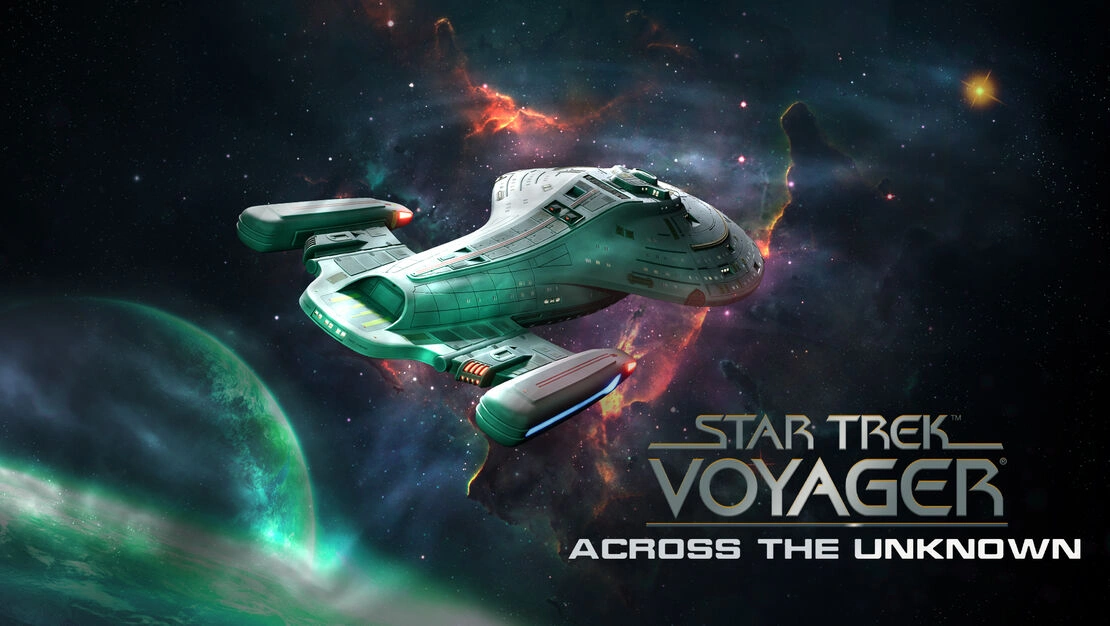

Scarcity has always been the cleanest way to make Voyager make sense as a video game. Captain Janeway’s ship was never meant to feel safe in the Delta Quadrant, and Star Trek: Voyager – Across the Unknown understands the series most clearly when it turns every comfort into a resource meter. Food runs low. Deuterium becomes a source of dread. A damaged deflector dish can turn a simple trip across a system into a slow crawl through panic. For a franchise so often built around ideals, this is a game about ideals with a repair timer attached.
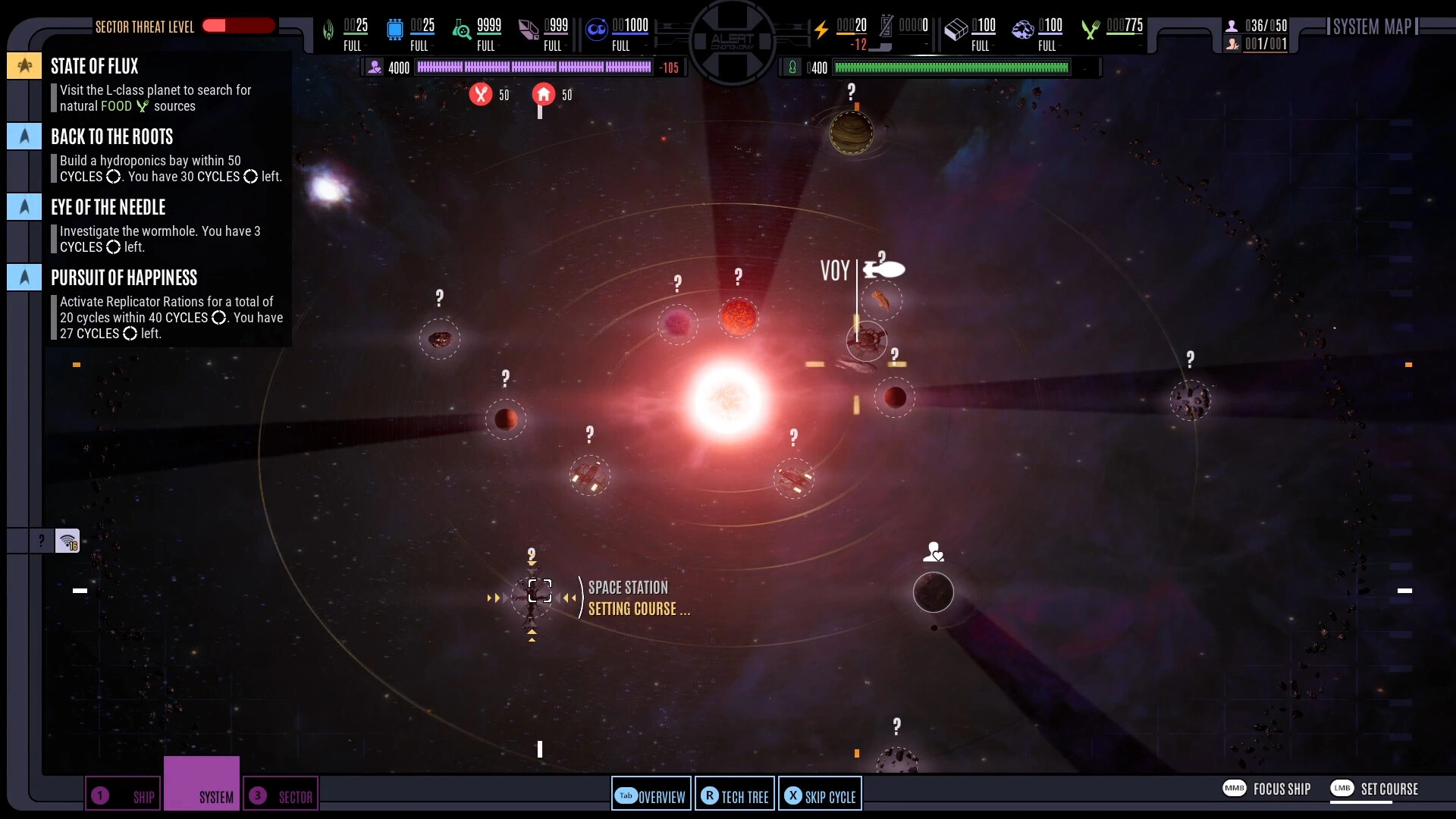
GameXcite’s survival strategy game follows the familiar setup of the show: Voyager is thrown far from home by the Caretaker, leaving the crew to cross hostile space on the way back to the Alpha Quadrant. The format fits almost too neatly. Across 12 sectors, you scan planets, visit points of interest, gather supplies, research technology, assign officers, send away teams, fight Delta Quadrant enemies, and decide how much risk the crew can take before the ship comes apart.
The result sits somewhere between FTL-style crisis management and a side-on ship builder in the vein of Fallout Shelter. Voyager’s decks become a working organism. Restore life support, clear debris, build rooms, upgrade systems, shift officers around, and pray that the next stop has enough Deuterium to keep the ship moving. The game is harsh, sometimes to a fault, yet its stress feels tied to the fantasy. You are not exploring space from a throne. You are trying to get one exhausted ship home with the lights flickering.
A Ship Full of Problems
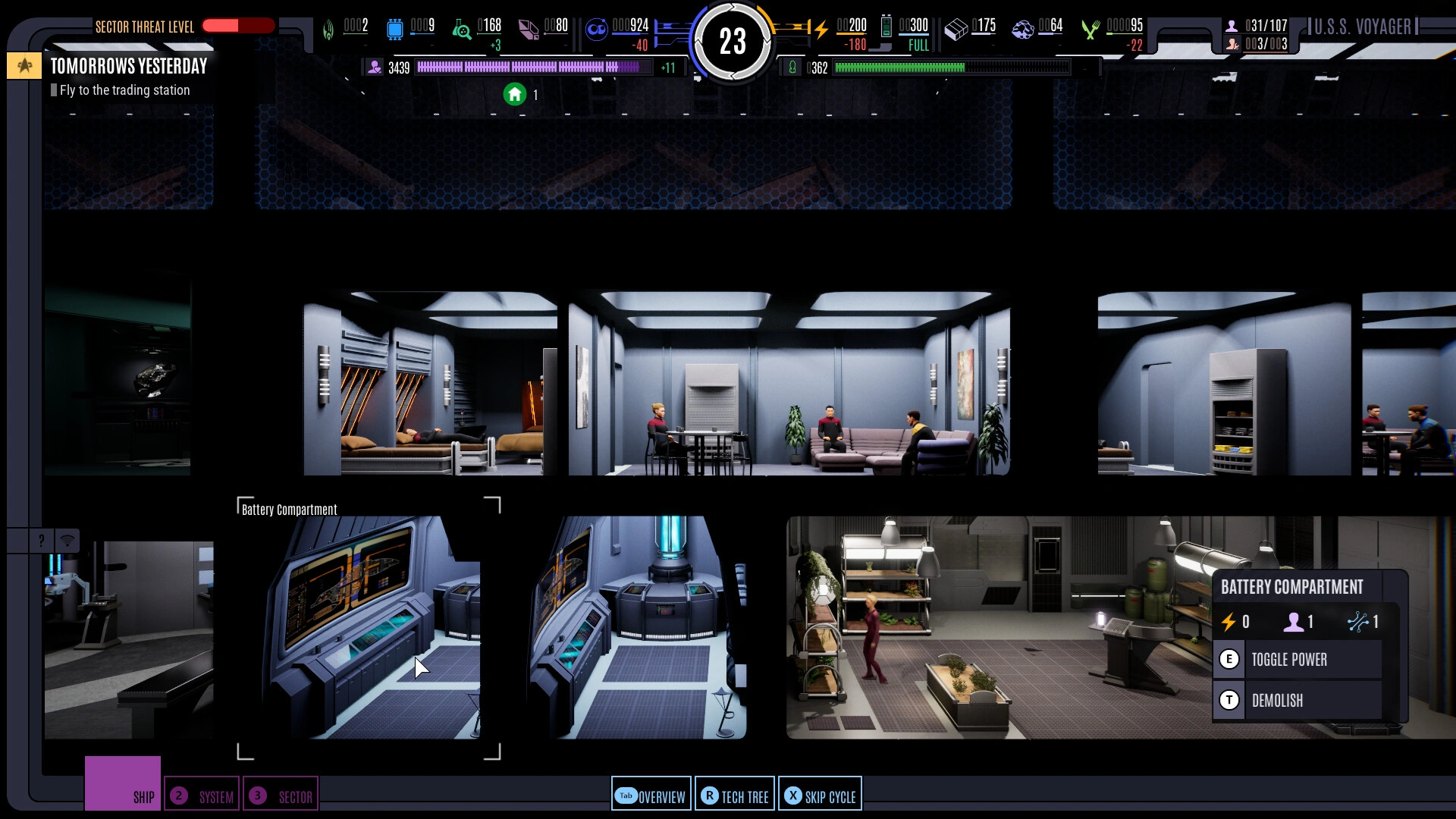
The strongest feeling in Across the Unknown comes from watching small problems stack into a crisis. A room upgrade needs Duranium and Tritanium. A damaged hull needs worker crews and cycles. A new facility draws energy, which pushes you toward warp core improvements. The crew needs beds, food, and morale support. Stay too long in a sector and homesickness starts eating at morale. Leave too early and you may miss the resources that would have saved you two systems later.
That design gives the game its best emotional rhythm. You might begin a sector thinking you are finally stable, then a nebula blocks scans, a trade post turns into an ambush, and a combat encounter leaves the hull barely holding.
One of the clearest examples of the game’s appeal is the post-battle recovery loop: Voyager survives a Borg fight, but the deflector is wrecked, rooms are damaged, and structural integrity rises by single points as crews are shuffled from task to task. Nothing about that is flashy. It is a map, a few bars, a set of timers, and a ship that refuses to die. Somehow, it works.
Also Read





Officer assignments help make the ship feel personal rather than purely mechanical. B’Elanna cutting down crafting time in the Workshop is exactly the kind of detail a Voyager fan wants, because the system turns character into function. Tuvok’s value in security or combat matters more when he has become one of your best away-team options. Losing him in a black hole encounter against the Hirogen is not just a failed roll. It changes how the ship feels afterward. A roster slot becomes an absence.
The game can be brutal on default Survival difficulty, and Adventure mode is still not a sightseeing pass. Sector restarts are part of the experience, especially when an autosave leaves you in a near-dead state. That can be frustrating, but it rarely feels detached from the premise.
The Delta Quadrant should feel unfair. The line between good survival tension and numerical cruelty is thin, and Across the Unknown crosses it at times, especially when a high-probability choice fails and takes a crew member with it. Still, the pressure gives every safe warp jump a little pulse of relief.
Canon With Loose Bolts
The smartest structural choice is treating Voyager’s canon as a set of unstable events rather than a museum tour. The broad shape follows the show’s seven-season arc, but specific encounters can shift based on timing, resources, available officers, and player decisions. That means familiar stories arrive with a question attached. Will you repeat Janeway’s choices, dodge them by accident, or make a worse mess with confidence?
The early Caretaker decision is a neat statement of intent. You can use the relay and end the run almost immediately, which is funny for about five seconds and then quietly revealing. The real game exists in rejecting the easy answer. From there, the familiar Voyager premise becomes a survival contract: home is far away, shortcuts are dangerous, and the noble option may cost you something you actually need.
The Tuvix scenario is the clearest example of the game’s playful relationship with the show. Depending on your active crew and conditions, the famous ethical dilemma can bend into something strangely anticlimactic, with Neelix returning from a planet alone and the mission resolving without the expected debate. That might sound like a loss, but it captures the appeal of this adaptation. The game does not simply replay a beloved episode. It lets the machinery of your run interfere with television destiny.
Other branches can produce stranger results: alternate versions of B’Elanna, Tuvix as a living consequence, minor figures such as Pelk receiving space that the show barely gave them. For fans, these deviations are a large part of the pleasure. The game becomes a lopsided rewatch where memory helps, then betrays you. Recognizing a situation can make you feel clever, right up until the dice roll fails and Voyager pays for your confidence.
Non-fans may feel some of that charge missing. The text events are readable on their own, but the spark often comes from knowing why a name, dilemma, or alien faction matters. The Kazon, Vidiians, Hirogen, Borg, and other Delta Quadrant threats are functional enemies for any strategy player, yet their full flavor belongs to viewers who remember the show’s texture. This is the old licensed-game problem, handled with care rather than solved.
Text, Dice, and Away-Team Anxiety
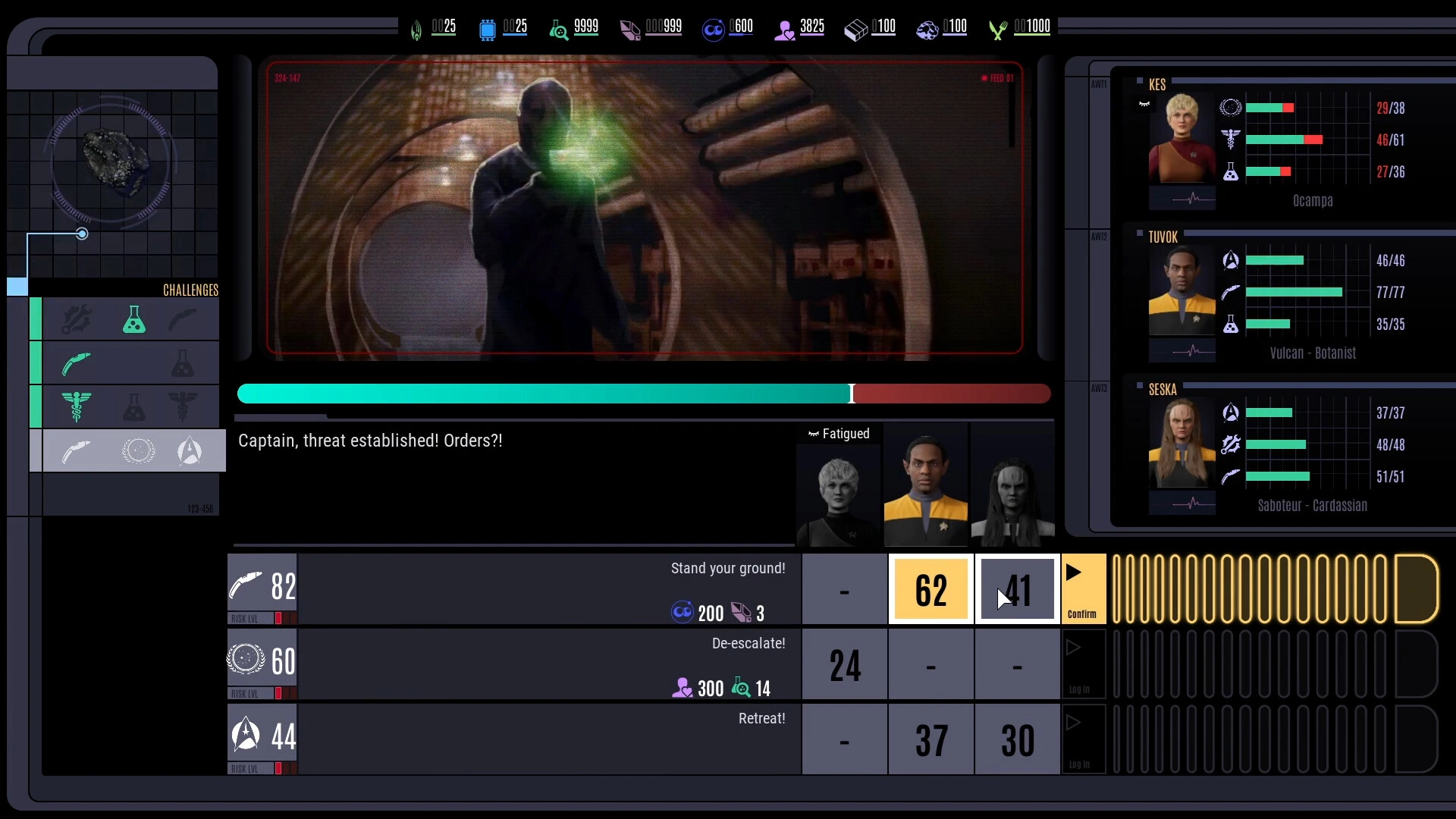
Away missions are built almost entirely from text choices, skill checks, and probability meters. You select heroes before beaming down, see which traits might help, then move through decision nodes where success depends on character abilities, level, fatigue, morale, upgrades, and luck. It is simple to understand, but the emotional effect grows as officers develop history. Sending a leveled-up Tuvok or B’Elanna into a risky sequence feels different after ten hours of depending on them.
Fatigue gives the away missions a tactical bite. Use one character for a successful action and they may be weaker for the next step, forcing you to rotate skills rather than spam your strongest officer. It is a smart, small system because it creates the feeling of command. You are not choosing the best number once. You are managing people through a chain of uncertainty.
The problem is the RNG can feel mean. A 75 percent chance should still fail sometimes, of course. That is how probability works, to the eternal annoyance of anyone who has ever trusted it. Yet Across the Unknown often attaches severe damage, dead crew, or wasted resources to those failures, and the meter’s little swing from hope to disaster can start to feel personal. The game’s survival mood benefits from that cruelty, but the player’s trust can take damage too.
Ship combat is more active, though still indirect. You assign power, select targets on enemy vessels, trigger hero skills, and manually fire photon torpedoes once enemy shields are down. Positioning matters through orders rather than direct piloting. If aft shields are gone, Tom Paris can turn Voyager so the exposed side slips away from danger. That command fantasy fits Janeway better than full arcade control would have. She gives orders. The ship responds, sometimes with all the grace of a wounded bus.
Targeting enemy systems is satisfying once the flow clicks, especially when torpedoes are scarce and timing matters. Larger ships, particularly Borg cubes, expose some stiffness in movement and control, but the basic loop holds. The late discovery that fleeing or surrender can be viable against some scavengers is also very funny in a Trek way. Pride says fight. The resource screen says hand over the Deuterium and keep the crew alive.
Loving the Interface, Fighting the Interface
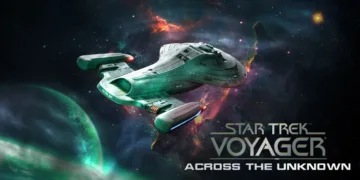
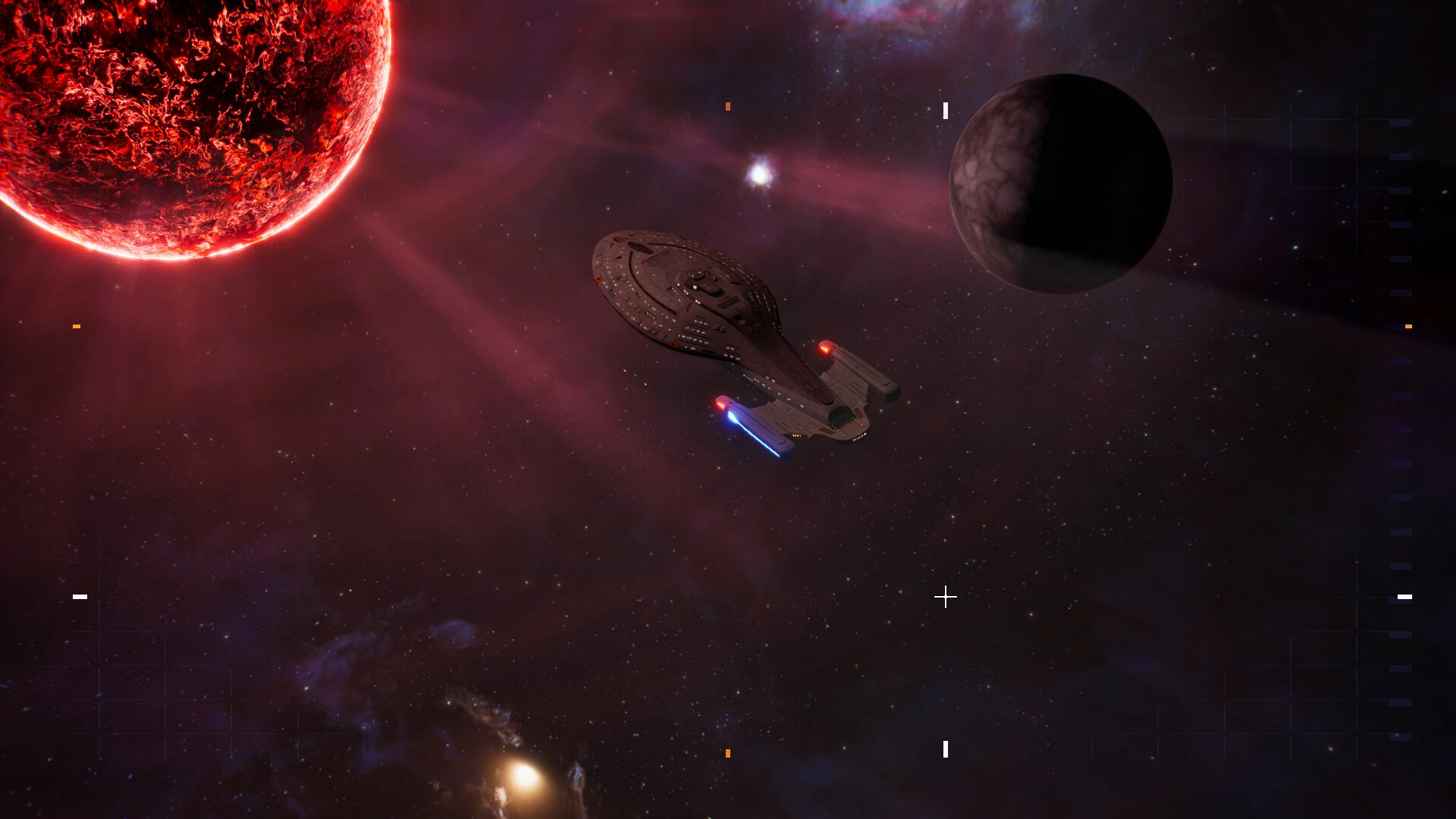
The presentation is charming in the places where it speaks fluent Voyager. The LCARS-inspired menus give the whole game a proper 1990s Trek pulse, and Voyager herself looks good moving between systems. The green wisps trailing the ship through nebulae are a small touch, but they matter because they connect the act of travel to the feeling of the show’s opening credits. For a fan, that is not cosmetic. That is memory doing half the lighting.
Audio works the same way. Jerry Goldsmith’s theme on the main menu and between sectors is an instant emotional hook, and the voice logs from Tim Russ and Robert Duncan McNeill give Tuvok and Tom Paris a welcome presence. Most of the game is still text, with long stretches of quiet reading between those voiced moments. Some players will find that dry. Others will settle into it like a captain reading reports at 2 a.m. while the ship hums around them.
The interface carries plenty of information, and not always comfortably. Icons and numbers can be small, especially on Switch 2 in handheld mode, and the game asks players to parse resource caps, morale, room status, damage, crew assignments, research timers, sector hazards, and combat data at speed. Color-blind options for Deuteranope, Protanope, and Tritanope players are welcome. UI scaling would have helped, since this much crisis management should not require squinting.
Technical roughness is harder to shrug off. Characters can appear in two places at once, such as Tom Paris being away on the Caretaker’s array while also sitting at the conn. Later-sector scanning can judder. Bugs that black out the ship or display absurd cycle distances can force a full sector reset. Crashes are rare enough not to define the game, but present enough to make every unstable run feel extra fragile. Voyager already has enough problems without the screen joining the Vidiians.
Missing Switch 2 features stand out too. Mouse Mode feels like a natural fit for cursor-heavy management, and touchscreen support could have made handheld play smoother. Their absence is not fatal, but it does make the interface feel less inviting than the design deserves.
For Fans Who Like Their Hope Damaged
Star Trek: Voyager – Across the Unknown works because it makes the long way home feel expensive. Every system you visit asks for something. Every upgrade creates another energy concern. Every successful away mission leaves someone tired. Every victory can send you limping toward the next Deuterium deposit with half the ship smoking.
That is why the game’s rough edges sting without erasing its appeal. The text presentation is heavy, the RNG can be harsh, and the interface fights back when it should be helping. Yet there is a specific kind of satisfaction in finishing a sector after the crew has been hungry, the hull has been patched in tiny increments, and the Borg have reminded you that some enemies do not accept surrender. The game understands the emotional shape of survival management: relief matters because collapse stayed close.
For Voyager fans, the attraction is even stronger. The branching canon turns familiar episodes into lived decisions, and the chance to guide Janeway’s crew through a different version of the Delta Quadrant gives the game a replay pull that goes beyond completion. You will miss events. You will lose people. You will see a choice and wonder how badly another version of you would handle it.
The main menu knows exactly which button to press when Goldsmith’s theme rises. Then the game hands you a damaged ship, a hungry crew, and a sector map full of bad ideas. It is a harsh kind of welcome, but for the right player, it feels like coming home the long way.
The Review
Star Trek: Voyager - Across the Unknown
Star Trek: Voyager - Across the Unknown turns scarcity, distance, and bad odds into the emotional language of Voyager itself. Its text-heavy events, harsh RNG, and clunky interface will test patience, yet the loop works because every damaged room and failed roll feels tied to the fantasy of dragging one battered ship home. For Trek fans who enjoy survival management, this is stressful in the right way. For everyone else, the Delta Quadrant may feel rather hostile.
PROS
- Strong Voyager survival fantasy
- Meaningful canon divergences
- Tense resource management
- Smart officer assignments
- Great Trek audio touches
CONS
- Heavy text presentation
- Punishing RNG swings
- Clunky small UI
- Technical bugs and crashes
- Limited appeal for non-fans