














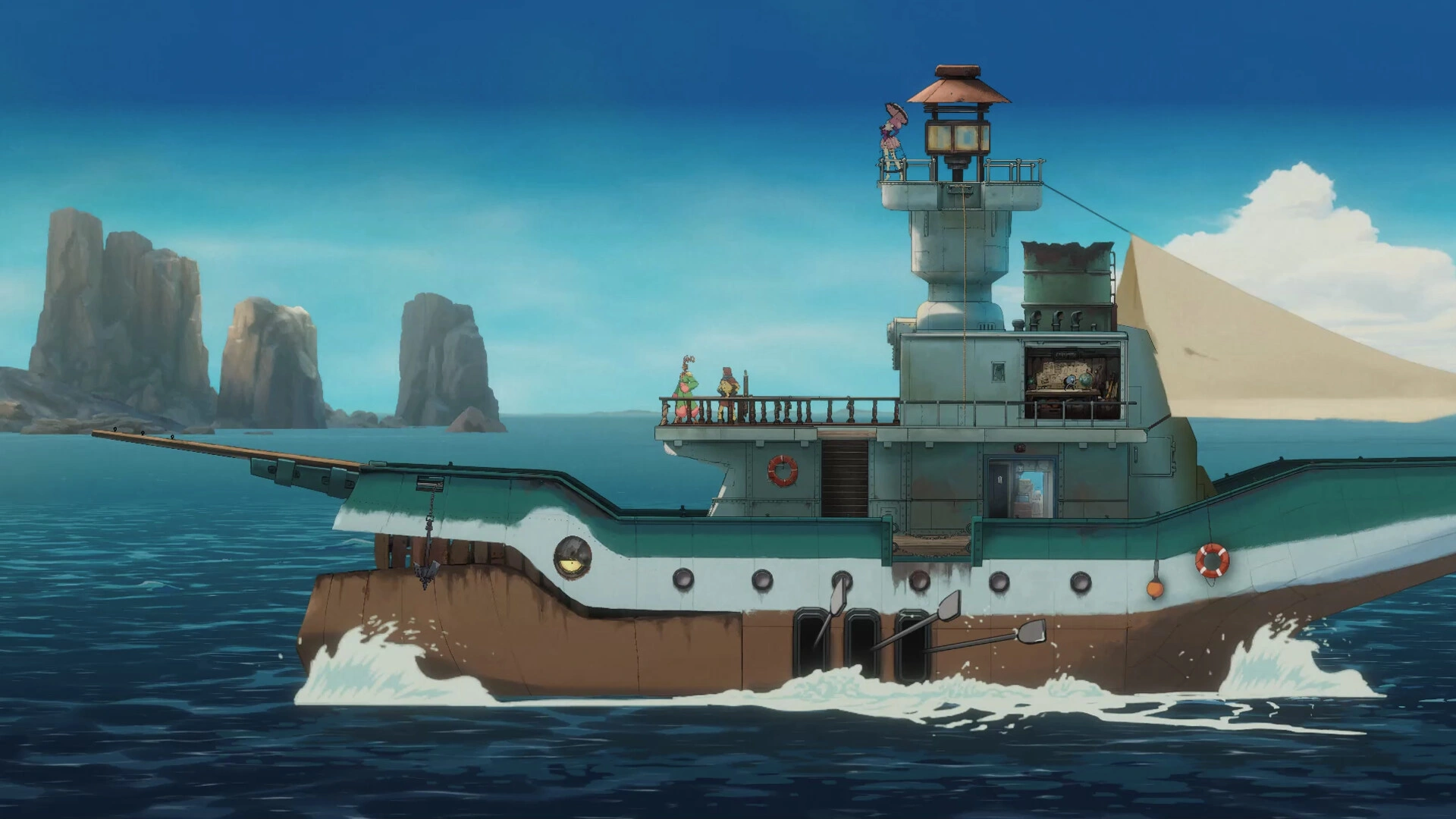

Purpose has always been the secret engine of ThroughLine Games’ forgotten universe. Forgotlings returns to the world first introduced in Forgotton Anne, but the new game widens the frame. The earlier title was a tighter, more linear narrative adventure built around puzzles, moral choices, and the melancholy charm of living objects. This prequel keeps that emotional architecture and builds a bigger, busier game around it.
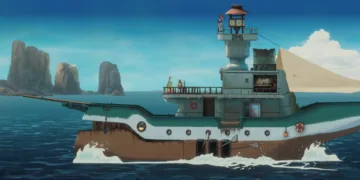
This time, the player controls Fig, a posing doll who awakens in the Forgotten Lands with little sense of who she is or what she is meant to do. That premise fits the series unusually well. A posing doll exists to be shaped by others, so Fig’s gradual movement from blank newcomer to captain of the Volare and mediator between tribes gives the story a clean thematic spine. She is joined by Dilla, a scarf and polaroid-camera forgotling whose design neatly combines protection and memory. In a game obsessed with what objects retain after humans stop seeing them, that pairing matters.
The threat is the Beast, a force that pushes the divided tribes toward disaster. It is not the most memorable villain ThroughLine could have built, mostly because it functions less like a character and closer to a pressure system. The real drama sits between the tribes, their histories, and their competing ideas of what a lost object should become.
Five Answers to Being Forgotten
The Forgotten Lands are the reason Forgotlings works as well as it does. The world is built from a simple rule: objects that have been discarded, misplaced, or abandoned continue somewhere else, carrying traces of use, affection, and identity. From that rule, the game draws a surprisingly rich society.
The five tribes give the world its structure. The Videra, housed in the Ancient Park, respond to loss through knowledge and preservation. The Aufero, tied to markets, engineering, and currency, push toward invention and commerce. The Servus build their identity around care and protection on Shelter Island. The Sonavi live through exploration, crystals, movement, and the promise of the next horizon. The Karus retreat into spiritual reflection in the Mangroves, looking beyond the material form that once defined them.
What makes these groups interesting is that the game does not treat one tribe as obviously correct. Their values clash because each answer is incomplete. The ruined Agora, once a shared meeting place for leaders, gives that division a physical shape. You do not need a lore entry to understand what has failed there. The architecture tells you.
Fig’s role works because she stands between these positions without fully belonging to any of them. The Volare, her sentient ship and travelling base, extends that idea into a crew: a headless mannequin, a chess piece, a princess hat, a broken drill, and other forgotten figures whose bodies are little arguments about identity. Compared with Forgotton Anne, the cast is broader, stranger, and sometimes less sharply focused, but the world feels richer for it.
Choices, Board Games, and Blunt Swords
The biggest mechanical change from Forgotton Anne is scale. Forgotlings uses semi-open 2.5D regions with backtracking, unlockable abilities, hidden routes, and previously blocked paths. It borrows from Metroidvania design without turning into a pure example of the genre. Exploration works best in places like Pono Market or the Ancient Park, where layout, color, music, and background detail all express the tribe that built the space.
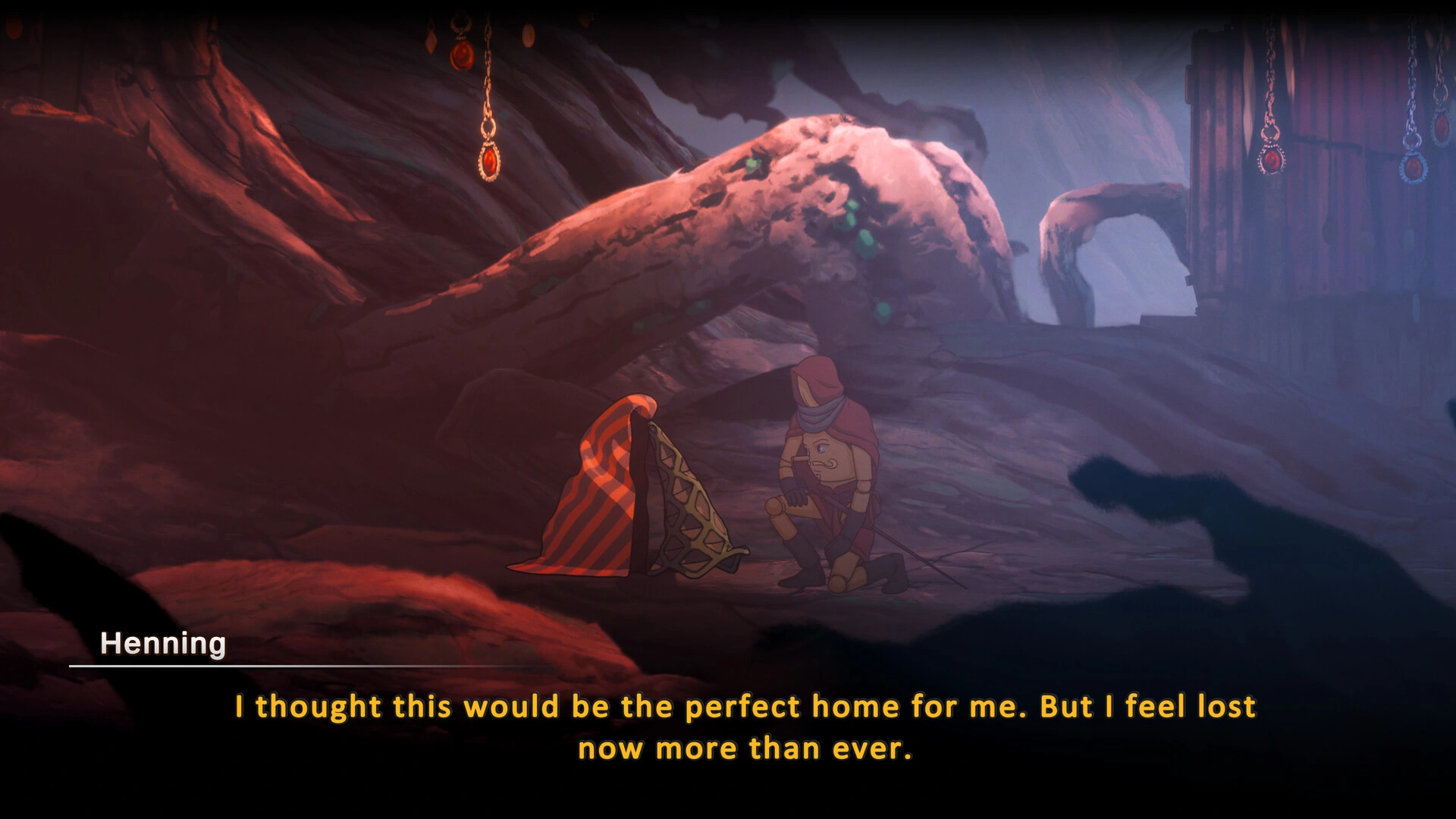
The choice system is where the game’s design most clearly matches its themes. Conversations give Fig four attitudes: Challenge, Encourage, Empathize, and Question. These are not simple good or bad buttons. They ask the player to read the emotional state of a forgotling and decide what kind of relationship Fig is trying to build. That is a natural evolution from the moral decision-making in Forgotton Anne, and it suits this prequel’s focus on diplomacy.
INA, the board game played across the Forgotten Lands, is another smart addition. Its crystals, eight pieces, and tribe-based powers make it feel like a local tradition rather than a random side activity. It can earn favor, create openings, and turn play into a shared language between groups that otherwise distrust each other. It can feel dense at first, and some players may treat it as a detour, but it belongs to the world in a way many minigames do not.
The action is less convincing. Fig can swing a sword, dodge, use rage attacks, and rely on Dilla’s support moves to blind or blitz enemies. These fights are readable, but they do not gain enough depth across the adventure. Stealth sections add variety, with Fig whistling to distract guards and slipping past danger, and one sequence clearly enjoys its Metal Gear flavor. The problem is precision. Movement and enemy handling can feel looser than the game’s cinematic confidence suggests. Environmental puzzles, mostly boxes, switches, and sequence logic, keep the pace moving but rarely surprise.
A Playable Animated Film With Scuffed Edges
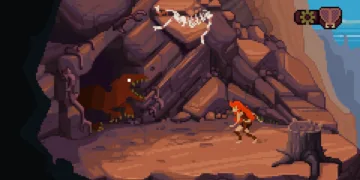
Visually, Forgotlings is easily ThroughLine’s most persuasive work. The hand-drawn animation gives characters expressive weight, from Fig’s doll-like posture to Blow, the sentient bellows whose breathy vocal performance turns a joke design into a full personality.
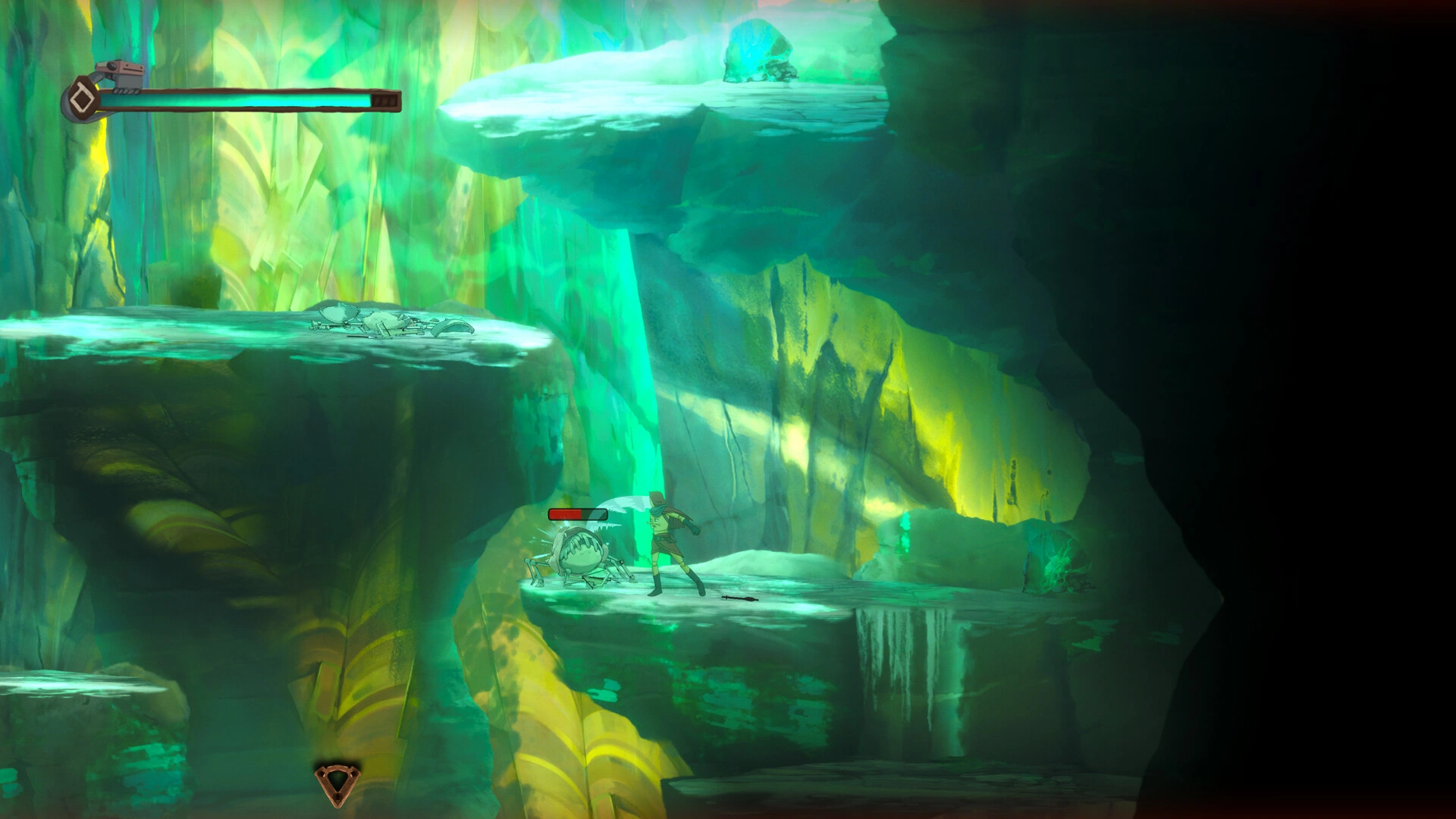
The Japanese-inspired art direction invites the Studio Ghibli comparison, but the stronger point is how carefully the style serves this specific world. These are objects with histories, and the animation treats their dents, shapes, and odd proportions as biography.
The 2.5D environments are also stronger than a flat description suggests. Pono Market feels crowded and layered, Shelter Island has a defensive stillness, and the Mangroves carry a suspended, spiritual atmosphere. Cutscenes and gameplay often flow into each other with little friction, giving the adventure the rhythm of an interactive animated feature.
The voice cast is solid, though uneven. Blow makes an early impression because the delivery matches the character’s physical design so precisely. Fig can sound flatter, which weakens some emotional peaks, yet there is a fair argument that her neutrality fits a character still learning what shape to take. The music does heavier lifting. The Copenhagen Philharmonic Orchestra and Theatre of Voices give the world scale, while tribal themes help spaces feel culturally distinct rather than merely pretty.
There are technical rough spots. Steam Deck performance can dip below 30 frames per second, and bugs have reportedly ranged from small visual issues to rarer serious interruptions, though patches have improved stability. Those issues matter, especially in a game that relies so much on immersion.
Still, Forgotlings earns patience because its expansion feels purposeful. It is less elegant than Forgotton Anne in pure structure, yet wider in imagination, stronger in worldbuilding, and more ambitious in how it turns lost things into a society worth saving.
The Review
Forgotlings
Forgotlings is the broader, richer sibling to Forgotton Anne, trading that game’s tighter puzzle focus for a semi-open world, tribal politics, choice-driven relationships, and uneven action. Its combat and stealth never reach the same craft level as its worldbuilding, but Fig’s role as mediator, the INA board game, the Volare crew, and the hand-drawn presentation give the prequel a strong identity of its own. It is clumsy in the places it expands, and strongest where it remembers what made this universe matter.
PROS
- Rich Forgotten Lands lore
- Strong Fig character arc
- Beautiful hand-drawn animation
- INA fits the world smartly
- Excellent music and sound design
CONS
- Combat lacks depth
- Stealth can feel imprecise
- Light environmental puzzles
- Some technical rough edges