





























Karl has built his adult life like a firebreak. He leases cars for his father-in-law, has married into a comfortable family, and is celebrating the naming of his infant son Elliot at a polished seaside hotel where even the starter is being debated with care. Salmon or asparagus is the sort of problem Karl wants. Then Vibeke walks into breakfast.
Mads Mengel’s The Guest understands that estrangement is rarely a clean narrative device. Karl has not spoken properly to his mother in roughly a decade, yet his sister Rikke has secretly invited her to Elliot’s ceremony. Vibeke has a history of hospitalization and psychiatric episodes, and Karl immediately begins watching her for signs of instability.
Rikke, who sees their mother several times a week, insists he is overreacting. The story’s mechanism is established within a few glances. One sibling survives by leaving. The other survives by staying. Put both strategies at the same table and wait.
Waiting for the Warning Sign
Trine Dyrholm makes Vibeke frightening because she spends so much time being delightful. Her entrance is cheerful and almost embarrassingly easy. Emilie’s family likes her. She tells a strange hitchhiking story, talks about studying Strindberg and joining a choir, and treats the weekend with the energy of someone determined to enjoy herself. David Bauer’s handheld camera keeps checking Karl and Rikke while she speaks. Their faces are running a separate version of the scene.
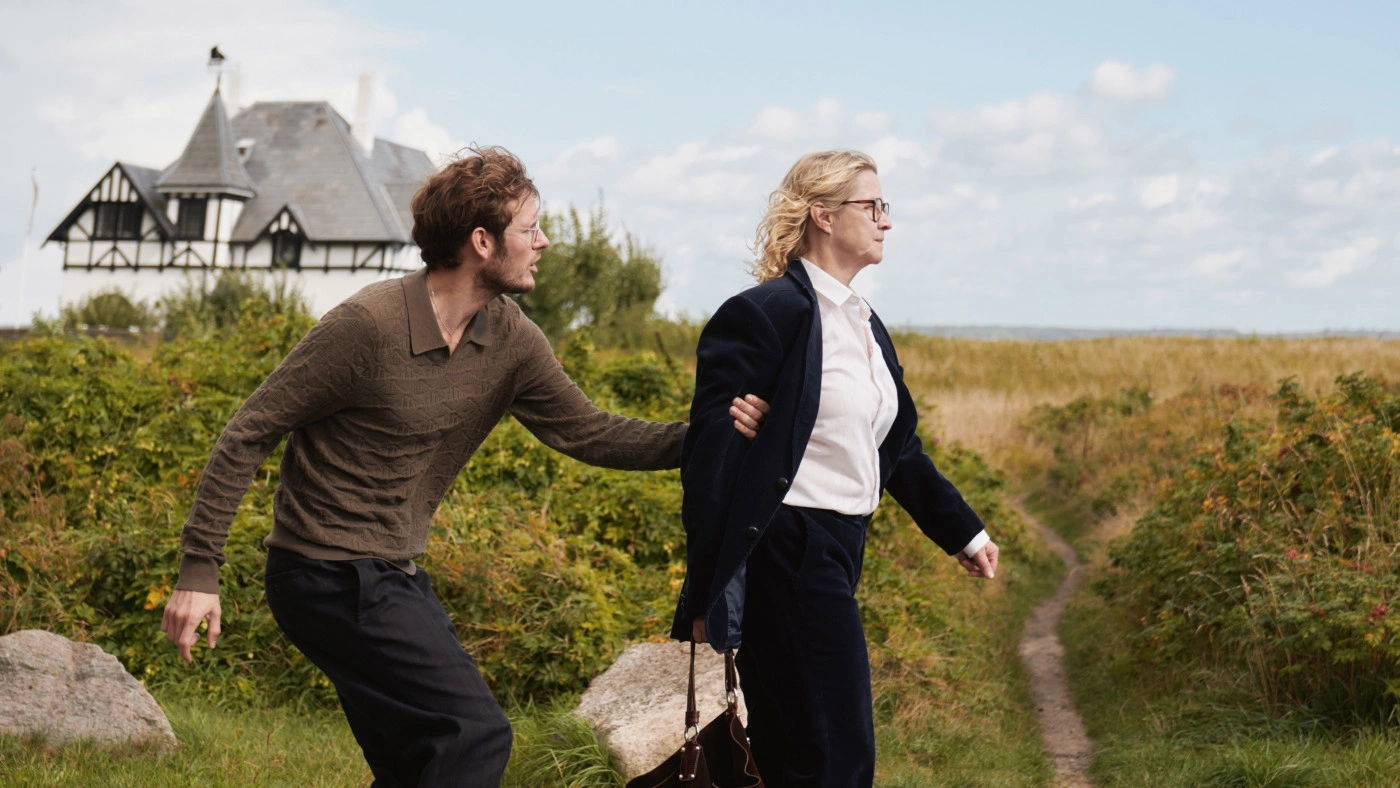
This is where Mengel’s structure is strongest. The audience has no independent method for judging Vibeke. We receive her through the exhausted pattern recognition of her children. A rambling story might be an eccentric anecdote. A joke might be a joke. Her playful slap of Rikke might be an ill-judged piece of affection. Or the pressure is starting to rise.
Also Read






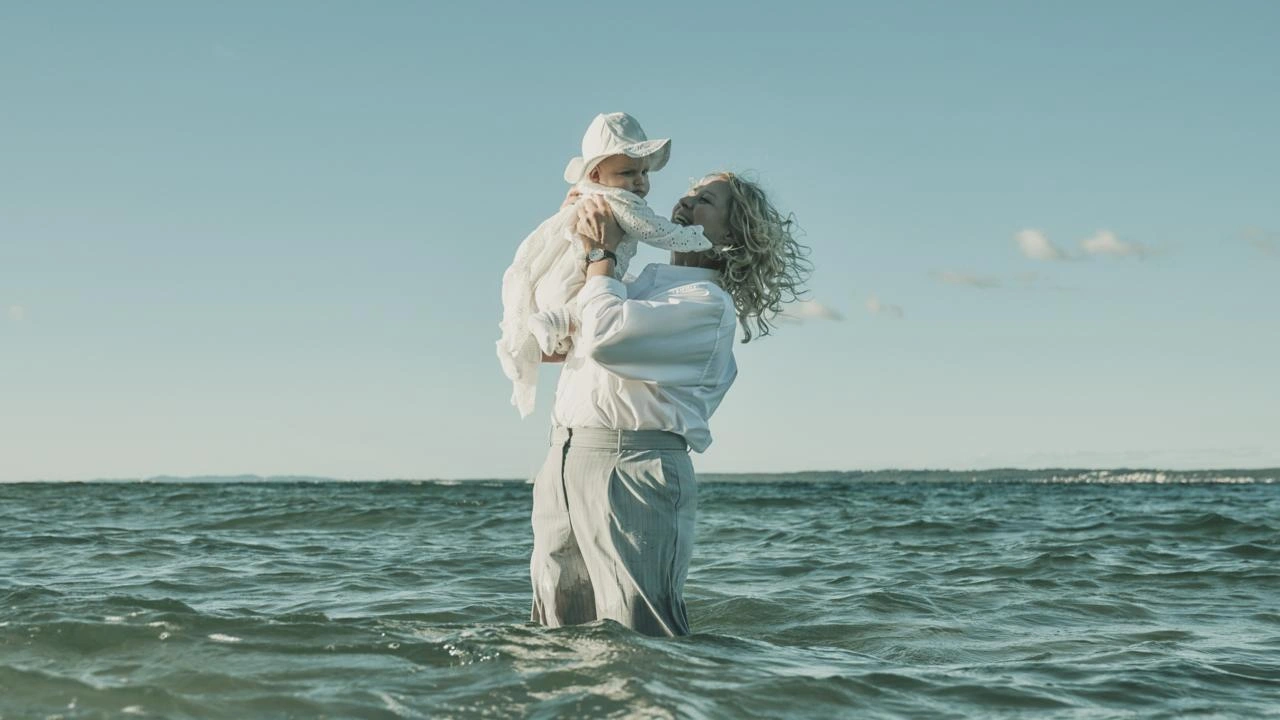
Dyrholm refuses to signal the answer too early. She shifts from warmth to imperiousness in tiny increments, then retreats again. During the seaside naming ceremony, Vibeke becomes emotional and takes control of Elliot in the water. Her decision to plunge the baby into the sea is alarming, but the fear arrives several beats before the action. Karl has already taught us to expect disaster.
Mengel occasionally plays fair with Vibeke, too. Her encounter with a teenage party has genuine joy in it, and her willingness to play football in her underwear while her clothes dry carries the loose, spontaneous pleasure her children seem to have exiled from their lives. Vibeke may be exhausting. She is also, occasionally, the most alive person at the hotel. That complication is the film’s best weapon.
Two Children, Two Survival Strategies
Karl’s response to his mother is easy to criticize until the film shows how quickly her presence changes him. Simon Bennebjerg plays him with a clenched stillness. When Vibeke mocks his job leasing cars, she lands the insult precisely where it hurts. Karl’s ordinary life is not an accident. The predictable job, the dependable in-laws, and the carefully arranged naming ceremony form a system designed against the childhood he survived. Vibeke sees boredom. Karl sees safety.
Rikke has made the opposite calculation. Josephine Park’s performance carries the fatigue of someone who has spent years translating crisis into routine. She knows how often Vibeke takes her medication, recognizes changes in her behavior, and understands that excluding her from a major family event creates a separate emergency that Rikke will probably have to handle alone. Karl accuses his sister of failing to set boundaries. He has the luxury of saying this because Rikke still answers the phone.
Mengel and co-writer Christian Bengtson are sharpest when they refuse to turn either sibling into the sensible one. Rikke insists that Vibeke is simply “over the top,” treating certain behaviors as personality rather than illness. Familiarity has given her useful instincts and dangerous blind spots. Karl, meanwhile, is so frightened of another episode that his attempts at prevention become disturbing.
The siblings’ decision to slip sleeping pills into Vibeke’s drinks is the clearest example. Structurally, it reverses the pressure. For much of the film, everyone is waiting for Vibeke to cross a line. Now her children cross one first.
Rikke’s difficulty connecting with Emma extends the damage beyond the weekend. Park plays her restraint without turning it into a speech about trauma. The script gives us a woman who stayed close to her mother, then quietly shows the cost of being permanently available to someone else’s instability. Nobody got out clean.
The Camera Cannot Step Back
Bauer’s cinematography treats distance as a privilege these characters do not have. At breakfast, the camera moves between Vibeke’s bright social performance and Karl’s fixed stare, often closing in before a reaction has fully formed. Quick pans and restless refocusing make the hotel feel less controlled with every scene. The technique carries a clear Dogme-influenced lineage, but Mengel uses it with greater sentimentality than the crueler Danish family dramas that hover around the film.
That softness sometimes works against the tension. Lasse Aagaard’s score grows increasingly insistent as the family loses control, occasionally telling us how heavily a scene should land when the performances have already done the job. The later eruptions are also difficult to treat as genuine surprises after the film has spent so long loading the weapon.
Still, Mengel earns the escalation by letting reconciliation appear possible first. Vibeke has lucid, generous moments that persuade Karl to lower his defenses. Dyrholm makes those scenes credible enough that his decision does not feel stupid. He is responding to the possibility every estranged child has probably rehearsed: this time might be different.
The handheld camera never shares his optimism for long. It stays close to Vibeke, Karl, and Rikke, watching each person misread the others by inches. In the background sits baby Elliot, the only member of the family without a survival strategy yet. Give him time.
The Danish drama film The Guest premiered on July 6, 2026, competing in the Crystal Globe competition at the Karlovy Vary International Film Festival, with regional distribution handled by Scanbox. The tense domestic drama unfolds during a weekend gathering at a seaside hotel for a baby’s naming ceremony, which quickly unravels when the husband’s estranged and mentally unstable mother arrives completely unannounced.
Full Credits
Title: The Guest
Distributor: Scanbox Entertainment
Release date: July 6, 2026
Rating: Not Rated
Running time: 100 minutes
Director: Mads Mengel
Writers: Christian Bengtson, Mads Mengel
Producers and Executive Producers: Victor Cunha
Cast: Simon Bennebjerg, Trine Dyrholm, Josephine Park, Peter Gantzler, Petrine Agger, Mette Klakstein Wiberg, Kristine Kujath Thorp
Director of Photography (Cinematographer): David Bauer
Editors: Louis Emil Ramm Seeberg
Composer: Lasse Aagaard
The Review
The Guest
The Guest builds its tension from a brutally simple structural problem: Karl and Rikke have spent years developing opposite methods of surviving Vibeke, then one family celebration forces both methods into the same room. Mads Mengel keeps tightening that conflict through the breakfast-table glances, the sea ceremony, and the siblings' desperate attempt to drug their mother's drinks. Trine Dyrholm is exceptional, but Simon Bennebjerg and Josephine Park make the family history feel lived rather than explained. The film occasionally leans hard on familiar Danish dysfunction, yet its character work is precise enough to keep the discomfort honest.
PROS
- Dyrholm's volatile, layered performance
- Sharp sibling conflict
- Excellent handheld tension
- Strong ensemble chemistry
- Precise family dynamics
CONS
- Familiar Danish family-drama territory
- Later meltdowns feel somewhat expected
- Score occasionally pushes emotion too firmly