































Naomi can conduct a sales meeting from a casino bathroom stall without letting her colleagues hear the slot machines outside. That feat of compartmentalization defines Jess Dang’s Surrender. Its heroine is not introduced in free fall. She is efficient, upwardly mobile, newly promoted, and practiced at making every private crisis look like a scheduling issue. Gambling enters this arrangement as another managed activity, right up to the point when management becomes the addiction’s favorite alibi.
Andrea Bang plays Naomi with a warmth that makes concealment plausible. She can reassure a colleague, smile at her mother, and keep Jovie waiting without appearing cruel. The performance gains force from the distance between that public fluency and Naomi’s silence when alone. When she scratches lottery tickets in secret or sits at a blackjack table after another sleepless night, Bang lets concentration harden into need. Her face does not announce collapse. It keeps trying to negotiate with it.
The Arithmetic of Escape
Dang understands that gambling addiction rarely presents itself as chaos at first. Naomi’s early win in Las Vegas gives her behavior the appearance of skill, and her memories of learning cards from her father support the illusion that she possesses some private mathematical advantage. The problem arrives when family debt gives that illusion a moral purpose. After finding the foreclosure notice her mother has hidden, Naomi decides that blackjack can rescue the household.
The decision is reckless, yet the film refuses to flatten it into stupidity. Naomi wants to solve the debt without exposing her mother, delaying her move to New York, or admitting that the family is frightened. Gambling offers a fantasy of intervention without conversation. One good night could preserve everyone’s dignity. It could also spare Naomi from saying aloud that her grandmother may have dementia and that she has no idea how to hold these pressures together.
The casino scenes grow tighter as that fantasy erodes. Early play carries alertness and pleasure. Later hands produce rigid focus, followed by the blank panic of a losing streak. Faroukh Virani’s editing accelerates with Naomi’s desperation, while Tangelene Bolton’s score becomes increasingly present. The craft avoids hysteria. It shows how repetition, once comforting, begins to consume every available space.
What the Family Refuses to Say
The film’s strongest material places Naomi’s addiction inside a family culture built around concealment. Flashbacks of her father teaching her cards first resemble affectionate memories. Their meaning changes once later scenes reveal his abuse of June and Gran Mi’s decision to remain silent to protect appearances at church. The cards become part of an inheritance whose true value was hidden from the child receiving it.
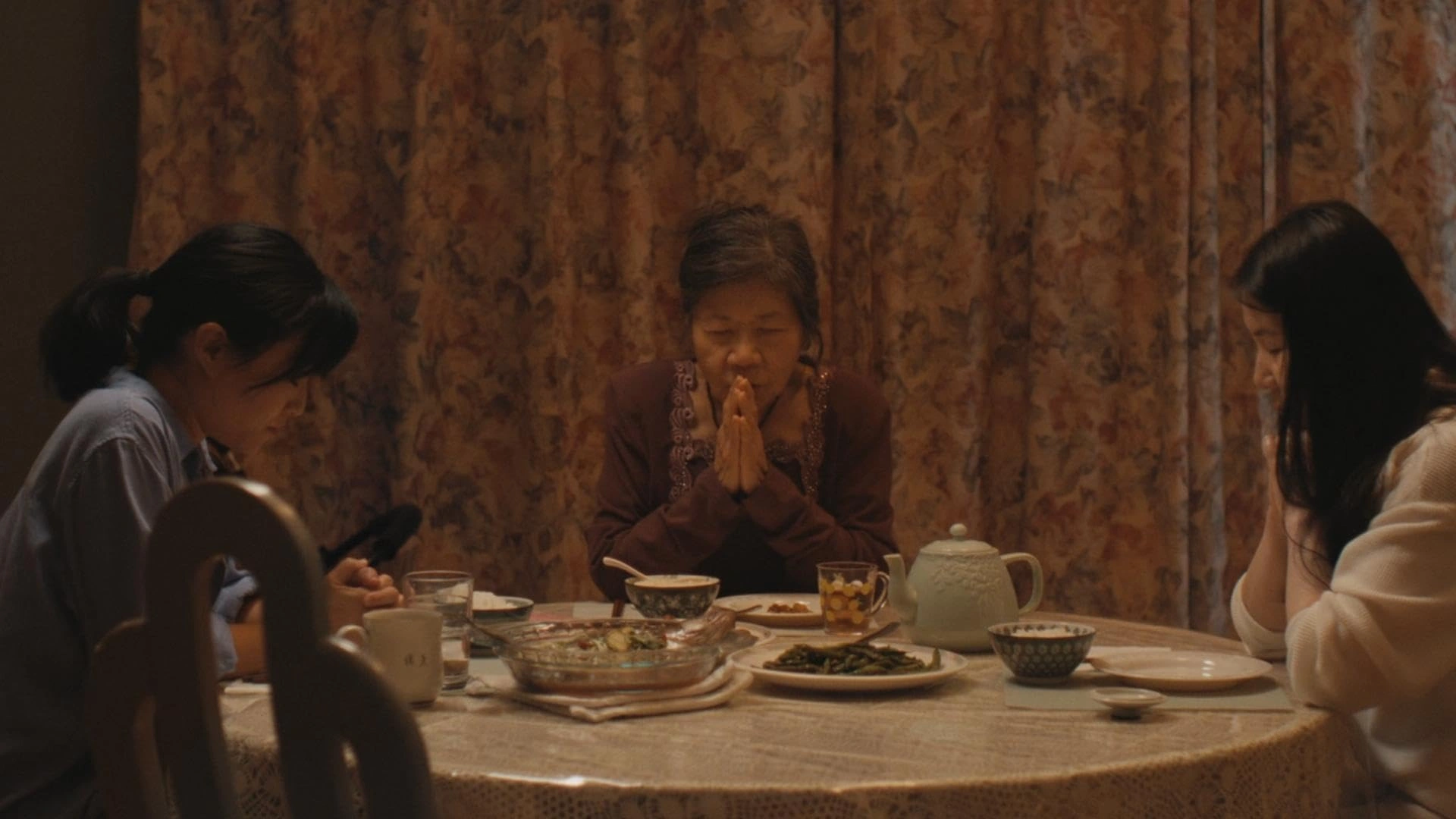
Each generation develops its own method of preserving the household’s surface. Gran Mi suppresses violence. June hides the foreclosure notice. Naomi withholds the New York promotion from Jovie and ignores repeated calls while returning to the casino. These actions differ in scale, yet they share the same belief: exposure is the greater danger.
Dang is precise about the cost of that belief. Gran Mi nearly sets the kitchen on fire, forcing June to research dementia after avoidance is no longer possible. Naomi tells Jovie about the promotion only after the decision has entered her life, turning what should have been a shared conversation into evidence of distance. Jovie’s anger lands because Naomi treats intimacy as another place where information can be rationed.
The romantic thread remains thinner than the family drama. Nozipho McLean gives Jovie a clear emotional position, especially in the promotion scene, but the screenplay leaves too little room for the relationship to develop beyond Naomi’s withdrawal. The omission matters because Jovie represents connection outside blood, duty, and inherited shame. The film sees that possibility, then keeps it at the edge of the frame.
A Controlled Collapse
Rubén Mendoza’s cinematography separates Naomi’s worlds without reducing them to a simple bright-versus-dark scheme. The casino’s seduction lies in activity, color, and constant promise. Home and work are rendered in muted tones, with blurred compositions and handheld instability appearing as Naomi’s attention fractures. The camera keeps ordinary rooms from feeling dependable.
That restraint gives Surrender its honesty and creates its main limitation. The pacing can become overly patient, particularly before the final act tightens around Naomi’s losses. The narrative follows a familiar progression from private thrill to isolation, deception, and financial damage, so its surprises come from performance and family detail rather than plot.
Bang carries that burden with remarkable discipline. During the losing streak, she plays a woman using the same habits that once made her successful: concentration, self-reliance, secrecy, and the ability to keep moving while frightened. Surrender’s sharpest cultural observation sits inside that continuity. The qualities praised in an ambitious professional become dangerous when every crisis is treated as a private test of competence.
Dang never asks the audience to admire Naomi’s suffering or excuse the harm she causes. She shows addiction thriving inside virtues distorted by pressure. A daughter tries to save a house, a granddaughter tries to protect an elder, a partner tries to avoid becoming a burden. At the blackjack table, each responsibility is converted into one more reason to stay for the next hand.
This Indian Tamil-language crime thriller released theatrically on August 1, 2025, and is available for streaming on Sun NXT and Prime Video. Set during a tense election period, the story follows a senior police officer and a young recruit who scramble to recover a politician’s missing surrendered gun before chaos erupts.
Full Credits
Title: Surrender
Distributor: Sun NXT, Prime Video
Release date: August 1, 2025
Rating: 18+
Running time: 2 hours 16 minutes
Director: Gowthaman Ganapathy
Writers: Gowthaman Ganapathy
Producers and Executive Producers: VRV Kumar
Cast: Tharshan, Lal, Sujith Shankar, Munishkanth, Padine Kumar, Mansoor Ali Khan
Director of Photography (Cinematographer): Meyyendiran Kempuraj
Editors: Renu Gopal
Composer: Vikas Badisa
The Review
Surrender
Surrender refuses to turn addiction into spectacle. Jess Dang locates Naomi’s collapse in concealed lottery tickets, unanswered calls, and the dangerous belief that another hand can restore order. Andrea Bang’s disciplined performance keeps that deterioration painfully credible, while the three generations of women around her reveal how silence becomes an inheritance. The measured pacing occasionally drains urgency, and Jovie remains underserved, yet the film’s restraint gives its portrait of compulsion unusual honesty.
PROS
- Andrea Bang’s controlled performance
- Patient portrayal of addiction
- Rich generational family dynamics
- Restrained visual and sonic craft
CONS
- Occasionally sluggish pacing
- Underdeveloped romantic relationship
- Familiar addiction trajectory