





























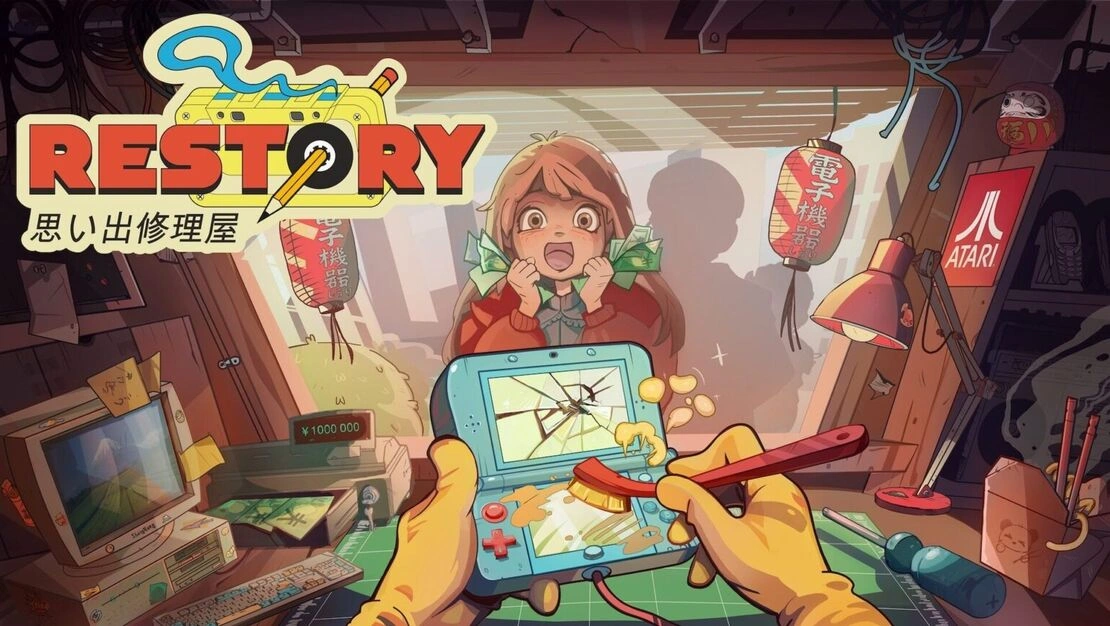

Mid-2000s Tokyo is an unusually precise place to build a cozy game around obsolete electronics. It was a period when portable technology was shrinking, game hardware was diversifying, and devices still invited owners to imagine that a screwdriver might reveal something understandable inside. ReStory: Chill Electronics Repairs turns that moment into its playground.
Developed by Mandragora and published by tinyBuild, the game places you behind the counter of a small electronics shop inherited from its previous owner. Before customers arrive, there is dust to clear and furniture to straighten. Soon the workbench begins filling with Nokia-like mobile phones, portable music players, cameras, consoles, radios, and Atari hardware. The nostalgia is specific rather than decorative. These machines matter because you are expected to open them.
Screws, Circuits, Repeat
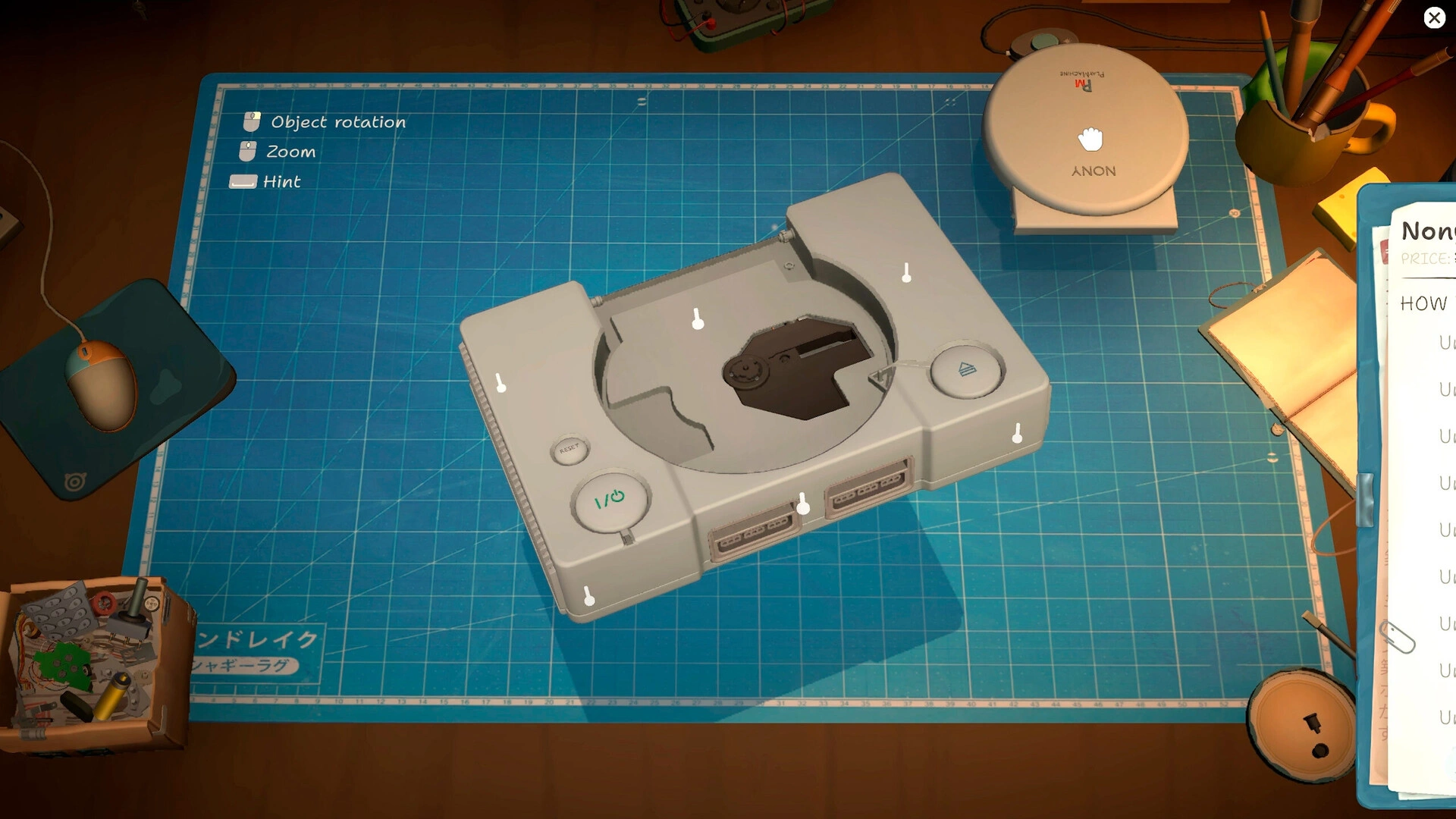
Repairing an Atari 2600 establishes ReStory’s philosophy better than any tutorial could. Flip the console over, remove its screws, lift the casing, work through the internal pieces, locate dirty or damaged components, then rebuild everything in reverse. Burned parts go in the bin. Dusty ones can be brushed clean. Missing replacements can be ordered through the shop computer.
The process resembles the logic of actual electronics repair while sanding away its harsher edges. Circuit boards, ribbon cables, connectors, and screws occupy plausible positions, yet the game rarely punishes imperfect handling. Parts tend to make their intended sequence clear, and a component can be removed once the surrounding path is open.
That places ReStory somewhere between detailed repair simulators and the broader cozy-management tradition. It wants the satisfaction of technical work without requiring technical training. The compromise works because handling recognizable machines carries its own reward. Taking apart a chunky phone or old console becomes a small act of technological archaeology.
Progression keeps that routine moving. Early money buys licenses for harder categories of hardware, while upgraded screwdrivers dramatically reduce the time spent turning screws. Soldering eventually introduces circuit-board work, and donor electronics provide another source of useful parts. The shop computer handles online repair requests, replacement orders, decorations, and other purchases.
ReStory also refuses to turn time into an enemy. Customers prefer quick service, but days end when you decide to finish them. You can work deep into the night or close early without a clock constantly shoving you toward optimization.
Then the repair competitions arrive. Devices are handed over fully dismantled, and you must reconstruct them correctly against a timer. Put something in the wrong place and the attempt can reset while the seconds continue disappearing. After hours of unhurried workshop labor, that sudden pressure feels almost culturally backward for the game. It is effective precisely because the workbench has trained you to associate electronics with patience.
Broken Gadgets, Messier People
Tokyo’s repair counter gradually becomes a place where customers bring personal complications alongside broken hardware. One early phone contains a hidden number, leaving you to decide if its owner should learn about it. A nervous romantic seeks help connected to his crush. Another customer, represented by a bucket decorated with a taped-on smile, needs an Atari joystick repaired for a Pac-Man tournament.
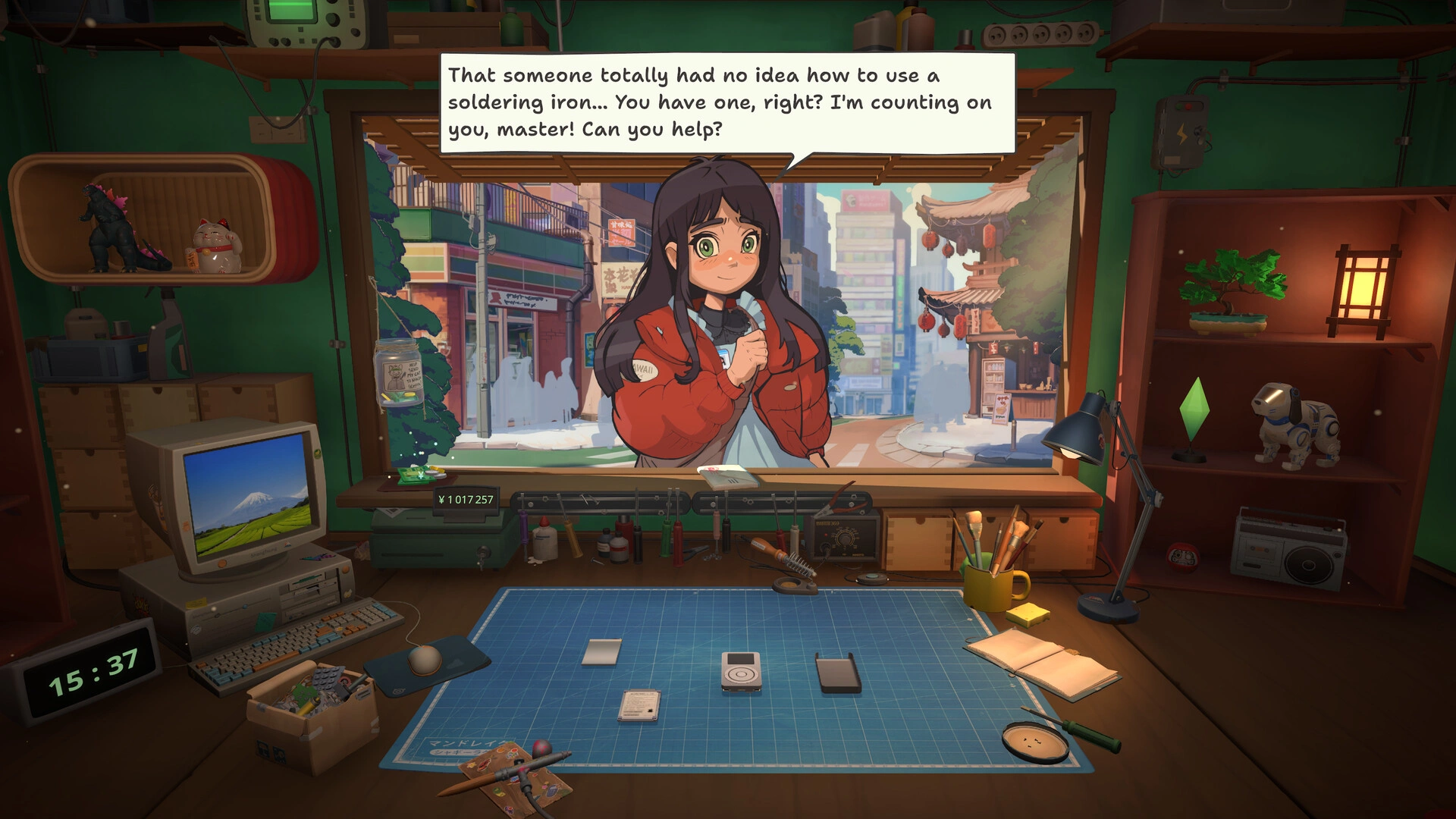
These exchanges create consequences that most service simulators avoid. Dialogue choices can alter later interactions, giving repeat visitors continuity beyond their latest damaged device. The structure draws on Japanese neighborhood storytelling, where a small commercial space becomes a junction for intersecting lives, while pairing that tradition with the branching choices common to Western narrative games.
The tone becomes stranger as the campaign develops. Questions surrounding the previous shop owner and a major repair competition lead toward theft, betrayal, suspicious alliances, and hints of espionage. Customers begin trusting the repairman with information that could affect other people.
There is tension between those halves. Someone who came to quietly clean an old circuit board may resent several screens of dialogue delaying the next screwdriver job. Players drawn into the mystery may begin rushing repairs to reach another conversation. ReStory permits both reactions, yet its strongest narrative device remains wonderfully simple: people reveal themselves because they need something fixed.
Lo-Fi Under Fluorescent Lights
The workshop’s presentation understands the appeal of repetition. Softly stylized characters stand against carefully modeled electronics, while lo-fi tracks drift from a boombox during long repair sessions. Shop decorations slowly turn the inherited space into something personal.
The music selection eventually exposes its limited size. Hearing familiar tracks cycle again after dozens of screws and circuit boards makes the radio feel less like atmosphere and closer to another machine requiring maintenance. Greater playlist control would suit a game built around letting players establish their own pace.
Small interface problems create similar friction. Device rotation can overshoot the angle needed to reach a particular screw, while the removal rules occasionally become so forgiving that screws can be extracted from implausible positions. The manual day-ending system could also be explained earlier.
Repetition poses the larger problem. Disassemble, clean, replace, rebuild. The verbs rarely change. Better tools, soldering, new device categories, and competitions alter their tempo rather than replacing them.
Yet there is something culturally fitting about a game set during technology’s rapid march forward finding pleasure in moving the opposite direction. ReStory asks you to stop, open yesterday’s machines, inspect how they were assembled, and return them to people who still have reasons to keep them.
The Review
ReStory: Chill Electronics Repairs
ReStory: Chill Electronics Repairs finds warmth in a very specific technological past, rebuilding mid-2000s Tokyo through Nokia-style phones, Atari hardware, portable players, and cluttered workbenches. Its strongest trick is making restoration tactile without demanding an engineering degree: screws, damaged boards, replacement components, and soldering establish a satisfying rhythm. The neighborhood mystery sometimes pulls too aggressively against that calm, while repetitive jobs and limited music expose the loop’s seams. Still, few cozy simulators make obsolete hardware feel this alive, especially once repairing yesterday’s technology begins changing the people who bring it through the door.
PROS
- Detailed, recognizable electronics
- Satisfying repair progression
- Strong mid-2000s Tokyo identity
- Meaningful customer choices
- Relaxed, player-controlled pace
CONS
- Repair loop grows repetitive
- Limited lo-fi soundtrack
- Occasionally awkward device rotation
- Narrative can interrupt the workshop rhythm