


















Found footage has spent decades pretending that somebody happened to be holding a camera at exactly the wrong moment. Snapshot pushes that excuse back to 1888, then makes the impossibility part of its charm. Director Joseph Archer and writer Cathy Wippell imagine an amateur inventor named Tamworth, voiced from behind the lens by Tom Stourton, recording Whitechapel through a moving-image machine equipped with synchronized wax-cylinder sound. Historically, the setup is absurd. Cinematically, it gives Archer a terrific toy.
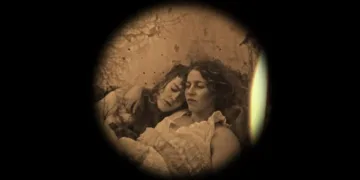
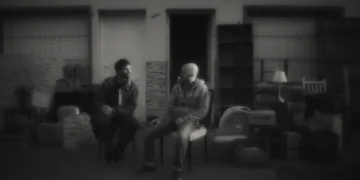
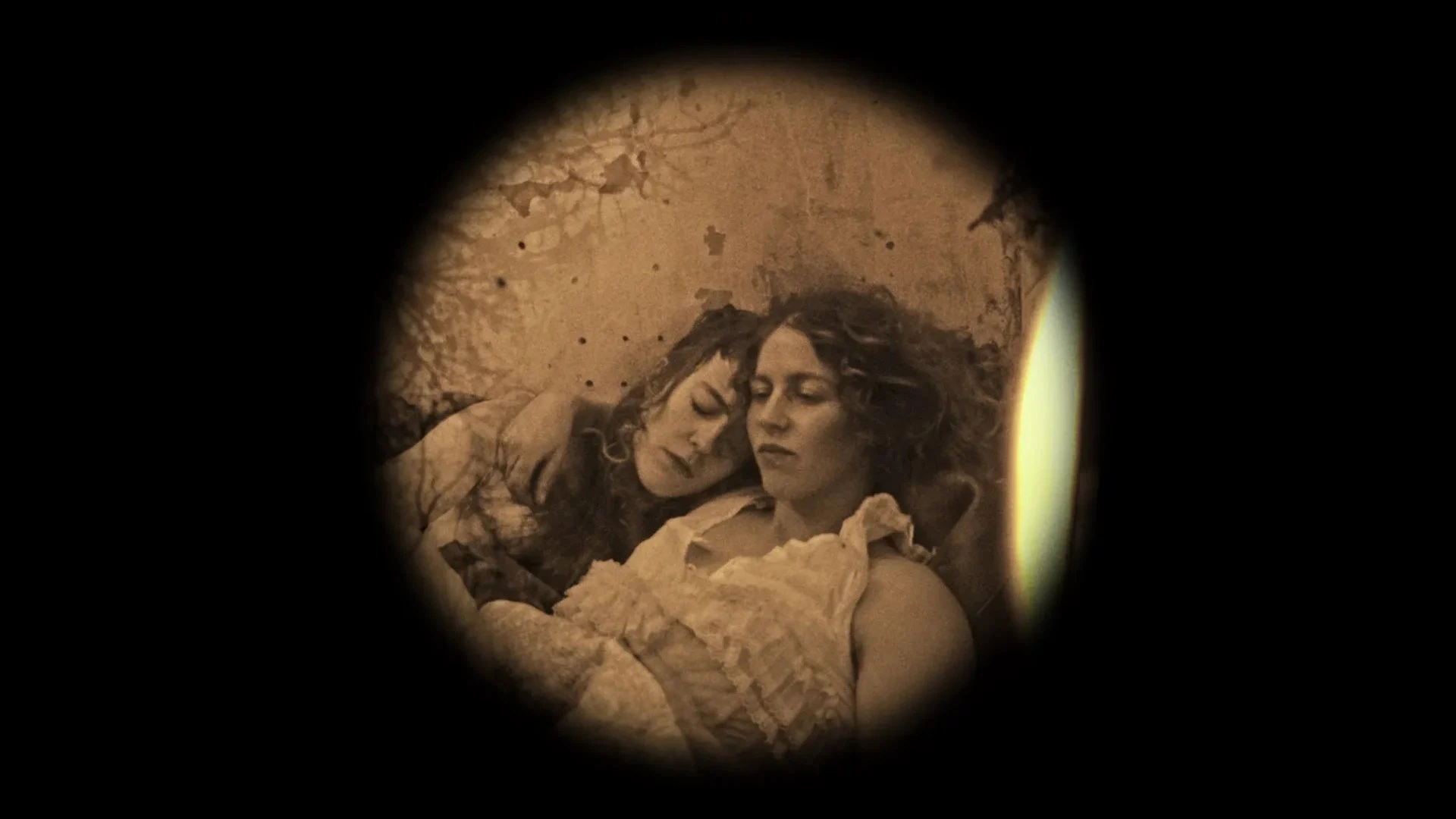
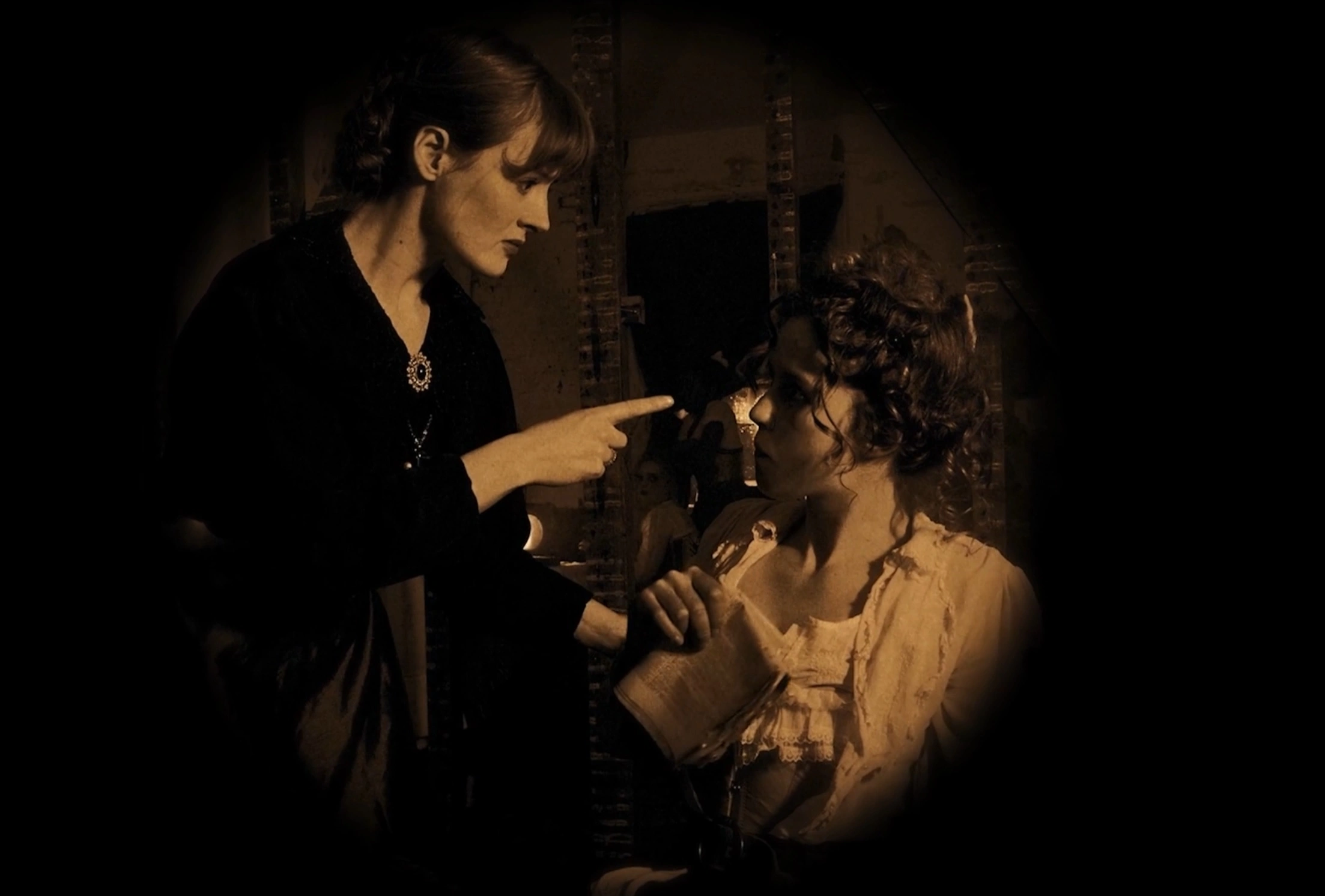
Every image appears inside a circular pinhole frame, coated in sepia, scratches, flicker and sudden damage. The easiest way to describe the effect is that Archer treats the frame itself as missing information. We see whatever Tamworth points toward, while corners, approaching figures and entire rooms vanish beyond the black circumference.
When frames suddenly repeat or screaming faces flash between cuts, the movie makes editing feel like physical corruption rather than invisible technique. The opening text says these reels were discovered in 2026 and had already been cut, reordered and manipulated. That warning matters. Snapshot asks us to distrust an image while spending 86 minutes trapped inside it.
Ghost Hunting During a Murder Spree
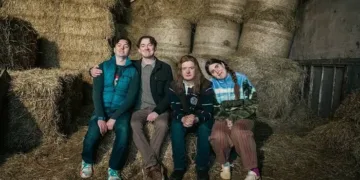
Tamworth’s main subjects are women living under very different forms of Victorian restriction. Minnie Penworth, played by Wippell, comes from a comfortable family but keeps returning to Whitechapel to see Fanny, Hazel Rogers’ sex worker living under the protection of the formidable Madam Evelyn. Molly and spiritualist Constance join them in a theory that gives the film its supernatural hook: Jack the Ripper may be a spirit rather than a man.
The investigation works best when Archer lets ordinary danger and paranormal possibility occupy the same space. During a search through an abandoned building used by sex workers, a group of men enters and briefly appears threatening. The scene then pivots when Tamworth finds a murdered woman inside, an interior door knocking repeatedly against her body. Nothing leaps toward the camera. The horror comes from realizing what the sound has meant all along.
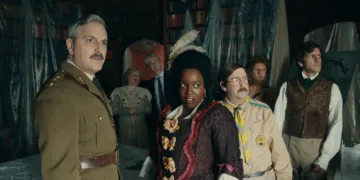
A séance takes a similar approach. A candle extinguishes, one participant begins convulsing and the group’s attempt to contact the dead suddenly feels much less theatrical. Archer keeps these incidents sparse, leaving long passages for drinking, card games and conversation.
I like that patience up to a point. Those quieter scenes sell Tamworth’s footage as accidental documentation rather than a modern screenplay racing toward set pieces. The problem arrives later, when conversations and investigations begin circling material the film has already established.
Who Gets to Point the Lens?
The strongest idea in Wippell’s script has little to do with proving the existence of ghosts. Tamworth appears sympathetic to the women, yet the audience still receives their lives through a male observer who controls the camera.
That tension sharpens during scenes dealing with the Ripper’s growing celebrity. A tour is already guiding spectators around murder sites while killings are still occurring, and its customers care about locations and gruesome details rather than the women themselves. Elsewhere, sex workers describe clients offering money to recreate the positions in which victims were discovered. The murders become entertainment almost immediately.
One darkly funny interview captures the same appetite from another angle. A grandstanding witness demands payment before revealing what the Ripper looks like, takes the cash, then simply runs away. It is funny because the timing is clean, but the joke also exposes how quickly fear produces opportunists.
Archer extends that idea through Tamworth’s footage. Recording something does not automatically make it truthful. He chooses where to stand. Newspapers shape what his subjects believe. Interviewees can lie. Someone later rearranges the reels. The technology changes, yet the problem remains recognizable. The recurring music-hall song “Two Lovely Black Eyes” gives that anxiety a bitter rhythm, pairing jaunty performance with a story increasingly concerned with violence against women.
The Limits of the Pinhole
Archer’s commitment to the visual conceit is impressive because practically every department has to cooperate with it. Costumes, hair, interiors and street locations stay convincing inside the tiny circle. A modern object appearing at the edge of the frame could wreck the illusion instantly, so the production’s control matters.
Sound does some of the best work. Hooves strike cobblestones outside the image. Clocks tick inside rooms. Church bells suggest streets Tamworth cannot show us. Since the frame is so restricted, these noises effectively become off-screen geography. Archer lets your ears build the London his camera cannot contain.
The performers have a tougher assignment. Wippell gives Minnie a useful mix of curiosity and sheltered confidence, while Rogers brings vulnerability to Fanny without reducing her to a future victim. Nadia Lamin’s Evelyn supplies blunt authority whenever the group threatens to drift into theatrical ghost-hunting enthusiasm. Some exchanges still feel stiff, especially when characters have to explain events occurring outside Tamworth’s narrow view.
The format also limits character growth. Once Minnie, Fanny and the others settle into their roles within the group, the second half gives them little room to change. The recovered-footage framing creates another small contradiction: if somebody assembled these reels to illuminate the Ripper mystery, it is strange that so much casual drinking and card-playing survived the edit.
Still, that circular image remains difficult to shake. Archer turns a technical restriction into the film’s visual grammar, then uses scratches, missing frames and off-screen sound to make absence itself frightening. Snapshot occasionally feels trapped inside its experiment, but the experiment keeps producing images and sounds that conventional found footage rarely reaches.
Snapshot premiered in competition at the 2026 Edinburgh International Film Festival. The horror film follows an all-female ghosthunting group in Victorian London who attempt to prove that a series of brutal murders is being committed by a malevolent spirit rather than Jack the Ripper, documenting their investigation using an experimental moving image camera.
Full Credits
Title: Snapshot
Distributor: Alief
Release date: August 2026 (Edinburgh International Film Festival)
Running time: 85 minutes
Director: Joseph Archer
Writers: Cathy Wippell
Producers and Executive Producers: Joseph Archer, Chippy Babu, Suresh Cedrick Pereira, Mario Stefan
Cast: Tom Stourton, Cathy Wippell, Hazel Rogers, Lydia Helen, Nadia Lamin, Rosie-Bella Johnson
Director of Photography (Cinematographer): Joseph Archer
Editors: Joseph Archer
The Review
Snapshot
Snapshot finds a clever way to make found footage feel unfamiliar again, using its circular pinhole frame, distressed editing and carefully layered sound to turn Victorian London into something both intimate and uneasy. Joseph Archer's formal commitment carries the film through stretches where the investigation begins repeating itself and the characters remain thinner than the concept deserves. The séance, abandoned-building discovery and grim Ripper tourism show how effectively its supernatural horror can merge with everyday misogyny and exploitation. Its experiment has limits, but the experiment is worth seeing.
PROS
- Inventive circular framing
- Excellent period sound design
- Strong Victorian atmosphere
- Sharp ideas about voyeurism and sensationalism
CONS
- Sluggish middle stretch
- Limited character development
- Occasionally stiff performances
- Found-footage logic strains credibility