




















Salvatore Mereu gives Wandering Trees the shape of an old story and the wounds of a modern one. Piero Arca lives with his young son Giuliano in a battered Sardinian farmhouse crowded with animals they have rescued, patched up, and kept alive. Donkeys interrupt homework. Pigs occupy domestic space. A tortoise can become part of the furniture. Their home feels less like property than temporary shelter shared by creatures unlucky enough to have been hurt elsewhere.
The nearby Nonne family interprets this tenderness as degradation. Sebastiano, a wealthy hunter played by Massimo Popolizio, fills his house with taxidermied animals and treats vulnerability with comparable violence. His son Emiliano befriends Giuliano, reads obsessively, and lacks the hardness his father prizes. Sebastiano responds by forbidding the friendship and, in one brutal scene, repeatedly driving Emiliano’s head against a sink.
Mereu arranges the conflict with fairy-tale clarity. One household heals animals. Another kills them. One father permits gentleness. Another tries to beat it out of his son. Yet the world around these oppositions feels stubbornly real. Blood hurts differently when the film has already asked us to believe in recognizable human psychology.
Fathers, Sons, and Inherited Violence
Years pass, and the families begin circling one another through children who are becoming adults without ever escaping what their fathers taught them. Giuliano grows into Romeo Perrone, carrying Piero’s reverence for nature without possessing his father’s certainty.
Emiliano remains the sensitive defect in Sebastiano’s military-minded household, overshadowed by his older brother Michelangelo. Lorenzo Richelmy plays Michelangelo with a rigidity that appears learned rather than mysterious. He has inherited his father’s appetite for hierarchy and converted it into posture, expectation, and entitlement.
Also Read






Then the film introduces the Brancas. Edoardo, an elderly man surrounded by books inside an aristocratic palazzo, seems almost absurdly gentle beside Sebastiano. His daughter Maddalena, played by Giulia Maenza, is engaged to Michelangelo. She laughs easily, behaves impulsively, and moves through rooms with none of her fiancé’s stiffness. Their relationship is also where Mereu’s fable begins slipping away from him.
Maddalena appears too alive for the role the story initially assigns her, yet the script offers little sense of why she has remained attached to Michelangelo. Fairy tales can produce cruel princes without paperwork. Human beings require motives. Maenza keeps suggesting thoughts behind Maddalena’s face that the writing rarely gives her space to articulate.
Emiliano suffers a similar fate. His books, friendship with Giuliano, and abuse by Sebastiano point toward a painful interior life. Then the narrative repeatedly leaves him behind. A character shaped by repression becomes another figure glimpsed through the trees.
The Children in the Forest
The film’s deepest rupture comes through absence. Giuliano returns home and finds the animals slaughtered. Piero is gone. The farmhouse that once seemed chaotically alive has become a graveyard without ceremony. Mereu does not need dialogue here. The emptiness carries the violence.
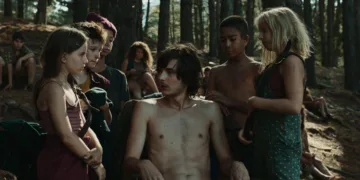
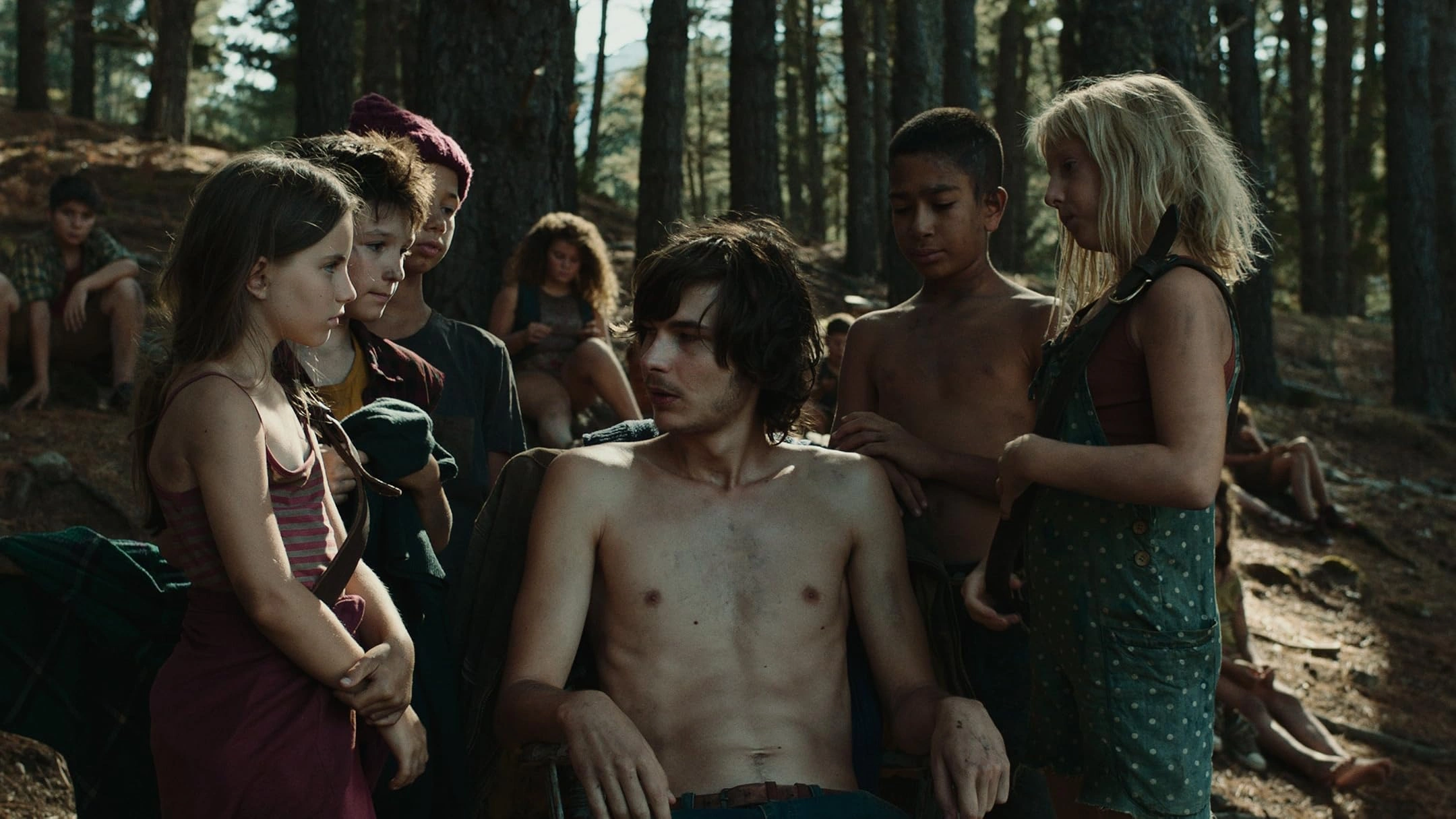
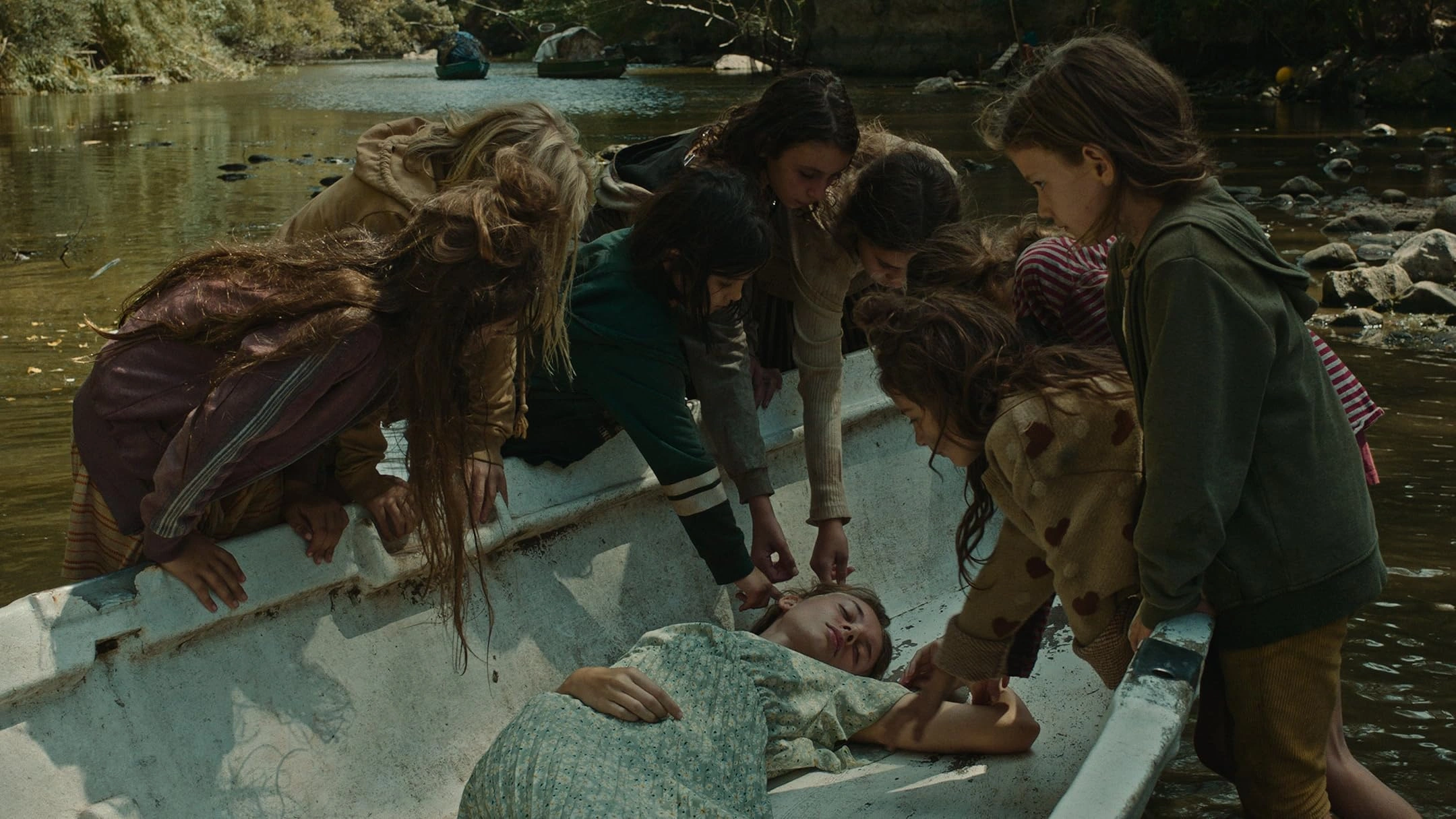
Giuliano searches for his father and heads toward the forest Piero called I Bambini, “The Children.” Earlier, the name sounded like another mystery passed from parent to child. Now the children appear.
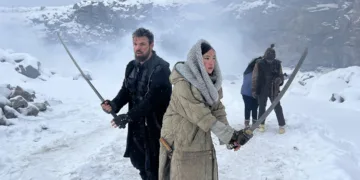
They live together beyond ordinary society, abandoned figures occupying a place where the rules of the surrounding town appear to have weakened. They first demand that Giuliano leave. Soon they want him to remain. The forest becomes refuge, dream, exile, perhaps all three.
Mereu gradually allows realism to dissolve here. Snow, trees, wandering children, and Giuliano’s memory of Piero begin occupying the same emotional register. Giuliano’s earlier study of Leopardi’s “L’Infinito” makes the symbolism almost painfully explicit, yet Francesco Piras’ cinematography often achieves what the literary signposting cannot. Trees dwarf people without making them insignificant. Paths disappear into pale distance. Human structures feel temporary beside the land.
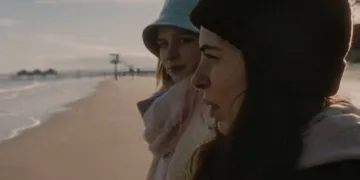
When Giuliano meets Maddalena, the film completes its fairy-tale machinery. The outsider finds the princess promised to the violent household. Their attraction arrives instantly, almost as destiny. That simplicity is beautiful for a moment. Then human questions return.
Roots That Refuse to Hold
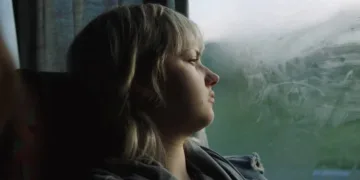
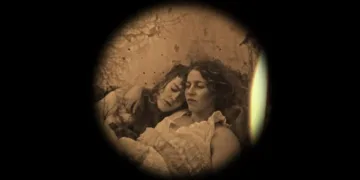
Piras photographs each family as if their homes have absorbed their morality. The Arca farmhouse is cramped, noisy, wounded, alive. The Nonne residence preserves death behind glass and polished surfaces. The Branca palazzo offers books, open rooms, and a softer form of privilege. I Bambini barely resembles a home at all. It survives through concealment.
Perrone gives adult Giuliano a searching quality that suits this geography. He rarely appears settled inside a room. His body seems prepared to leave before conversation ends. Maenza brings a flicker of playfulness to Maddalena, particularly beside Michelangelo, whose controlled behavior makes her spontaneity feel almost dangerous.
Alessandro Haber has less screen time once Piero disappears, yet his early scenes linger. Watching him tend injured animals establishes an ethic that the film spends three hours testing: care as a form of resistance. Popolizio supplies its corrupted mirror. Sebastiano does not merely dislike weakness. He seems frightened by its existence, which makes his treatment of Emiliano especially ugly.
Three hours give Mereu room to drift between families, generations, social classes, and states of reality. They also expose how many threads never receive the same care as the images surrounding them. Maddalena’s sisters hover at the margins. Emiliano fades when his conflict seems ready to deepen. The forest children carry enormous symbolic weight while remaining strangely unreachable as individuals.
There is something mournful in that incompleteness. Wandering Trees keeps searching for a place where tenderness can survive violence, and every possible refuge looks temporary. The farmhouse can be invaded. The wealthy home can become a prison. The forest protects its children only by hiding them. Even the trees seem to understand that staying rooted is sometimes another way of waiting to be found.
Wandering Trees (originally titled Alberi erranti) made its world premiere on August 10, 2026, in competition at the Locarno Film Festival. Set against the backdrop of northern Sardinia, the film follows a young man who embarks on a dreamlike journey to locate his father after his sudden disappearance, unraveling a deep exploration of identity and connection.
Full Credits
Title: Wandering Trees
Distributor: Viacolvento, Rai Cinema, Minerva Pictures International
Release date: August 10, 2026
Running time: 3 hours 0 minutes
Director: Salvatore Mereu
Writers: Salvatore Mereu, Alberto Capitta
Producers and Executive Producers: Salvatore Mereu, Elisabetta Soddu
Cast: Romeo Perrone, Giulia Maenza, Lorenzo Richelmy, Alessandro Haber, Massimo Popolizio, Maximilian Dirr, Lupo Barbiero, Edoardo Raiola
Director of Photography (Cinematographer): Francesco Piras
Editors: Jacopo Quadri, Salvatore Mereu
The Review
Wandering Trees
Wandering Trees finds its clearest language when people fall silent and Sardinia seems to speak for them. Giuliano walking into I Bambini after the slaughter of the animals carries a grief that the film’s fairy-tale logic cannot fully explain, yet Francesco Piras’ images give that grief a physical world. The three-hour structure leaves Emiliano, Maddalena, and the forest children stranded between character and symbol. Still, Salvatore Mereu creates something mournful and strangely beautiful: a story about people searching for somewhere violence cannot follow.
PROS
- Striking Sardinian landscapes
- Romeo Perrone’s earnest performance
- Strong ecological imagery
- Effective shift toward magical realism
- Memorable visual contrasts between families
CONS
- Underdeveloped secondary characters
- Thin romantic psychology
- Heavy-handed symbolism
- Uneven three-hour structure