






















Paul Di’Anno’s most revealing moments are not the ones where he sings. They are the ones where the stage lights disappear. Wes Orshoski’s documentary studies a performer after the mythology has cracked, leaving behind a man trapped between the person fans remember and the body that refuses to cooperate.
The camera rarely lets Di’Anno hide. His wheelchair, damaged legs, medical procedures, and moments of anger become part of the visual language. The documentary observes him with the patience of a character study, refusing the flattering angles usually reserved for rock icons.
Every frame asks the same question: what remains when the voice that built a legacy is fighting against everything else? This approach gives the film a strange noir quality. The hero has already lived through his defining chapter. The investigation happens afterward, among the consequences.
A Voice Lost in the Shadows
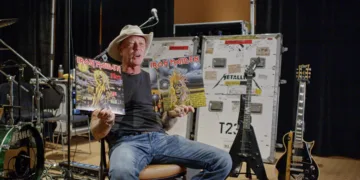
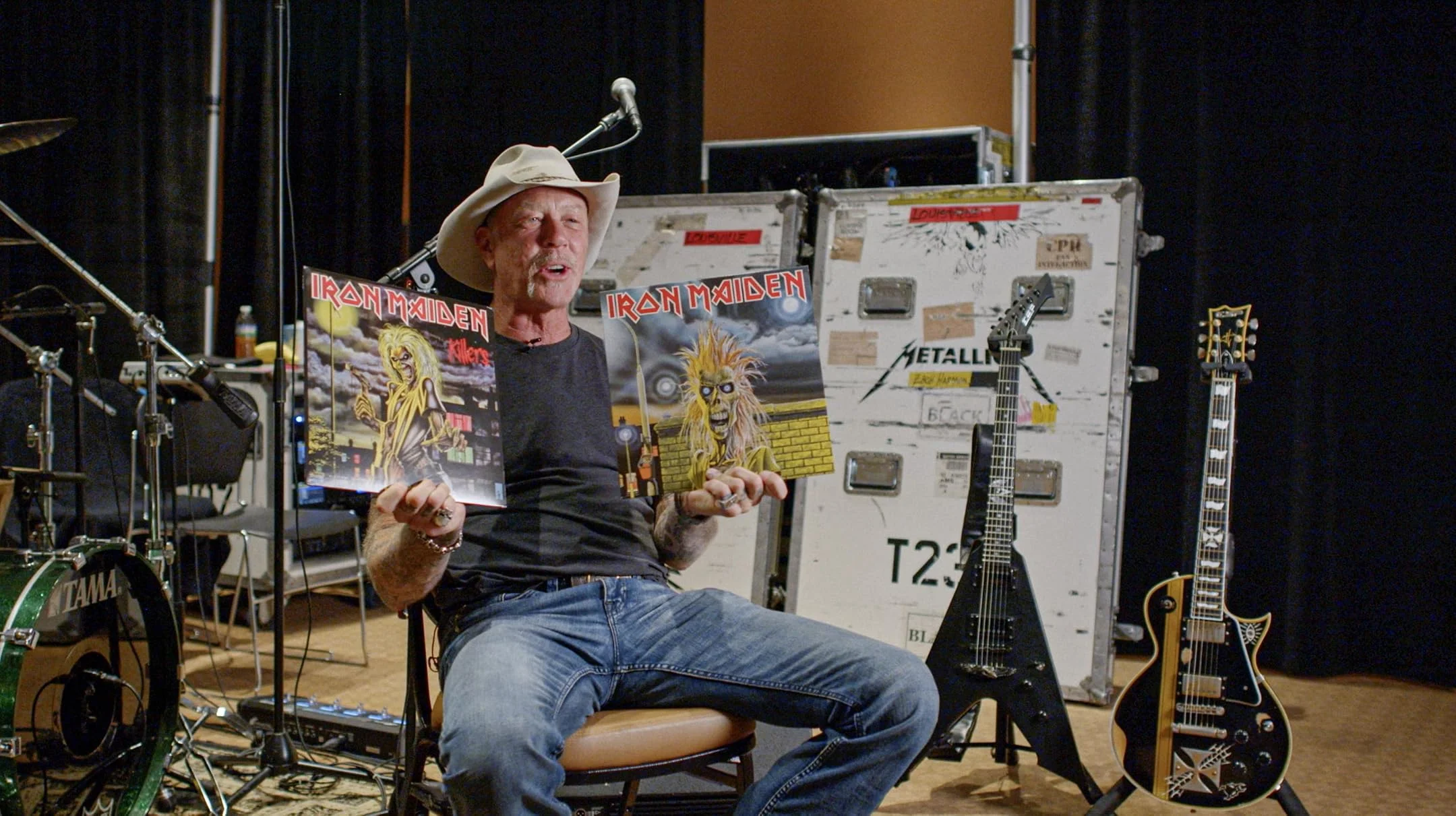
The archival footage of Di’Anno performing with Iron Maiden carries a completely different energy. Young, confrontational, and carrying a rough vocal attack closer to punk aggression than traditional metal theatrics, he appears like a man built for a smaller, dirtier stage. The early Iron Maiden records, especially the self-titled debut and Killers, still carry that tension between precision and rebellion.
The documentary understands that his departure from Maiden created a strange historical position. He helped create the foundation, then watched the band become a global force after Bruce Dickinson took over. That uncomfortable space gives the story its emotional weight. Di’Anno is neither forgotten nor the central figure of Maiden’s mythology.
Interviews with musicians and former band members reinforce this complicated legacy. They remember the talent clearly, yet the film avoids turning memory into a polished monument. The past remains bright. The present is where the shadows gather.
The Ethics of Looking at Pain
The strongest choice Orshoski makes is refusing to protect his subject from uncomfortable truths. The camera stays with Di’Anno through his physical decline, from his inability to walk properly to the painful medical treatment required to give him a chance at recovery. The surgery footage is difficult because it removes the distance audiences often have from celebrity suffering. This is not a dramatic recreation of hardship. It is a body struggling in real time.
The documentary also examines Di’Anno’s personality with a sharp eye. He can be funny, charming, and grateful. He can also lash out at the people trying to help him. His frustration often becomes cruelty, creating a portrait of someone whose suffering explains his behaviour without excusing it. That moral uncertainty is where the film finds its power. A weaker documentary would choose either admiration or condemnation. This one stays in the uncomfortable middle.
The Long Road Back
The journey to Croatia, funded by devoted fans and organised by Stjepan Juras, becomes the documentary’s emotional centre. The supporters surrounding Di’Anno reveal a relationship between artist and audience that extends beyond music. They are preserving a piece of their own history through their effort to save his future.
The Croatian chapters also shift the film’s visual rhythm. The isolation of hospitals and medical spaces gives way to performances, friendships, and small signs of renewal. Di’Anno begins to reconnect with the identity that illness had taken away from him.
Yet the camera remains suspicious of easy redemption. Recovery is fragile. Old habits return. Physical improvement does not erase years of damage. The film understands that survival rarely arrives as a clean transformation.
A Metal Legacy in Human Form
Di’Anno’s story works because it refuses the simple image of the fallen rock star. He is a difficult man, a gifted singer, a source of inspiration, and someone who spent years fighting himself as much as his circumstances. The reunion with Steve Harris carries a quiet emotional force because the film does not treat it as a grand Hollywood reconciliation. It is two people acknowledging a shared history after decades of distance.
The final portrait is shaped by contradiction. The same person who helped give Iron Maiden its early identity also struggled to care for himself away from the spotlight. The same voice that inspired generations belonged to someone carrying enormous pain. Orshoski frames that contradiction with honesty. The darkness remains visible, but so does the small, stubborn light that keeps appearing through it.
Di’Anno: Iron Maiden’s Lost Singer premiered digitally and on video-on-demand platforms on June 9, 2026. Directed by Wes Orshoski, the biographical documentary delivers an uncompromising look at the iconic heavy metal frontman Paul Di’Anno, charting his struggles with severe health challenges and chronic medical battles alongside his inspiring return to the live stage.
Where to Watch Di’Anno: Iron Maiden’s Lost Singer (2025) Online









Full Credits
Title: Di’Anno: Iron Maiden’s Lost Singer
Distributor: Cleopatra Entertainment, Music Film Network
Release date: June 9, 2026
Running time: 1 hour 37 minutes
Director: Wes Orshoski
Writers: Wes Orshoski
Producers and Executive Producers: Wes Orshoski, Jeff Walker, Andy Gould
Cast: Paul Di’Anno, Gene Simmons, James Hetfield, Bruce Dickinson, Paul Stanley, Steve Harris, Blaze Bayley, Adrian Smith
Director of Photography (Cinematographer): Wes Orshoski
Editors: Wes Orshoski
The Review
Di’Anno - Iron Maiden’s Lost Singer
Di’Anno - Iron Maiden’s Lost Singer refuses the easy mythology of rock biography. Its camera stays close to pain, anger, regret, and rare moments of grace, creating a portrait that feels closer to psychological noir than a traditional tribute. The documentary finds its power in the shadows between hero and self-saboteur, where every recovery carries the threat of collapse. It is uncomfortable, imperfect, and deeply human.
PROS
- Unfiltered character study
- Powerful archival footage
- Intimate visual approach
- Moral complexity
CONS
- Repetitive emotional lows
- Difficult central figure