
























Ten episodes is a long time to prove that a man exists, especially when every available system has already decided that he does not. Mousetrap needs that space for a mystery that keeps redrawing the line between victim and impostor, yet the length also exposes the limit of its method. Withholding information can deepen a question only so many times before it begins to resemble delay. What carries the series through that strain is a sharper proposition: Je Moon-jae’s identity can be stolen so completely because he had already hidden it, outsourced it, and reduced it to credentials.
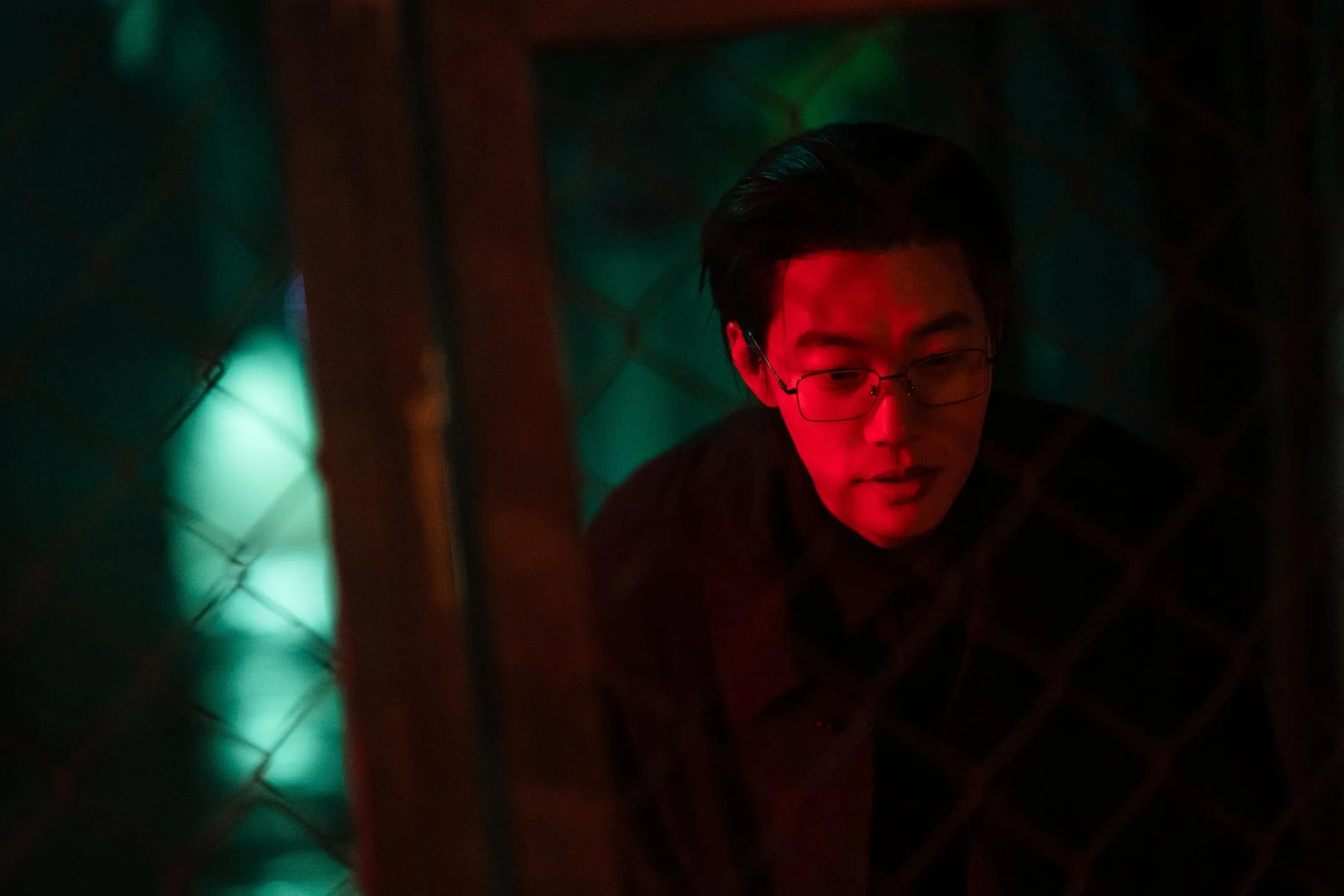
Moon-jae is a successful novelist whose public name belongs to his books and leaves the man writing them invisible. He has spent three years inside a luxurious apartment, regulating his panic disorder through routine and allowing his only friend, Soo-hyun, to control the practical machinery of his life. His home and money exist under somebody else’s name. His career depends upon nobody knowing his. Long before the conspiracy arrives, Moon-jae has built a life in which privacy and erasure have become difficult to distinguish.
The first episode dismantles that arrangement with brutal efficiency. His fingerprint stops unlocking his phone and bank account. A real-estate agent arrives with buyers for his apartment. Former classmates insist that another Moon-jae attended their reunion. Police records offer no confirmation, while the bank claims that he personally changed his information months earlier. Each institution accepts its own data over the frightened man standing in front of it.
These failures turn ordinary authentication into a form of horror. A locked account carries greater authority than memory; a database can erase a person without understanding what it has done. The series pushes that idea into physical territory when Moon-jae encounters another man wearing his face. Documents can be replaced. Flesh should be harder to counterfeit. Mousetrap removes even that certainty before its opening hour ends.
The doppelganger premise draws on a Korean folktale in which a rat becomes human after consuming someone’s clipped fingernails. The adaptation brings that superstition into a world of biometric locks, financial records, surveillance, and identity laundering. Technology modernizes the old fear by giving institutions the power to validate the imitation. The Rat succeeds because contemporary life already asks machines and official records to decide which version of a person is authentic.
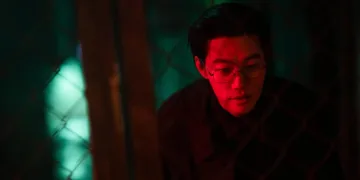
Ryu Jun-yeol keeps Moon-jae from settling into the role of blameless quarry. His panic is severe and visible, particularly once a street pursuit ends with him overwhelmed in an alley, yet fear never explains the whole man. The same isolation that makes him vulnerable also suggests a guarded, possibly calculated relationship with his past. His insistence that he is the genuine Moon-jae becomes less reassuring as the series exposes how carefully he has edited his own existence.
That ambiguity matters because the mystery would collapse into a prolonged chase without it. Moon-jae has lost his name, but the series gradually asks whether possession and entitlement are the same thing. A person can hold the correct face, records, property, and memories while remaining morally compromised by how those things were acquired. Authenticity becomes a dispute over who has inherited, borrowed, or appropriated a life.
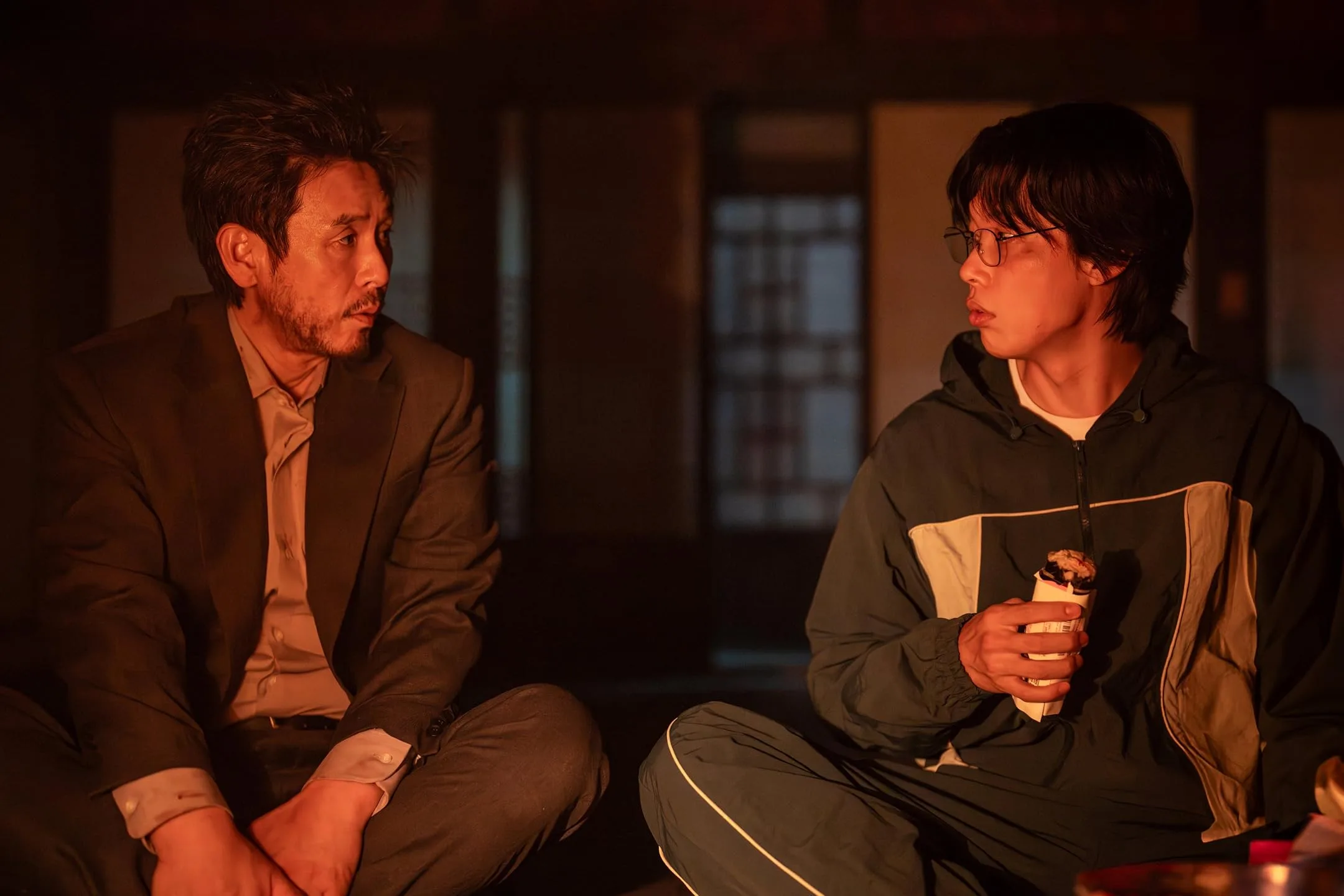
Sul Kyung-gu’s Noja provides the necessary resistance to Moon-jae’s sealed personality. He enters as a ruthless creditor and remains dangerous after circumstances force the men together. Their alliance never transforms into comfortable loyalty. Moon-jae needs someone capable of operating in a violent world he cannot navigate, while Noja needs access to the identity scheme surrounding his reluctant partner. Trust develops as a practical arrangement, always vulnerable to the next piece of evidence.
Their relationship gives the series a human test for the questions raised by its databases and doubles. Noja’s provisional acceptance grows from cooperation producing results; documentary proof has already failed. Even after the men begin working together, Sul keeps the threat alive in their exchanges and lets flashes of dry humor interrupt without softening it.
The larger investigation is less consistently rewarding. Detective Park Sun-yong follows anonymous tips, unidentified bodies, disappearing witnesses, and fragments of buried history, but his storyline frequently functions as a delivery system for the next connection. The season repeatedly approaches an explanation, redirects suspicion, launches another pursuit, and withholds the memory or testimony that might settle the matter. The pattern preserves paranoia while gradually making the machinery visible.
Kim Hong-sun’s direction supplies momentum when the narrative begins circling. A high-speed pursuit near the Han River, an overhead police hunt through residential streets, and a vicious fight inside a makeshift operating theatre give the identity crisis physical consequence. The electronic score drives these sequences with pulsing insistence, while the illustrated credits acknowledge the story’s webtoon origins without making the series feel trapped on a page. The action moves cleanly even when the mystery does not.
The later episodes recover some of the patience demanded by the middle. Without disclosing the Rat’s identity or the final confrontation, the story eventually destabilizes its original division between stolen and thief, predator and prey. Earlier lies acquire different moral weight, and reclaiming a life begins to resemble another act of appropriation. The reversal gives the mystery a destination, though it cannot retroactively make every postponed answer necessary.
Moon-jae begins with a simple demand to be recognized as real. By the time Mousetrap has finished questioning that demand, the correct face is the least persuasive evidence he possesses. A life assembled from another person’s work, records, pain, and recognition may be fraudulent at first. The darker possibility is that enough time, belief, and complicity can make the fraud feel deserved.
Mousetrap premiered globally on Netflix on August 28, 2026. You can stream the 10-episode South Korean crime thriller limited series exclusively on Netflix. The plot follows reclusive novelist Je Moon-jae, who wakes up to discover that a sinister, mysterious figure known as “The Rat” has stolen his name, face, and entire life, forcing him into a desperate alliance with a ruthless loan shark to uncover the truth and reclaim his identity.
Where to Watch Mousetrap Online


Full Credits
Title: Mousetrap
Distributor: Netflix, C-JeS Studios, Kakao Entertainment, H House
Release date: August 28, 2026
Rating: TV-MA
Running time: 50–60 minutes
Director: Kim Hong-sun
Writers: Lee Jae-gon
Producers and Executive Producers: Kim Hong-sun, Jang Se-jung, Park Ho-sik, Lee Jae-gon, Ludovico
Cast: Ryu Jun-yeol, Sul Kyung-gu, Lee Kyu-hyung, Lee El, Kim Sung-oh, Moo Jin-sung, Hyeon Bong-sik, Park Hyuk-kwon, Kim Sang-ho, Ahn Nae-sang, Jin Kyung
Director of Photography (Cinematographer): Mike Gioulakis
Editors: Kim Chang-ju
Composer: Kim Tae-seong
The Review
Mousetrap
Mousetrap transforms stolen identity into a disturbing argument about the systems, relationships, and compromises that manufacture a self. Ryu Jun-yeol and Sul Kyung-gu sustain its unstable human center, while sharp action and a relentless electronic score keep the conspiracy moving. Repeated reversals make the middle longer than necessary, and the detective thread often functions as machinery. The late complication of victim and impostor gives that machinery genuine moral consequence.
PROS
- Potent identity-laundering premise
- Unstable central partnership
- Folklore modernized through technology
- Meaningful late moral complication
CONS
- Repetitive middle stretch
- Functional detective subplot
- Overextended mystery structure