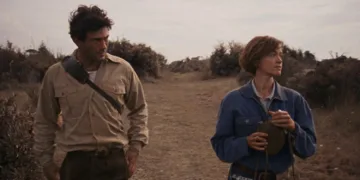
















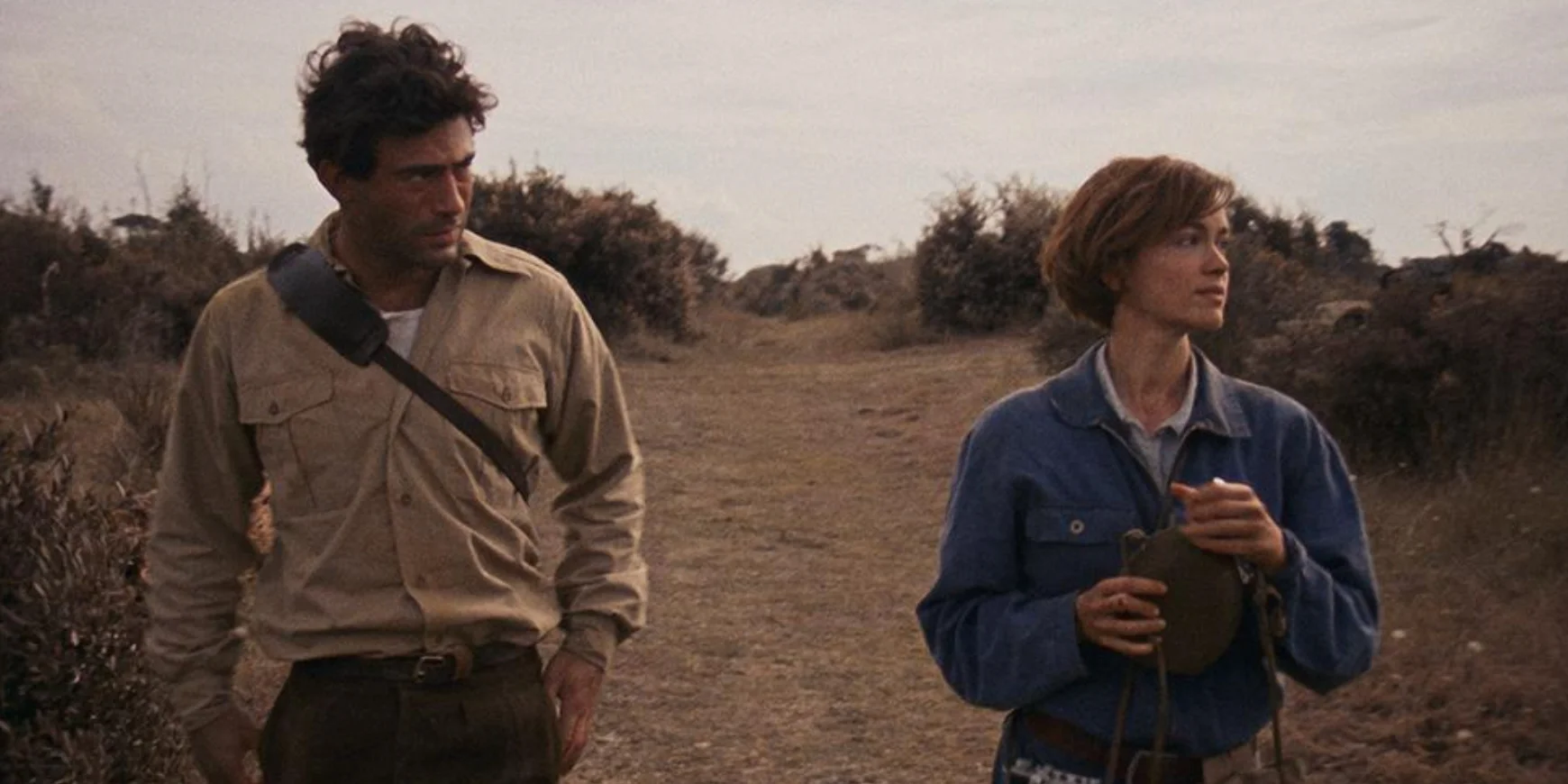

Photography has always carried a strange contradiction: it can preserve a moment forever while allowing the person behind the lens to disappear. Alina Marazzi’s The Girl With The Leica explores that contradiction through the life of Gerda Taro, a pioneering photojournalist whose images from the Spanish Civil War became tied to the Robert Capa name. The film is less interested in simply correcting history than examining how identity, memory, and art become tangled over time.
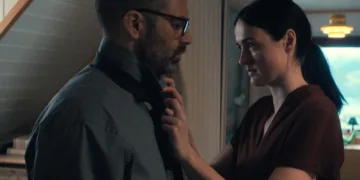
Marazzi’s approach immediately separates the film from a conventional biopic. Rather than presenting Taro’s life as a straightforward timeline, the director combines dramatic scenes with archival photographs, documentary footage, newsreels, and fragments from other films of the period. The result is a portrait that feels like a collection of memories being reconstructed. Sometimes that method creates a powerful sense of historical urgency. Other times, it leaves the emotional details slightly out of reach.
The story follows Taro, born Gerta Pohorylle, from her political awakening in Leipzig during the rise of fascism to her escape to Paris as a Jewish refugee. The film captures the uncertainty of young Europeans who found themselves forced to rebuild their identities in exile. Paris becomes a place of reinvention, where Taro surrounds herself with artists, activists, and fellow refugees searching for a future while confronting the political darkness spreading across Europe.
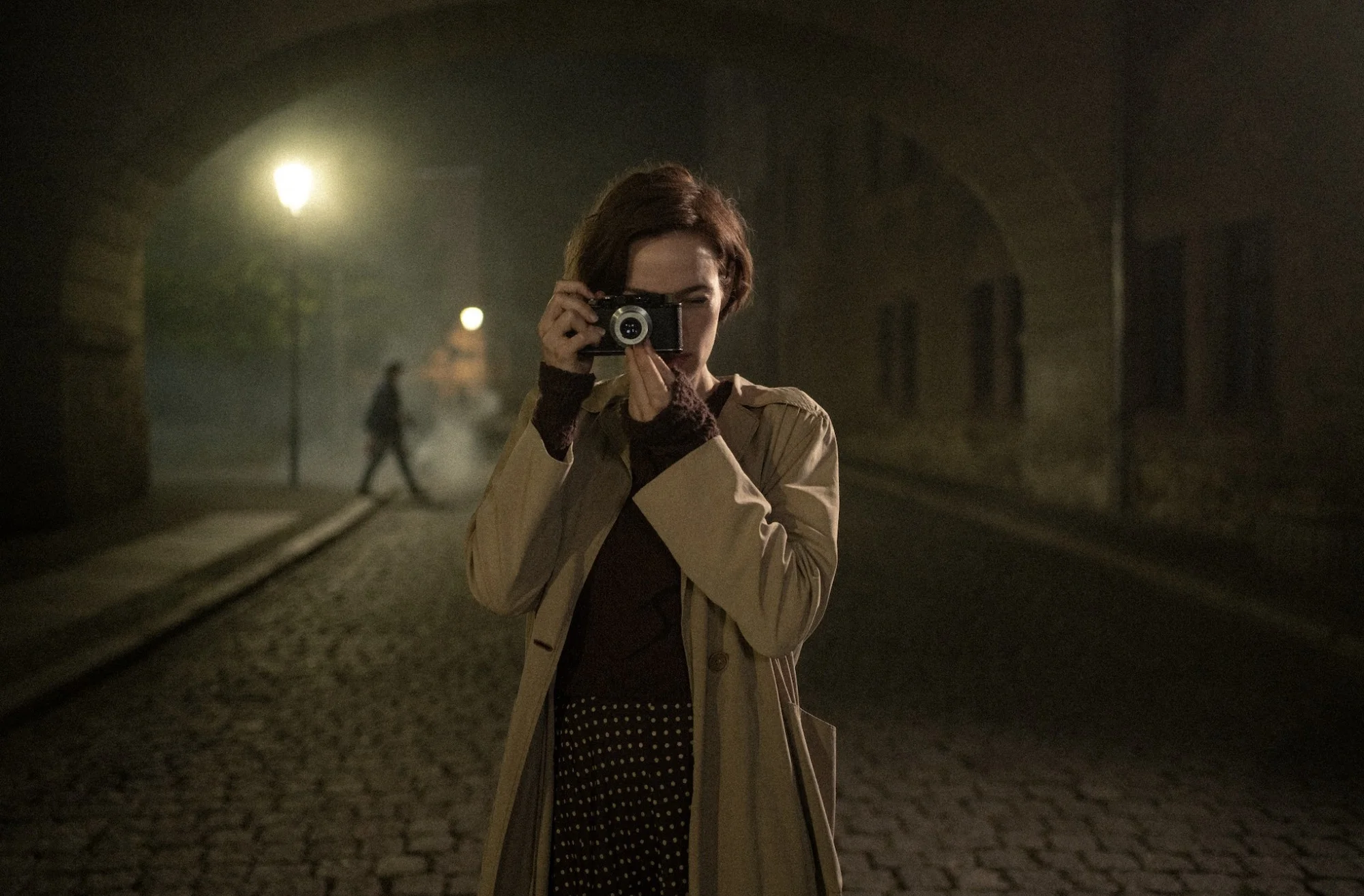
Her relationship with Endre Friedmann, the photographer who would become known as Robert Capa, forms the center of the film’s personal and creative conflict. Together, they create the Capa persona, a name designed to make their work more attractive in a publishing world shaped by prejudice. The decision reveals the harsh realities surrounding their careers, but it also raises questions about ownership and recognition. Taro helped create a legend that eventually overshadowed her own achievements.
Marazzi uses this tension to explore photography as both documentation and self-expression. The film repeatedly returns to the idea that taking a photograph is an act of participation. Taro does not view her camera as a distant observation tool. Her work in Spain comes from a desire to stand alongside those fighting fascism and preserve their struggle. The film’s strongest moments come when it connects her artistic ambition with her political commitment.
The nonlinear structure reflects Taro’s restless personality. The narrative moves between Leipzig, Paris, and Spain, returning to different stages of her short life as memories surface. For viewers unfamiliar with her story, the constant movement may require patience. The film assumes that history itself is fragmented, and that understanding someone often means assembling pieces rather than following a clean path.
The visual design supports this idea. Cinematographer Manuel Alberto Claro gives the fictional scenes an energetic quality, while the archival photographs and footage provide a direct connection to the era. The inclusion of images taken by Taro and Capa creates a fascinating conversation between the recreated past and the real one. Watching those photographs appear beside dramatized moments reminds viewers that the camera can outlast the person who holds it.
Emilia Schüle delivers the film’s strongest element with a performance that captures Taro’s confidence and contradictions. She portrays a woman who is politically committed, fiercely independent, and unwilling to follow expectations placed on her. Her interactions with Capa show both creative partnership and emotional friction, while her relationships with other men reveal someone determined to control her own choices. Schüle gives Taro a sense of energy that keeps the film moving through its more abstract sections.
The supporting cast helps establish the world around Taro, especially Luna Wedler as Ruth Cerf, her close friend and assistant. Yet the film’s focus on Taro sometimes leaves these figures underdeveloped. Many of them lived extraordinary lives themselves, but they remain part of the orbit around the central character.
The biggest challenge for The Girl With The Leica comes from its ambition. The film wants to capture both a historical figure and the feeling of a generation caught between political collapse and personal freedom. That approach creates beautiful moments, though it occasionally makes the fictional story feel less powerful than the real photographs surrounding it.
Still, Marazzi’s film succeeds in bringing attention to a remarkable artist whose name was pushed into the background by the legend she helped create. The Girl With The Leica may not provide the definitive portrait of Gerda Taro, but it offers a thoughtful reminder that history often remembers the image before it remembers the person who captured it.
The Girl with the Leica premiered at the 83rd Venice International Film Festival on September 2, 2026. The biographical drama follows German-Jewish photojournalist Gerda Taro during her final days in Paris before returning to document the Spanish Civil War.
Full Credits
Title: The Girl with the Leica
Distributor: BiM Distribuzione
Release date: September 2, 2026 (Venice International Film Festival)
Running time: 1 hour 59 minutes
Director: Alina Marazzi
Writers: Alina Marazzi, Valia Santella
Producers and Executive Producers: Marta Donzelli, Gregorio Paonessa, Jonas Dornbach, Janine Jackowski, Maren Ade
Cast: Emilia Schüle, Luna Wedler, Aaron Altaras, Lucas Englander, Thomas Schubert, Sebastian Schneider, Idan Weiss, Lia von Blarer
Director of Photography (Cinematographer): Manuel Alberto Claro
Editors: Ilaria Fraioli
Composer: Dominik Scherrer
The Review
The Girl With The Leica
The Girl With The Leica finds a fascinating way to revisit Gerda Taro’s legacy through a blend of fictional drama and archival material. Its nonlinear structure and visual experimentation sometimes create distance from its subject, yet the film’s attention to photography, political conviction, and Emilia Schüle’s commanding performance keeps Taro’s story alive. It is an imperfect portrait of a remarkable artist whose work deserves the renewed attention.
PROS
- Emilia Schüle’s magnetic performance
- Rich archival integration
- Thoughtful visual design
- Powerful historical subject
CONS
- Fragmented storytelling
- Fiction feels weaker than archives
- Supporting characters lack depth
- Overly stylized approach