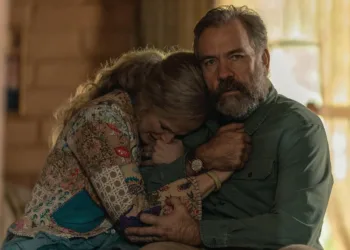









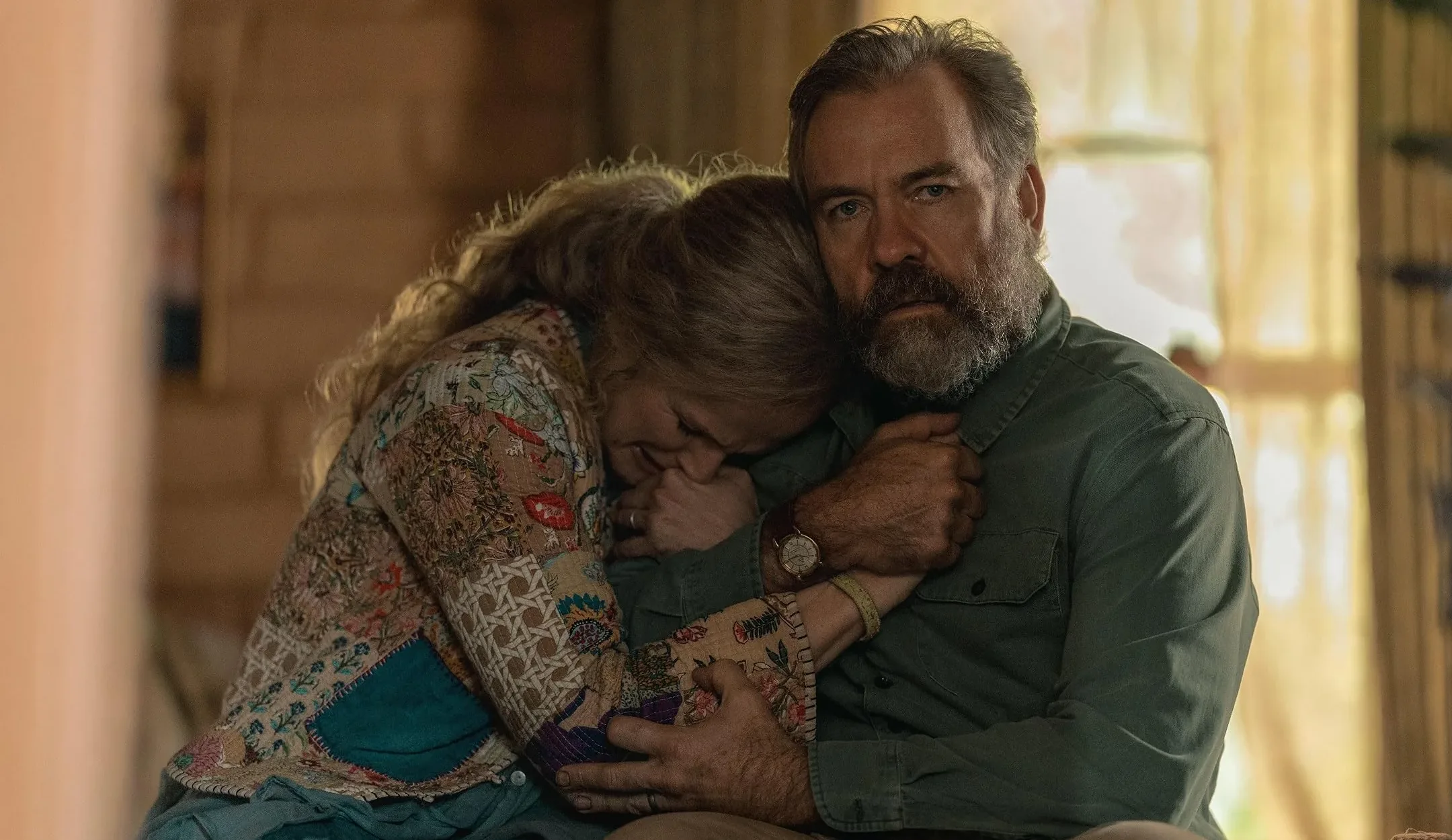

Ian Ridley keeps an unopened bottle of vodka on the table while he eats alone. Six months sober, 11 years removed from the disappearance of his three-year-old daughter Maggie, he has apparently decided temptation should have a reserved seat at dinner. It tells you plenty about Ian before Last Seen starts dismantling what little stability he has left.
Kris Mrksa’s six-part Apple TV thriller, adapted from Ryan David Jahn’s novel The Dispatcher and directed throughout by Christian Schwochow, relocates the story to the fictional Victorian town of Port McKenna. Patrick Brammall plays Ian, once a senior police investigator and now an operator taking Australia’s 000 emergency calls. Maggie’s disappearance ended his marriage to Debbie (Jessica Wren), damaged his relationship with son Dean (Tobias Muhafidin), fed his alcoholism and removed him from the career that once defined him. Then a storm exposes the remains of a child in nearby bushland.
Ian immediately suspects Maggie. He appears at the site, interferes with the investigation and begins behaving less like a former detective than a man whose grief has just been handed a police scanner. The advertised hook arrives later, at the end of episode two, when a distressed teenage caller suggests that she might be the “Mags” Ian has spent 11 years searching for.
Waiting nearly two hours for the premise plastered across the marketing sounds risky. Schwochow and Mrksa make the delay work because Ian’s life is already a live wire. The phone call lights the fuse. The explosives were there all along.
Grief Without a Badge
Brammall’s best scenes depend on the distance between the policeman Ian used to be and the man grief has created. Early on, he talks a terrified mother through an emergency call, keeping his voice steady while help races toward her. The scene gives Brammall very little visible action, yet his calm delivery establishes Ian’s professional instinct immediately. He knows how panic behaves. He knows how to make somebody else breathe through it. His own panic is another matter.
Once the remains are found, Ian heads straight into an investigation he has no authority to touch. He questions people, pursues leads and ignores requests to stay clear. Hope makes him reckless faster than despair ever did. His relapse gives Brammall some of his strongest material because he never plays intoxication as a theatrical collapse. Ian simply starts losing whatever judgment remained between his obsession and the people unfortunate enough to stand nearby.
Brammall also has a knack for making Ian sound distinctly, casually Australian without turning his dialogue into regional seasoning. “My life’s still in the shitter” lands because Ian says it like a man reporting the weather.
The writing has a harder time accounting for what he actually does. Detective Senior Sergeant Izzy Pena (Zahra Newman) eventually confronts him over his lawlessness, and the scene is badly needed. Ian crosses professional and legal lines early enough that a less forgiving series might have removed him from its own plot by episode two. Last Seen occasionally treats institutional consequences as optional paperwork.
That weakness becomes easier to tolerate once the question shifts away from finding Maggie. Ian starts learning enough to realize that knowledge will not reconstruct the life he lost. Debbie has moved forward. Dean grew up inside a family permanently organized around an absent child. Ian is still trying to solve 11 years ago as though the correct answer might restore an earlier save file. Grief has made him a detective with exactly one case, and no off switch.
The Girl Behind the Reveal
Henry Reid’s isolated farmhouse initially looks built for a familiar thriller function. Put Brendan Cowell in the countryside with a stern religious worldview, a guarded wife and a teenage daughter who looks suspiciously like an age-progressed missing child, and viewers will start doing arithmetic before the detectives do. The clever choice is that Last Seen does not spend six episodes pretending nobody has noticed.
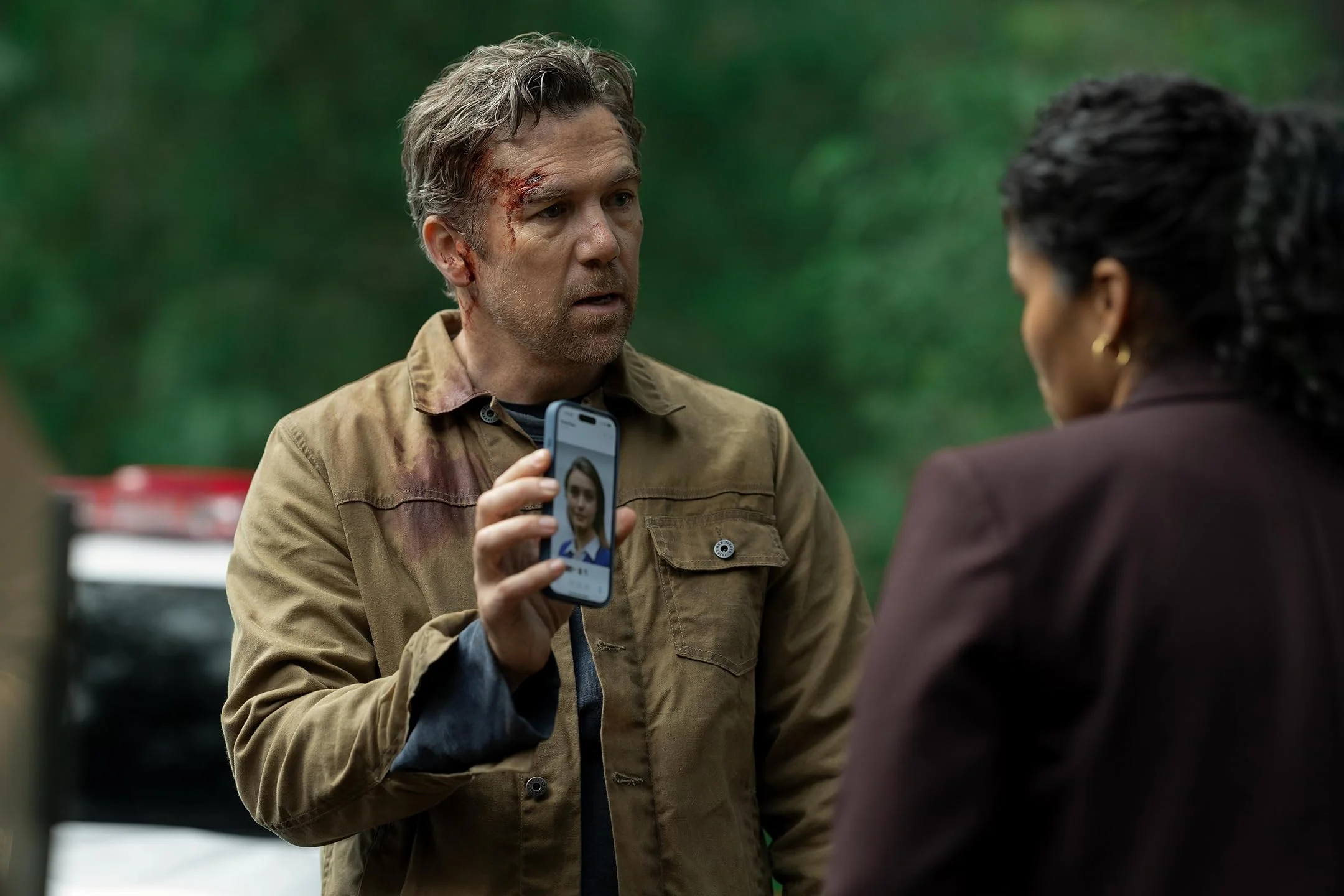
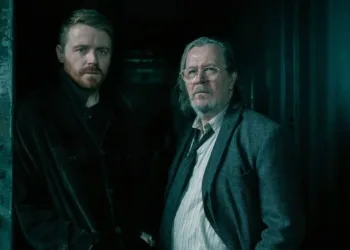
Henry lives apart from society with Jenna (Maxine Peake) and their daughter Sarah (Chloe Jean Lourdes), telling Sarah that contact with teenagers her age would expose her to people hostile to the family’s beliefs. Cowell gives Henry a stooped, weighted physicality and a careful speaking rhythm. He feels dangerous because he appears to have rehearsed every justification long before anyone arrives to challenge it.
Peake works at a quieter frequency. Jenna’s affection for Sarah is visible in small pauses and softened exchanges, which makes her position increasingly uncomfortable once Sarah begins questioning the story she has been given about her own life. Love and culpability occupy the same room here, and Peake never asks one to excuse the other.
Lourdes has the most difficult assignment. Sarah could easily have become the human prize at the end of Ian’s investigation, shuffled between adults while the script congratulated itself on solving the mystery. Instead, her 000 call gives her agency before Ian ever reaches her. She is searching too.
Her later scenes have to hold several incompatible truths at once. The family she knows may have been constructed through an unforgivable act. The people responsible still raised her. Ian may be her biological father, yet his desperate need for Maggie carries an implicit demand that Sarah become a three-year-old girl preserved inside his memory.
Lourdes handles those contradictions without forcing them into a single emotional register. Fear can sit beside loyalty. Curiosity can sit beside anger. Recognition does not instantly become belonging. The missing girl finally gets to exist as somebody other than missing.
Nobody Gets Maggie Back
Daniel Henshall’s Donald Reid quietly becomes the hinge connecting both families. He is Henry’s brother, Ian’s friend and one of the people helping Ian maintain his sobriety. That arrangement works perfectly until Ian’s investigation begins moving toward Henry. Donald suddenly has to decide what loyalty means when every available option betrays somebody.
Henshall is excellent in the middle episodes because he plays indecision as pressure rather than confusion. You can see Donald calculating what each disclosure will destroy before he chooses what to say. The plot requires information from him. The performance makes that information expensive.
Debbie is less fortunate on the page. Jessica Wren gives her scenes with Ian an exhausted tenderness that suggests a whole marriage beyond the dialogue. She has rebuilt her life, is expecting a child with police sergeant Bill McCracken (Bert LaBonté), and has every reason to fear Ian reopening trauma that consumed their family once already.
Too often, though, Debbie becomes the person who tells Ian to stop so Ian can explain that he never will. Once is character conflict. Repetition starts sounding like the writers checking that we still remember the premise.
Dean raises a sharper idea that the series only partially explores. Ian has spent years pursuing the child who vanished while his surviving son grew up beside the pursuit. Tobias Muhafidin’s presence gives Ian’s devotion an uncomfortable edge. Persistence can resemble love from one direction and abandonment from another.
The same moral friction runs through Henry and Jenna’s household. Ian wants his daughter returned. Sarah has a life that cannot simply be deleted. Jenna’s care for her carries genuine feeling, yet feeling does not absolve what came before. Henry frames his choices as protection, which tells us plenty about Henry and very little about protection. Everybody can explain themselves. Nobody gets acquitted.
Mystery After the Mystery
The most interesting structural choice in Last Seen is how little interest it has in hoarding its central revelation. The child’s remains propel episode one. Sarah’s call closes episode two. Her connection to Maggie becomes increasingly difficult to deny long before the finale. A conventional streaming thriller might spend another three episodes planting fake suspects, misleading phone records and one suspicious man who owns an unusually ominous shed.
Mrksa largely skips that exercise. The result is a series whose suspense changes form halfway through. Instead of asking who Sarah is, we start asking what happens once Ian knows, how Sarah responds, what Donald chooses and how Henry and Jenna defend a life built around buried history. Plot still matters, but revelation becomes a starting gun rather than a finish line.
Episode five risks testing that approach. The penultimate chapter moves backward to fill in the circumstances surrounding Maggie’s disappearance, slowing the present-day story just when the character collisions are becoming most urgent. Some of its explanations strain credibility, and the flashback occasionally feels like the script patching holes viewers have already spotted. Six episodes help. Most run under 50 minutes, giving weaker logic limited time to become irritating.
Bonnie Elliott’s cinematography also provides Port McKenna with a stronger identity than Apple’s familiar prestige sheen sometimes allows. Coastal views and Victorian bushland suggest the sort of town where television detectives should be solving tasteful murders before tea. Schwochow keeps setting that beauty against isolation: Ian alone at home, the Reid property cut off from ordinary social life, bodies and histories surfacing from the landscape.
His direction is strongest when he lets conversations carry the threat. Sarah facing the adults who claim her, Donald weighing two families, Jenna speaking around what she knows. No frantic cutting is required. People sitting in rooms can do plenty of damage. The police logic occasionally wanders off without leaving a forwarding address. The emotional logic stays put.
Last Seen premiered globally on Apple TV+ on September 9, 2026. The thriller series follows an emergency dispatcher who becomes convinced that an incoming distress call comes from his daughter, who vanished eleven years earlier.
Where to Watch Last Seen Online


Full Credits
Title: Last Seen
Distributor: Apple TV+
Release date: September 9, 2026
Rating: TV-MA
Running time: 52–53 minutes
Director: Christian Schwochow
Writers: Kris Mrksa
Producers and Executive Producers: Joanna Werner, Christian Schwochow, Kris Mrksa, Jamie Laurenson, Hakan Kousetta, Katharina Haase
Cast: Patrick Brammall, Brendan Cowell, Maxine Peake, Daniel Henshall, Jessica Wren, Zahra Newman, Taylor Ferguson, Bert La Bonté
Director of Photography (Cinematographer): Bonnie Elliott
Editors: Fiona DeSouza
Composer: Isobel Waller-Bridge
The Review
Last Seen
Last Seen gets its biggest revelation out of the way early, then finds better suspense in the damage left behind. Patrick Brammall makes Ian’s recklessness painfully watchable, while Chloe Jean Lourdes, Maxine Peake, Brendan Cowell and Daniel Henshall keep the moral ground shifting beneath him. Some police logic strains credibility and Debbie deserves sharper material, yet the six-episode structure rarely stalls. The mystery hooks you; the people keep you there. A thriller remembering that consequences can be scarier than secrets.
PROS
- Brammall’s fraying lead performance
- Lourdes’ superb debut
- Character-driven revelations
- Strong six-episode pacing
- Excellent supporting ensemble
CONS
- Convenient police logic
- Debbie feels underwritten
- Penultimate flashback slows momentum
- Some consequences disappear too easily