























Removing gacha mechanics from a mobile RPG sounds like the easy part. The harder question is what happens to everything that was built around them. Another Eden Begins answers that in uneven but interesting fashion. WRIGHT FLYER STUDIOS has turned Another Eden into a complete single-player RPG with a proper campaign, expanded progression, character quests, and a sizable New Game+ component. Yet the longer Aldo’s adventure goes on, the clearer it becomes that the original game’s live-service structure was never limited to monetization.
Aldo begins in Baruoki, living quietly with his sister Feinne until the Beast King attacks and takes her. His attempt to give chase goes badly, and a rift in spacetime throws him hundreds of years into the future. From there, the rescue mission expands into a much larger problem involving different eras, altered histories, and conflicts scattered across the timeline.
Masato Kato’s presence is easy to recognize. The Chrono Trigger and Chrono Cross comparisons are unavoidable, particularly once the story begins using changes in one period to reshape another. Another Eden Begins rarely handles those rules with the same discipline.
Characters can move between eras with surprisingly little concern for paradoxes, then later the script asks us to take small changes to history very seriously. Scientific plausibility is beside the point. JRPGs would become considerably less fun if that were the standard. What matters is that the story changes how seriously it treats its own rules whenever the next plot development requires it.
That looseness extends to the campaign’s structure. Aldo reaches a new place, learns about a local crisis, volunteers to help, defeats whatever is causing the problem, and moves on. Several arcs build toward bosses with the dramatic weight of final encounters, only for another conflict to appear shortly afterward. The pattern makes sense when viewed through Another Eden’s original life as an evolving mobile game. Individual updates needed their own conflict, climax, and reward. Played consecutively as one traditional RPG, those seams become difficult to ignore.
The later chapters improve as earlier events begin connecting and travel between eras becomes freer, but the first half rarely gives its locations or supporting characters enough time to settle. Aldo is constantly useful without always being personally involved. He becomes the timeline’s most reliable handyman.
The large party exposes the same inheritance. Amy, Riica, Cyrus, and a handful of others receive meaningful story involvement, while several companions can spend major scenes effectively invisible despite being members of the active roster. The original gacha structure could not assume every player owned every character; Begins now fixes the roster inside a single-player RPG, making those absences much harder to overlook.
Their Memories quests do much of the repair work. Building kinship by using characters and giving them gifts unlocks individual stories alongside weapons and accessories, and these smaller episodes often contain the personality missing from the central plot. Aldo benefits too.
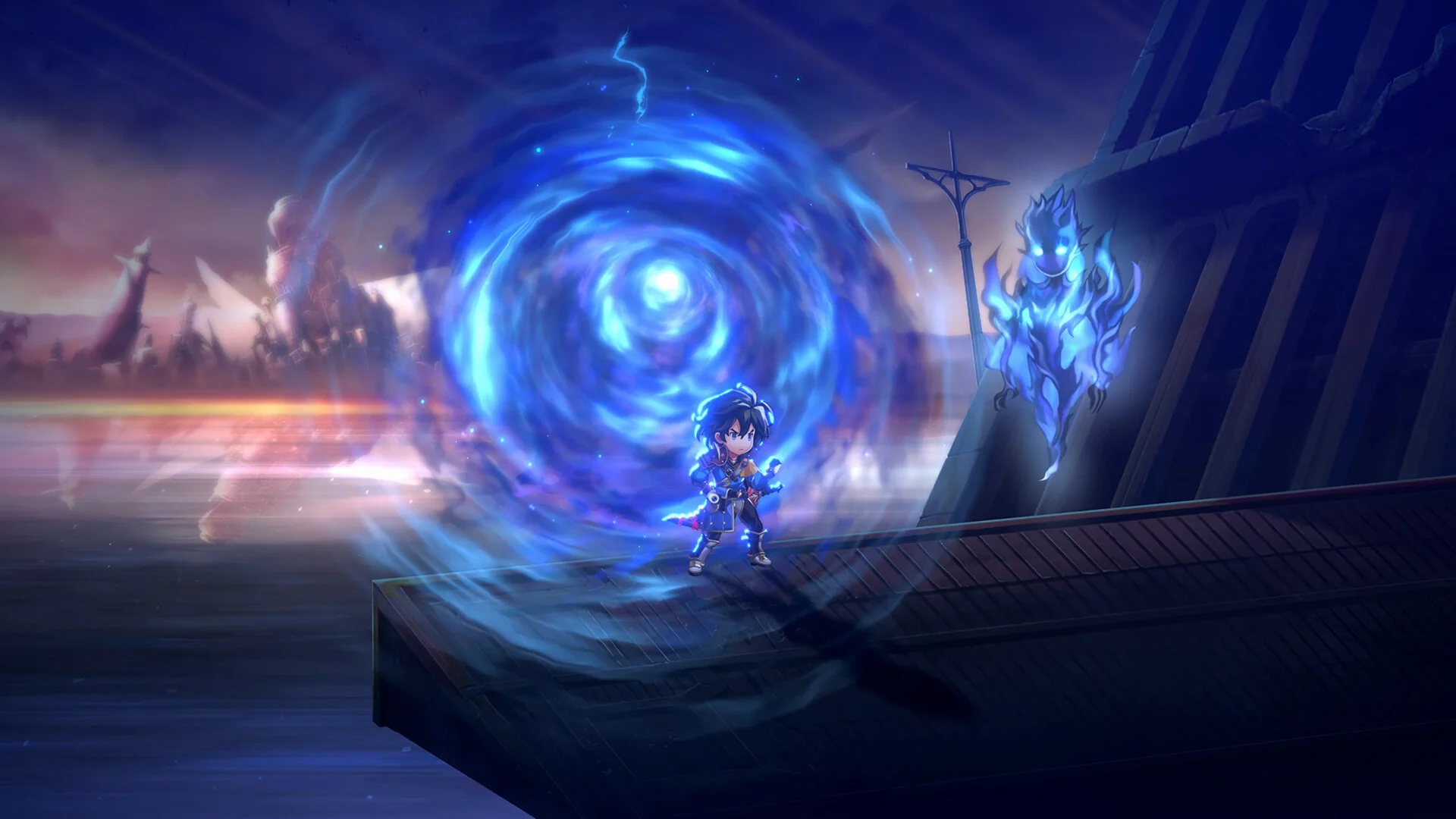
He is straightforward and agreeable in the main campaign, but becomes considerably livelier when eccentric companions pull him into their problems. The side content does not erase the uneven treatment of the roster, though it proves the writers had stronger material for many of these characters than the main story knows how to use.
Combat has the opposite problem. Its strongest ideas are present early enough to create curiosity, yet the game waits far too long before demanding that players understand them.
Battles use a simple turn-based structure built around equipped skills and speed order. There are no consumable items to rescue a bad situation, and healing is tied heavily to character abilities. Chain Skills deepen the system by giving each character a condition that builds toward an automatic extra action.
Aldo can work toward his Chain through specific offensive setups, while other characters build theirs through different attack types or support actions. Because progress can carry across encounters, party construction becomes a matter of planning sequences rather than selecting the strongest move each turn.
Valor Change expands that idea once multiple parties become available. A fire-focused group can be swapped out when an enemy resists its main element, bringing in another party built around water or a different damage profile. Swapping an entire team instead of one reserve member gives Another Eden Begins a useful variation on a familiar JRPG concept.
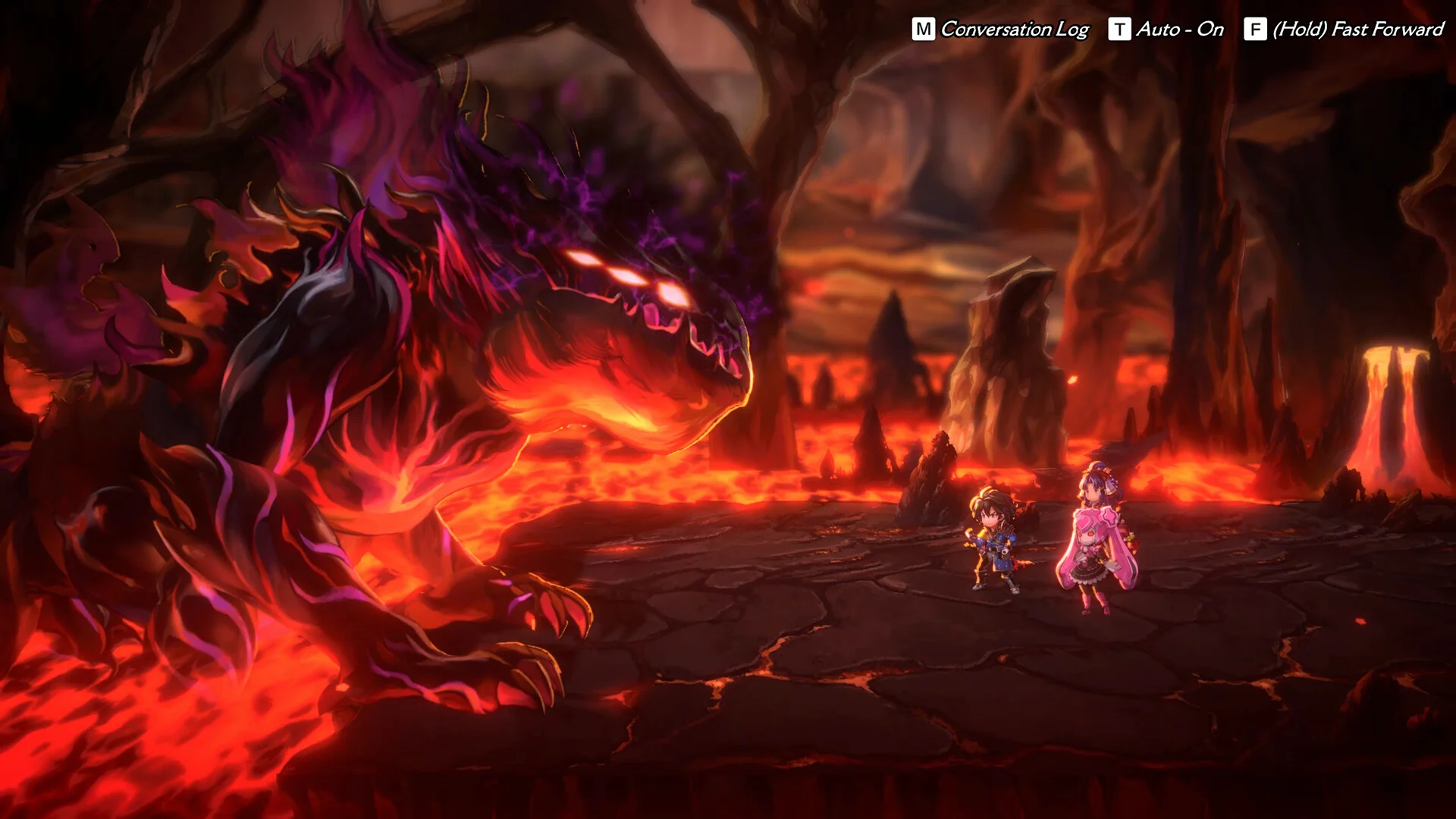
The frustrating part is how rarely the campaign forces that machinery to matter. Regular encounters frequently collapse under straightforward offense, and many enemies cannot punish sloppy party construction hard enough to make deeper experimentation necessary. Strong area attacks clear mobs before support, healing, Chain planning, or party swapping become serious considerations.
Then the final boss arrives and suddenly asks for the game the combat system has been promising all along. Party composition matters. Equipment passives matter. Elemental coverage matters. Skill selection matters. Preparing several functional groups finally feels necessary rather than optional. It is a strong battle because it reveals how much strategic room the system had been carrying for the previous twenty-five hours. It also raises the obvious question of why so little of the campaign demanded the same attention.
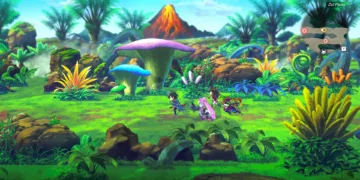
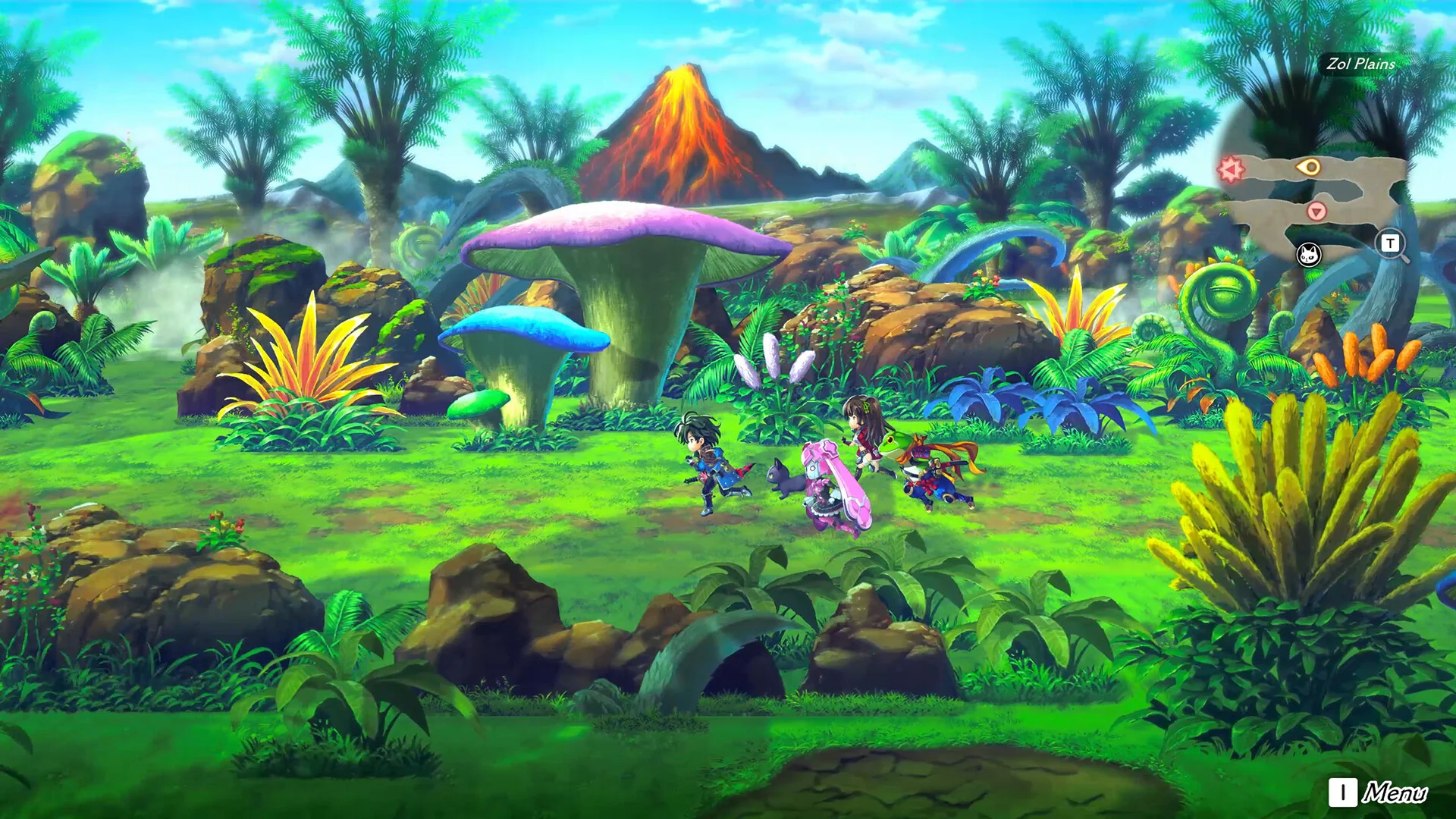
The transition from mobile to console is similarly mixed in presentation. The chibi character models can initially look like remnants of the original format, but the art direction carries them well. Portraits are attractive, individual eras have distinct visual identities, and areas such as volcanic regions and waterside villages create enough contrast to sell the movement through time.
Dungeon design has received less reconsideration. Many areas remain straightforward corridors with small branches for treasure, while story scenes rely heavily on static character placement and reused animations. The fully voiced main story helps, but there are moments when the production still feels designed around a phone screen rather than rebuilt around a console adventure. Beside the stronger character art and environmental variety, those rigid scenes make the limits of the conversion especially visible.
New Game+ is where the adaptation makes its clearest argument for returning players. Ten endings and additional story material give a second run a purpose beyond replaying familiar battles at higher levels. Character progression carries forward, and the post-game structure turns preservation into expansion rather than simple repackaging.
That distinction matters. Another Eden Begins is strongest whenever it reconsiders what the old game can become without the demands of a live service. Chain Skills, Valor Change, Memories, and the expanded replay structure all point toward a richer traditional JRPG.
The moments that drag are the ones still moving to the rhythm of patches, isolated story arcs, and mobile-sized spaces. By the time the final boss finally asks the player to use the whole combat system, Begins has already shown exactly how good this conversion could have been if the rest of the adventure had demanded the same commitment.
The Review
Another Eden Begins
Another Eden Begins successfully turns a former mobile gacha RPG into a complete single-player adventure, but it cannot entirely escape the structure it inherited. Its time-travel story moves too quickly between isolated conflicts, while an excellent combat system spends much of the campaign waiting for enemies demanding enough to expose its depth. Memories quests, distinctive party mechanics, attractive art, and an ambitious New Game+ give the conversion real value, especially for returning players. This is a good JRPG adaptation whose best systems deserved a campaign built to challenge them sooner.
PROS
- Deep Chain Skill and Valor Change systems
- Strong companion Memories quests
- Distinctive environments and character art
- Substantial New Game+ content
CONS
- Main story retains episodic mobile pacing
- Difficulty underuses combat depth
- Uneven treatment of party members
- Linear dungeon design