



























Farasha has forty days to visit Faris in his dreams, which gives their courtship an unusual timetable. They have barely met when a car accident kills her; now the relationship can develop only while its remaining time disappears. Fatih Akin’s Ghost Song makes this arrangement easy to understand without explaining away its strangeness.
Farasha’s deceased father supplies the rule, and illustrated chapter cards count the days. A mourning period associated with some Muslim traditions becomes the shape of a young couple’s romance: each meeting offers another chance to know someone and brings the final separation closer.
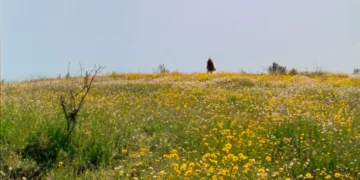
The accident, meanwhile, returns in fragments. As the lovers move toward their deadline, flashbacks take us back into the event that made these meetings necessary. These two directions give the film a useful tension. We anticipate what will happen while gradually learning what happened already.
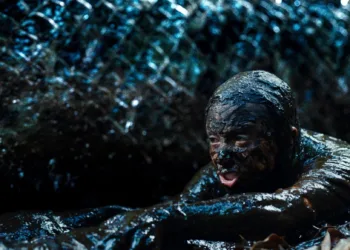
The underwater passages make the death physically frightening, preventing the dream encounters from entirely softening it. Yet parceling out the crash also gives the film a mystery to service. At times, the suspense surrounding the circumstances competes with the harder task of showing how two people absorb a loss they cannot reverse.
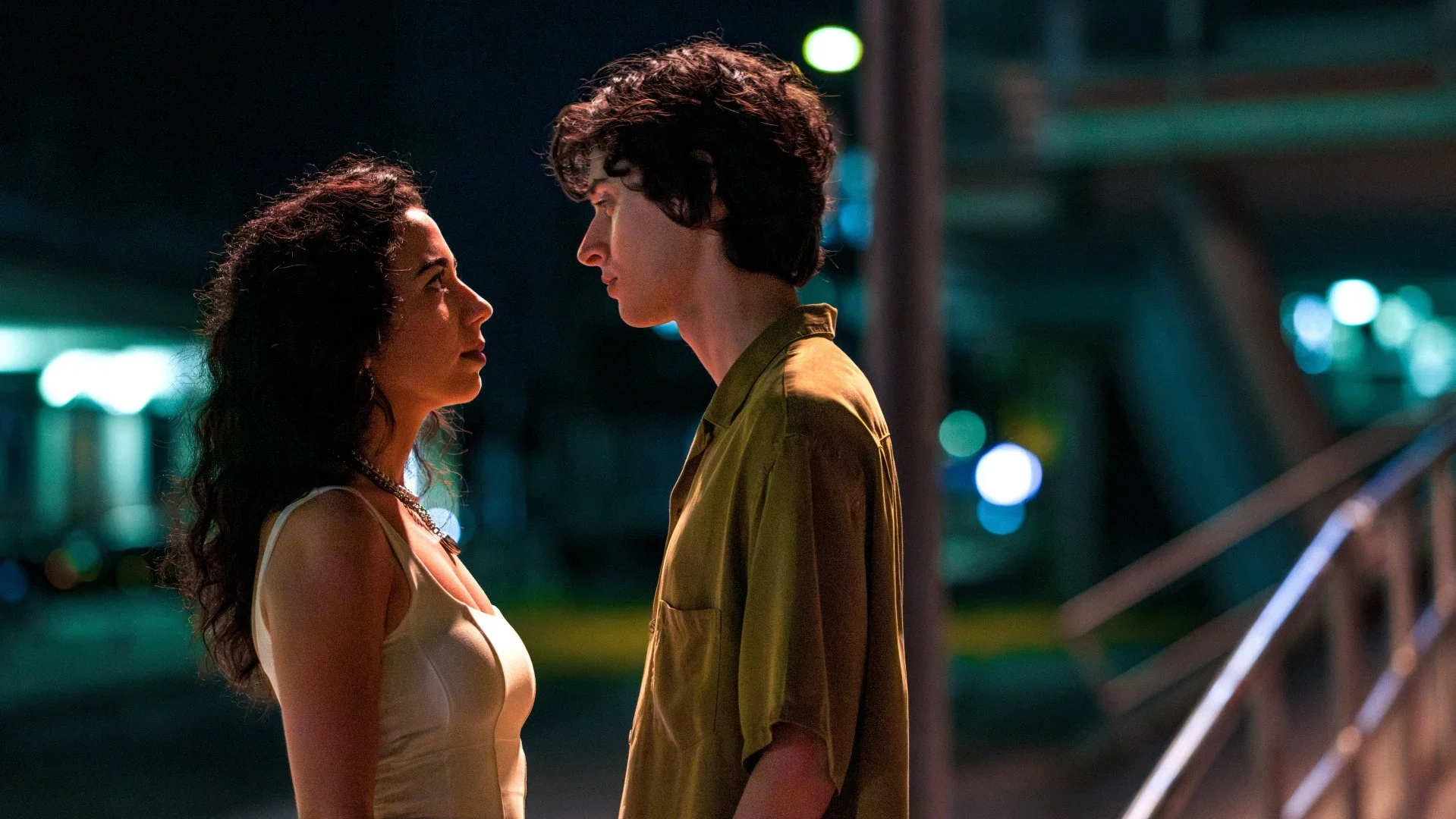
Before the accident, Akin establishes attraction with considerable economy. Farasha and Faris exchange looks in a crowded lift at Hamburg’s Telemichel tower, where their graduation party takes place. Close-ups allow each face to answer the other, making a busy public space feel briefly private.
Mariam Dawoud and Eren M. Güvercin are immediately credible as young people surprised by mutual interest. Their shared enthusiasm for science gives them something to recognize beyond physical attraction, but the looks do the persuasive work. Akin trusts the small interval between noticing someone and realizing that you have been noticed back.
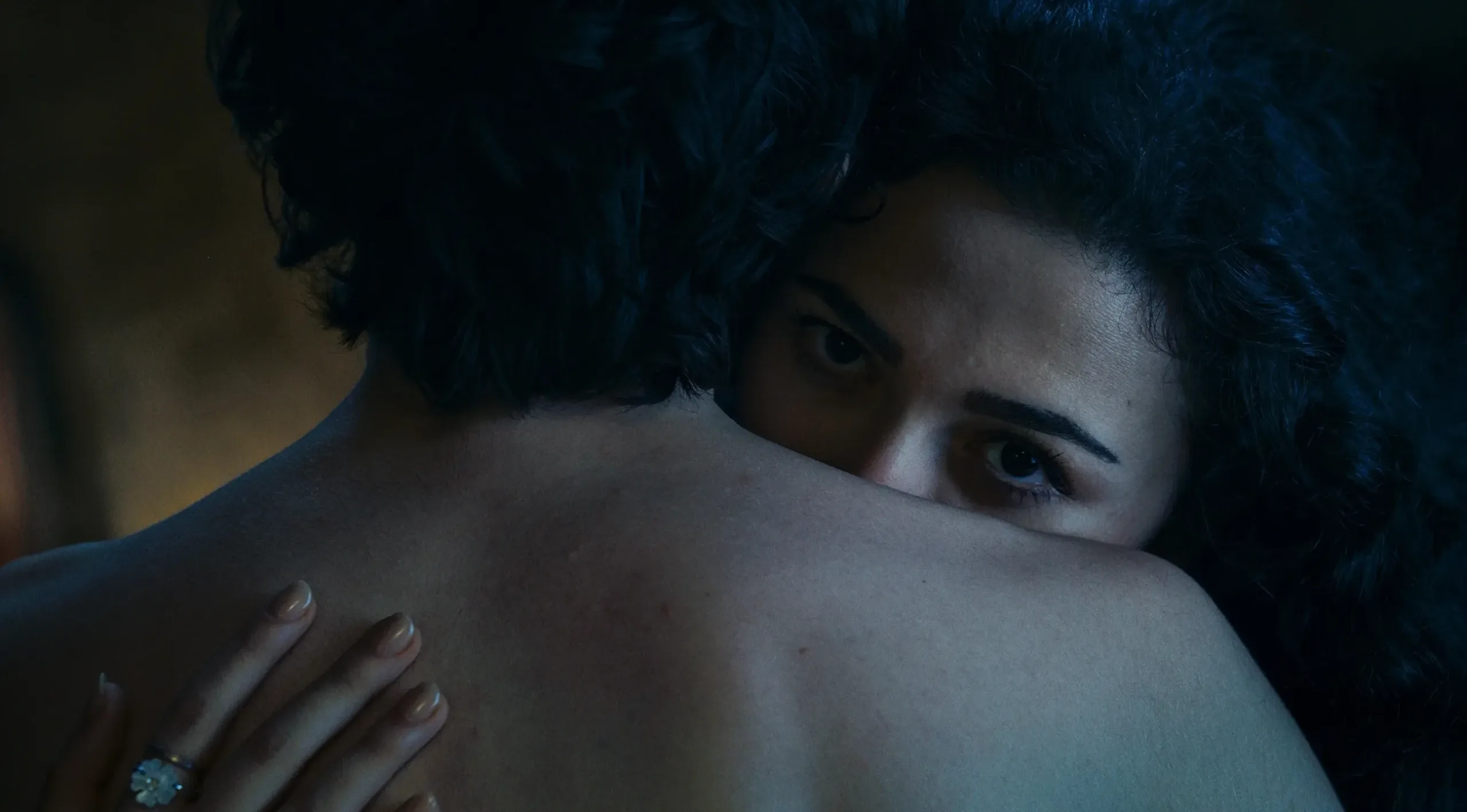
That is a strong foundation for a first date. A love capable of making death seem preferable to separation is a heavier demand. The dream meetings help: tentative physical contact gives the relationship experiences that their interrupted evening could never provide.
Güvercin’s description of the arrangement as a “long-distance relationship” introduces welcome humor, making the impossible sound like something a young couple might manage. Still, the screenplay’s repeated declarations of devotion push beyond what it has established about these particular people. I believe their excitement and tenderness readily; the insistence on an exceptional, all-consuming bond occasionally feels like the film supplying its own missing evidence.
Frank Griebe’s photography does much to make the continued encounters persuasive. In the predominantly black-and-white version, dockside spaces, railway platforms, and deserted streets become places where an ordinary city can accommodate an impossible meeting. The widescreen compositions give the lovers room while preserving a sense of the world around them.
Akin and Griebe also rotate the camera, changing our spatial footing rather than requiring elaborate supernatural scenery. Familiar architecture becomes unstable enough to suggest another condition of existence. There is pleasure in seeing a railway platform retain its everyday identity while becoming somewhere the dead and living can spend time together.
Sound provides another connection between those conditions. Malakoff Kowalski’s score uses a leitmotif, a recurring musical idea whose repetitions build associations across scenes. Here it appears through ringtones and whistling, then through strings, winds, and brass.
Moving the same idea between sounds within the characters’ world and the accompanying score gives their surroundings an emotional continuity. The music seems capable of passing where bodies cannot. Alongside it, the party’s Arabic-influenced electronic music gives Farasha a setting for unrestrained enjoyment. These musical choices keep the supernatural romance attached to the habits and pleasures of young people living in contemporary Hamburg.
Dawoud is particularly good at making Farasha’s different commitments feel comfortably inhabited. She chooses to wear a headscarf, unlike her mother and sisters, and takes visible pleasure in dancing. Her interest in physics and her concealed butterfly tattoo add further particulars without needing to turn her into a debate about faith and modernity.
The performance gives these details the coherence of one person making her own choices. That matters because the film’s fantasy risks reducing her to Faris’s lost beloved. Dawoud preserves the sense that Farasha had interests, loyalties, and private desires before their meeting, and continues to have them after her death.
The scene in which she watches her family wash and prepare her body for burial gives that continued existence its most difficult expression. The supernatural device creates two simultaneous experiences: Farasha remains present as an observer, while her family cares for a body that can no longer respond.
Their practical acts make the loss tangible. Nothing in the scene requires a declaration about love surviving death; the relationship between care and absence is already there in what they do. It also changes the scale of the film. Farasha’s death belongs to a household, with attachments that neither the romance nor its dream visits can repair.
Those attachments become essential when Faris grows increasingly drawn toward joining her. His suicide attempt and subsequent encounter with a doctor bring the fantasy into contact with distress that requires attention from the living.
The meetings have changed function: what gave the couple extra time now threatens to consume his future. Farasha’s recognition of that danger gives her an active role in the film’s emotional turn. Letting him go requires her to reconsider something she has wanted, rather than simply comply with the approaching deadline. The forty-day rule can end their contact, but it cannot make that decision for her.
The late tower sequence and the move into colour give this change a conspicuous visual form. Height turns the possibility of reunion into an immediate physical danger, while colour offers an expressive release from the monochrome world. The gesture is attractive and easy to read, perhaps too easy for the pain it must carry.
As the writing leans toward sacrifice and reassurance, the resolution loses some of the complexity found in the burial scene. Farasha’s changed purpose remains the valuable part of that final movement. Having used her remaining days to continue the relationship, she must now help Faris return to a life whose daily experiences will happen without her.
Ghost Song premiered at the 74th San Sebastián International Film Festival in September 2026. The supernatural romance follows a young woman who connects with her grieving partner through his dreams after her sudden death.
Full Credits
Title: Ghost Song
Distributor: Warner Bros. Pictures
Release date: September 18, 2026 (San Sebastián International Film Festival) / November 5, 2026 (Germany)
Running time: 1 hour 45 minutes (105 minutes)
Director: Fatih Akin
Writers: Ruth Toma, Ann-Kristin Bardi
Producers and Executive Producers: Fatih Akin, Klaus Maeck, Nurhan Şşekerci-Porst
Cast: Mariam Dawoud, Eren M. Güvercin, Carlotta von Falkenhayn, Gabriel-Winner Amorim, Lama Alhalabi, David Schütter, Anna Bederke, Mohamed Achour
The Review
Ghost Song
Ghost Song makes its impossible courtship easy to follow and often touching. The forty-day limit gives the romance urgency, while Hamburg’s nightscapes and recurring music make the dream meetings feel tangible. Dawoud brings welcome individuality to Farasha, and the burial preparation scene gives grief a weight the lovers’ declarations sometimes lack. The screenplay asks their chemistry to support an immense devotion, then resolves its hardest questions a little neatly. Still, its attention to the people left living gives the fantasy emotional substance.
PROS
- Expressive monochrome photography and dream locations.
- Recurring music connects everyday life with fantasy.
- Dawoud gives Farasha warmth and individuality.
- - Burial preparation scene makes loss painfully concrete.
CONS
- Declarations oversell the relationship’s depth.
- Accident mystery sometimes competes with the grief.
- - Closing colour shift simplifies a difficult resolution.