





























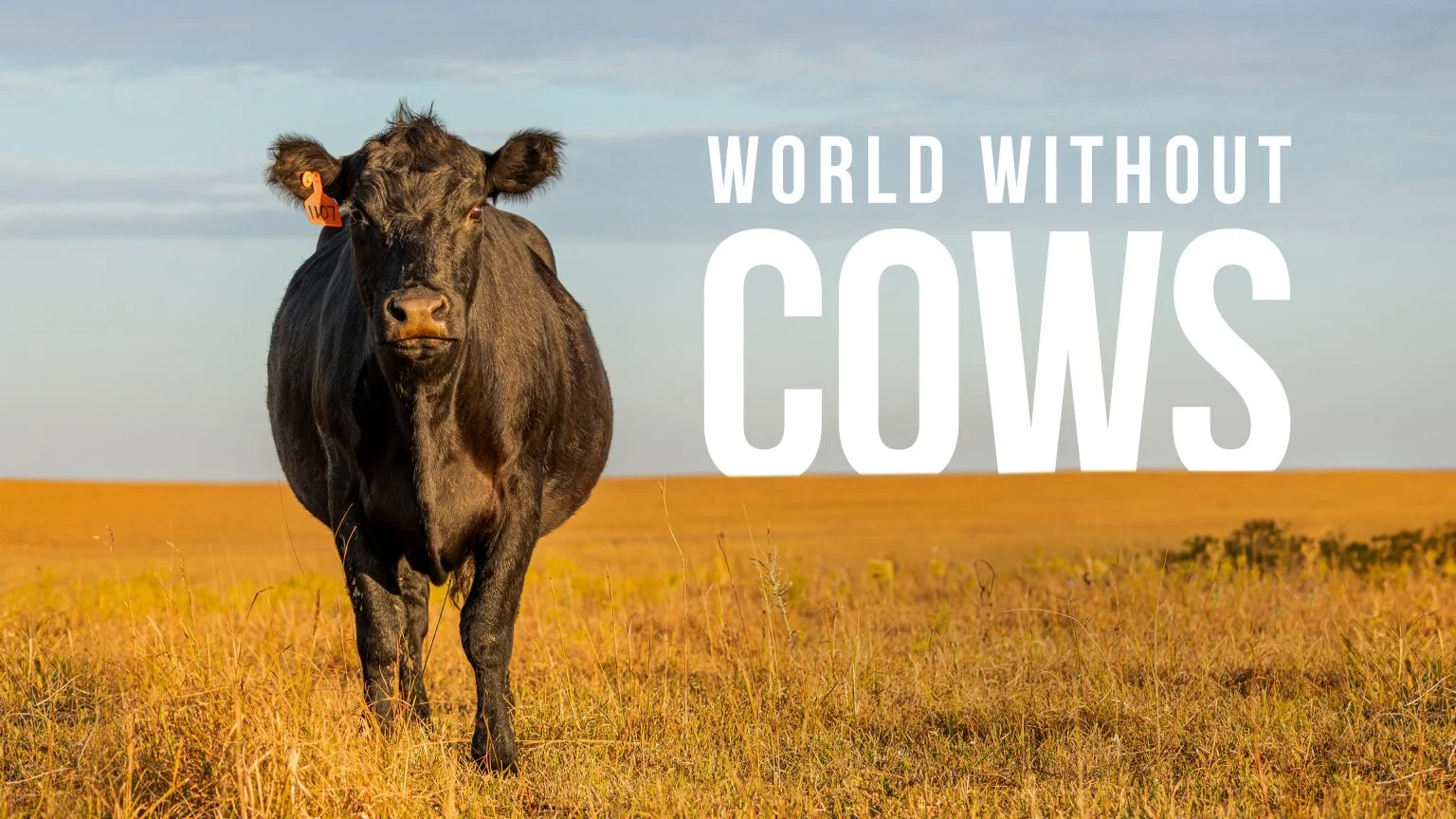

I wanted to stay down in the mud with the farmers in World Without Cows. Michelle Michael and Brandon Whitworth give their agricultural documentary plenty of beautiful aerial photography, taking in landscapes across India, Kenya, America, and Ireland. Getting the camera close to the soil creates a different kind of interest.
The land becomes somewhere people work, with demands that a distant view cannot explain. An understated score makes these encounters welcoming. Before the film asks us to assess cattle’s environmental costs, it encourages us to feel some attachment to the places supporting them.
That attachment becomes most useful when the documentary allows cattle to mean different things to different communities. Among Kenya’s Maasai pastoralists, the animals connect livelihood with wealth and cultural continuity. In India, their religious significance complicates any assessment based solely on agricultural output.
These encounters give the film’s question about removing cows from the world an immediate human cost. It becomes difficult to entertain that hypothetical casually once the animals belong to somebody’s life. The concern the filmmakers encourage here is worth taking seriously, including for viewers who remain unconvinced by their defense of the industry.
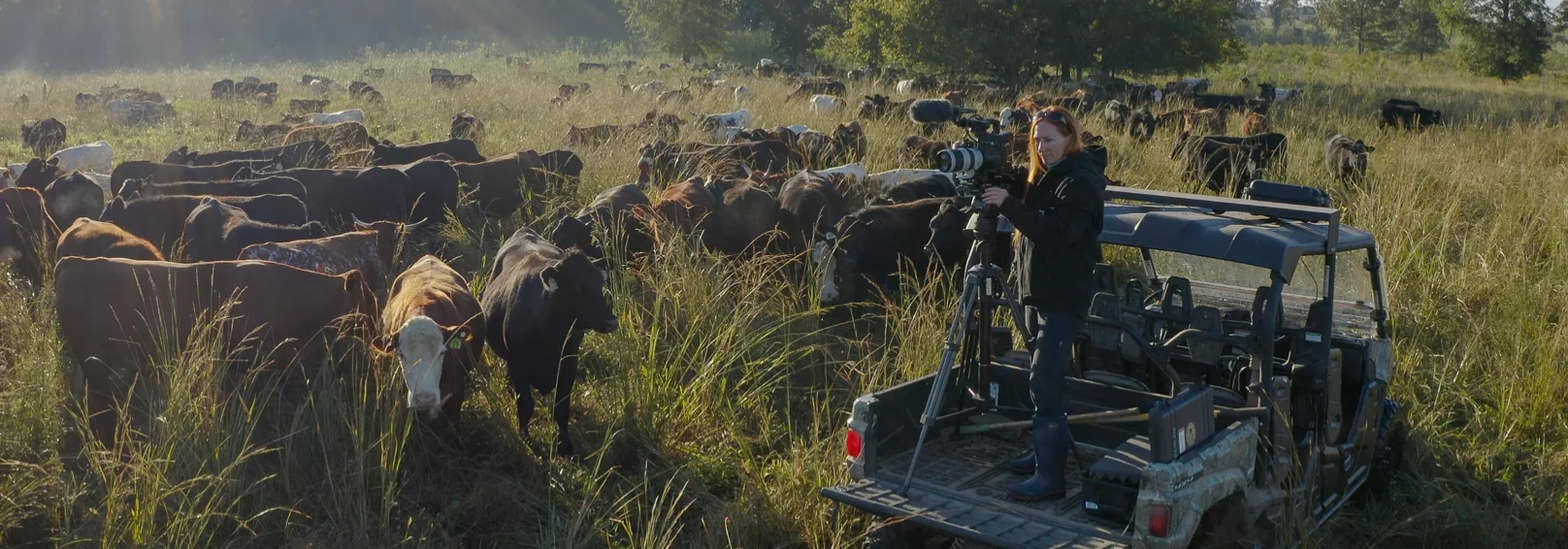
Working largely as a two-person filmmaking team, Michael and Whitworth travel across 22 countries, using interviews with farmers, ranchers, and scientists to carry the discussion. Each new encounter gives the audience a manageable piece of an enormous subject. The steady movement between locations keeps explanations of nutrition, land use, and emissions from becoming one long lecture.
It also creates an expectation: another person, another place, another reason to reconsider cattle. That rhythm is comfortable to settle into. The difficulty comes when the accumulating reasons begin to feel like answers to questions the film has made unusually easy.
A world with no cows is a sweeping proposition. Protecting a pastoral community from the disappearance of its livestock is an accessible emotional position; deciding how much industrial beef production a food system should support involves different pressures.
The film moves between those scales with insufficient resistance. Once it has persuaded us to care about people who depend on cattle, that care lends warmth to a much wider agricultural defense. I wanted the distinctions established by its travels to keep exerting pressure on the argument. Instead, the title’s hypothetical repeatedly gathers very different practices beneath the same threat of loss.
Some of the explanations deserve the room they receive. The account of cattle eating grasses and other material people cannot digest makes their place in food production easier to grasp. A two-year attempt to turn non-arable land into crop-producing ground, presented as unsuccessful, gives that discussion a tangible test case. Such examples replace an abstract accusation about wasted resources with circumstances viewers can examine. Yet their explanatory value has limits. Showing why cattle suit a particular parcel of land does not settle the scale of production elsewhere. The smooth progression between examples can make those limits easy to pass over.
The narration makes the invitation to reconsider feel less open. Michael and Whitworth alternate voice-over duties, and phrases such as “protein is a big deal,” used in the Indian material, reduce a complicated subject to a reassuring conversational nudge.
Accessibility matters, especially in a documentary carrying this much information. Here, the breezy certainty sometimes gets ahead of the investigation. The lovingly photographed steaks, cooked and sliced in close-up, exert a separate pull. Their appeal is immediate and sensory. Alongside the farmers’ testimony, they give the defense of cattle both human warmth and the prospect of a good dinner.
Alltech’s funding matters within this experience. The animal-nutrition company has a commercial interest in cattle farming, and the production is associated with its Planet of Plenty initiative. That relationship does not invalidate the people interviewed or make their experiences disposable.
It does sharpen the need to examine where the film spends its curiosity. Its attention to cattle’s benefits is extensive; the environmental objections to intensive production and concerns surrounding high red-meat consumption receive less searching treatment. The comfortable narration becomes harder to relax into when the case for retaining cattle gets such generous explanation and the case for substantial reduction remains comparatively thin.
The regenerative material restores some of the curiosity that this imbalance dampens. Managed grazing, soil health, and manure-based energy production offer specific practices to consider. Buck Island Ranch in Florida is presented as a site whose carbon sequestration exceeds its emissions.
Attached to a location and a management approach, the example gives the film’s optimism something viewers can hold onto. I found this kind of hope easier to engage with than the defense built around disappearance. It makes improvement feel like work people can undertake, with outcomes that can be examined, rather than a reward for adopting a sympathetic attitude.
The reassuring momentum persists, though, when the documentary considers efficiency through faster production. A Kansas feedlot operator argues that fattening animals quickly and slaughtering them earlier reduces the methane they emit over their lifetimes.
That proposal asks for a different kind of confidence from the grazing material. One encourages attention to cattle’s relationship with a landscape; the other emphasizes reducing time before slaughter. Both can enter a discussion about emissions, yet the emotional ease of moving from one proposed solution to another leaves their competing priorities insufficiently explored. The film gives us reasons to feel hopeful faster than it helps us choose among them.
The Indian cattle remain difficult to fit into that optimism. Having introduced their religious importance, the documentary also describes them as producing roughly one-fifth of the protein output achieved in certain other national systems. The comparison changes the terms of our attention. Animals whose place in a community invited understanding become a shortfall measured against productivity elsewhere. I wanted to know how the people living with them would answer that assessment, and what improvements could mean while preserving the relationship the film had asked us to care about.
World Without Cows premiered globally in September 2026 before launching in select U.S. theaters in October 2026 through Studio 410. Spanning twenty-two countries over a five-year production journey, the thought-provoking documentary examines the complex ecological, nutritional, and economic realities of cattle farming and its true impact on the future of our planet.
Where to Watch (2026) Online
Full Credits
Title: World Without Cows
Distributor: Studio 410, Planet of Plenty
Release date: September 9, 2026 (Dublin Premiere), October 9, 2026 (United States Limited Theatrical)
Running time: 1 hour 21 minutes (81 minutes)
Director: Michelle Michael, Brandon Whitworth
Producers and Executive Producers: Michelle Michael, Brandon Whitworth, Susanna Elliott, Alan Henthorne, Josh Tickell, Mark Lyons
Director of Photography (Cinematographer): Michelle Michael, Brandon Whitworth
Editors: Talain Blanchon
Composer: Nathan Horst
The Review
World Without Cows
World Without Cows made me care about the farming lives behind its arguments. Its close attention to agricultural work and practical regenerative examples gives that concern somewhere useful to go. The confidence it asks for is harder to sustain. A sweeping disappearance premise, reassuring narration, and uneven scrutiny make its optimism feel too easily earned. I valued the encounters while wanting a tougher conversation about the different futures being proposed.
PROS
- Close, sympathetic attention to farming communities.
- Landscape and ground-level photography create attachment.
- Specific regenerative examples give hope practical substance.
CONS
- Disappearance premise sidesteps questions of scale and reform.
- Breezy narration reduces investigative openness.
- Competing agricultural solutions receive insufficient comparison.







