




























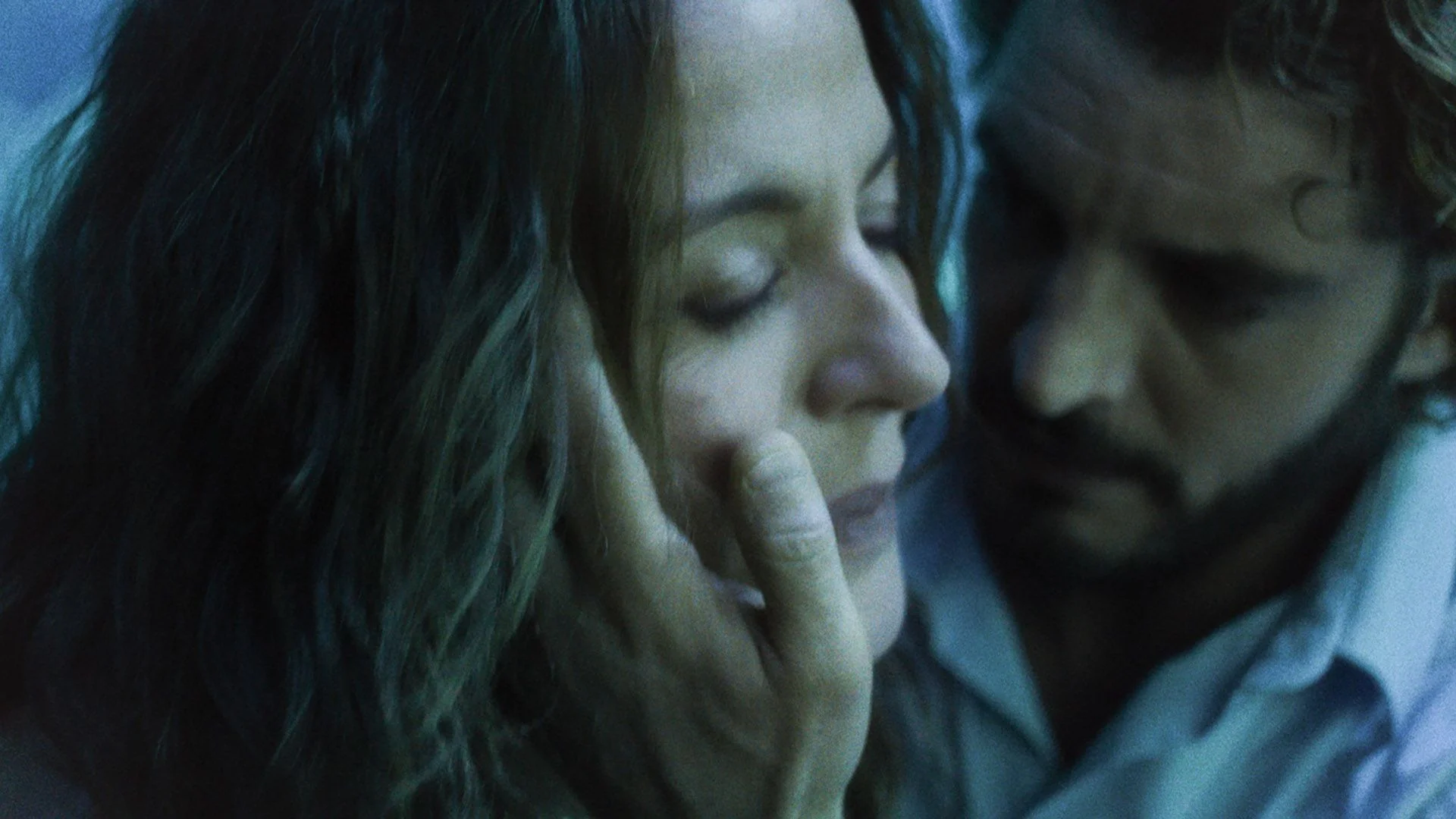

Gil has just given birth, and the people who love her are waiting to meet her daughter. Her husband, Jacques, tells them she needs rest. Watching this hospital visit in Géraldine Nakache’s Think Good, I wanted someone to get past him, to let the anticipated happiness reach the woman inside. Her mother Annah’s distress grows, and her friend Ibrahim nearly comes to blows with Jacques. A gathering that should have made Gil feel surrounded by affection becomes another occasion for her husband to decide who gets access to her.
Niels Schneider makes that decision horribly easy to recognize and difficult to challenge. His controlled delivery gives Jacques’s demands the surface of reasonable concern. He can question Gil’s movements, disparage her wish to work, then make her objection sound like the problem. The discomfort comes from anticipating how much effort the next disagreement will require. Monia Chokri supplies that cost through Gil’s hesitations and increasingly tired expressions. Even before she gives up an argument, you can feel how exhausting it has become to enter one.
The film moves backward and forward through their relationship, reaching from an intense courtship in Dubai into a marriage organized around Jacques’s expectations. Gil works on film shoots; he is a businessman whose attention arrives quickly and insistently. Pregnancy accelerates their commitment. She considers an abortion, and he persuades her to marry him despite how little they know each other. These earlier scenes sit alongside the restrictions that follow, asking us to connect the promise of being cherished with the experience of being watched. The movement through time can initially leave the relationship’s stages difficult to place.

A phone call offering Gil work gives that fractured chronology an emotional connection. Her former colleague brings an earlier version of her life within reach, with people who know her through her abilities and a purpose outside the household. Jacques makes returning to work a test of her fitness as a wife and mother. That accusation changes the feeling of the offer: something welcome becomes something she must defend. Chokri’s quieter voice and reduced smiles help hold the different periods together. Her performance lets us register changes in confidence even when the editing interrupts their progression.
I was less convinced by the amount of emotional ground the early romance covers. Its speed is clear, but the attachment itself receives less development than the distress that follows. Once Jacques’s behavior becomes recognizable, successive incidents can leave the audience waiting for Gil to reach an understanding we already possess. The film does not need to make him sympathetic or ask her to justify staying. It does need to bring us close to the attachment and narrowing possibilities that make her decisions difficult. Chokri often supplies that closeness through fatigue when the screenplay supplies another demonstration of his cruelty.
The move to an isolated country house gives those narrowing possibilities a practical shape. Gil cannot drive. Distance makes contact with other people harder, while Jacques extends the baby monitors beyond the nursery and throughout the home. An object associated with watching over their daughter becomes a way of watching her. When Gil protests, he treats her reaction as unreasonable. The hospital exclusion and the monitors do different emotional work: one makes us ache for an interrupted reunion; the other makes ordinary time at home feel exposed. There is little opportunity to stop accounting for herself.
Sylvestre Vannorenberghe’s photography makes the house’s comfort unsettling. Wood, glass, and generous space offer an attractive setting, while the intimate close-ups keep returning us to faces under pressure. The wide Scope image gives the film physical room without granting Gil much ease within it. Her inability to leave independently matters as much as the architecture. A beautiful home can still make an afternoon feel interminable when going elsewhere requires someone else’s cooperation. The framing keeps that tension personal, attaching the space to Chokri’s worn expressions rather than allowing its elegance to provide a pleasant distraction.
Faith complicates the comfort Gil can seek. Both partners are Jewish, though Jacques insists on stricter outward observance. Before the wedding, he tells her to conceal her pregnancy from the rabbi and the mikvah attendant. His demands place her in an uneasy position: she must observe the rules he values while helping him hide something from the people involved in those rituals. The mikvah scene that opens the film acquires pressure through this selective obedience. Gil’s religious life remains meaningful to her, even as Jacques makes its expectations another subject over which he exercises authority.
Annah’s advice that positive thinking will bring good things has a different, sadder effect. We have seen her anguish at being kept away from her daughter, so the reassurance comes from someone whose love is visible. Still, it offers Gil endurance when she needs support for change. The rabbi’s eventual reconsideration, after initially defending Jacques, brings welcome relief because it alters what help within her faith can look like. His advice to leave allows a commitment Gil values to support her decision. That matters emotionally: separation need not demand that she surrender every source of belonging alongside the marriage.
The film gives that release less time than it gives the restrictions preceding it. Gil leaves within a day, and the practical and emotional passage out of the home feels compressed after such sustained attention to everything that keeps her there. I wanted the relief, but the narrative moves toward it before fully developing the change in her circumstances. Once Jacques knows she wants to leave, the film also stops showing their interactions at home. That omission removes a difficult transition from our experience of Gil’s decision, leaving the departure to carry a weight the intervening scenes have barely explored.
Jacques’s continued harassment over custody prevents the separation from becoming a clean resolution. His demands can reach Gil after she has left the place where he monitored her, extending the strain into her life as a parent. The final turn toward police assistance offers somewhere for her to take that pressure, though the film does not establish what follows at the station. After spending so long beside Gil as she struggles to be heard, we are left waiting to learn how this new listener will respond.
Think Good made its world premiere in the Cannes Premiere section at the 79th Cannes Film Festival on May 15, 2026, followed by a theatrical release in France on September 16, 2026 via Pan Distribution. Directed by Géraldine Nakache, the French-Belgian psychological drama chronicles the insidious unraveling of a young marriage, following a woman who gradually recognizes the manipulative emotional and psychological control exerted over her life by her husband.
Full Credits
Title: Think Good (Original title: Si tu penses bien)
Distributor: Pan Distribution, Playtime
Release date: May 15, 2026 (Cannes Film Festival), September 16, 2026 (France Theatrical)
Rating: 18+
Running time: 1 hour 34 minutes (94 minutes)
Director: Géraldine Nakache
Writers: Géraldine Nakache, David Lambert
Producers and Executive Producers: Philippe Godeau, Patrick Quinet
Cast: Monia Chokri, Niels Schneider, Clémentine Célarié, Christian Benedetti, Mina Kavani, Oussama Kheddam, Daniel Cohen, Salomé Dewaels, Laurent Capelluto, Rudgy Pajany
Director of Photography (Cinematographer): Sylvestre Vannoorenberghe
Editors: Juliette Welfling
The Review
Think Good
Think Good makes the loss of everyday freedom painfully tangible, from a hospital visit Jacques blocks to a home where Gil cannot escape observation. Chokri’s exhausted hesitations give that pressure a human cost, while Schneider makes apparent concern deeply unsettling. The fractured storytelling leaves the couple’s initial attachment thin, and the hurried departure offers relief before fully earning the transition. Its intimate portrait of endurance remains stronger than its account of escape.
PROS
- Chokri makes Gil’s diminishing confidence palpable.
- Schneider’s restrained delivery turns concern into menace.
- Framing and household surveillance create sustained unease.
- Faith becomes a credible source of support as well as pressure.
CONS
- The initial romantic attachment feels underdeveloped.
- Repeated incidents sometimes confirm familiar ground.
- Gil’s departure receives insufficient dramatic development.







