





















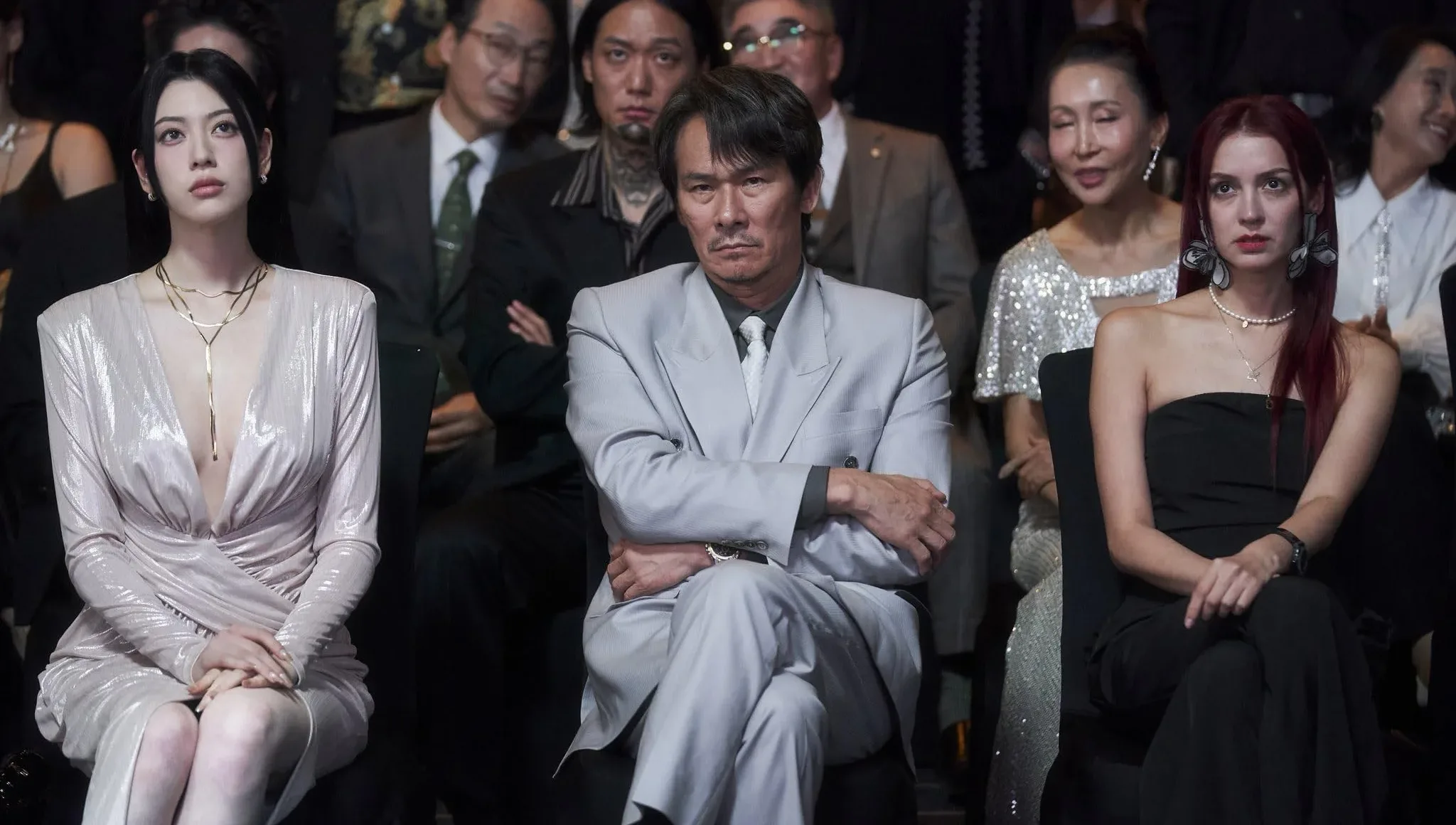

Park Tae-young helps build a successful online casino, watches a risky business decision pay off, and still finds himself on the losing side of his own life. His best friend Jang gets the attention. Park gets another reason to feel overlooked. Having Park narrate Tazza 4: The Song of Beelzebub puts us uncomfortably close to that resentment.
We know the partnership has made both men wealthy, yet we’re listening to someone for whom their shared success registers as a private defeat. It’s a good place to begin a gambling thriller: winning has already failed to make somebody happy.
Roh Jae-won makes that dissatisfaction unpleasant company in a productive way. His Park can seem wounded and dangerous within the same stretch of the film, with nervous intensity turning a craving for recognition into something threatening. Opposite him, Byun Yo-han gives Jang the easy confidence that makes certain people enjoyable to be around and unbearable to compare yourself with. Their performances create an imbalance you can feel before the betrayal turns it into physical harm. Jang’s comfort seems effortless; Park appears to experience every reminder of it as an injury.
Director Choi Kook-hee fills in that sensitivity through childhood flashbacks. Park’s abusive, religiously fanatical mother gives his envy a history, while his closeness to Jang’s family places a happier home within reach without making it his own. His rejected interest in Jang’s older sister further entangles affection with humiliation.
These details help us understand why comparison has become such a habit. The adult friendship receives less room to breathe, though. The film supplies several roots for Park’s resentment, then moves quickly through confrontations that could make the loss of their bond hurt. Understanding his grievance comes easier than feeling everything the two men once shared.
Jang’s suffering creates a much quicker attachment. Bloodied aboard a ship near Vietnam, he is offered freedom if a tossed coin lands on its edge. His extraordinary luck delivers the impossible outcome, yet his captors still remove a kidney and abandon him.
The sequence makes survival feel grotesquely incomplete. We’re relieved that he lives, appalled by the price, and ready to see him regain some control. Returning from that ordeal to the business trip Park engineered also changes the temperature of their earlier relationship. The professional slights Park nurses now sit beside the bodily damage he is prepared to arrange.
That opening leaves the film with a tricky problem: how do you worry about a hero whose luck can produce a standing coin? Giving Jang poker lessons offers a promising answer. Stranded in Vietnam, he needs another person’s knowledge and must learn a game his instincts alone haven’t equipped him to play.
There’s pleasure in seeing his confidence acquire a practical use, especially with Byun remaining so relaxed under pressure. The training passes quickly enough to weaken the satisfaction, however. We can enjoy his growing capability without fully feeling the work that separates the battered survivor from the assured player.
His mentor helps make that recovery engaging because learning becomes a relationship. Jang has to ask for instruction and accept dependence after losing the life in which everything seemed to come naturally. Then the mentor’s past brings Japanese criminal Sasaki, played by Tsuyoshi Ihara, into the story, along with a demand to participate in a high-stakes poker match.
This gives the apprenticeship danger beyond practice and preparation. The awkwardness comes when the mentor exits and Jang takes his place. A bond we’ve begun following suddenly becomes a route into the next contest, leaving little emotional time for the handover.
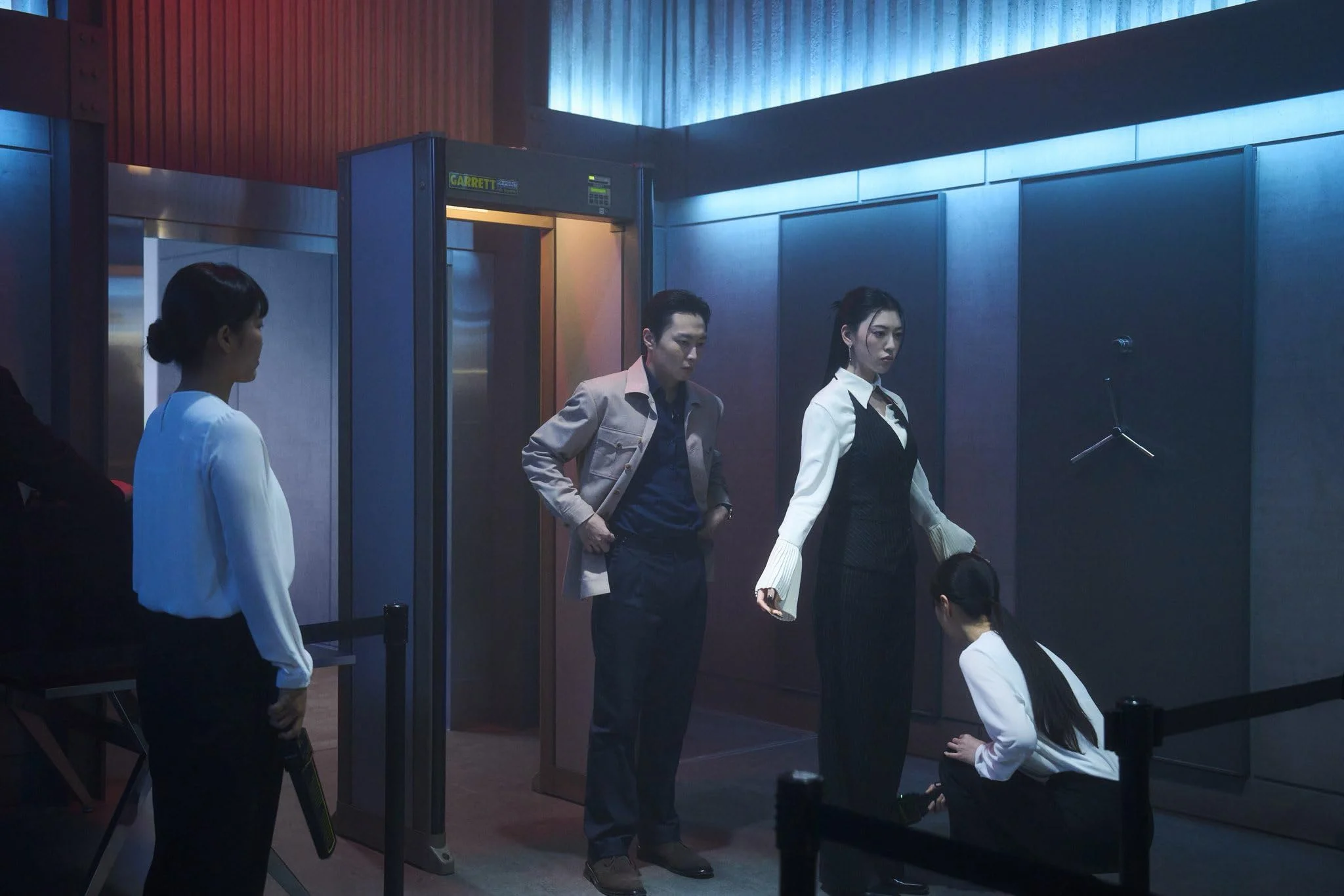
Kaneko, played by Ayaka Miyoshi, brings her own revenge motive into these dealings and forms an alliance with Jang. Her presence gives him someone whose interests overlap with his without simply belonging to his original dispute. That’s useful friction for a revenge story, and it helps the criminal world feel populated by people pursuing separate ends.
Yet her history competes for attention with the mentor’s trouble and Jang’s return to Korea. At 129 minutes, the film has plenty of activity while some of its relationships still feel hurried. The stretch through Sasaki’s affairs expands the route back to Park without deepening the original friendship at the same rate.
The poker supplies enough enjoyment to carry those detours. This is a standalone installment, so newcomers can enter without homework on the earlier films, and the basic emotional stakes remain accessible without expertise at the table. Jang wants to answer a betrayal. Park needs the satisfaction of prevailing over someone whose apparent ease has tormented him for years.
Byun’s composure and Roh’s agitation give calculation a personal charge. Watching Jang keep his cool becomes pleasurable partly because we understand how intolerable that quality is to Park. The film finds a strong use for the very trait that helped destroy their partnership.
Explanations of probability occasionally interrupt that pleasure. A pause to clarify strategy can let an unfamiliar viewer recognize the risk, but the longer discussions pull attention away from the people taking it. We start processing a calculation just as we want to remain inside an uncomfortable encounter.
Poker knowledge adds texture here; it doesn’t supply the reason to care. With Park already established as an accomplished player, the possibility of losing carries a humiliation that money cannot cover. The games hold their tension best when there is room to follow the odds while still feeling how badly he needs Jang to fail.
Tazza: The Song of Beelzebub premiered globally on Netflix on October 16, 2026. Directed by Choi Dong-hoon, the South Korean crime thriller follows a brilliant card player who enters a high-stakes, underworld gambling ring where an ancient demonic contract turns every hand into a battle for souls.
Full Credits
Title: Tazza: The Song of Beelzebub
Distributor: CJ Entertainment, Netflix
Release date: October 16, 2026
Rating: TV-MA
Running time: 2 hours 15 minutes (135 minutes)
Director: Choi Dong-hoon
Writers: Choi Dong-hoon, Lee Gi-cheol
Producers and Executive Producers: Ahn Soo-hyun, Lee Dong-ha
Cast: Ryu Jun-yeol, Kim Tae-ri, Lee Byung-hun, Park Jeong-min, Yum Jung-ah, Jo Woo-jin, Kim Eui-sung, Choi Deok-moon
Director of Photography (Cinematographer): Kim Woo-hyung
Editors: Shin Min-kyung
Composer: Jang Young-gyu
The Review
Tazza The Song of Beelzebub
Tazza 4: The Song of Beelzebub makes you care about who wins before asking you to follow the odds. Byun Yo-han’s calm and Roh Jae-won’s restless resentment give the poker an emotional charge that survives some crowded plotting. Jang’s rapid development and the mentor’s abrupt exit weaken the satisfaction of his recovery, while strategy explanations occasionally interrupt the tension. Still, the damaged friendship gives this revenge thriller a reason to keep watching beyond the next hand.
PROS
- Byun Yo-han and Roh Jae-won’s contrasting performances.
- Personal stakes that give the poker tension.
- Accessible standalone story.
CONS
- Jang’s poker development feels rushed.
- Criminal detours hurry developing relationships.
- Extended probability explanations interrupt suspense.