













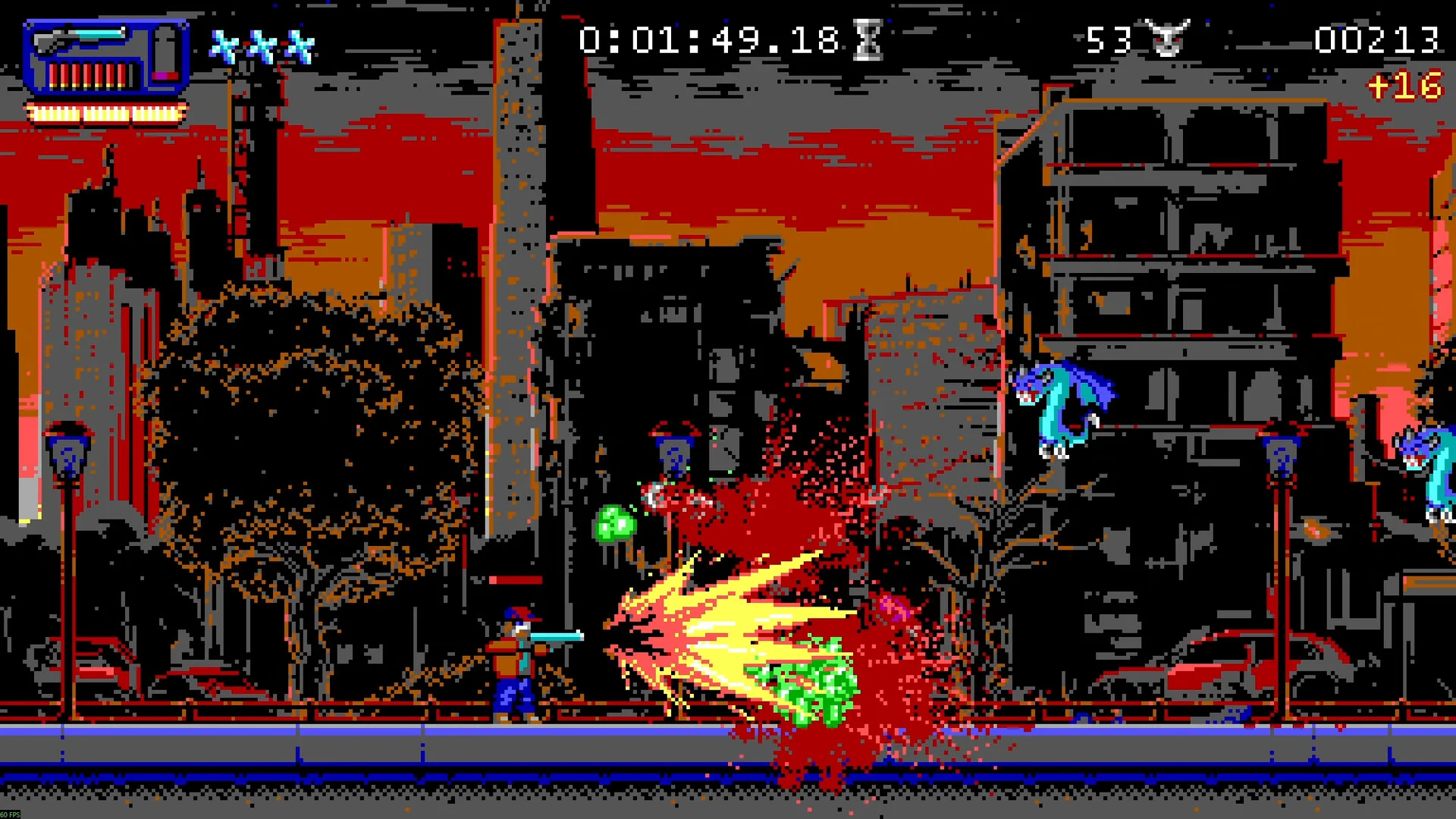

The gunman in Haunted Lands has unlimited ammunition and still needs somewhere safe to reload. He must stand still while doing it, so the supply of bullets matters less than the distance between his body and whatever is approaching. Retreat becomes part of firing a weapon. There is a particular understanding of action in that small restriction: preparation belongs inside the encounter, and a monster can become dangerous simply by denying you the space to perform an ordinary task. The horror starts with having a gun that cannot immediately help.
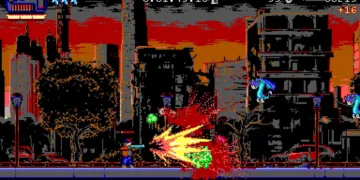
The visual language places this awkward vulnerability within a recognizable computer gaming tradition. Dangerous Dave in the Haunted Mansion is the useful reference, with its combination of horror, exploration, and platforming. The restricted colors and animation frames recall that lineage with greater precision than the catchall description “eight-bit.”
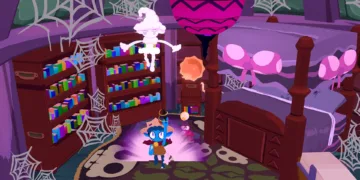
Castlevania and Contra offer other points of contact through monsters, projectiles, and demanding action, but those associations should not flatten the different traditions being brought together. Here, the bright, sharply separated colors give supernatural creatures a peculiar solidity. These are horrors drawn to occupy a small vocabulary of pixels, and the detailed monster sprites make that vocabulary feel sufficient.
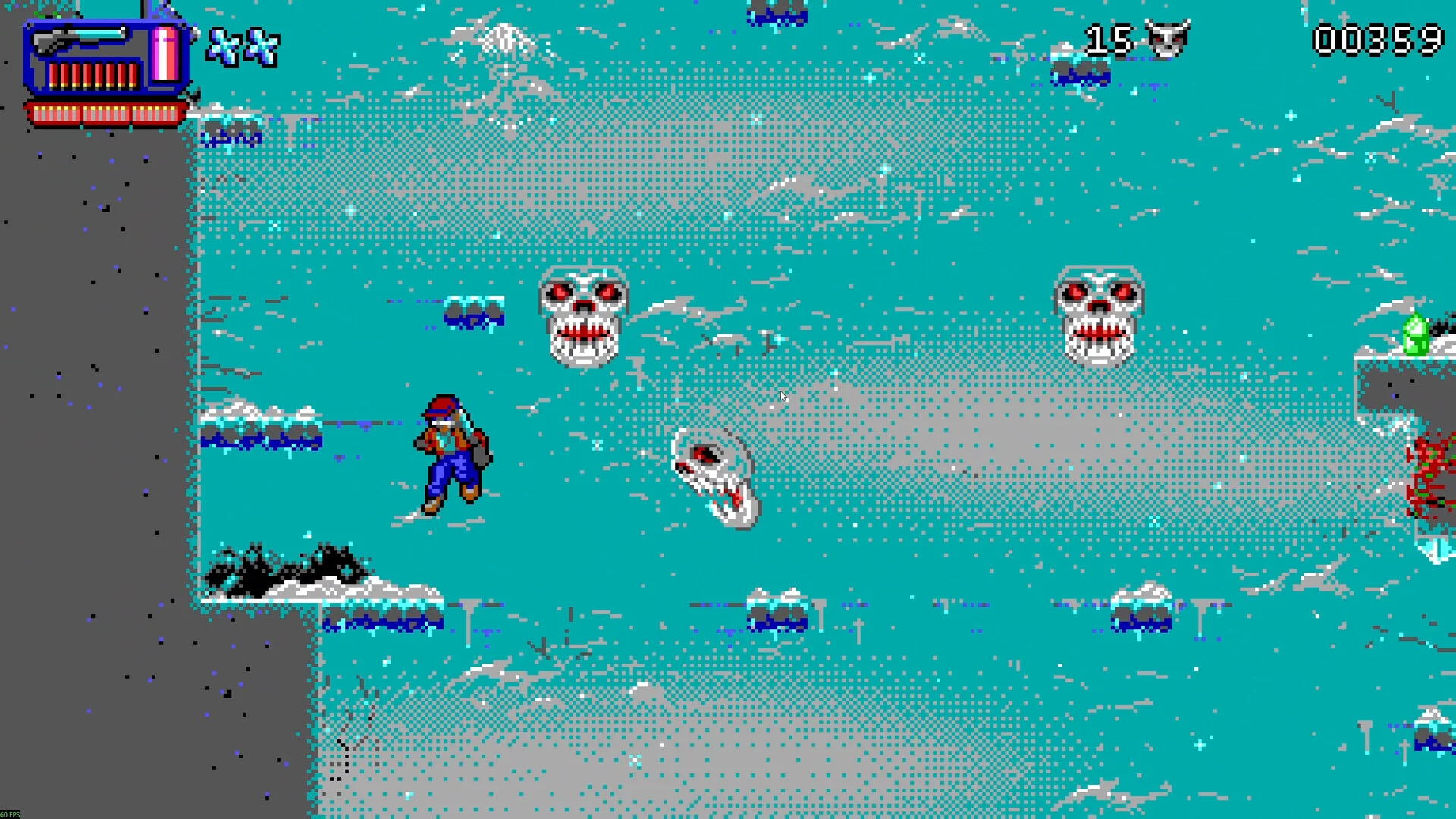
That inheritance remains available to players without a personal memory of older computers. The zombies’ carefully worked forms and movements can be appreciated as design rather than recognized as memorabilia. Equally, historical recognition cannot settle questions of readability. Some threats become difficult to distinguish from the saturated surroundings, which carries an immediate cost in a game with little tolerance for damage. A room can be attractively composed and still communicate a danger poorly. The limited palette gives the world its identity, but that identity needs to survive the practical business of identifying something before it hits you.
The three initial characters provide different ways of inhabiting this hostile environment. The rifle user can engage at long range and produce a concentrated explosive shot, with reloading interrupting his security. The witch’s lightning has a shorter reach and draws on replenishing energy.
The werewolf commits to claws and a leap toward his target. These choices alter the distance at which the world must be understood. An approaching enemy gives the gunman a shrinking opportunity to fire; for the werewolf, closing that distance is part of the solution. Character selection changes the player’s exposure to the same kinds of danger, giving the repeated encounters some interpretive flexibility.
The gunman’s restrictions are particularly effective when there is room to act on them. Choosing to retreat before reloading gives the pause a tactical purpose. Waiting until enemies surround him turns it into a consequence of poor preparation. The friction becomes harder to defend when attacks arrive from several directions and the constrained aiming struggles to answer them.
Walking enemies, flying creatures, sudden appearances, and transformations demand rapid reassessment, while the weapons encourage measured engagement. There is productive tension here, though the encounters can ask for a speed of response that the character’s actions resist. Remappable controls and gamepad support offer useful options without removing that underlying relationship.
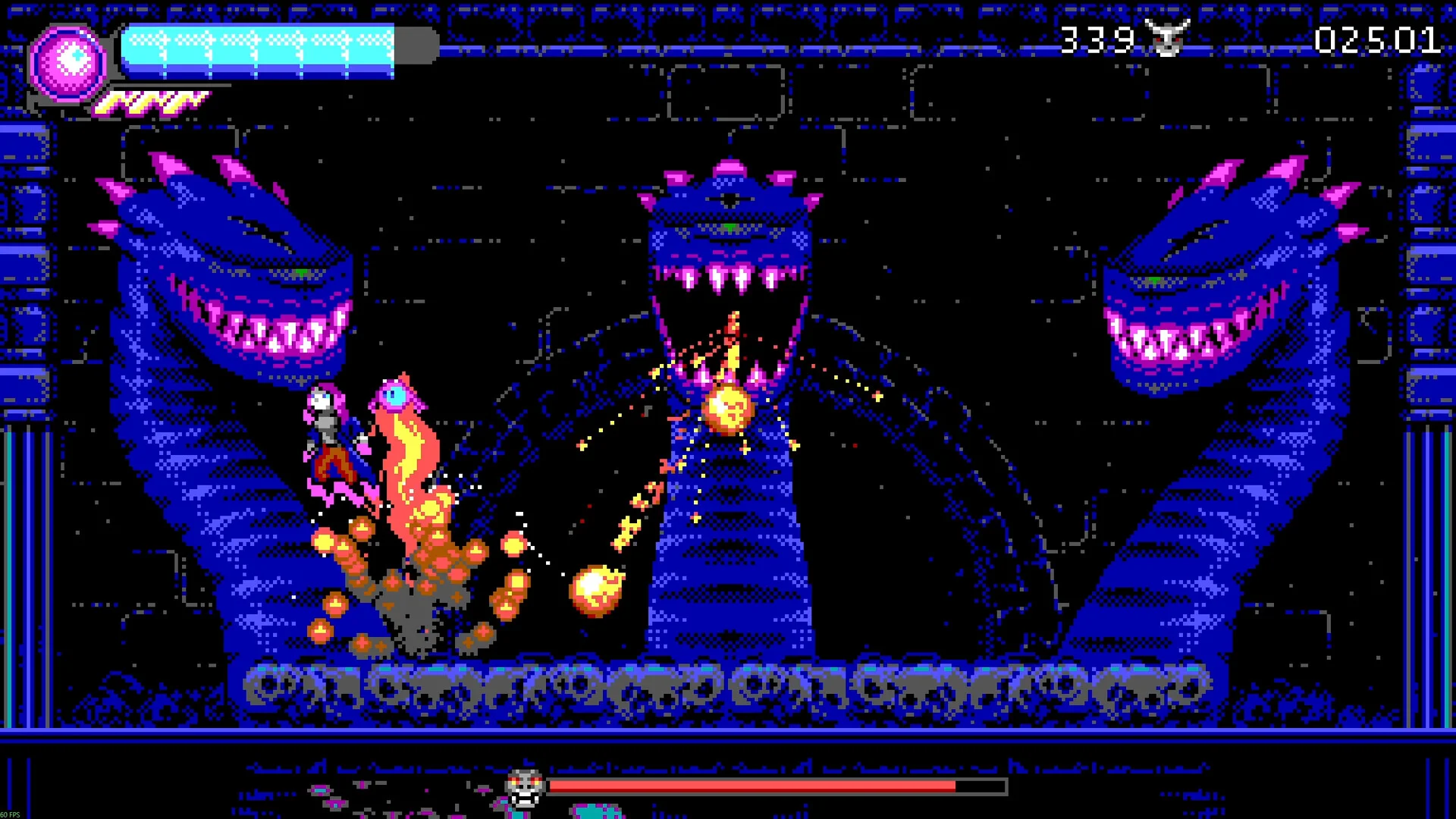
The console action comparisons become useful at this point because they clarify an expectation rather than establish a standard the game must obey. A screen full of monsters and projectiles invites an aggressive response; stationary reloading asks the player to make room, wait, and recommit.
Neither rhythm has an exclusive claim to authenticity. What matters is how convincingly the encounter accommodates their meeting. Haunted Lands earns its cumbersome moments when restraint produces a better decision. Its devotion to an older style becomes less persuasive when the player understands the required decision but must repeatedly negotiate the same lengthy approach to execute it.
Exploration makes that problem unusually pronounced. These environments spread sideways and vertically, with background doors connecting passages and routes branching through substantial spaces. Their scale gives the horror room to develop beyond a succession of targets.
The player has to acquire a sense of place, remembering connections alongside enemy positions. Sparse checkpoints, however, place that curiosity under pressure. Taking an unfamiliar route risks health and progress, while the route already learned offers a safer prospect. A layout built to invite investigation can gradually encourage conservative repetition.
The early sequence of doors leading toward the first boss makes the conflict concrete. Learning the correct sequence is a spatial task; reaching the boss with enough health left is an attritional one. A wrong turn can leave the player carrying damage into the fight, so understanding the route and understanding the boss become entangled.
There is satisfaction in bringing both under control. Yet a failed boss attempt can send the player back through material whose lesson has already been absorbed. The return trip asks for continued execution, but it can also delay the next opportunity to learn something new.
Checkpoint health retention tightens the problem further. Reaching a checkpoint with damage does not necessarily provide a fresh attempt at the next obstacle. The player may have secured a new position while preserving the consequences of an earlier mistake, arriving at the boss with the route finally understood and too little health left to study its attacks.
The Review
Haunted Lands
Haunted Lands revives the computer horror tradition with detailed creature sprites and combat that makes distance, timing, and preparation matter. Its three starting characters offer distinct ways to inhabit that inheritance. The difficulty becomes wearing where sparse checkpoints turn exploration into repeated rehearsal, while constrained aiming and obscured threats complicate an already demanding routine. There is pleasure in learning its spaces, but too much familiar ground separates discovery from the next useful attempt.
PROS
- Detailed monster sprites within a restricted palette.
- Distinct character approaches to combat.
- Reloading rewards careful positioning.
CONS
- Long returns between boss attempts.
- Crowded encounters strain constrained aiming.
- Some threats blend into the surroundings.