




















Cynthia has found a prospective sexual partner for her adult daughter, and her research has been thorough. The new neighbour has unusual genitalia; Mary’s browsing history suggests an interest in tentacles. Yvette Parsons delivers this maternal matchmaking with an enthusiasm that makes privacy seem like an unfortunate obstacle to being helpful. Cynthia can discuss unconventional desire without embarrassment. Allowing her daughter an intimate life she cannot inspect seems considerably harder.
Mary’s annoyance is directed at her mother, not the neighbour’s anatomy. When she meets Boo in the communal laundry, she wants to see for herself. This distinction matters: Hannah Lynch plays a woman capable of pursuing pleasure and resenting interference simultaneously. Her curiosity needs neither an apology nor a certificate of good judgment. She is also unemployed, irritable, and still living at home, none of which makes her reproductive wishes available for correction.
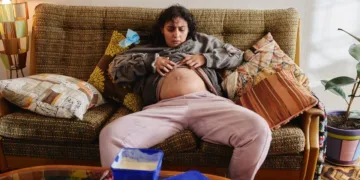
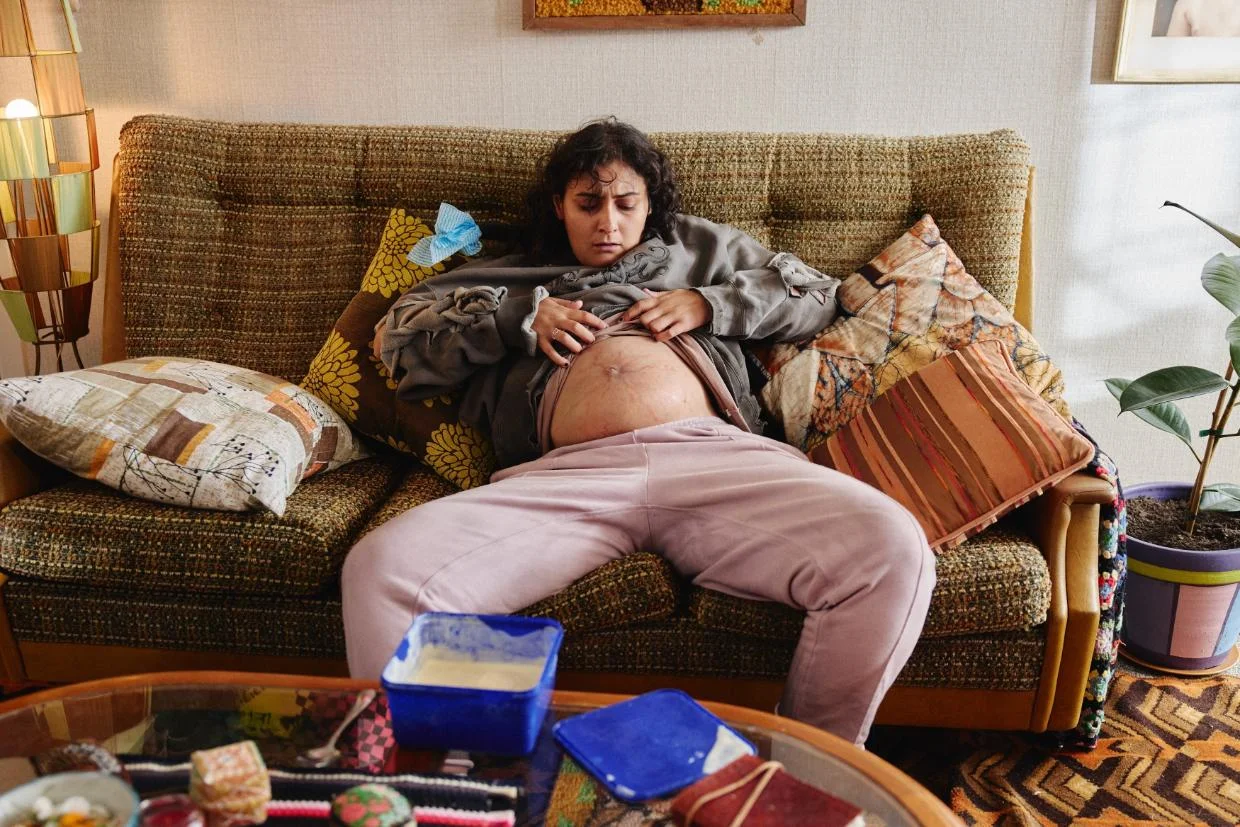
The encounter leaves her alien pregnant, through her clothes, with a gestation period measured in hours. Thunderlips, the New Zealand filmmaking duo Sean Wallace and Jordan Mark Windsor, give Mum, I’m Alien Pregnant the bodily extravagance its title promises. Boo (Arlo Green) is part alien, his mother Ann (Jackie van Beek) has been keeping that history quiet, and ordinary emergency contraception proves inadequate. Mary wants an abortion. Around her, people begin finding other things to discuss.
Lynch’s performance gives the resulting farce a wonderfully abrasive point of contact. Her hard stare and clenched delivery keep interrupting the cheerful assumptions and detached professional responses surrounding her. Repeating the fact that she is alien pregnant becomes funny because she has to keep making the obvious register. When she protests the humiliation of medical treatment, the irritation has accumulated through people examining her condition without adequately hearing her. The film lets her be unpleasant company without withdrawing its attention from what she is saying. Politeness would be an exhausting additional symptom.
At first, I thought the alien exaggeration simply made Mary’s case impossible to dismiss. Blue projectile vomit and a purple rash spreading across her belly certainly give her complaints visual force. But that explanation bothers me. It would make the extremity of her suffering the reason her refusal deserves respect. Mary has already expressed what she wants; she should not need spectacular evidence. The film’s commitment to her unpromising, unaspirational life helps here. It never supplies the reassuring career plan or admirable vocation that might make an audience consider her exempt from motherhood. Her existing life is the one she wishes to retain.
The bodily comedy also complicates the distinction between an alien catastrophe and an ordinary pregnancy. An edit to a conventional ultrasound brings familiar reproductive imagery into the same visual territory as the grotesque effects. Familiarity supplies surprisingly little reassurance once we have been invited to look at the process afresh.
Scale Studios’ practical work gives the swelling, slime, and bodily distortions an insistently tactile quality, while bold color keeps the spectacle buoyant enough for laughter. The blue vomit is disgusting, but its improbable color also preserves the childish pleasure of watching something revolting happen. The film allows that pleasure without requiring each eruption to stand for a social problem.
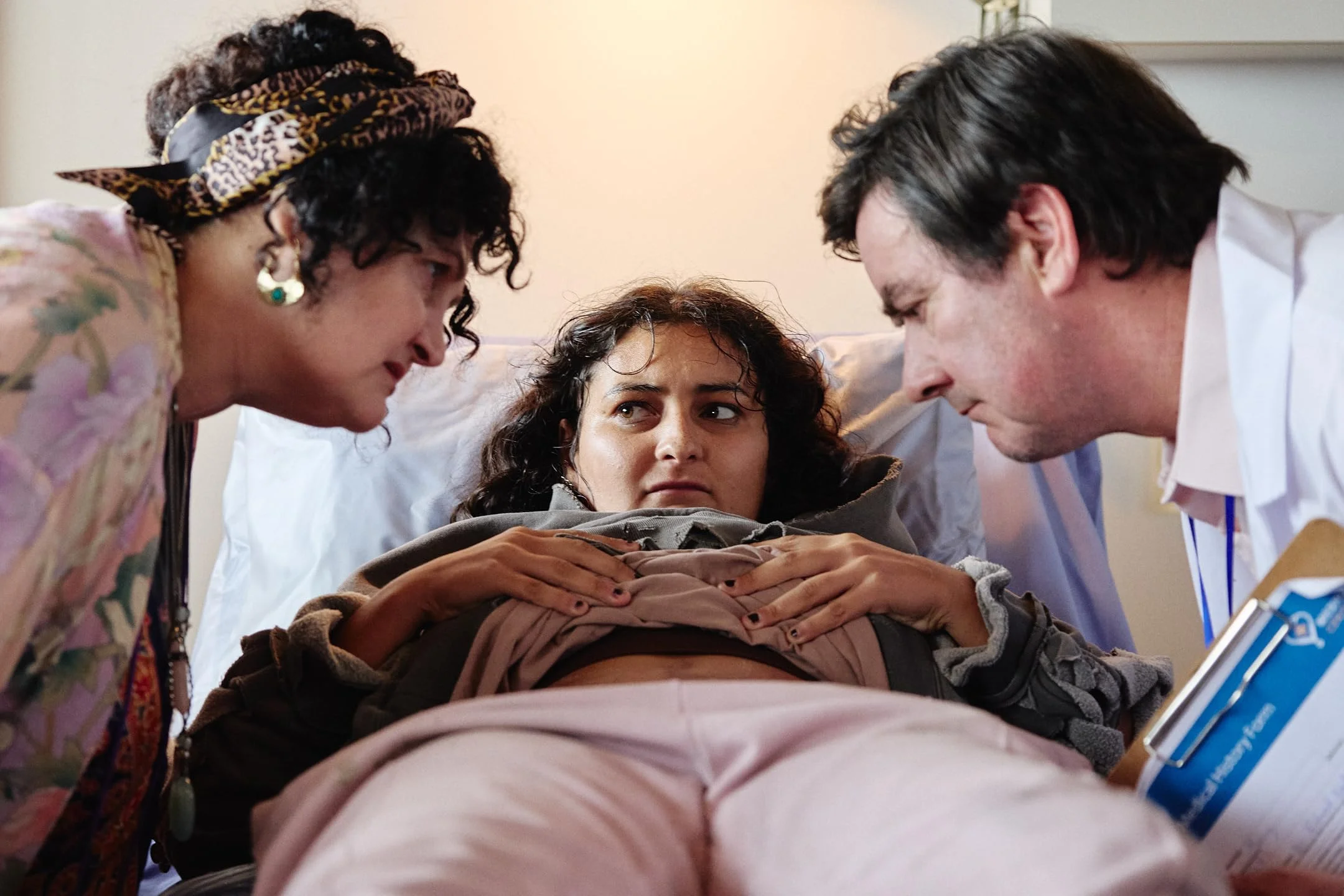
Its deadpan reactions do a different kind of work. Ann worries about the mess in her immaculate flat. Cynthia takes exception to excessive farting during an episode that has made ordinary standards of bodily decorum fairly ambitious. Parsons and van Beek give these priorities an everyday seriousness, allowing domestic etiquette to survive conditions that should have suspended it. The joke keeps returning attention to what people choose to notice. Mary can be undergoing an unprecedented physical event and still find herself answerable for being a nuisance.
Medical curiosity extends the problem beyond the family. Mary receives congratulations while seeking to stop her pregnancy; Boo’s unusual anatomy attracts interest without permission. The shared exposure does not equalize their positions, since Mary is carrying the rapidly developing consequences. It does show how easily a person can become material for somebody else’s investigation. With gestation accelerating over hours, every conversation conducted around Mary’s wishes takes on an extra absurdity. Her body is moving faster than anyone’s willingness to listen.
Cynthia prevents this argument from settling into a simple account of hostile people. She helps Mary obtain emergency contraception. She also suggests that Mary may feel differently once the baby arrives. These actions belong to the same person, and Parsons makes their coexistence credible through a cheerfulness that can sustain an ordeal or steamroller a conversation. Predicting a future change of heart sounds comforting to the speaker. To the person asking for help now, it postpones the moment when her answer will count.
Ann’s intervention in Boo’s life tests a different use of parental authority. Her secrecy accompanies his withdrawal, leaving him frightened and uncertain while Mary faces the physical emergency. Getting him involved asks something reasonable of him. Green’s hesitant manner preserves his vulnerability without making helplessness an adequate contribution. The distinction is practical: asking him to assist Mary creates an obligation; it gives him no ownership of her decision. Ann’s guarded composure and Cynthia’s expansive concern keep the two households from becoming interchangeable examples in an argument about mothers.
As Cynthia stays beside Mary through the worsening ordeal, their relationship acquires an intimacy neither woman could have arranged through matchmaking or predictions about grandmotherhood. The late movement brings several female experiences of pregnancy into contact, giving Mary company without making any single experience an instruction she must follow. Parsons’ determined buoyancy has to accommodate Lynch’s continuing impatience, with neither actor smoothing away the habits that made these two such awkward housemates.
Mum, I’m Alien Pregnant premiered at the Sundance Film Festival on January 23, 2026, before receiving a theatrical release in New Zealand on September 10, 2026, and launching on digital VOD platforms on October 27, 2026. Directed by the New Zealand filmmaking duo THUNDERLIPS, this sci-fi body-horror comedy follows a messy millennial underachiever who accidentally becomes pregnant with an extraterrestrial child, forcing her to deal with skeptical doctors, a unhelpful partner, and her overbearing mother.
Where to Watch Mum, I’m Alien Pregnant (2026) Online





Full Credits
Title: Mum, I’m Alien Pregnant
Distributor: Umbrella Entertainment, XYZ Films
Release date: January 23, 2026 (Sundance) / September 10, 2026 (New Zealand) / October 27, 2026 (VOD)
Rating: 18
Running time: 1 hour 35 minutes (95 minutes)
Director: THUNDERLIPS (Sean Wallace, Jordan Mark Windsor)
Writers: THUNDERLIPS (Sean Wallace, Jordan Mark Windsor)
Producers and Executive Producers: Alix Whittaker, Morgan Leigh Stewart, Ilai Amar, Timothy White, Nate Bolotin, Nick Spicer, Aram Tertzakian, Todd Brown
Cast: Hannah Lynch, Yvette Parsons, Arlo Green, Jackie van Beek, Jonny Brugh
Director of Photography (Cinematographer): Sean Wallace
Editors: Jordan Mark Windsor
Composer: Ewan Clark
The Review
Mum I'm Alien Pregnant
Mary's refusal deserves a hearing before the blue vomit arrives. Thunderlips' gleefully disgusting comedy understands this, grounding its alien absurdity in Hannah Lynch's abrasive precision and two mothers whose help comes tangled with presumption. The spectacle risks making an ordinary choice seem to require extraordinary suffering, but Mary's stubborn lack of an inspirational life plan keeps that danger in check. Practical slime effects and domestic deadpan make bodily autonomy funny without making the person demanding it ridiculous.
PROS
- Lynch's anger grounds the escalating absurdity.
- Tactile practical effects sustain the revolting fun.
- Deadpan domestic complaints sharpen the comedy.
- Maternal affection remains complicated by intrusion.
CONS
- Extreme suffering risks making Mary's refusal seem to need exceptional justification.