


















• Latest
  • Trending
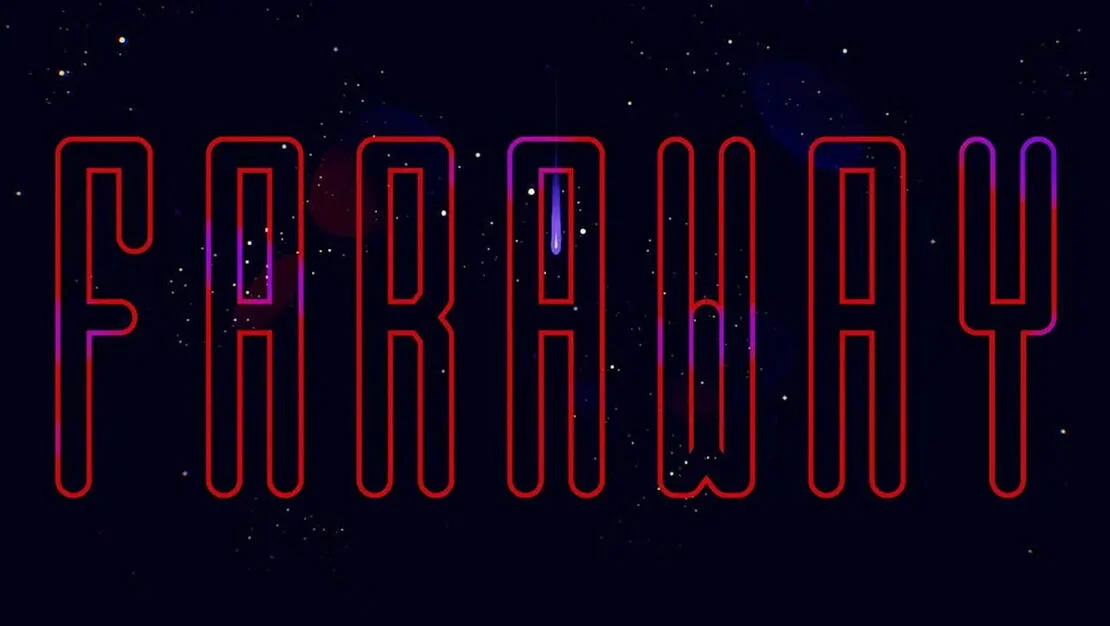
Faraway Review

Faraway Review: Drawing Your Own Obstacles

Waves Turn Review

Waves Turn Review: Maternal Love Has No Deadline

Never Had a Chance Review

Never Had a Chance Review: Ravi Wants a Family and Keeps Choosing Jay

Dementium Review

Dementium Review: The Past Keeps Interrupting the Nightmare

Savage Mountain Review

Savage Mountain Review: Friendship Holds a Fragmented Expedition Together

Let’s Sing 2027 Review

Let’s Sing 2027 Review: Making Room for Nervous Singers

Think of England Review

Think of England Review: Manufacturing Desire Among the Damaged

Black Doves Season 2 Review

Black Doves Season 2 Review: Affection Is Part of the Job

Travis Barker: Louder Than Fear Review:

Travis Barker: Louder Than Fear Review: Practice Continues While Fear Sets the Schedule

Concrete Land Review

Concrete Land Review: Eight Years Beside a Shrinking Pasture

Psycho Sleuth

Psycho Sleuth Review: Familiar Trials with Unreliable Witnesses

Cherry and Virgin Review

Cherry and Virgin Review: Two Artists Learn to See Each Other

A Dog’s Perfect Christmas Review

A Dog’s Perfect Christmas Review: Holiday Healing Comes Too Easily

  • Home
  • Privacy Policy
  • Terms and Conditions
  • Gazettely Review Guidelines
Thursday, November 5, 2026
GAZETTELY
  • Home
  • Movie and TV News
    Liam Neeson

    Liam Neeson Backs Meryl Streep as Aslan After Learning of Casting on Camera

    Joe Miñoso

    “Chicago Fire” Writes Out Joe Cruz in 300th Episode as Joe Miñoso Exits

    Pixar

    Pixar Names Jonathan Garson President as Jim Morris Steps Aside

    Logan

    Dafne Keen Says She Was Offered Cocaine at Wrap Parties as a Child

    AMC

    AMC Posts Record $1.71 Billion Quarter on “Spider-Man” and “The Odyssey”

    Batman: Part II

    Scarlett Johansson Says Her “Batman: Part II” Role Brought “Existential Angst”

    Dune Part Three

    “Dune: Part Three” Cast Says Film Departs From Herbert’s “Messiah”

    Get Rid of It

    Daisy Ridley and Sosie Bacon to Star in Pregnancy Horror “Get Rid of It”

    Godzilla Minus Zero Review

    “Godzilla Minus Zero” Eyes Box Office Crown Over “The Cat in the Hat”

  • Movie and TV Reviews
    Waves Turn Review

    Waves Turn Review: Maternal Love Has No Deadline

    Never Had a Chance Review

    Never Had a Chance Review: Ravi Wants a Family and Keeps Choosing Jay

    Dementium Review

    Dementium Review: The Past Keeps Interrupting the Nightmare

    Savage Mountain Review

    Savage Mountain Review: Friendship Holds a Fragmented Expedition Together

    Think of England Review

    Think of England Review: Manufacturing Desire Among the Damaged

    Black Doves Season 2 Review

    Black Doves Season 2 Review: Affection Is Part of the Job

    Travis Barker: Louder Than Fear Review:

    Travis Barker: Louder Than Fear Review: Practice Continues While Fear Sets the Schedule

    Concrete Land Review

    Concrete Land Review: Eight Years Beside a Shrinking Pasture

    Cherry and Virgin Review

    Cherry and Virgin Review: Two Artists Learn to See Each Other

  • Game Reviews
    Let’s Sing 2027 Review

    Let’s Sing 2027 Review: Making Room for Nervous Singers

    Psycho Sleuth

    Psycho Sleuth Review: Familiar Trials with Unreliable Witnesses

    Faraway Review

    Faraway Review: Drawing Your Own Obstacles

    Escape Academy 2: Back 2 School Review

    Escape Academy 2: Back 2 School Review: A Campus Built on Shared Curiosity

    The Legend of Zelda: Ocarina of Time Review

    The Legend of Zelda: Ocarina of Time Review: A Hyrule Worth Getting to Know

    Marvel’s Guardians of the Galaxy: Encore Edition Review

    Marvel’s Guardians of the Galaxy: Encore Edition Review: Leading the Team Takes Work

    Stellar Blade Complete Edition Review

    Stellar Blade Complete Edition Review: Familiar Fights Need Fresh Timing

    Tom the Postgirl Review

    Tom the Postgirl Review: Little Red Riding Hood on the Postal Round

    Heir of the Dog Review

    Heir of the Dog Review: What the Dog Knows After Dark

  • The Bests
No Result
View All Result
GAZETTELY
No Result
View All Result
Faraway Review

The Institute Season 2 Review: The Children Escape but the System Keeps Hiring

Taken: Natalee Holloway Review: The Mother’s Pursuit and the Daughter We Briefly Meet

Home Games Reviews Games

Faraway Review: Drawing Your Own Obstacles

Coby D'Amore by Coby D'Amore
4 hours ago
in Games, Nintendo, PC Games, PlayStation, Reviews Games, Xbox
Reading Time: 4 mins read
A A
0
Share on FacebookShare on TwitterShare on PinterestShare on WhatsAppShare on TelegramSummarize with ChatGPTSummarize with Perplexity

Every connection you draw in Faraway changes the routes you can still take. Link two stars and you earn points, but the line between them becomes something your next connection cannot cross. A convenient approach can leave another star stranded behind your own geometry.

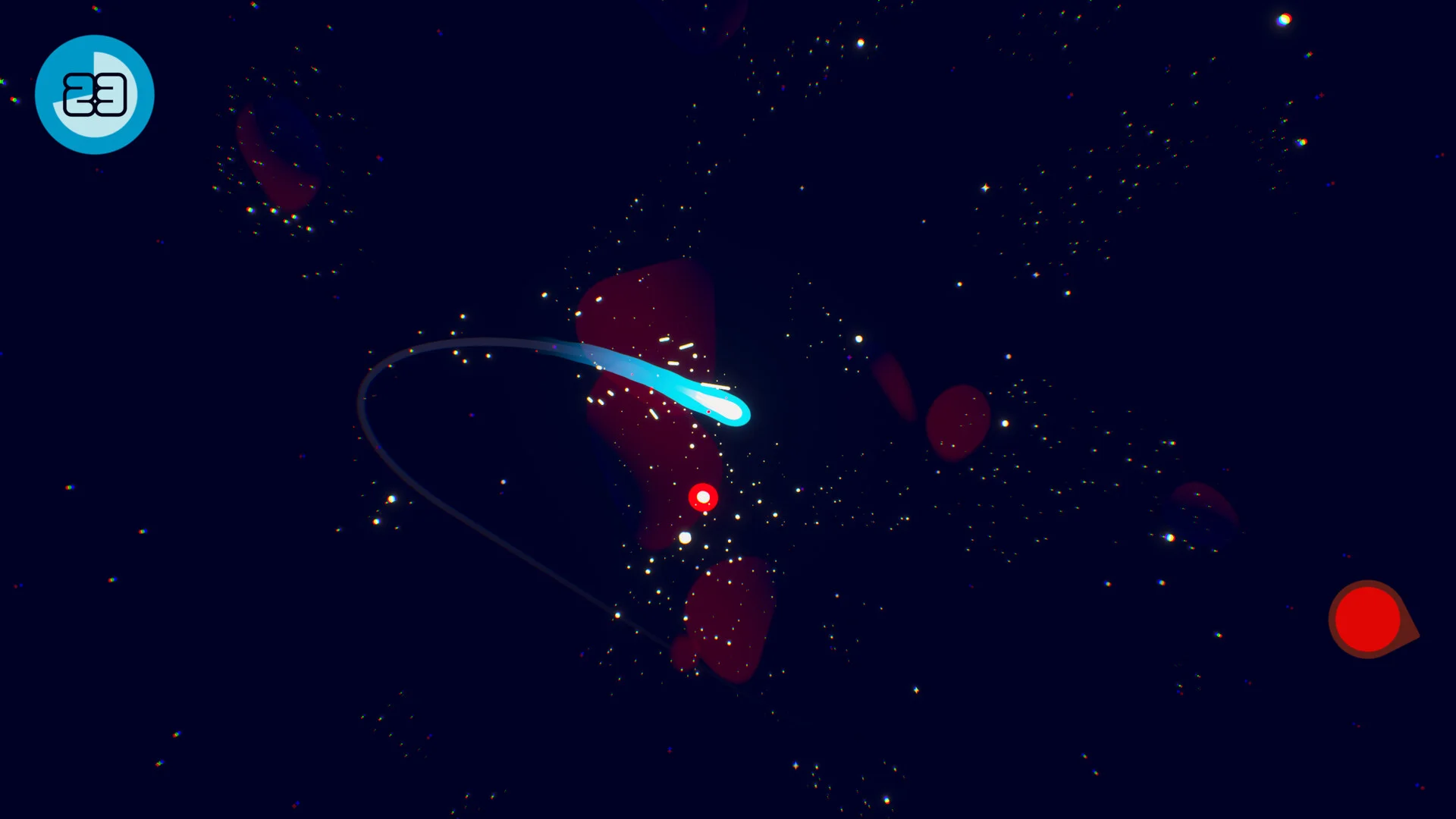
Playing well requires you to think past the next successful attachment and preserve space for the ones after it. Steph Thirion’s constellation-building game, published by Annapurna Interactive, makes that calculation physical: you are a shooting star, constantly moving, using a single button to catch another star’s gravity, orbit it, and release yourself along a new trajectory.

Holding that button keeps you circling; letting go determines your departure. Direction and speed emerge from timing rather than conventional steering, so reaching a star involves judging the orbit that will carry you toward it. Inside circular constellation zones, those movements build a drawing that must accommodate its own construction.

Crossing a line or leaving the zone ends the attempt. You can understand the shape you want to make and still need to solve how to move through it. That separation between a route imagined and a route executed supplies much of the game’s depth, along with its most persistent frustration.

The scoring rules give that spatial problem a useful direction. Closed loops increase your rewards, and incorporating every star earns a completion bonus. Simply touching a few available nodes leaves potential points unused. Starting among the inner stars and working outward can preserve room for further connections, though the arrangement still dictates what is possible.

The satisfaction comes from seeing how one sequence permits several loops where another would close off the remaining space. An apparently awkward cluster becomes workable through a change in approach, without the game needing to introduce another ability or another button.

Those rewards feed the main Faraway mode’s survival loop. Your star has a finite lifespan, and building constellations replenishes time as you progress through procedural space toward larger challenges. Accepting a modest drawing and pushing for complete coverage therefore have consequences beyond leaderboard position.

Better construction buys further opportunities to play. The fleeting-star premise earns its emotional weight through this exchange: the beautiful object left behind is also the means of continuing. There is pleasure in watching the constellation form, followed by the practical need to find somewhere else to make another.

Automatic targeting complicates the connection between those decisions and their outcomes. The button engages a nearby star, but you cannot separately aim at the one your route requires. In crowded groups, an attachment can take you toward an adjacent node instead, altering the drawing before you have completed the intended sequence.
Faraway Review

Because each connection changes the remaining routes, that discrepancy can spoil several planned moves. The frustration grows from the specificity of the intention. You may know exactly which star you need, and understand why you need it, while still struggling to make the single input communicate that choice.

This deserves a different diagnosis from missing an exit angle. A poor release gives you a recognizable action to adjust on the next attempt. An unexpected attachment leaves a less obvious lesson about position, timing, or target selection.

Slowing down and studying the attraction indicators helps, and the orbital display communicates speed through a red-to-blue gradient. Careful approaches can make dense arrangements manageable. Yet that solution asks the player to devote attention to securing each attachment while also planning the constellation. The interface supplies information; translating it into confidence about the next target takes considerable practice.

Faraway’s sparse presentation assists that concentration. Bright nodes and connecting lines remain distinct against the dark field, keeping the drawing readable as it grows. Pulses of light and electronic cues give successful actions a perceptible response, so the reward has a texture beyond a rising number.

The synth palette suits the continuity of orbital movement, while the shapes accumulating under your control make competence visible. Its absorbing quality develops through that feedback. Watching a clean sequence take shape feels different from admiring an attractive background, because the composition records decisions you have successfully carried out.

Faraway Review

Echoes provides a useful setting for learning the construction side of those decisions. Its predetermined arrangements and target shapes replace an open scoring problem with a specific route to reproduce. Ascent changes the task again, offering a fixed arrangement whose scoring potential you must work out.

These modes exercise related skills without being interchangeable. One gives you an intended figure to understand; the other asks you to find an efficient figure yourself. Returning to procedural play then tests how readily that understanding transfers to a fresh arrangement, where the useful sequence has to be recognized again.

The limitation is how much learning remains concentrated in the same orbit-and-release interaction. New layouts change the routing problem, but they retain the same demands on your ability to select and leave stars. Faraway’s longevity depends heavily on finding that refinement rewarding.

Procedural generation supplies fresh arrangements rather than a succession of new verbs, and the authored challenges deepen the existing ones. Slower play offers room to study movement, though extra thinking time cannot by itself explain an attachment that still surprises you. A target constellation can teach a route without fully teaching the control needed to trace it.

Score-based unlocking ties access to further authored challenges to performance in the main mode. For a player improving steadily, this can pace the exercises sensibly: a stronger run opens another opportunity to study the system. For someone stalled, the same arrangement restricts access to potentially useful practice.

A missed threshold sends that player back into procedural attempts, where the troublesome selection may appear among different surrounding stars each time. They can recognize the geometry they want to draw and remain unable to rehearse a particular transition in a fixed exercise they have yet to unlock.

The Review

Faraway

7.5 Score

Faraway turns orbital timing and constellation geometry into a rewarding test of foresight. Every line changes your options, and better construction buys your shooting star further life. Automatic targeting makes crowded routes harder to execute confidently, while score requirements can restrict access to useful practice. Its responsive light and sound make successful sequences satisfying to watch and hear, but sustained enjoyment depends on accepting a learning process that does not always explain your mistakes clearly.

PROS

  • One-button movement supports substantial spatial planning.
  • Loop rewards connect scoring, survival, and risk.
  • Echoes and Ascent develop distinct routing skills.
  • Clear visuals and responsive audio reward successful execution.

CONS

  • Automatic targeting can disrupt intended routes in dense clusters.
  • Score requirements gate potentially useful practice challenges.
  • Long-term appeal relies heavily on refining the same actions.
Review Breakdown

  • Overall 0
Tags: Annapurna InteractiveFarawayFeaturedIndieSteph Thirion
Previous Post

The Institute Season 2 Review: The Children Escape but the System Keeps Hiring

Next Post

Taken: Natalee Holloway Review: The Mother’s Pursuit and the Daughter We Briefly Meet

0 0 votes
Article Rating
Subscribe
Login
Notify of
guest
guest
0 Comments
Oldest
Newest Most Voted

This Week's Top Reads

  • Ramayana Rise of a Legend Review

    Ramayana: Rise of a Legend Review: Sacred Duty Needs a Human Cost

    1 shares
    Share 0 Tweet 0
  • Is This Seat Taken? Review: A Satisfying Mental Workout

    1279 shares
    Share 0 Tweet 0
  • Incinerator Review: Warm Images Soften Difficult Questions

    0 shares
    Share 0 Tweet 0
  • The Gift of Deceit Review: Maternal Guilt Finds a Willing Seller

    0 shares
    Share 0 Tweet 0
  • Phony Review: An Impostor Mystery With Excellent Social Problems

    1 shares
    Share 0 Tweet 0
  • Newlyweds Review: Later-Life Love Gets Room to Be Silly

    1 shares
    Share 0 Tweet 0
  • Adultery Review: Two Generations, One Costly Affair

    2 shares
    Share 0 Tweet 0

Must Read Articles

Black Doves Season 2 Review
TV Shows

Black Doves Season 2 Review: Affection Is Part of the Job

2 hours ago
Drummer Boy Review
Movies

Drummer Boy Review: Percussion Gives a Divided Family Its Pulse

3 hours ago
The Institute Season 2 Review
TV Shows

The Institute Season 2 Review: The Children Escape but the System Keeps Hiring

4 hours ago
All’s Fair Season 2 Review
TV Shows

All’s Fair Season 2 Review: Sarah Paulson Keeps the Feud Alive

5 hours ago
The Legend of Zelda: Ocarina of Time Review
Reviews Games

The Legend of Zelda: Ocarina of Time Review: A Hyrule Worth Getting to Know

1 day ago
Loading poll ...
Coming Soon
Which of Alfred Hitchcock's 1960s thrillers is your all-time favorite?

Gazettely is your go-to destination for all things gaming, movies, and TV. With fresh reviews, trending articles, and editor picks, we help you stay informed and entertained.

© 2021-2026 All Rights Reserved for Gazettely

What’s Inside

  • Movie & TV Reviews
  • Game Reviews
  • Featured Articles
  • Latest News
  • Editorial Picks

Quick Links

  • Home
  • About US
  • Contact Us
  • Advertise with Us
  • Review Guidelines

Follow Us

Facebook X-twitter Youtube Instagram
No Result
View All Result
  • Gazettely | Movie, TV & Game Reviews, News, and Rankings
  • Movies
  • Entertainment News
  • Movie and TV Reviews
  • TV Shows
  • Game News
  • Game Reviews
  • Contact Us

© 2024 All Rights Reserved for Gazettely

wpDiscuz
0
0
Would love your thoughts, please comment.x