

























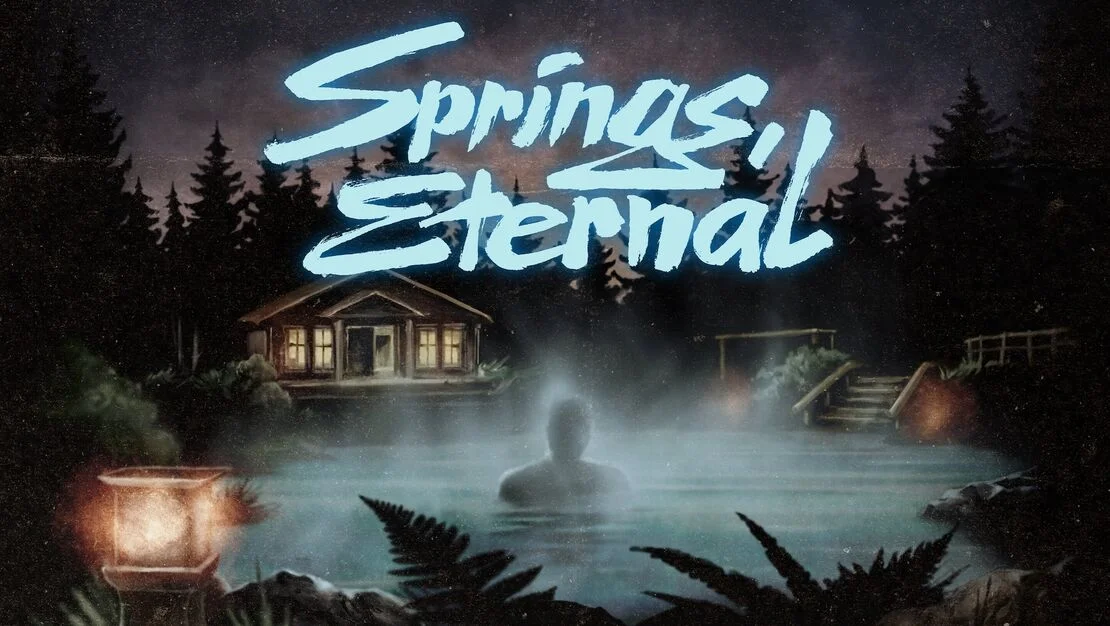

You can choose which hot spring to visit next, but opening the next stretch of Stillwater Springs requires finishing the memories available in the current one. Fullbright’s Springs, Eternal gives its unnamed protagonist room to wander around a nighttime retreat while keeping a firm grip on his recollections of Twyla, his former partner. Find a pool, step into the water, press a button, and the relationship returns in flashback. The map’s numbered locations suggest an itinerary, though you can approach them in different orders.
The dialogue choices inside those memories offer a different kind of participation. You select responses within a relationship whose course has already been decided. That restriction suits the subject: remembering someone does not grant the power to repair what happened. Choosing a response can still make the player consider the position behind it, even when the past remains intact. The useful distinction is between controlling events and participating in their telling.
The memory gates make this arrangement less relaxed than the resort setting suggests. Wandering is voluntary until the next area requires the remaining recollections. Then a pool becomes something to locate and clear before continuing. There is an understandable narrative purpose here, since the game needs to deliver the relationship it has made its principal subject. Yet the completion requirement also puts a practical instruction beneath the invitation to reflect. You can linger over a memory, but reaching the next stretch of the retreat means accounting for the others.
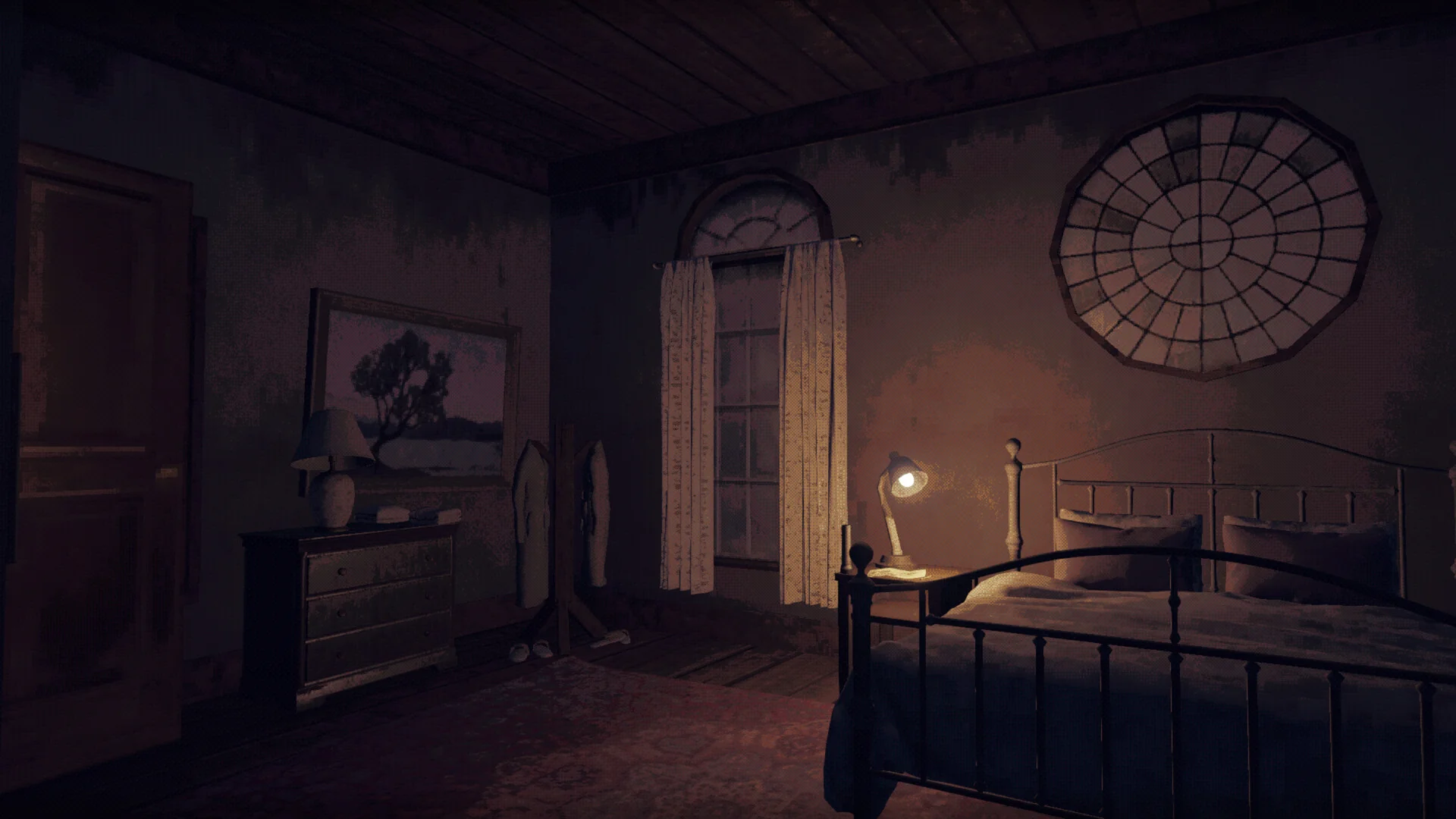
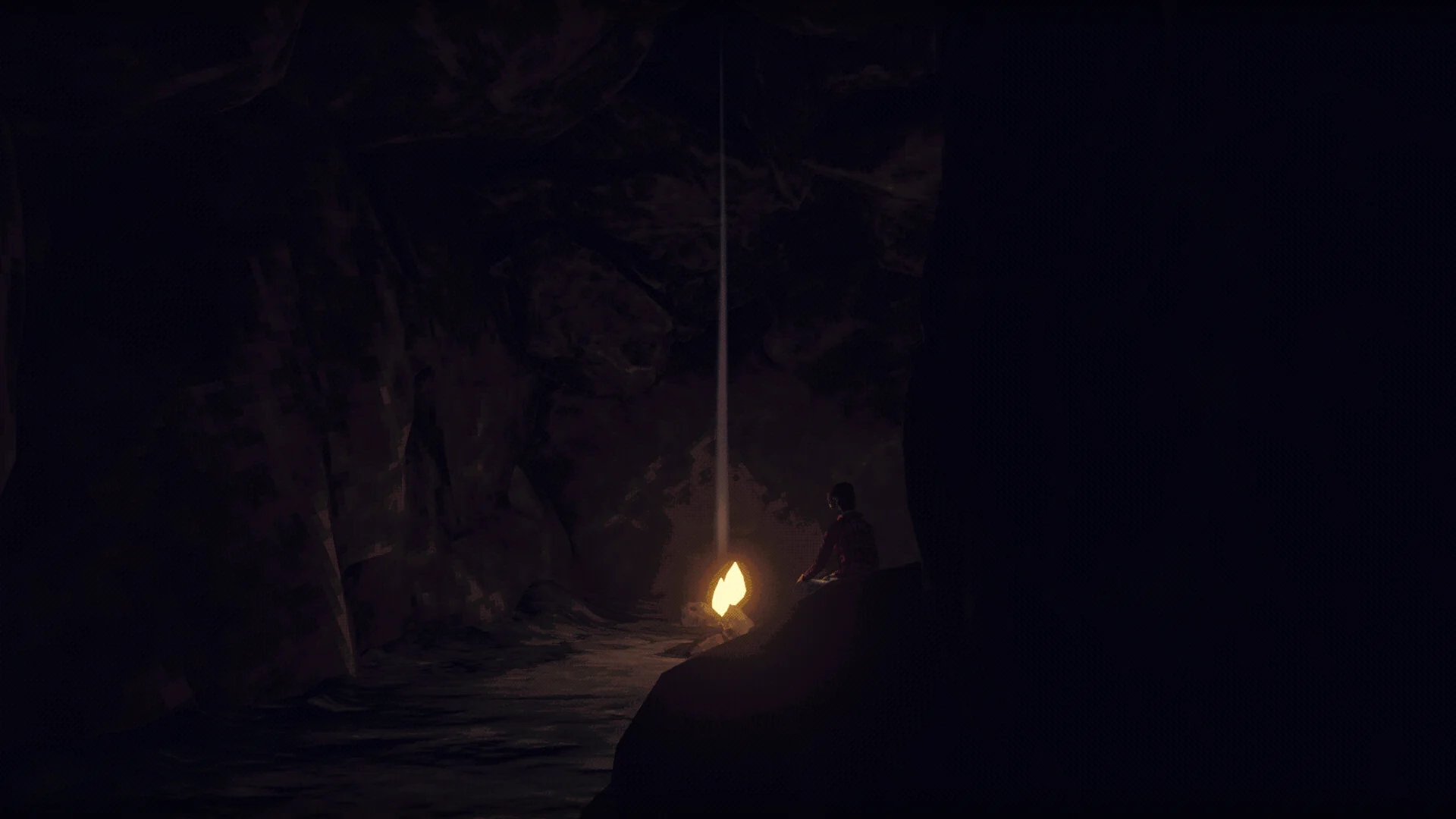
Finding those pools occupies much of a game that lasts roughly two hours, with extra time available for optional exploration. Woodland paths and underground spaces connect the retreat, seen through grainy, dithered graphics that recall early 3D games.
Blurred detail gives the flashlight less certainty to work with. A conversation overheard at a swimming pool, concerning a creature seen in the woods, supplies a reason to regard the darkness with suspicion. The setting acquires a threatening edge through the combination of limited sight and someone else’s account of what might be nearby.
That uncertainty has a substantial usability cost. The retreat is dark enough to make the map a frequent substitute for reading the surroundings. Instead of noticing a route and deciding to follow it, you can end up consulting the layout to establish where you are supposed to go.
This matters because exploration is the game’s main way of distributing its writing. Poor visibility obstructs access to the very encounters that might make a detour worthwhile. The atmosphere works; the trouble is how often sustaining it makes searching feel less appealing than following the marked locations.
Optional tasks give that searching some useful direction. A locked locker needs a code, while a palm reader offers a tattoo if you find a design. These are small objectives, but their scale fits a retreat built around walking, talking, and looking.
They give you something to pursue outside the required memories without demanding a separate progression system. Their value lies in making attention purposeful: an object or request can become a reason to inspect the space rather than pass through it.
Conversations provide another reason to return to people rather than simply move between pools. Information gathered through talking can open further dialogue elsewhere, allowing knowledge to function as a form of progress. The reward is access to another perspective rather than a changed version of the central relationship.
This is a sensible use of a small interaction set, though it puts considerable pressure on the writing. Extra dialogue needs to justify the walk back on its own merits; the fact that a conversation has become available cannot supply its interest.
The sardonic Jizo statue gives the spiritual material a welcome conversational texture. An encounter with a sacred figure could easily turn into a pause for solemn instruction. The statue’s snark instead introduces friction into that exchange, giving the player a personality to engage with alongside the suggestion of guidance.
It also makes the retreat feel less uniformly arranged around the protagonist’s sadness. The occupants can be entertaining company, which helps explain why moving directly through the required pools leaves something worthwhile outside the main route. Spending time here has pleasures separate from retrieving the next piece of the past.
The lesbian couple discussing compromises between their contrasting personalities offers a particularly useful point of contact with the Twyla memories. Their differences have become matters to negotiate in an ongoing relationship.
Encountering that conversation while revisiting a lost one lets the player place two responses to incompatibility beside each other. Choosing to stop and listen already changes the material available for thinking about his recollections. For a moment, the player can attend to how another couple keeps living together while the next required memory waits.
The Review
Springs Eternal
Springs, Eternal makes participation in an unchangeable past feel purposeful. Dialogue choices let you inhabit remembered responses, while optional encounters offer perspectives beyond the protagonist's loss. Its grainy darkness creates unease while obstructing the exploration that delivers its writing. Mandatory memory sets add a collection mentality to a retreat built for reflection. The strongest rewards come from stopping to hear someone else's story, especially when their compromises give you another way to think about Twyla.
PROS
- Dialogue choices suit the act of recollection.
- Optional conversations broaden the relationship story.
- Small objectives give exploration purpose.
- Grainy visuals and unsettling encounters establish atmosphere.
CONS
- Severe darkness makes exploration overly dependent on the map.
- Required memory sets turn reflection into completion work.