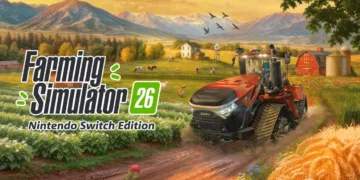
























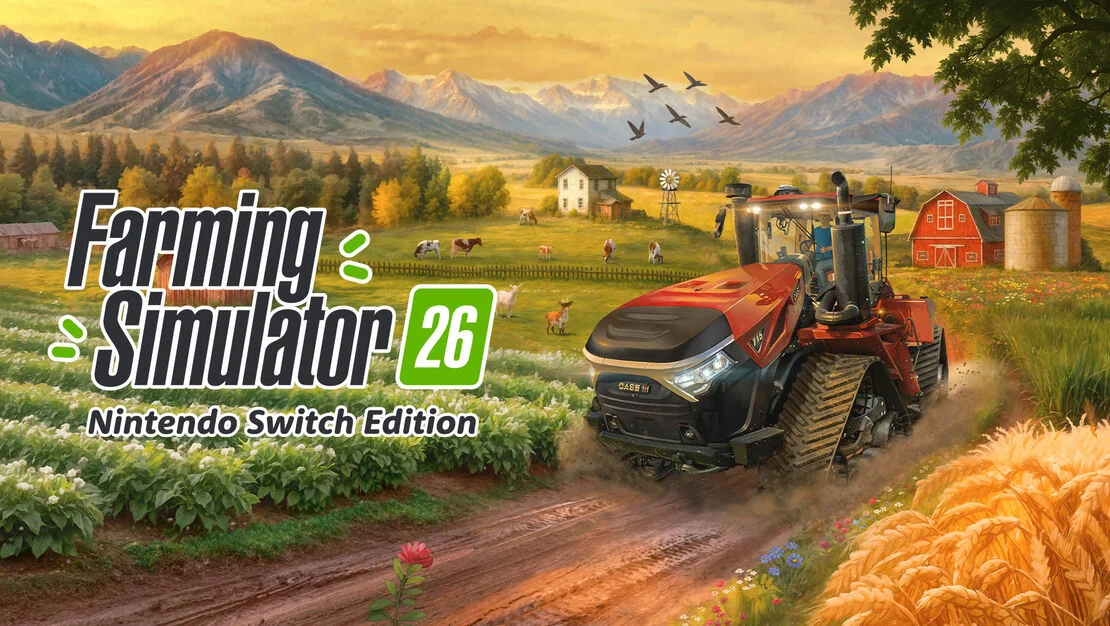

Returning players from Farming Simulator 23 will find the clearest changes in the work available to them. Farming Simulator 26 expands the crop and livestock selection, brings machinery to support those activities, and adds GPS guidance for fieldwork. Contracts provide paid jobs between harvests. These are sensible additions to the portable branch of the series because they address two familiar parts of its routine: finding something productive to do and keeping a large machine moving accurately across a field.
The management options have changed less. Bank loans remain absent, and buying land or equipment still does not extend to freely building and customizing the farm. Against the larger console entries, those restrictions establish a narrower kind of agricultural ownership. You can decide which business to pursue and purchase the machinery it requires, but financing that purchase and reshaping the property offer fewer possibilities. For someone returning from 23, the expanded activity list is a stronger reason to upgrade than any reinvention of farm management.
That distinction leaves plenty of room for an absorbing routine. Growing crops, selling a harvest, and putting the proceeds toward equipment give repetitive work a visible purpose. Livestock and forestry offer other uses for your time, while production businesses connect separate jobs: grain can become flour for a bakery. Career gives those choices financial weight; Creative removes the pressure of earning enough to experiment. The attraction survives because operating a machine and understanding how it fits into the business are satisfying at different scales.
Getting to that understanding is harder than the streamlined presentation suggests. The guided tour uses vehicle outlines and markers to make basic harvesting approachable, but it has an odd blind spot: an AI worker handles planting. A newcomer can finish harvesting the prepared crop without having learned how to establish the next one. Players carrying knowledge over from earlier installments can fill that gap themselves. Everyone else has been shown how to complete one stage of a cycle they are now expected to manage independently.
Transport work exposes the same problem in greater detail. Collecting pallets involves detaching the trailer, using a forklift attachment, and loading the cargo before delivery. A destination marker explains where the goods belong without explaining that sequence. Equipment rental adds a consequential decision before the job begins, since it must be selected before accepting the contract. Discovering how agricultural equipment works can be enjoyable, but this is information needed to undertake a paid task. The game could explain the procedure and still leave the execution to you.
Some of its information tools are genuinely helpful. The planting calendar connects crops to suitable seasons, field colors communicate what is growing and which tasks are needed, and the price catalogue identifies buyers and their offers. These support decisions once you understand the operations behind them.
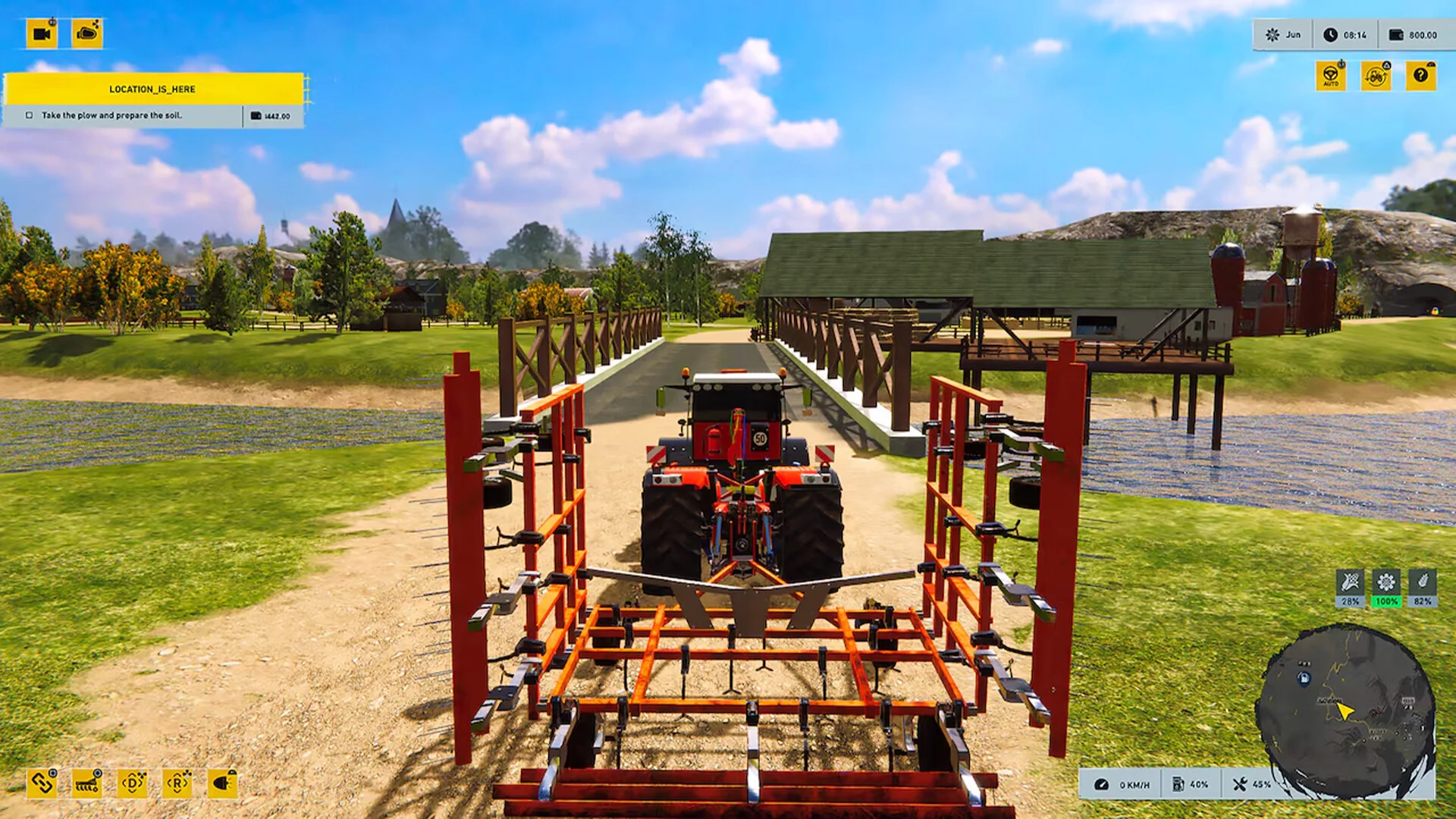
The crowded minimap works against that clarity, with large icons overlapping place names. Persistent button prompts also make the screen busy without supplying the missing explanation of how several actions fit together. The interface often seems designed for a returning player who needs a reminder.
GPS assistance is a clearer improvement over the previous portable formula. Activate it on a field and the vehicle follows a straight working path, reducing the small steering corrections involved in planting, fertilizing, or harvesting. You still disengage at the end, turn, line up the next pass, and reactivate it. Long fields make the benefit easy to appreciate. Small ones interrupt it frequently, and rushing the next alignment can send the guidance along an unwanted path. It makes a familiar job easier while preserving the positioning work between passes.
Hired workers address a different need: getting several jobs done at once. Their awkward routes and slow repositioning can undermine that benefit, leaving a delegated field taking longer than its straightforward layout suggests. GPS helps you perform your own task efficiently; hiring someone should free you to tackle another. The latter remains less dependable. Smaller conveniences fare better, including the harvester automatically extending its unloading tube when a trailer pulls alongside. That removes a fiddly interruption from an operation whose purpose is already clear.
Contracts are useful additions because they give the waiting between harvests an economic function. You can harvest, plant, or deliver goods for another farmer while your own crops grow, with adjustable time speed providing another way to control the pace.
Challenges supply further objectives, though equipment requirements can postpone participation. Combined with production businesses, these jobs give returning players practical reasons to use the wider machinery selection. The farm can sustain several connected commitments instead of depending entirely on the next crop coming ready.
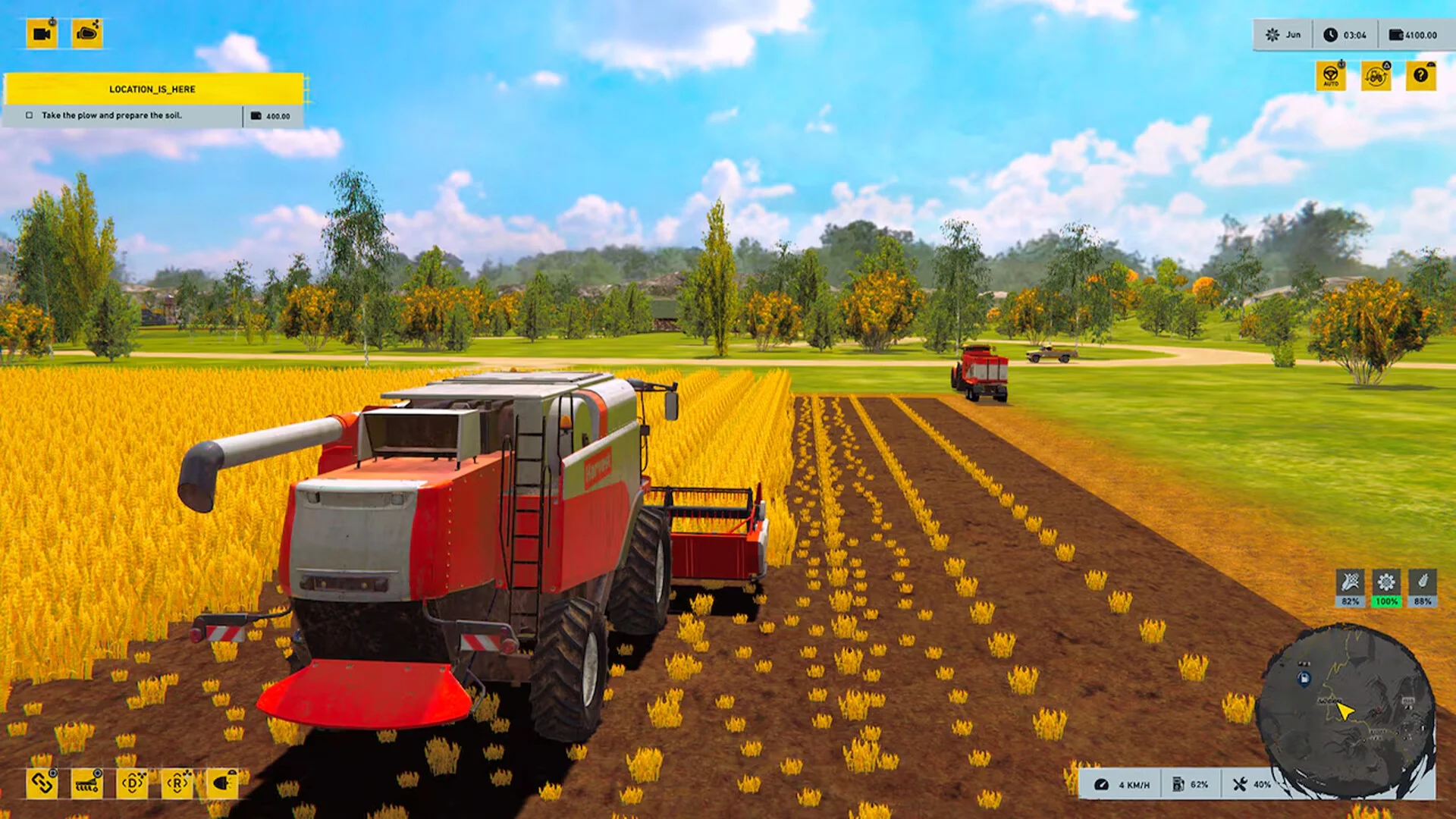
The contract economy needs closer attention, however. A potato-planting job offering $5,000, with equipment rental costing roughly $400, can end in an approximately $5,000 loss once planting expenses are paid. The reward and rental fee alone give an incomplete picture of the commitment.
Other contracts can earn money, so this does not make the whole system useless, but it weakens its value as an obvious source of supplementary income. Elsewhere, storing crops in silos and comparing buyers creates a readable business decision: keep the harvest or sell at an available price. Planting work needs comparable clarity about its costs.
The machines themselves remain a strong reason to spend time here. Licensed John Deere, Fendt, and New Holland equipment gives the collection recognizable shapes and detail, supported by distinct engine and implement sounds. On Switch 2, that attention makes the surrounding shortcomings harder to overlook.
Cockpit gauges and mirrors are nonfunctional, reducing the practical appeal of sitting inside equipment modeled so carefully outside. Texture-loading problems can leave parts of the environment smeared, while crop draw-in affects something directly relevant to the job. Across Dawn Ridge and Harbruck, fields matter chiefly as places to work; when distant crops fail to appear, a planted stretch can look harvested until you drive closer.
The Review
Farming Simulator 26
Farming Simulator 26 gives returning players from 23 a worthwhile expansion of their agricultural routine. GPS guidance eases fieldwork, extra activities sustain progression, and the detailed machinery remains satisfying to operate. The familiar limits on financing and farm customization persist, alongside slow hired workers and planting contracts that can lose money. Newcomers also face instruction gaps that franchise experience helps conceal. Fans seeking additional portable farm work have reasons to return; players expecting a substantial management overhaul have fewer.
PROS
- Expanded crop, livestock, and machinery choices
- GPS assistance reduces steering corrections
- Satisfying progression through farming and production
- Detailed licensed machinery with distinct working sounds
CONS
- Tutorials leave essential procedures unexplained
- Hired workers waste time repositioning
- Planting expenses can overwhelm contract rewards
- Limited financing and farm customization
- Texture-loading problems and distracting crop draw-in