









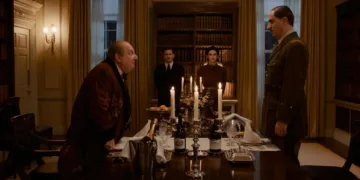













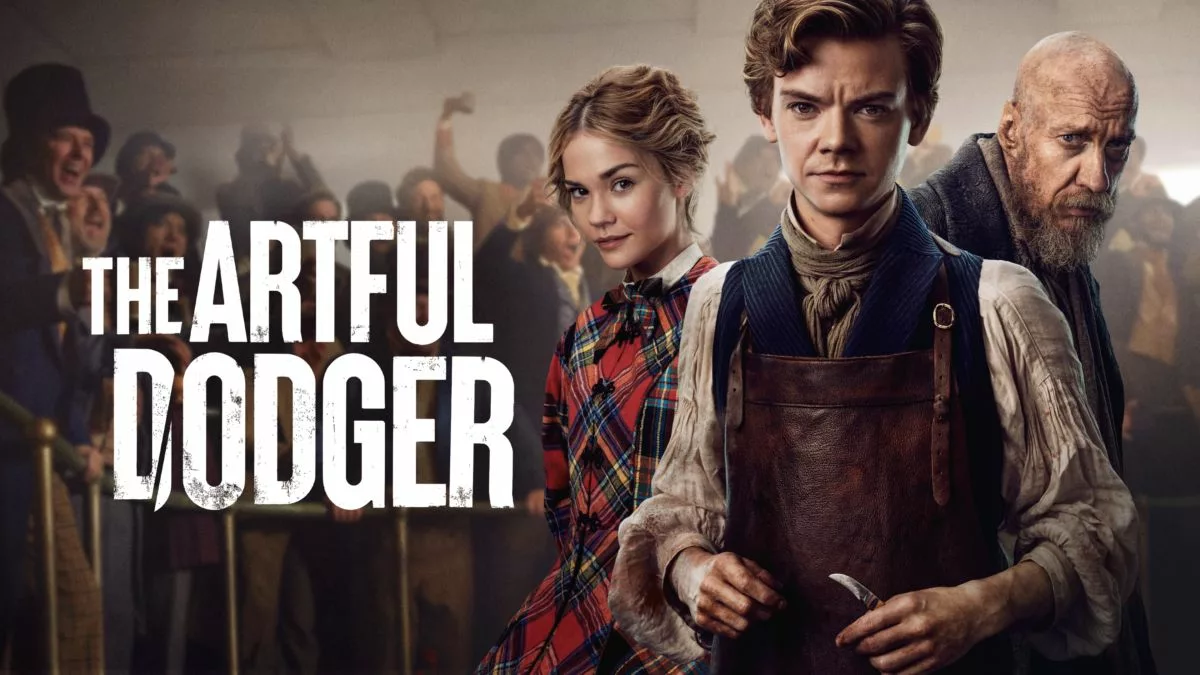

In this eight-episode Hulu series we find Jack Dawkins fifteen years after the events of Charles Dickens’ Oliver Twist. You know him by the name he earned on London streets: the Artful Dodger, the small-time pickpocket who taught orphan Oliver how to lift a wallet before the law closed in.
Thomas Brodie-Sangster plays him with an easy charisma that keeps one eye on mischief and the other on survival. Time in the penal colony has furnished Dodger with a set of new, grim talents. He has become a surgeon by necessity and skill, sawing and stitching inside cramped operating spaces. This is surgical theatre without modern comforts: no anesthetic, spectators crowding the room, patients awake while Dodger’s hands move quickly and sure.
When Fagin, here embodied by David Thewlis and rendered deliciously slimy, arrives in Australia as a convict, Dodger is tugged back toward old habits to cover dangerous gambling debts. Maia Mitchell’s Lady Belle, an aristocrat with progressive aims, stands at the opposite moral pole; she is determined to train as the colony’s first woman surgeon and to keep Dodger tethered to a more legitimate life.
Expect clashing histories and fresh romantic friction set against a bloody backdrop of colonial medicine. Quippy exchanges, blunt operations, and chemistry between Brodie-Sangster and Mitchell drive many of the show’s moments. Below I unpack how this sequel reworks Dickens, how its performances hold the spectacle together, and where the series strains under its own ambitions.
Reimagining Dickens Down Under
On the surface The Artful Dodger resembles a raucous period series about a roguish healer. For readers who remember Oliver Twist, the presence of Dodger and Fagin signals a direct kinship with Dickens’ novel. This sequel borrows the original’s figures and motifs while sending them into new terrain.
Also Read

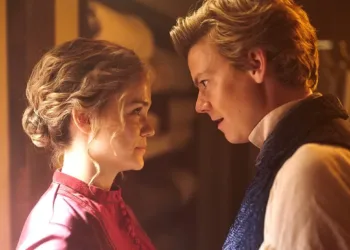



Viewers familiar with the book will find Dodger grown into a capable surgeon and credited with military service in the Australian penal colony. He carries a veneer of respectability, yet gambling debts keep dragging him back into criminal enterprise with Fagin, who remains an on-again, off-again father figure. Their tangled alliance, alternating between exploitation and a brittle kind of dependence, forms the dramatic center of the series. Fagin continues to exert psychological sway over Dodger while also showing a crude, uneven affection. Their interactions hum with a mixture of resentment and attachment.
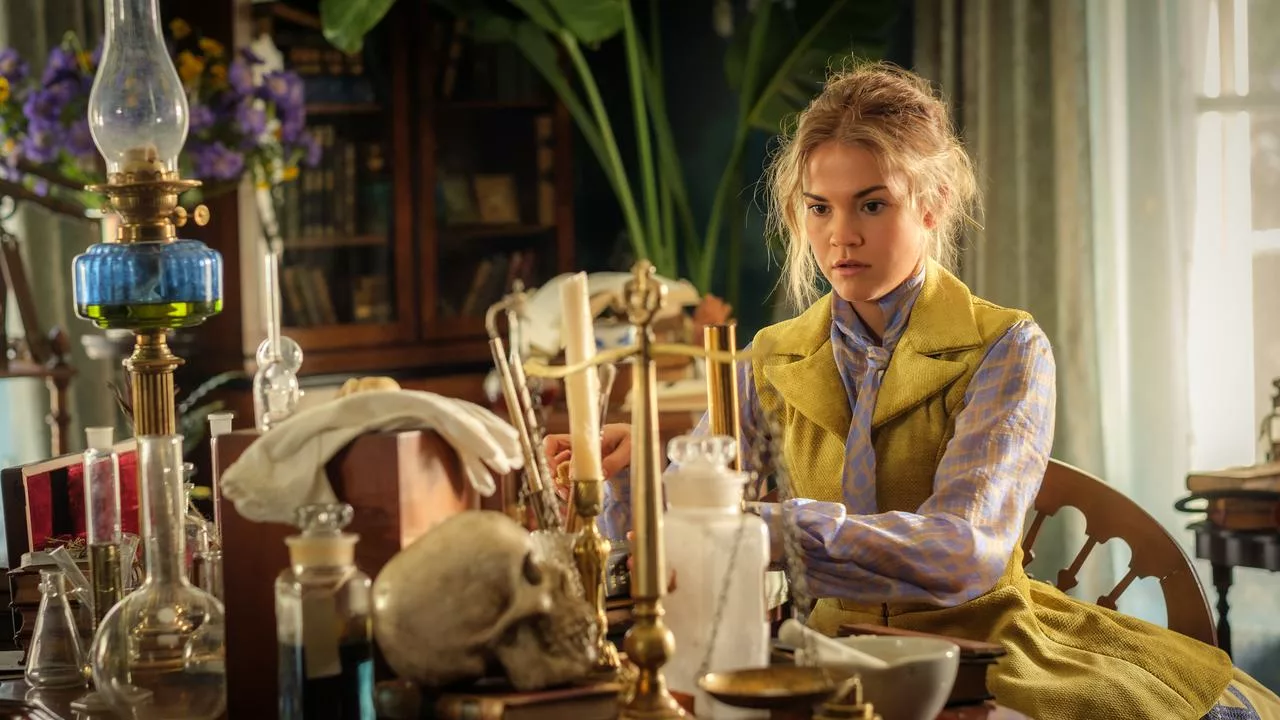
Lady Belle occupies an unexpected place in this moral map. She pushes Dodger toward steadiness while she pursues a path that has been closed to women. Her determination to train as a surgeon introduces an explicitly feminist strain to the story.
Some viewers who revere Dickens’ original may object to certain shifts. Thewlis’ Fagin leans into sleaze and occasionally approaches caricature, which diverges from darker, subtler portrayals in other adaptations. Dodger’s old Victorian slang and street patter, which once anchored him in a specific London milieu, appears toned down here.
That said, the writers demonstrate a clear familiarity with Dickens. Scripts pepper the series with references to Oliver Twist’s events and tease an unseen role for Oliver in Fagin’s fate. The production captures Dodger’s punkish appetite for life, even when it remixes the source into something looser than strict adaptation. The result is a lively, often enjoyable reworking rather than a literal continuation.
A Winning Trifecta Anchors the Rowdy Procedural
Central to the series’ energy are three lead performances that lock together and pull the show forward. Brodie-Sangster’s Dodger is affable and slippery, combining a survivor’s hard-worn instincts with an almost boyish charm recalling his earlier work. He makes believable the conflict of a man who can heal and who can steal.
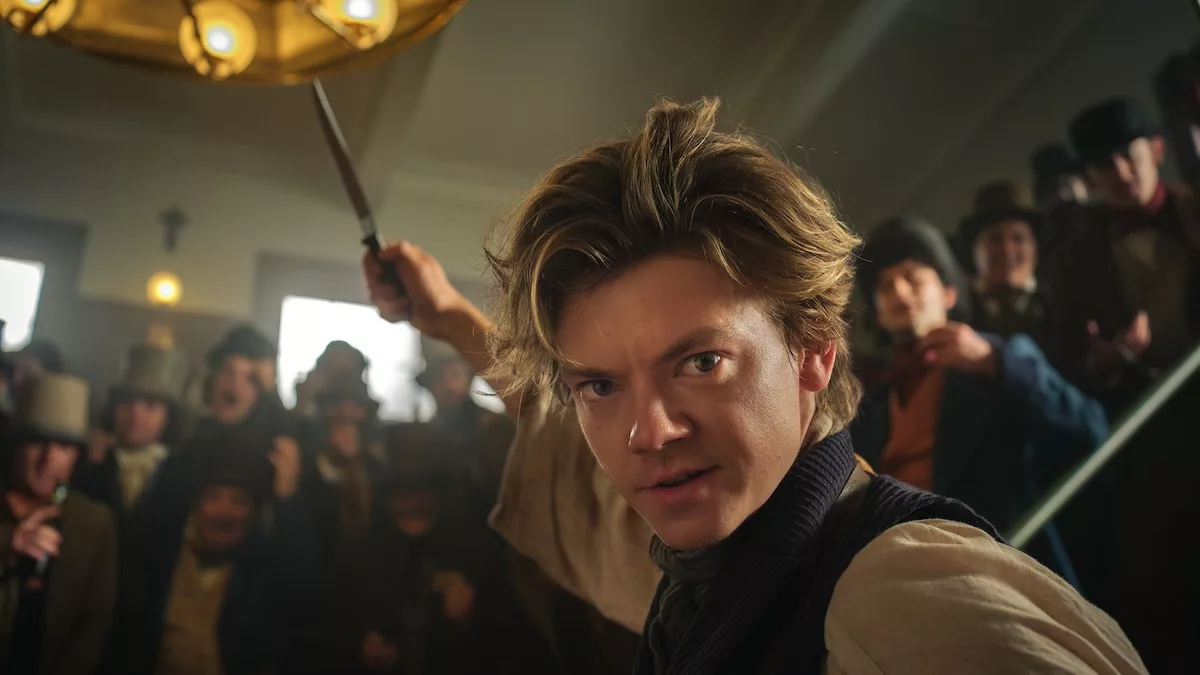
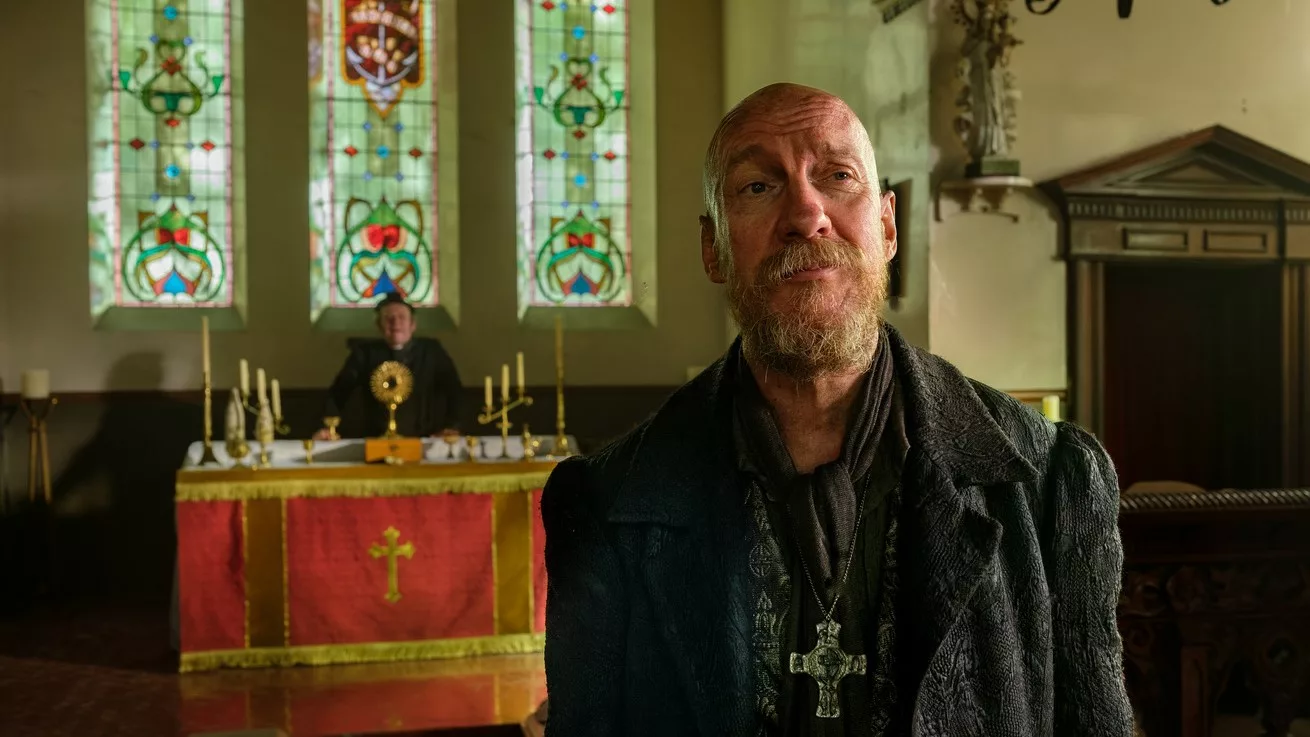
David Thewlis turns Fagin into a scene-consuming presence. Prior versions of the character have swung between gaunt menace and ludicrous vanity; here Thewlis balances a crude paternal protectiveness with self-serving scheming. His shifts in mood and physicality make Fagin alternately pitiable and dangerous.
Maia Mitchell’s Lady Belle supplies the third corner of the triangle. She enlivens a familiar figure—the wealthy woman who rejects the comforts of rank for the rigors of medicine—by interrogating patriarchal barriers and by carrying a clear, gentle attraction to Dodger.
Around them orbit a cast of foils and cronies: Dodger’s rival surgeon Sneed, Fagin’s volatile heavy Charlie, and a chorus of broad Australian caricatures that sometimes verge on camp. These figures tend to underline the central trio’s interplay more than to threaten it. Together the three leads unify a show that often prefers character chemistry to intricate plotting. As Dodger and Lady Belle inch toward romance, their tense, thorny exchanges grow into the series’ most rewarding thread. If the show returns, their entanglement promises further development.
A Rowdy Romp Through Australia’s Gritty Medical Underbelly
Reject any expectation of sedate Merchant Ivory atmospherics. This is an abrasive, impulsive take on 1850s colonial medicine that mixes punk energy with surgical grit.
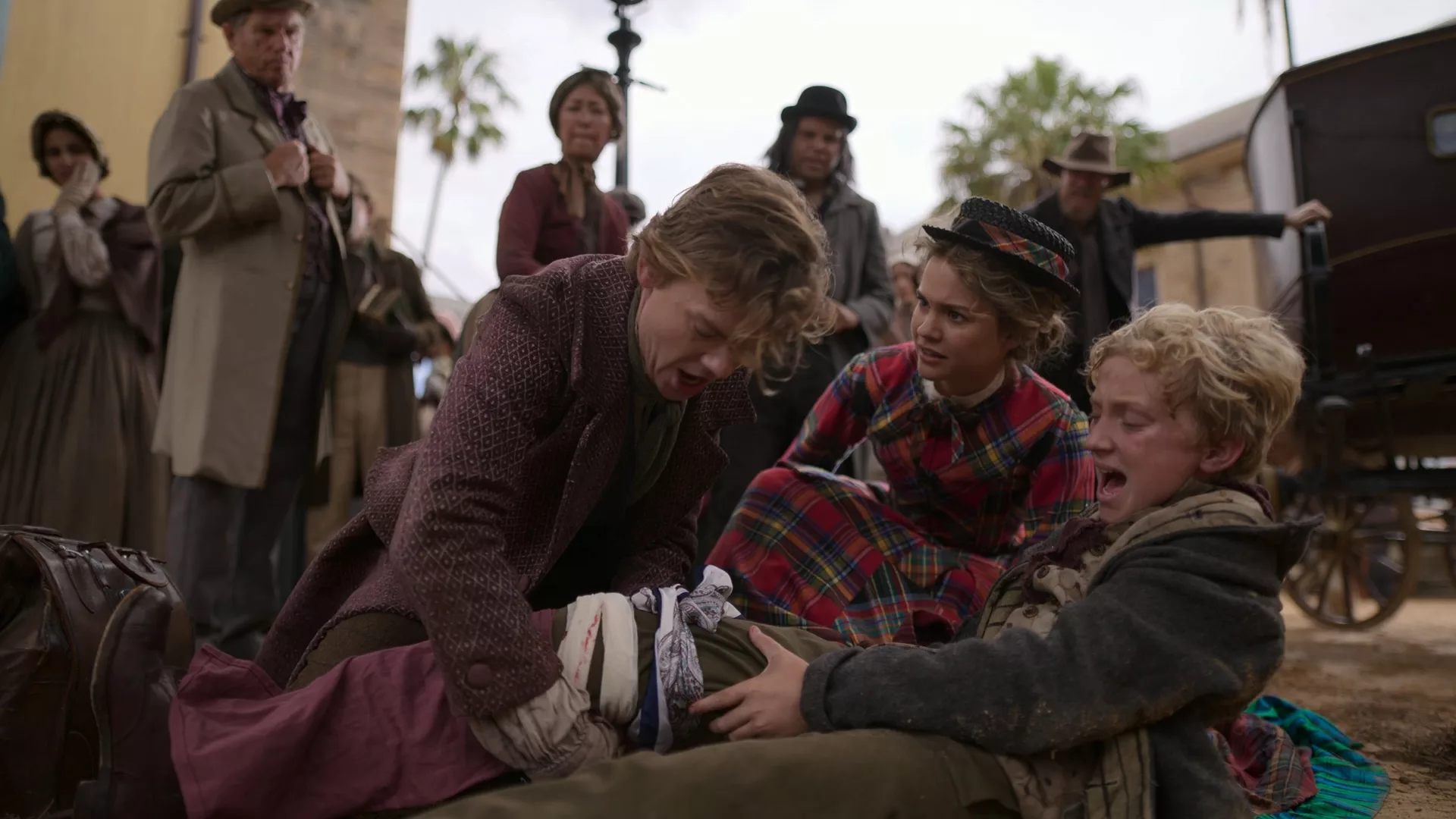
Scenes flip quickly from bravado to tenderness. Dodger can be seen sawing bone to the bass riff of Wolfmother’s “Joker and the Thief” while mocking a rival’s slow technique. Minutes later he attends a whimpering patient with a surprisingly gentle bedside manner.
The series thrives on that collision of brutality and care. Limbs are removed in graphic detail before a shouting gallery, only to be stitched back together with a surgeon’s precision. Schemes and long cons sit up against pangs of remorse.
While the show accepts the crudity of colonial practice, it also traces technical change in the field. Characters engage with early turns toward germ theory and with experiments in anesthesia performed in the middle of operations. Those moments offer a thin strand of hope amid the gore.
Writers temper dark material with quick banter and a sly humor reminiscent of Dickens’ lighter moments. The musical and visual choices push the material away from strict period mimicry; the series’ approach feels closer to Top Gun: Maverick than to Downton Abbey. Occasional blasts of psychedelic indie rock lend a present-day propulsion that animates the proceedings. Camera work stays kinetic but rarely feels anachronistic in service of scene energy.
This mix yields a distinct identity: rock-infused historical procedural. If you respond to adventurous period fare such as The Great, this series will likely interest you.
Thematic Trajectories and Tonal Swerves
At base, the show restates a familiar buddy pattern. Dodger, the good-hearted thief, is lured back into petty crime by Fagin’s pressures. The narrative threads this old arrangement through medical drama and romantic tension.
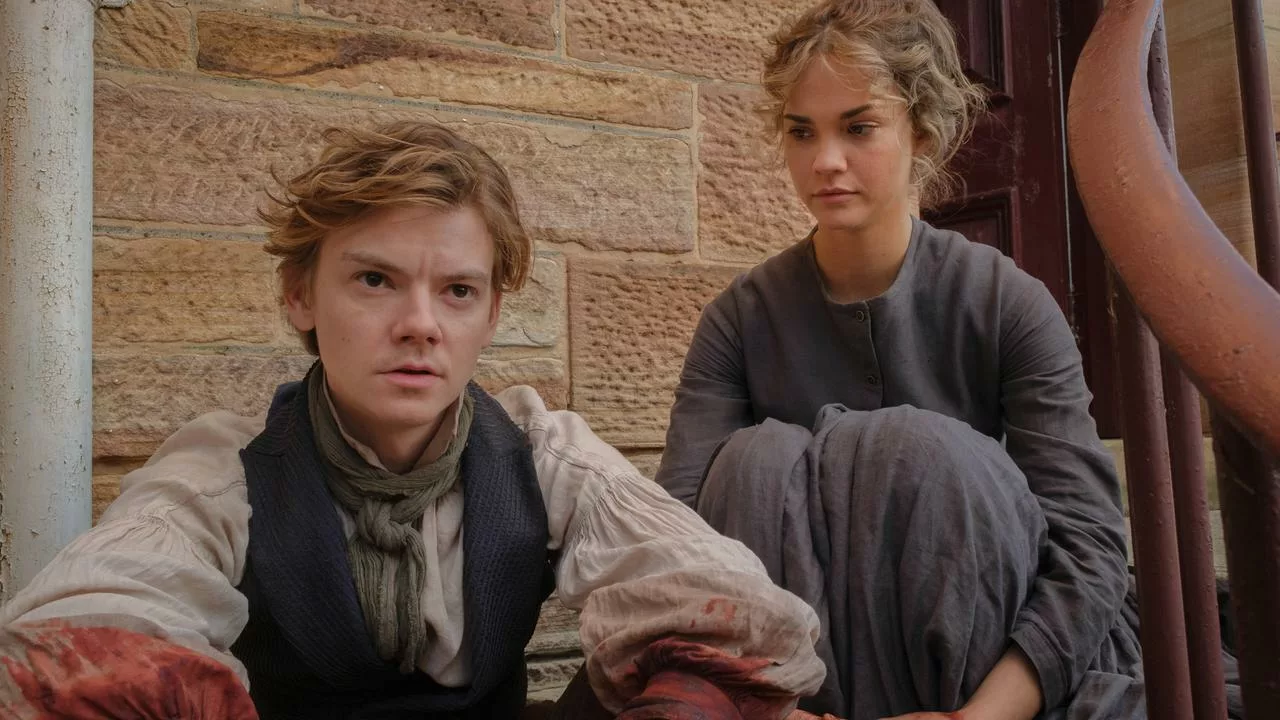
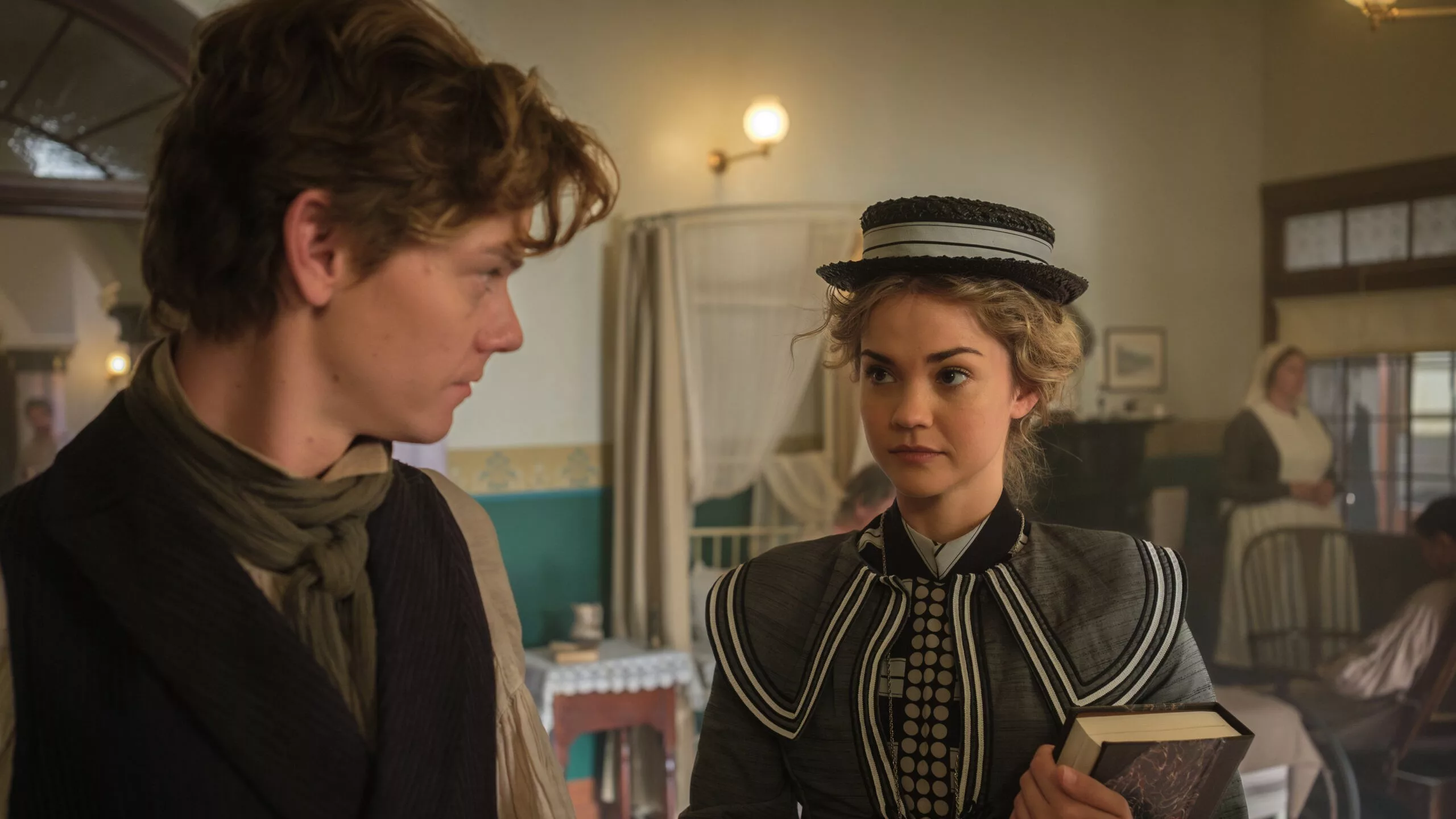
Early episodes often follow a clear rhythm: Dodger seeks ways to pay debts through risky means, confrontation pushes him toward conscience, and a mid-heist revelation alters his course. When repetition threatens, Lady Belle introduces new stakes. She pressures Dodger into a tutor-pupil arrangement that crackles with forbidden attraction. Mitchell and Brodie-Sangster exploit this teacher-student tension with charged, cautious performances.
Plotlines that emphasize Dodger and Fagin’s fraught bond increase the pressure. Scenes in which the two men appear literally chained after escaping custody force Dodger to confront the manipulative elements of his relationship. He begins to perceive Fagin’s schemes while remaining emotionally entangled.
As relationships thicken, the narrative gains texture, shifting among gallows humor, pathos, and satire. Supporting beats—such as Belle’s bumbling suitor who favors poetry—offer comic relief without derailing core conflicts.
Pacing sometimes slackens, but that looseness reflects audience investment in the characters. By mid-season the show finds a functional balance between lurid hooks and sympathetic portrayals of society’s outcasts and outsiders. The ride staggers at moments through satire, tragedy, and soapier turns. Even so, it remains an engaging take that leaves viewers eager for the next scrape.
Scalpels and Sawbones as Social Metaphor
Like many respectful riffs on Dickens, this series uses period detail to press at enduring social wounds. Class frictions, systemic cruelty, and limits on women’s ambition run through the narrative.
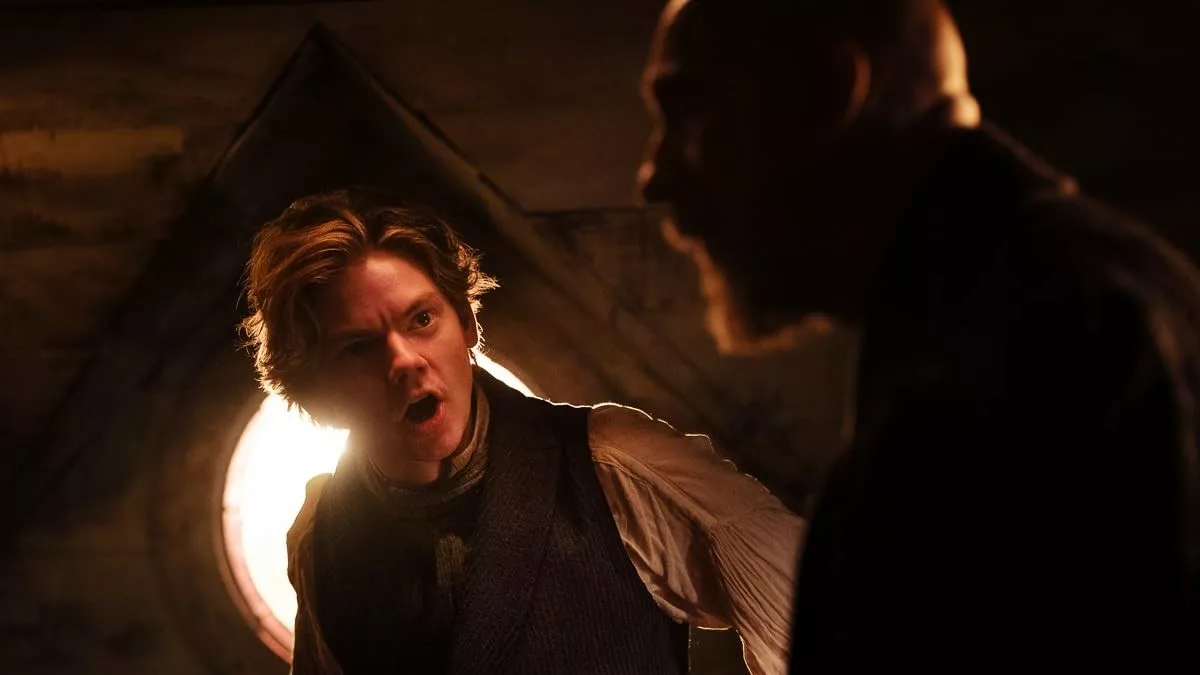
The drama emerges from rigid class assumptions. Aristocratic surgeons dismiss Dodger as uncouth despite his demonstrable ability. Poverty forces resourceful survival tactics; scenes emphasizing hunger and legal harshness show how scarcity channels people toward theft.
Lady Belle confronts gendered constraints. She proves smarter than many established surgeons, yet institutional barriers close many doors. A magistrate sentencing starving child thieves to hard labor lays bare the legal machinery that criminalizes want.
The show asks what alternatives exist for those pushed to the margins. Its answer takes the form of incremental progress inside a narrow field. Medical discovery—germ theory, the tentative use of anesthetics—suggests reform. Doors open bit by bit for immigrants, orphans, and daring women.
In its grim settings, the series still tends toward humane impulses. Humor loosens heavy scenes and invites compassion rather than judgment.
Production Choices: Intimacy Over Panorama
On a modest budget, this production chooses specificity over grand scope. The series favors interior spaces: cramped taverns, Dodger’s basement clinic, nursing wards, jail cells, and alleys. Texture and grit dominate over painterly spectacle.
Design shines when it recreates the underground surgical theatre. Open wounds, saws, and clamps appear with an immediacy that avoids gratuitous lingering; the effects serve physical shock without sliding into gore for its own sake. When a surgeon’s finger slips mid-procedure there is a visceral jolt and then the return to craft.
Exterior vistas feel weaker at times; certain establishing shots of early colonial Australia occasionally betray limited effects. Close candlelit frames, though, yield evocative portraits as shadows and weathered faces take on meaning. If later seasons expand effects budgets, wider landscape shots could strengthen the sense of place—Port Victory in the 1850s needs a fuller geography that the show can only hint at now.
For the present, fast montages and tight surgical coverage conjure the era’s intensity. What the series lacks in spectacle it recoups in a gritty, B-movie charm.
Sutures and Scars on the First Season
As a hybrid genre piece this show stumbles in places typical of ambitious debuts. It can feel tonally unsteady, with subplots and comic beats competing for equal weight with thriller elements and intimate character moments.
Some arcs seem stitched on. Belle’s poet suitor and certain of Fagin’s machinations occasionally read as padding that interrupts central momentum. The mix of camp, tension, and raw emotion does not always cohere.
Longer runs could benefit from tighter plotting and increased production resources. Key relationships—Dodger and Fagin in particular—receive surface treatment in this season, leaving room for deeper excavation in flashbacks and backstory. Broadening the visual canvas would further anchor the narrative within its colonial context.
Even with these flaws, the core strengths remain: the leads’ messy, persuasive chemistry and the script’s ability to generate biting exchanges and humane moments. These elements give the series a positive prognosis. With more exacting narrative engineering and a slightly larger budget, the show could move from rough early promise to a more accomplished form.
Closing the Operating Room
Despite uneven plotting and occasional camp diversions, The Artful Dodger offers a vigorous and often bloody entertainment. Viewers drawn to inventive period fare will find pleasures in the mash of medical drama, criminal mischief, and Victorian sentiment.
At the center sits the chemistry between Dodger and Fagin, a long-simmering attachment that ignites most of the series’ best scenes. Their barbed rapport provides warmth inside the rough edges.
Loopy adventures abound for viewers who enjoy eccentric historical takes: grotesque tumors cut to punk guitar riffs, aristocrats sharing space with orphans and ex-convicts, and a persistent tension between scalpel and sawbone. The surgical theatre will unsettle sensitive viewers, but the overall tone retains mischief rather than cruelty. Dodger’s basic decency and irreverent Australian humor ease the rougher moments.
Trimming narrative fat would sharpen future seasons, yet the story’s vital organs appear healthy enough to sustain several more years of scrapes and near misses. As long as Brodie-Sangster and Thewlis remain in the fold, the series has the cast integrity to keep a loyal audience engaged. This season supplies a rough but energetic house call; it promises further work ahead.
The Review
The Artful Dodger
With its potent mix of medical drama, dark comedy, and romantic tension, The Artful Dodger makes for a wickedly entertaining ride. Thomas Brodie-Sangster is a particular standout as the roguish yet sympathetic Dodger, while David Thewlis lives up to Fagin's creepiness. A few messy subplots and cheap-looking sets drag down the momentum at times. But overall, this is a solid historical genre bending escape with enough style and sass to thrill Dickens fans open to a sexier, punk-fueled take.
PROS
- Strong lead performances from Thomas Brodie-Sangster, David Thewlis, and Maia Mitchell
- Entertaining plot blending medical drama, crime capers, and romance
- Sharp dialogue and quirky Aussie wit
- Fun punk rock energy and modern style
- Gritty surgery scenes are visceral and thrilling
CONS
- Subplots around supporting characters drag down pacing
- Cheap looking sets and backgrounds
- Deviates too much from Dickens' original novel at times
- Tonally uneven between gritty and campy