





















In the dark world of a world changed by climate change, “The Assessment” is an interesting look at people’s deepest desire: to make life. This sci-fi thriller, directed by Fleur Fortuné for the first time, takes place in a very tightly controlled society, making even the most basic things like having a child very difficult.
The story takes place in a future where environmental failure has drastically changed the world into two stark realities: a clean, climate-controlled new world and a damaged, poisonous old world. Population control has become a cruel science in this carefully run society. To live forever and breathe clean air, you must give up all-natural breeding and pet ownership.
Himesh Patel plays Aaryan, a cutting-edge genetic researcher, and Elizabeth Olsen plays Mia, a bright botanist. The pair is the best example of scientific progress in this new world. Even though they have great qualifications and what seems to be a perfect relationship, they must go through a tough seven-day test before they can even consider having children.
Virginia, played by Alicia Vikander, is a complicated examiner who changes from a clinical examiner to a childish, uncertain troublemaker. Her job is to test the couple’s patience, break down their relationship, and show how unstable the roots of their seemingly perfect life are.
It’s not just a test of how good a parent you are; it’s a deep psychology experiment that questions what it means to bring a child into a world on the verge of huge societal and environmental changes. “The Assessment” becomes a scary reflection on love, life, and the lengths people will go to protect their future.
Survival’s Razor’s Edge: Dissecting Societal Survival
“The Assessment” explores some of the most important existential questions people have, turning what seems to be a personal story into a deep look at life, choice, and how societies change.
At its core, the movie shows the harsh truth of climate change by showing a big difference in geography and social class. The “old world” turns out to be a toxic, unlivable wasteland—a scary sign of the end of the environment. Unlike the “old world,” the “new world” is a clean, controlled place where living means giving up basic human rights like having children.
The government’s method of controlling reproduction isn’t just a waste of time; it’s a smart way to stay alive. By limiting births, this society tries to keep resources from running out and stop natural disasters from happening again. Only the most “worthy” people can continue the species, so the evaluation process turns into surgery.
Elitism exists everywhere. The lucky few, like Mia and Aaryan, live in a luxurious bubble. Their scientific successes allow them to live longer and be more comfortable all the time. On the other hand, Those sent to the old world are doomed to die in the environment. This creates a clear social order that mirrors the way things are now in the world.
The movie raises an interesting question: What makes someone “deserving” of being a parent in a world on the verge of extinction? Is science success a good way to pay for making life? “The Assessment” makes people think about basic human rights and social structures by turning the very personal act of having a child into a scientific, government-controlled process.
Through its sci-fi lens, the movie reflects on our current climate disaster, our technological goals, and the scary solutions we might devise to save our species.
Psychological Chess: Performers Navigating Dystopian Depths
In “The Assessment,” the characters are like living tests of how strong people can be, and each actor teaches how complicated minds work.
Elizabeth Olsen plays Mia, a botanical scientist who is incredibly well-controlled. She strikes a careful balance between being precise at work and wanting to be a mother. Her act shows how a woman feels inside as she tries to prove she is worthy of being a parent. Olsen handles Mia’s feelings with a lot of subtlety. She is quick to scold but also very good at caring for her, showing how complicated modern parenting can be.
The play Aaryan by Himesh Patel contrasts gentle manhood. As a geneticist who makes virtual hologram pets, he represents how technology is used to fill emotional gaps. Regarding Virginia’s rude behavior, Patel is often calmer than Mia because of how sensitively she plays the part. His character turns into a complex look at how men can be weak and smart emotionally.
Alicia Vikander does a great job as Virginia, going from a strict, robotic grader to a wild, childish troublemaker. Her performance is a mesmerizing psychological high-wire act. She seamlessly moves between clinical efficiency and childish disruption. Vikander breaks down the usual ways that power works, making Virginia dangerous and, sadly, human.
The supporting actors, like Minnie Driver, Indira Varma, and Charlotte Ritchie, give the story many different textures. Their short visits give us a better idea of the larger social situation and hint at the complicated emotional landscapes in this tightly controlled world.
Every performance is like looking at how people have changed up close, showing how they deal with life, love, and identity when the system puts a lot of pressure on them. What could have been a clinical dystopian story is turned into a truly moving look at how people connect by the actors.
The actors’ nuanced performances highlight the film’s main idea: in a world devoid of normal humans, being emotionally honest becomes the most extreme way to fight back.
Visionary Landscapes: Sculpting Dystopia’s Emotional Terrain
Fleur Fortuné’s move from making music videos to making full-length movies is more than just a job change; it’s a masterful reimagining of how movies tell stories. When she writes “The Assessment,” she turns a bleak story into a visceral, sensory experience that is strange and strangely familiar.
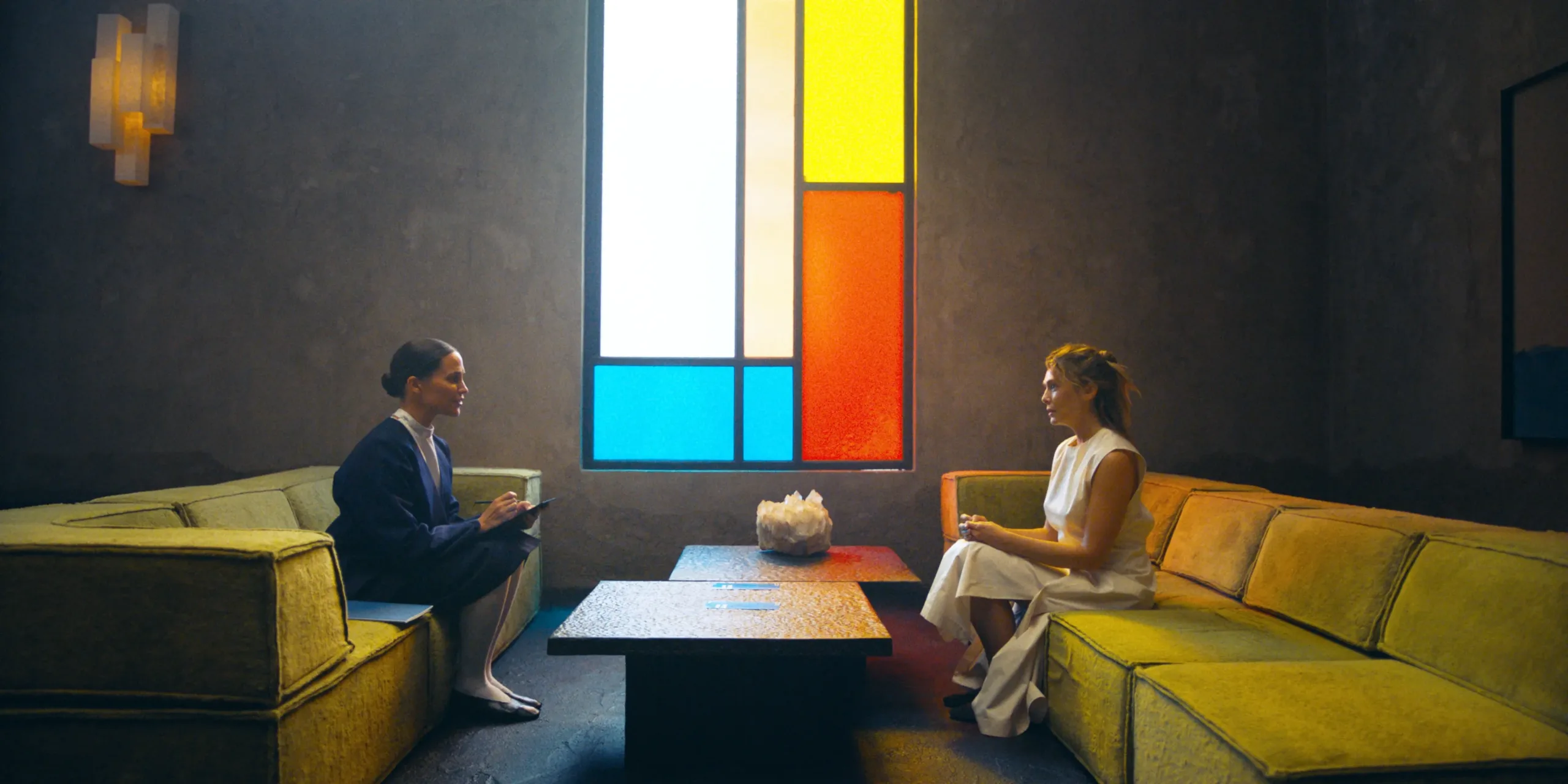
The film’s careful world-building immediately makes her visual design background clear. The new world isn’t just a place; it’s a character in and of itself, full of life, organized, and too perfect for comfort. Imagine a palette like Pedro Almodóvar’s mixed with the sterility of science: bright primary colors splash across high-end rooms, making a visually appealing and emotionally stifling place.
The big difference between the old and new worlds becomes Fortuné’s best way to tell a story. The clean, climate-controlled environment shows how desperately people are trying to stay alive. At the same time, the poisoned, empty old world is a scary warning of how the environment is breaking down. Each frame is carefully put together to show how social control affects people’s minds.
Policies made by the government are not just background noise; they are the invisible structure that controls every contact between people. During the review process, personal wants are carefully looked at and possibly taken away, a microcosm of society’s work. Mia and Aaryan’s journey shows how people fight to be human under layers of government surveillance.
What could have been a clinical sci-fi story is turned into a deeply emotional study by Fortuné’s direction. “The Assessment” is more than just a movie because she balances clinical precision with raw human vulnerability. It’s a visceral meditation on life, love, and the lengths people will go to protect their essence.
Fortuné makes a world that feels far away and uncomfortably prophetic by treating the dystopian scenery as if it were alive.
Chromatic Dystopia: Designing Emotional Landscapes
The production design by Jan Houllevigue turns “The Assessment” into a controlled visual symphony of chaos, where each color, texture, and space layout tells a story. The look of the movie isn’t just seen; it’s felt.
Mia and Aaryan’s house turns into a beautiful painting of primary colors, like Pedro Almodóvar’s vivid visual stories. This isn’t just for looks; it’s a carefully thought-out picture of the mental landscape of the new world. Bright reds, blues, and yellows give the impression of warmth and promise, hiding the clean, controlled space below.
The sharp difference between the old and new worlds is a visual metaphor for how societies change. The old world decays in poisonous monotone while the new world pulses with clean luxury. This is a visual shorthand for how the environment collapses and how strong people are.
The costume style says a lot without saying a word. The characters dress in simple, classy ways that reflect society’s clinical accuracy. Each outfit is a subtle show of class, restraint, and emotional depth that is kept hidden.
From a cinematic point of view, the movie works like a psychiatric microscope. Every frame is carefully put together to show inner tensions. For example, tight framing in assessment scenes creates a feeling of suffocating closeness, while wider shots of the pristine environment highlight systemic isolation.
Houllevigue’s design doesn’t just create a world; it also explains how people can survive, using visual elements to explore deeply what people want and fear.
Sonic Landscapes: Orchestrating Emotional Frequencies
Emilie Levienaise-Farrouch’s score for “The Assessment” doesn’t just go with the story; it becomes a psychological heartbeat that pulses with the emotions in the movie. Her music takes sounds and turns them into extra characters, walking the fine line between clinical accuracy and raw emotional vulnerability.
The score tracks small changes in the person’s mood during the test, kind of like an unseen emotional seismograph. When Virginia changes in unpredictable ways, the music breaks up and changes quickly, with harsh electronic tones giving way to unexpectedly soft melodic sections that show how complicated Virginia’s mind is.
Levienaise-Farrouch creates a soundscape that sounds both modern and like people made it. Undertones of electronics create a feeling of technological sterility, while occasional organic instrumental moments remind listeners of the basic human wants beneath the dystopian structure.
Sound design boosts this sound complexity. Many different sounds are mixed together to make the dystopian world feel eerily real. For example, mechanical hums and almost imperceptible human breaths are mixed together in the background.
The music doesn’t just back the story; it also becomes a powerful emotional translator, turning cold technology into something painfully, vulnerableally alive.
Survival’s Emotional Frontier: Decoding Human Resilience
“The Assessment” goes beyond the usual limits of science fiction to create a deep meditation on how people connect that stays with you long after the credits roll. In her first movie as a director, Fleur Fortuné does something amazing: she turns a high-concept dystopian premise into a deeply human study of love, survival, and societal norms.
The film is held together by Alicia Vikander’s amazing performance, which turns what could have been a clinical story into a mesmerizing psychological dance. Her performance as Virginia is what makes the movie so brilliant: it shows how complicated people can be in systems that seem rigid.
The movie’s real success comes in its ability to make people feel uncomfortable and sympathetic at the same time. It questions basic ideas about being a parent, controlling technology, and how flexible people are without giving easy answers.
For people who like complex psychological tales that mix science fiction with deep emotional intelligence, “The Assessment” is more than just a movie—it’s an experience. Passionate science fiction fans, deep thinkers, and people who love exploring human nature in harsh situations will be enthralled.
It’s not just a show. It’s a mirror that shows us our darkest fears, possible futures, and amazing ability to bounce back from setbacks.
The Review
The Assessment
"The Assessment" is a wildly original sci-fi drama that breaks all the genre rules, turning a possibly clinical premise into a deeply human look at love, survival, and how society controls people. Fleur Fortuné's first movie as a director is a superb mix of deep psychological insight, stunning visual artistry, and deep emotional intelligence. The best thing about the movie is how it makes the future feel real. Elizabeth Olsen, Himesh Patel, and especially Alicia Vikander give performances that are both perfectly perfect and honest about how they feel. Careful attention to detail is used to build a world that makes the future seem too real. Even though the story sometimes goes into deep philosophical territory, it never loses its emotional heart. The movie makes people think about basic human rights, the morality of reproduction, and what it means to survive in a world that has changed greatly due to climate change.
PROS
- Exceptional performances, especially by Alicia Vikander
- Innovative and visually stunning world-building
- Thought-provoking exploration of climate change and societal control
- Unique directorial approach by Fleur Fortuné
- Nuanced screenplay that balances intellectual and emotional depth
CONS
- Complex narrative might be challenging for some viewers
- Potentially overwhelming philosophical undertones
- Some abstract conceptual elements may require multiple viewings