






















• Latest
  • Trending
Ryuichi Sakamoto: Opus review

Ryuichi Sakamoto: Opus Review – A Quiet Farewell

Dune: Part Two

Chalamet, Zendaya Back in the Desert: New “Dune 3” Images and Trailer Land

6 hours ago
The Pitt

Shawn Hatosy Lands Second Emmy Nod for “The Pitt,” This Time as Supporting Actor

6 hours ago
Justin Baldoni Blake Lively

Justin Baldoni Breaks Two-Year Silence on Blake Lively Legal Battle

7 hours ago
Ariana Madix

Ariana Madix Scores First Emmy Nod for “Love Island USA”

7 hours ago
Surrender to It Review 1

Surrender to It Review: A Crowded Hike Through Grief and Chaos

Transforming the Beautiful Game: The Clyde Best Story Review

Transforming the Beautiful Game: The Clyde Best Story Review: History Was Watching Clyde Best

Echoes of Aincrad Review

Echoes of Aincrad Review: SAO Finally Finds a Better Player Character

How to Get Filthy Rich With Gary Stevenson Review e1783598839661

How to Get Filthy Rich With Gary Stevenson Review: YouTube Certainty Meets Television Questions

Salcedo, Leather, And Boogaloo Review

Salcedo, Leather, And Boogaloo Review: Martín Salcedo Finds Trouble on Schedule

Im Not Afraid Review

I’m Not Afraid Review: Childhood Pays for Adult Desperation

Assassin's Creed: Black Flag Resynced Review

Assassin’s Creed: Black Flag Resynced Review: The Jackdaw Rules the Seas Again

Moana Review

Moana Review: Disney Refuses to Cross the Reef

  • Home
  • Privacy Policy
  • Terms and Conditions
  • Gazettely Review Guidelines
Thursday, July 9, 2026
GAZETTELY
  • Home
  • Movie and TV News
    Dune: Part Two

    Chalamet, Zendaya Back in the Desert: New “Dune 3” Images and Trailer Land

    The Pitt

    Shawn Hatosy Lands Second Emmy Nod for “The Pitt,” This Time as Supporting Actor

    Justin Baldoni Blake Lively

    Justin Baldoni Breaks Two-Year Silence on Blake Lively Legal Battle

    Ariana Madix

    Ariana Madix Scores First Emmy Nod for “Love Island USA”

    The Odyssey

    Christopher Nolan Defends Modern English Dialogue in ‘The Odyssey’

    Jennifer Beals

    Jennifer Beals Joins LL Cool J and Scott Caan in ‘NCIS: New York’

    Moana

    ‘Moana’ Tracking for $130M Global Opening, Below Earlier Forecasts

    Enola Holmes 3

    ‘Enola Holmes 3’ Opens Soft With 20.3M Views, Trails Franchise Predecessor

    Big Brother

    ‘Big Brother’ Season 28 Cast Revealed Ahead of ‘Time Trip’ Premiere

  • Movie and TV Reviews
    Surrender to It Review 1

    Surrender to It Review: A Crowded Hike Through Grief and Chaos

    Transforming the Beautiful Game: The Clyde Best Story Review

    Transforming the Beautiful Game: The Clyde Best Story Review: History Was Watching Clyde Best

    How to Get Filthy Rich With Gary Stevenson Review e1783598839661

    How to Get Filthy Rich With Gary Stevenson Review: YouTube Certainty Meets Television Questions

    Salcedo, Leather, And Boogaloo Review

    Salcedo, Leather, And Boogaloo Review: Martín Salcedo Finds Trouble on Schedule

    Im Not Afraid Review

    I’m Not Afraid Review: Childhood Pays for Adult Desperation

    Moana Review

    Moana Review: Disney Refuses to Cross the Reef

    Evil Dead Burn Review

    Evil Dead Burn Review: French Severity Meets Deadite Carnage

    Redoubt Review

    Redoubt Review: Fear Becomes Architecture

    Q Review

    Q Review: Hiba’s Quiet Return to Herself

  • Game Reviews
    Echoes of Aincrad Review

    Echoes of Aincrad Review: SAO Finally Finds a Better Player Character

    Assassin's Creed: Black Flag Resynced Review

    Assassin’s Creed: Black Flag Resynced Review: The Jackdaw Rules the Seas Again

    Granblue Fantasy: Relink - Endless Ragnarok Review

    Granblue Fantasy: Relink – Endless Ragnarok Review: Summons Make Every Fight Bigger

    EA SPORTS College Football 27 Review

    EA SPORTS College Football 27 Review: Great Football Buried Under Busywork

    HYPERWIRED

    HYPERWIRED Review: Ship Rescues Give Every Run Something to Chase

    Frostpunk 2: Breach of Trust Review

    Frostpunk 2: Breach of Trust Review: The Ground Has Its Own Vote

    Moonlight Peaks Review

    Moonlight Peaks Review: Farming Feels Better After Dark

    Sonic Frontiers - Definitive Edition Review

    Sonic Frontiers – Definitive Edition Review: Sixty Frames Cannot Fix the Price

    A Storied Life: Tabitha Review

    A Storied Life: Tabitha Review: Every Keepsake Takes Up Space

  • The Bests
No Result
View All Result
  • Home
  • Movie and TV News
    Dune: Part Two

    Chalamet, Zendaya Back in the Desert: New “Dune 3” Images and Trailer Land

    The Pitt

    Shawn Hatosy Lands Second Emmy Nod for “The Pitt,” This Time as Supporting Actor

    Justin Baldoni Blake Lively

    Justin Baldoni Breaks Two-Year Silence on Blake Lively Legal Battle

    Ariana Madix

    Ariana Madix Scores First Emmy Nod for “Love Island USA”

    The Odyssey

    Christopher Nolan Defends Modern English Dialogue in ‘The Odyssey’

    Jennifer Beals

    Jennifer Beals Joins LL Cool J and Scott Caan in ‘NCIS: New York’

    Moana

    ‘Moana’ Tracking for $130M Global Opening, Below Earlier Forecasts

    Enola Holmes 3

    ‘Enola Holmes 3’ Opens Soft With 20.3M Views, Trails Franchise Predecessor

    Big Brother

    ‘Big Brother’ Season 28 Cast Revealed Ahead of ‘Time Trip’ Premiere

  • Movie and TV Reviews
    Surrender to It Review 1

    Surrender to It Review: A Crowded Hike Through Grief and Chaos

    Transforming the Beautiful Game: The Clyde Best Story Review

    Transforming the Beautiful Game: The Clyde Best Story Review: History Was Watching Clyde Best

    How to Get Filthy Rich With Gary Stevenson Review e1783598839661

    How to Get Filthy Rich With Gary Stevenson Review: YouTube Certainty Meets Television Questions

    Salcedo, Leather, And Boogaloo Review

    Salcedo, Leather, And Boogaloo Review: Martín Salcedo Finds Trouble on Schedule

    Im Not Afraid Review

    I’m Not Afraid Review: Childhood Pays for Adult Desperation

    Moana Review

    Moana Review: Disney Refuses to Cross the Reef

    Evil Dead Burn Review

    Evil Dead Burn Review: French Severity Meets Deadite Carnage

    Redoubt Review

    Redoubt Review: Fear Becomes Architecture

    Q Review

    Q Review: Hiba’s Quiet Return to Herself

  • Game Reviews
    Echoes of Aincrad Review

    Echoes of Aincrad Review: SAO Finally Finds a Better Player Character

    Assassin's Creed: Black Flag Resynced Review

    Assassin’s Creed: Black Flag Resynced Review: The Jackdaw Rules the Seas Again

    Granblue Fantasy: Relink - Endless Ragnarok Review

    Granblue Fantasy: Relink – Endless Ragnarok Review: Summons Make Every Fight Bigger

    EA SPORTS College Football 27 Review

    EA SPORTS College Football 27 Review: Great Football Buried Under Busywork

    HYPERWIRED

    HYPERWIRED Review: Ship Rescues Give Every Run Something to Chase

    Frostpunk 2: Breach of Trust Review

    Frostpunk 2: Breach of Trust Review: The Ground Has Its Own Vote

    Moonlight Peaks Review

    Moonlight Peaks Review: Farming Feels Better After Dark

    Sonic Frontiers - Definitive Edition Review

    Sonic Frontiers – Definitive Edition Review: Sixty Frames Cannot Fix the Price

    A Storied Life: Tabitha Review

    A Storied Life: Tabitha Review: Every Keepsake Takes Up Space

  • The Bests
No Result
View All Result
GAZETTELY
No Result
View All Result
Ryuichi Sakamoto: Opus review

The Shadowless Tower Review: Finding Solace in Beijing's Backstreets

Crimes of Fashion: Killer Clutch Review - A Trendsetting Debut

Home Entertainment Movies

Ryuichi Sakamoto: Opus Review – A Quiet Farewell

Behind Closed Doors with a Legend in His Final Days

Naser Nahandian by Naser Nahandian
2 years ago
in Entertainment, Movies, Reviews
Reading Time: 6 mins read
A A
0
Share on FacebookShare on TwitterShare on PinterestShare on WhatsAppShare on TelegramSummarize with ChatGPTSummarize with Perplexity

Ryuichi Sakamoto paved new paths across genre and culture as a musical pioneer. Originally finding acclaim in the 1970s with Yellow Magic Orchestra, blending electronic sounds with pop dexterity, Sakamoto’s inquisitive spirit led him everywhere. He reinvented himself constantly, crafting Grammy-winning film scores with beauty matching any image. Through Yellow Magic Orchestra, solo outings and collaborations, his synth compositions left marks on ambient, techno and beyond.

Always expanding his vision, Sakamoto grew fascinated by natural field recordings and the music within everyday life. By 2022, failing health halted touring. Instead, he channeled remaining creativity into “Opus,” bidding farewell through resonant performances. With son Neo directing, Sakamoto played 20 personally selected works over weeks. Though unable to tour, this still let him share art’s meaning during life’s final chapter.

Shot in lustrous black and white, “Opus” displays Sakamoto’s musical journey via intimate solo piano. Stripped of auxiliary adornment, arrangements distill compositions to emotive essences. Through “Opus,” Sakamoto celebrates a life shaping sounds and stories. Though now in our memories, his notes evoke hope that transcends all limits, reminding us music’s timeless power to unite and uplift.

Stripped-Back Showcase For A Master’s Swansong

Directed by his son Neo Sora, Ryuichi Sakamoto: Opus presents the late composer’s last recorded performance with minimalist brilliance. Filmed in a Tokyo recording studio, this black-and-white documentary captures Sakamoto intimately over the course of a week, yet requires no supplementary information to deeply appreciate both artist and art.

Through compassionate camerawork and judicious editing, Sora allows his father’s playing to take center stage. Close-ups reveal the thoughtful care in Sakamoto’s fingertips, while occasional wider shots situate us in the scene. Smooth camera movements flow like the tidal motion of Sakamoto’s melodies, abandoning flourish for fluent portrayal. Engineering enhances the performance further – microphones immerse us in each note’s resonance while emphasizing the player’s vulnerable humanity.

Subtlety defines the film, from Sakamoto’s understated mastery to the gentle shifts in lighting. Dappled studio beams transition day to dusk, their gradual alteration mirroring the scored suite’s shifting moods. Spare production complements sparse musical arrangements, concentrating attention on emotional essence rather than technical fireworks. Though Sakamoto sprinkles in larger-scale works, intimacy overall lends these greatest intimacy.

Also Read

  • Best Christmas Movies
    30 Best Christmas Movies to Watch This Holiday Season
  • Best 2025 Movies
    Gazettely's 30 Best Movies of 2025
  • 30 Best Drama Movies
    30 Best Drama Movies to Watch Before You Die
  • best sci fi movies
    30 Best Sci Fi Movies Ever: Gazettely's Ultimate…
  • Best Horror Movies
    30 Best Horror Movies: The Horror Hall of Fame
  • best 2025 games
    Gazettely's 30 Best Video Games of 2025

By stripping back embellishment, Sora allows his subject’s final creative offering to resonate freely. Opus becomes a sublime homage to one artist’s journey, a voyage we trace not through talk but through the transformative power of watched and witnessed art. In witnessing Sakamoto’s swansong we find poignant portraiture and profound parting gift, a cinematic tribute that does the maestro’s musicianship, and life, justice in a breath.

Ryuichi Sakamoto’s Final Masterclass

Ryuichi Sakamoto handpicked twenty pieces that would become his swan song. The musical selections in Ryuichi Sakamoto: Opus showcased the full arc of the legendary composer’s illustrious career. With a tracklist spanning five decades, Sakamoto treated viewers to a retrospective masterclass on his journey from electronic pioneer to film score maestro.

Ryuichi Sakamoto: Opus Review

Naturally, Sakamoto included seminal works like “Merry Christmas Mr. Lawrence,” the iconic theme from Nagisa Oshima’s stirring anti-war film of the same name. His elegant solo piano rendition striped the song back to its emotional core, revealing its bittersweet beauty in its purest form. Selections from “The Last Emperor” also featured, works that won him an Academy Award—a testament to his ability to immerse audiences in either Eastern or Western cultures through music alone.

Beyond his most famous pieces, Sakamoto reinterpreted classics with fresh improvisations. He reinvented early synth-pop hits from Yellow Magic Orchestra in novel ways, like slowing the tempo of the bouncy “Tong Poo” to produce new layers of poignancy. Sakamoto also unearthed more hidden gems, playing works that had never been performed solo on piano before. Throughout, his stripped back arrangements highlighted intricate melodic details that lingered in the memory.

Through this thoughtful compilation, Sakamoto imparted one final lesson on the enduring impact of a life’s work. With each succeeding song, viewers witnessed the evolution of an artist who never stopped pushing creative boundaries. His nuanced performances inspired appreciation for both the traditions he built upon and reinvented, leaving an indelible mark on film, electronic and concert music.

Ryuichi Sakamoto’s Intimate Musical Farewell

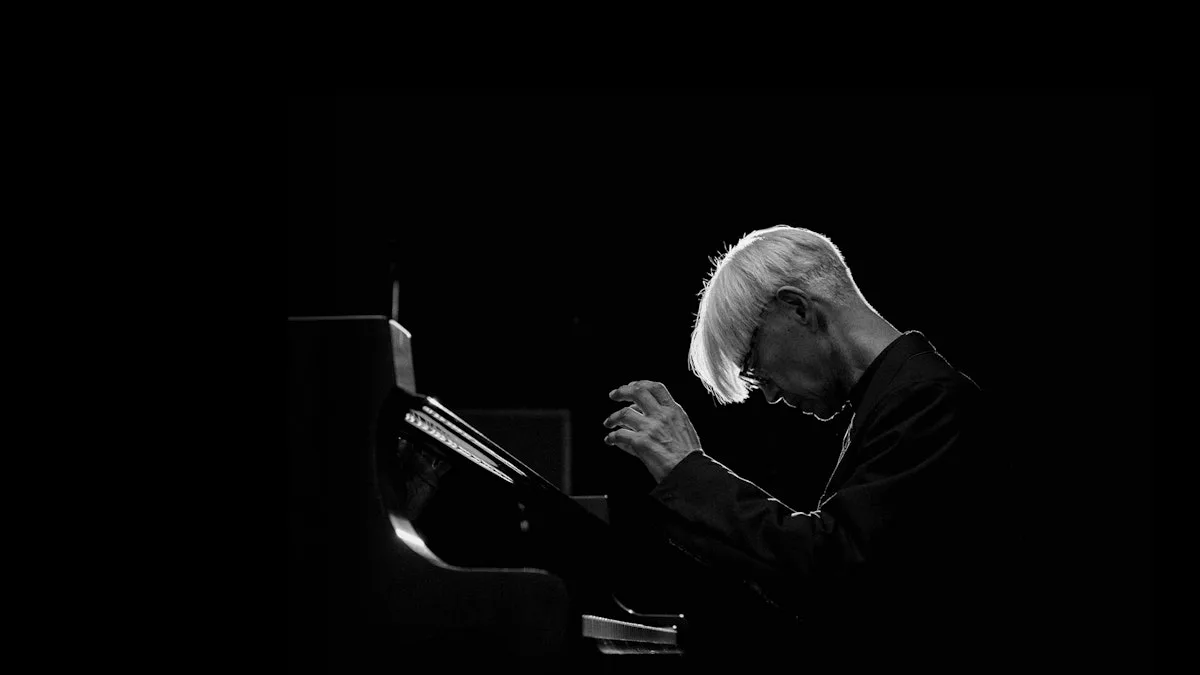
Despite evident physical struggles from his illness, Ryuichi Sakamoto played with conspicuous technical skill and meditative focus during what would be his final recorded performance. Camera angles affording close views of his hands revealed a musician completely immersed in the music, conducting intricate rhythms and melodies with subtle gestures. Wider shots capturing his face showed a performer emotionally wedded to every note.

Ryuichi Sakamoto: Opus Review

During slower pieces, Sakamoto’s expressions conveyed a profound vulnerability. Revisiting compositions from across his lengthy career, ones he had played countless times before, his eyes hinted at deep reflection on a life’s work and what it meant to bid that farewell. His gaze seemed drawn inwards, as if communing with private memories through the instrument.

Yet his demeanor was not wholly melancholy. Livelier tempos brought a faint smile dancing at the edges of his lips, and a livelier rhythmic pulse to his conducting hands. One sensed he still found joy in summoning effervescent melodies from the piano, even in that intimate setting, as if eager to offer moments of levity amid the solemnity.

Whether uplifting or introspective, each piece emanated from an artist determined to wring from them every subtle emotion, every nuanced texture, in what he must have known would be his valedictory performance.

The Enduring Gift of Ryuichi Sakamoto

Ryuichi Sakamoto approached his final recorded performances captured in “Opus” with a profound purposefulness. Both he and director Neo Sora were aware this would be the last music Sakamoto would share. Over several days of playing, the lighting in the studio subtly shifted, almost imperceptibly at first, from bright morning to softer evening, marking the passage of time.

Ryuichi Sakamoto: Opus Review

For Sakamoto, this span presented an opportunity to reflect on his journey through a career that influenced generations of musicians. He selected pieces spanning five decades to craft a narrative of his evolution as an artist. Beloved soundtrack works sit side-by-side with pioneering electronic music and intimate improvisations. His playing infuses each song with new layers of depth and emotion, revealing fresh insights.

Certain selections feel especially poignant, like the delicate rendition of “Merry Christmas Mr. Lawrence’s” beloved theme. Where it once captivated as an exotic fusion of cultures, on piano it gains a quiet desperation that mirrors Sakamoto’s own circumstances. His performances throughout become steadily more vulnerable. By the end, only a small lamp lights the stage, as if to symbolize the dimming of his own life.

Throughout, Sakamoto maintained an focused intentness. Although he admitted the effort caused strain, his love for the music renewal powered his playing. For those watching, his gift is to guide us through both a cherished body of work and his own journey towards its close. “Opus” stands not only as a chronicle of Sakamoto’s incomparable career, but a poignant farewell and parting gesture from one of music’s greats. His enduring legacy will remain in the memories and hearts he touched.

Farewell to a Master

Through Opus, Ryuichi Sakamoto gifted us with an intimate parting gesture. In its simplicity lay a profound expressiveness. On the bare stage, with only his instrument as companion, Sakamoto quietly bid us farewell. His selection prowled the career of a prolific and boundary-pushing artist. Familiar favorites mingled with fresh revelations of untapped depths in each composition.
Ryuichi Sakamoto: Opus Review

Between pieces, in those rare unguarded moments, we glimpse a performer nearing the final act. Exhausted by effort but determined in his purpose, Sakamoto grants us a privileged window into his process. The film moves at his measured pace, a vessel bearing profound emotions across the silent space. Light and camera trace shifting textures on Sakamoto’s focused features, creased by deep reflection.

His son’s care is evident in each intimate frame. With compassionate direction, Neo ensures the music remains foremost even as filming draws close. In Opus, Sakamoto was granted freedom to simply be—a man alone with art, bidding it shape the moment.

Though now his physical form is memory, his artistic spirit finds renewal through both the lingering melodies and this touching document of final communion through music. Sakamoto’s indelible legacy is one that, like all great art, enables him to play on.

The Review

Ryuichi Sakamoto: Opus

9 Score

In its elegant simplicity, Opus grants viewers a rare and precious gift - a glimpse into the heart of an artist as he makes his farewell. Sakamoto's moving performances, framed with deep compassion, ensure his legacy of beautiful, impactful music will echo on.

PROS

  • Intimately captures Sakamoto's final performances in stunning visual and audio quality
  • Includes a diverse selection of pieces that showcase his immense talents and influence
  • Affords rare behind-the-scenes access to better understand the artist's process and personality
  • Pays moving tribute to Sakamoto's legacy through its elegant simplicity and focus on the music

CONS

  • Very minimal dialogue could leave some viewers wanting more context
  • Strictly focused on the performances with little discussion of Sakamoto's body of work and influences
  • Some shots feel like they focus too much on the technical aspects of filming rather than the emotional experience


Review Breakdown

  • Overall 0

Tags: Bitters EndDocumentaryFeaturedKAB AmericaKinetic Art & Business AmericaMusicNeo SoraRyuichi SakamotoRyuichi Sakamoto: Opus
Previous Post

The Shadowless Tower Review: Finding Solace in Beijing’s Backstreets

Next Post

Crimes of Fashion: Killer Clutch Review – A Trendsetting Debut

Try AI Movie Recommender

Gazettely AI Movie Recommender

This Week's Top Reads

  • Is This Seat Taken? Review

    Is This Seat Taken? Review: A Satisfying Mental Workout

    1187 shares
    Share 0 Tweet 0
  • Trust Review: Squandered Potential and an Incoherent Plot

    6 shares
    Share 0 Tweet 0
  • Black Box Review: Flight 298 Loses Contact With Reason

    0 shares
    Share 0 Tweet 0
  • Summer of ’36 Review: Murder Checks Into the Riviera

    1 shares
    Share 0 Tweet 0
  • Proud Review: Ignacy Liss Shines in HBO Max’s Striking New Series

    7 shares
    Share 0 Tweet 0
  • Human Vapor Review: Toho’s Cult Monster Gets a Streaming Pulse

    1 shares
    Share 0 Tweet 0
  • Citizen Vigilante Review: Uwe Boll Mistakes Vengeance for Justice

    1 shares
    Share 0 Tweet 0

Must Read Articles

Moana Review
Entertainment

Moana Review: Disney Refuses to Cross the Reef

21 hours ago
Evil Dead Burn Review
Movies

Evil Dead Burn Review: French Severity Meets Deadite Carnage

23 hours ago
EA SPORTS College Football 27 Review
Reviews Games

EA SPORTS College Football 27 Review: Great Football Buried Under Busywork

1 day ago
The Five-Star Weekend Review
TV Shows

The Five-Star Weekend Review: Jennifer Garner Plates Grief Beautifully

3 days ago
House of the Dragon Season 3 Episode 3 Review
TV Shows

House of the Dragon Season 3 Episode 3 Review: The Loneliest Winning Hand in Westeros

3 days ago
Loading poll ...
Coming Soon
Which of Alfred Hitchcock's 1960s thrillers is your all-time favorite?

Gazettely is your go-to destination for all things gaming, movies, and TV. With fresh reviews, trending articles, and editor picks, we help you stay informed and entertained.

© 2021-2026 All Rights Reserved for Gazettely

What’s Inside

  • Movie & TV Reviews
  • Game Reviews
  • Featured Articles
  • Latest News
  • Editorial Picks

Quick Links

  • Home
  • About US
  • Contact Us
  • Advertise with Us
  • Review Guidelines

Follow Us

Facebook X-twitter Youtube Instagram
No Result
View All Result
  • Home
  • Movies
  • Entertainment News
  • Movie and TV Reviews
  • TV Shows
  • Game News
  • Game Reviews
  • Contact Us

© 2024 All Rights Reserved for Gazettely