
























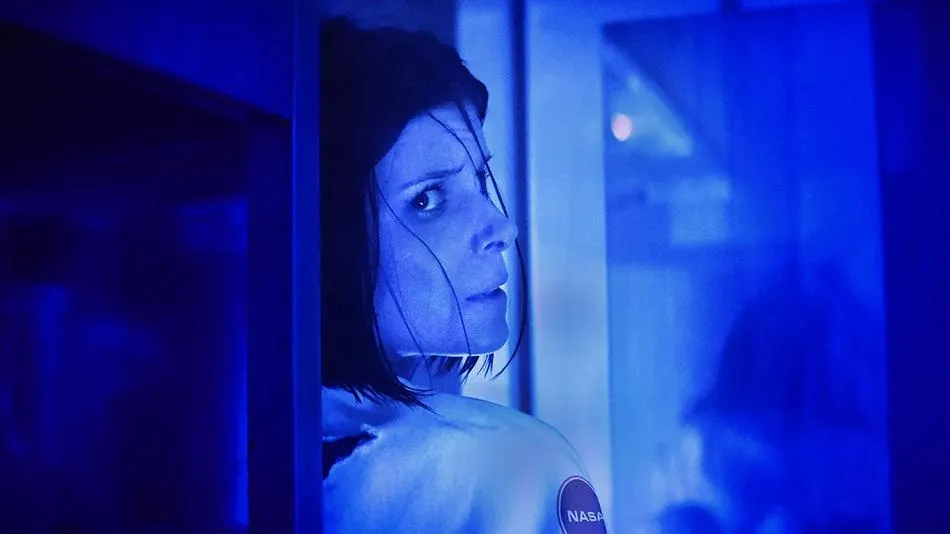

The film opens with the striking scenario of a celebrated astronaut returning to Earth under bizarre and unsettling circumstances—a shattered visor and spreading bruises hint at mysteries beyond simple space travel mishaps (a nod to the physical toll of cosmic ventures). Sam Walker’s reentry sets the stage for an exploration of isolation that mirrors the cold, unyielding nature of deep space.
The narrative splits cleanly into two phases. In the early moments, the story slowly constructs a tension filled with eerie quiet and a palpable sense of unease, as if the walls of the remote mansion might whisper secrets of forgotten missions. Then, almost abruptly, the tone shifts in a way that leaves one momentarily disoriented (a bit like missing a step on a dark stairway).
Key plot points emerge with Sam’s enforced stay in a secure, technologically advanced residence—complete with a mysterious, hidden underground area that raises more questions than answers.
The film toys with the possibility that an otherworldly presence has clung to her, blurring the line between perceived hallucination and tangible threat. Sam’s subjective view (colored by uncertain memories and physical oddities) keeps viewers in a state of hesitant anticipation about the nature of her peril.
Human Faces in a Cold Expanse
Kate Mara’s performance as Sam Walker becomes a study in human fragility and the toll of secrets. Sam is portrayed as a trained professional caught in the crossfire of personal duty and an inner unraveling that she hides from those around her.
Her struggle is not merely about surviving a mission gone awry but managing the shame and burden of an unspoken affliction. Mara’s work makes Sam feel both resilient and exasperatingly vulnerable (a paradox that might remind one of wartime heroes burdened by hidden scars).
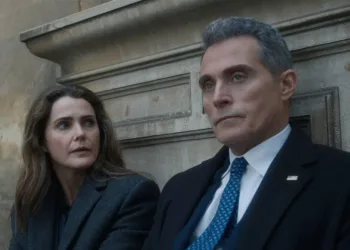
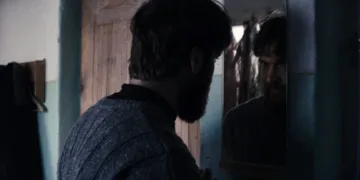
Mark, her husband, is sketched as a man equally weighed down by sacrifice and unspoken despair. His eyes, often fixed in quiet disapproval or reluctant concern, mirror a tension that speaks to more than personal friction—it hints at the cost of careers defined by risk and the silent judgment that follows. A brief glance exchanged between them can summon images of historical conflicts, where duty clashed with personal loss, leaving no man unscarred.
Izzy, Sam’s daughter, injects a tender note into this otherwise heavy narrative. Her presence is a quiet reminder that the human spirit finds solace in bonds, even when ambition leads to isolation. In her, we catch a glimpse of the innocence that suffers when great expectations come with a price.
Then there is General William Harris, whose authoritative shadow looms large over Sam’s every decision. He stands as a figure of both protection and restraint—a personification of institutional demands that can comfort as much as they confine. His role is a living symbol of legacies that burden the individual, much like the weight borne by historical figures caught between personal ideals and public duty.
Minor figures, such as the doctor and military officials, punctuate the narrative with brief but pointed reminders of the structured world that insists on control, contrasting sharply with Sam’s internal chaos.
Echoes of Isolation and the Unknown
The film presents isolation as a stark landscape—a physical retreat into a remote mansion that mirrors the emotional seclusion of its protagonist. Here, Sam’s mental state reflects a quiet deterioration reminiscent of historical periods marked by enforced solitude (think of those long winters in isolated outposts).
The narrative casts paranoia as a natural outcome of being cut off from familiar rhythms, a condition that can resemble the existential dread found in eras of rapid social change.
A careful look reveals a deliberate uncertainty regarding what is real and what might be imagined. Visual cues and narrative fragments make it challenging to decide if the disturbances Sam experiences are the aftermath of space travel or the figments of an overstressed mind. This oscillation leaves viewers questioning the true nature of the threat—a subtle reminder of how modern society grapples with conflicting signals in times of upheaval.
The film does not confine itself to a single genre but instead shifts its focus from a restrained, character-driven thriller to a form of speculative horror. Sudden changes in tone disrupt expectations and create a sensation akin to historical turning points that redefine cultural norms. Such shifts, while jarring, may serve to mirror the unpredictable impacts of technological and social progress on individual lives.
Themes of duty and personal sacrifice are interwoven into Sam’s internal battle. Her struggle represents the weight carried by those who must perform under strict institutional oversight—a reflection on the personal costs encountered in high-stakes vocations. At moments, the narrative appears to contradict its own hints, leaving room for debate about whether its mixed signals might eventually provoke discussion on the cultural implications of ambition and isolation.
A series of deliberate narrative choices invites the audience to question the symbols and hidden meanings behind every unsettling detail (and perhaps even laugh at the absurdity of it all).
Visual & Audio Dimensions Uncovered
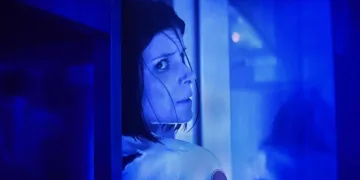
The film’s visual presentation offers a striking contrast between nature and engineered space. On one side, the lush, shadowy woods evoke a sense of foreboding, as if the environment itself conspires to unsettle the mind; on the other, the sleek, high-tech interiors of the safehouse create a sterile backdrop that emphasizes the artificial nature of control.
Specific set pieces—such as the expansive glass windows framing a giant fish tank, and the secretive, subterranean facility—serve as visual metaphors, hinting at hidden truths and suppressed emotions (a clever nod to historical moments when appearances masked deeper realities).
The digital imagery, while occasionally effective in building tension, sometimes falls short of the mark. There are moments when computer-generated elements blend seamlessly with practical effects, evoking a sort of calculated magic reminiscent of early cinematic experiments in visual trickery; then, there are instances where the effects seem clumsy, disrupting the film’s careful pacing. This unevenness might remind one of the clashing styles seen during periods of artistic transition in cinema history.
Sound design plays an equally pivotal role. Jacques Brautbar’s score oscillates between sparse, haunting melodies and more dramatic, pulse-quickening sequences, reflecting the film’s shifting moods. Ambient noises—subtle creaks, whispered winds, and abrupt, jarring audio cues—create an aural landscape that keeps the viewer on edge.
The interplay between light and sound is not mere decoration but functions as a narrative device, each element amplifying the tension and mystery inherent in the unfolding story.
In this setup, the director appears to employ technical prowess as a means of storytelling, balancing artistic ambition with the need for clarity in a narrative filled with subtle yet profound symbols (a duality that may spark debates on its cultural implications).
Cosmic Command: A Study of Direction & Screenplay
Jess Varley’s debut effort as a writer-director is a study in audacity and occasional missteps. His approach to mixing disparate genres feels like an experiment in combining ingredients that might not always harmonize (imagine a chef throwing in spices with reckless abandon). Varley’s cinematic language is at once vivid and uncertain, his background clearly coloring his attempt to fuse visual artistry with narrative ambition.
The screenplay is structured with an almost measured buildup—a slow simmer of tension built around an unreliable protagonist who blurs reality with personal demons. Early on, the pacing is careful and contemplative.
Then, in a move that catches the viewer off guard (and occasionally off balance), the narrative accelerates into a frenetic crescendo that seems to lose the thread of its earlier restraint. Moments that once hinted at profound introspection now collide with scenes that veer into overt speculative theatrics.
Dialogue plays a curious role throughout this film. Characters exchange lines loaded with quiet irony and subtle innuendo, a hint that their words mask deeper truths about isolation, duty, and the psychological toll exacted by space travel.
It is as if every exchange is a miniature debate—one that might recall the quiet tensions of historic political salons, or perhaps the terse camaraderie found in high-risk professions. (One can almost hear the clink of glasses in a smoky room when these lines are delivered.)
Yet, the screenplay’s ambition occasionally muddles its own ideas. The mid-film tonal shift—a stark departure from a measured thriller into a burst of dramatic sci-fi—provokes both admiration and a raised eyebrow.
This pivot serves as both a creative flourish and a potential narrative quirk, leaving audiences to decide whether Varley’s risk will be remembered as a visionary twist or a hiccup in an otherwise thoughtful exploration of our cosmic fears.
Final Reckoning
The film impresses with its atmospheric buildup, a standout performance from its lead, and technical prowess in both visuals and audio. Its moments of quiet intensity and careful framing evoke memories of classic sci-fi narratives that stirred public debate during tumultuous eras.
Yet, the latter part stumbles as abrupt tonal shifts and fragmented storytelling interrupt the established rhythm (one might compare this to a historical coup d’état that disrupts a long-standing regime). The narrative’s strengths are evident in its capacity to engage and unsettle, while its shortcomings reveal a struggle to maintain consistency when venturing into speculative territory.
This debut effort leaves an indelible mark on genre cinema, hinting at a future where creative risks are met with both acclaim and scrutiny. Its cultural footprint may serve as a reference point for forthcoming projects that seek to balance ambition with coherent execution.
The Review
The Astronaut
The Astronaut offers potent atmosphere and impressive technical execution but stumbles with sudden tonal shifts that disrupt its narrative flow. A debut marked by daring ambition and uneven delivery, it leaves a distinct imprint on sci-fi thrillers while inviting debate on its scattered approach.
PROS
- Strong atmospheric buildup
- Compelling central performance
CONS
- Abrupt tonal shifts disrupt narrative flow
- Occasional weak CGI effects