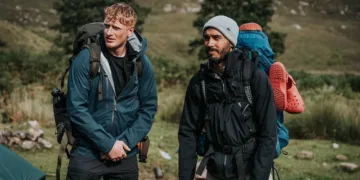


















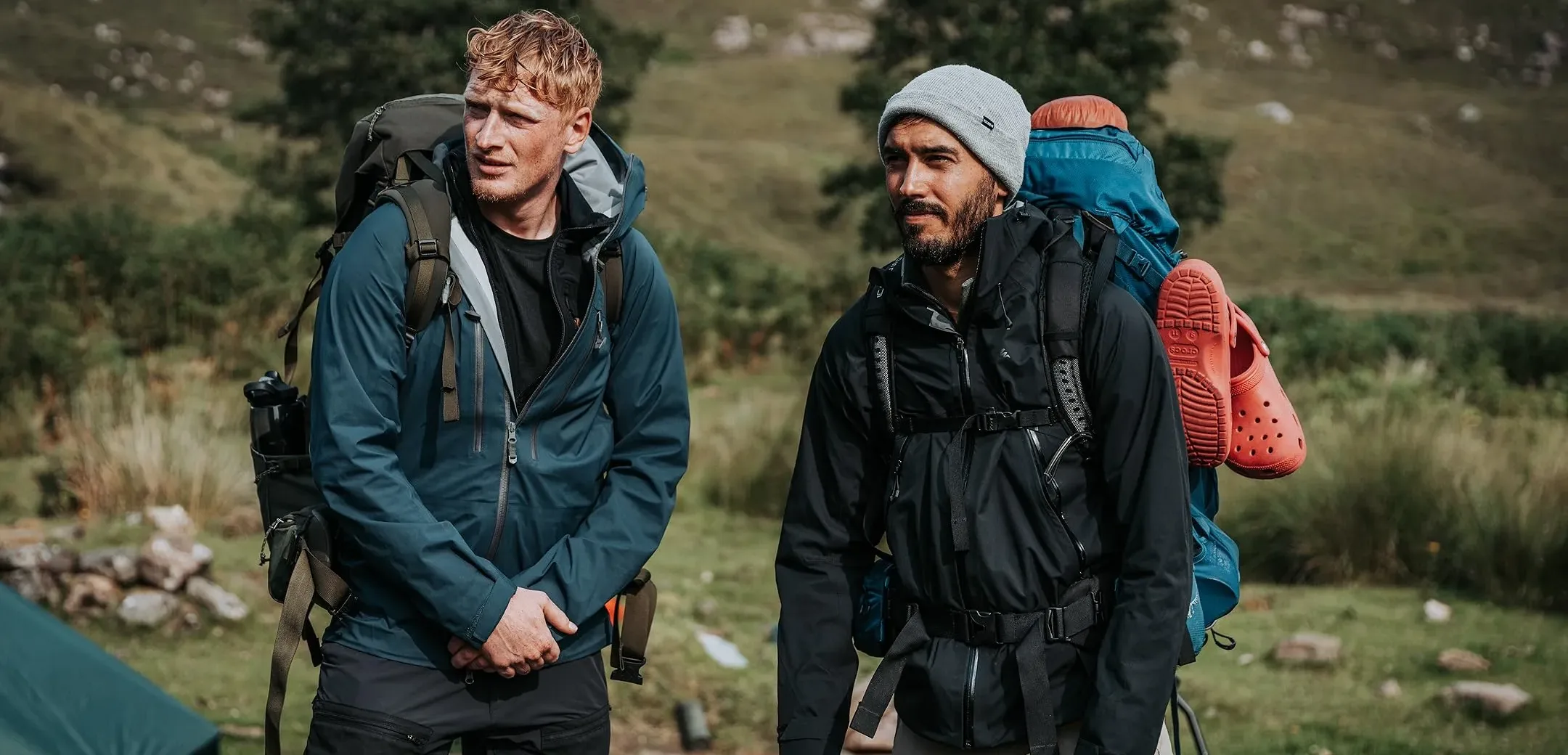

There is a peculiar stasis to friendships separated by time and distance. They do not die, so much as they hibernate, waiting for a catalyst—or in the case of Bart Schrijver’s The North, a Herculean trial. The film follows Chris and Lluis, two men whose shared history has been relegated to memory for a decade.
Their solution for bridging this chasm is an act of beautiful madness: to walk 600 kilometers together across the Scottish Highlands. They are at starkly different junctures in life, and this arduous trek is less a reunion than an existential audit of their bond.
The landscape itself, a sublime and punishing expanse of crag and bog along the West Highland Way and Cape Wrath Trail, becomes the third character. It is an ancient, impartial stage for a very modern, very human drama, where the greatest obstacle may not be the terrain, but the silence between two people who used to know each other completely.
Two Solitudes on a Single Path
The film presents us with two archetypes of contemporary manhood, walking side-by-side but worlds apart. Chris (Bart Harder) is the embodiment of structured, late-capitalist success—a career professional whose identity is fused with his productivity.
His constant fielding of work calls in the middle of a glen is not just a plot device; it’s a symptom of a modern condition where one is never truly off the clock. He approaches the hike with a conqueror’s enthusiasm, capturing vistas on his phone as if to catalogue and possess the experience, turning raw nature into curated content. His stability feels performed, a carefully maintained facade for the world and, perhaps, for himself.
In stark contrast, Lluis (Carles Pulido) is the artist adrift in a world that has commodified his craft (he quit shooting wedding videos). He walks with the grim, metronomic determination of a penitent, his gaze fixed on the muddy path rather than the majestic peaks. His journey is not one of discovery but of endurance, a physical manifestation of his internal, philosophical stalemate.
Their dynamic becomes a forensic examination of masculine reticence. The vast, bog-heavy silences between them are not empty; they are filled with the ghosts of their younger selves and the unarticulated weight of their divergent lives.
Their halting conversations are painfully authentic, showcasing how men often talk around their feelings rather than through them. It is a quiet critique of a culture that champions stoicism until it calcifies into isolation.
The performances from Harder and Pulido are masterful in their physicality. They communicate a decade of distance through posture alone—Chris’s forced, upright energy versus Lluis’s weary slump. It is in these non-verbal exchanges that the film’s emotional truth resides, making their complicated, fractured friendship feel utterly, uncomfortably real.
The Tyranny of the Real
Director Bart Schrijver eschews the romanticism of the wilderness adventure for something far more potent: a form of cinematic asceticism. In an era of sterile digital perfection, his method is a radical act of rebellion. The choice to have his small cast and crew actually hike the route, shooting chronologically through whatever misery the Scottish weather threw at them, infuses the film with an unimpeachable authenticity. This is not a simulation of hardship; it is the thing itself. The exhaustion is palpable. The mud is not a set dresser’s creation.
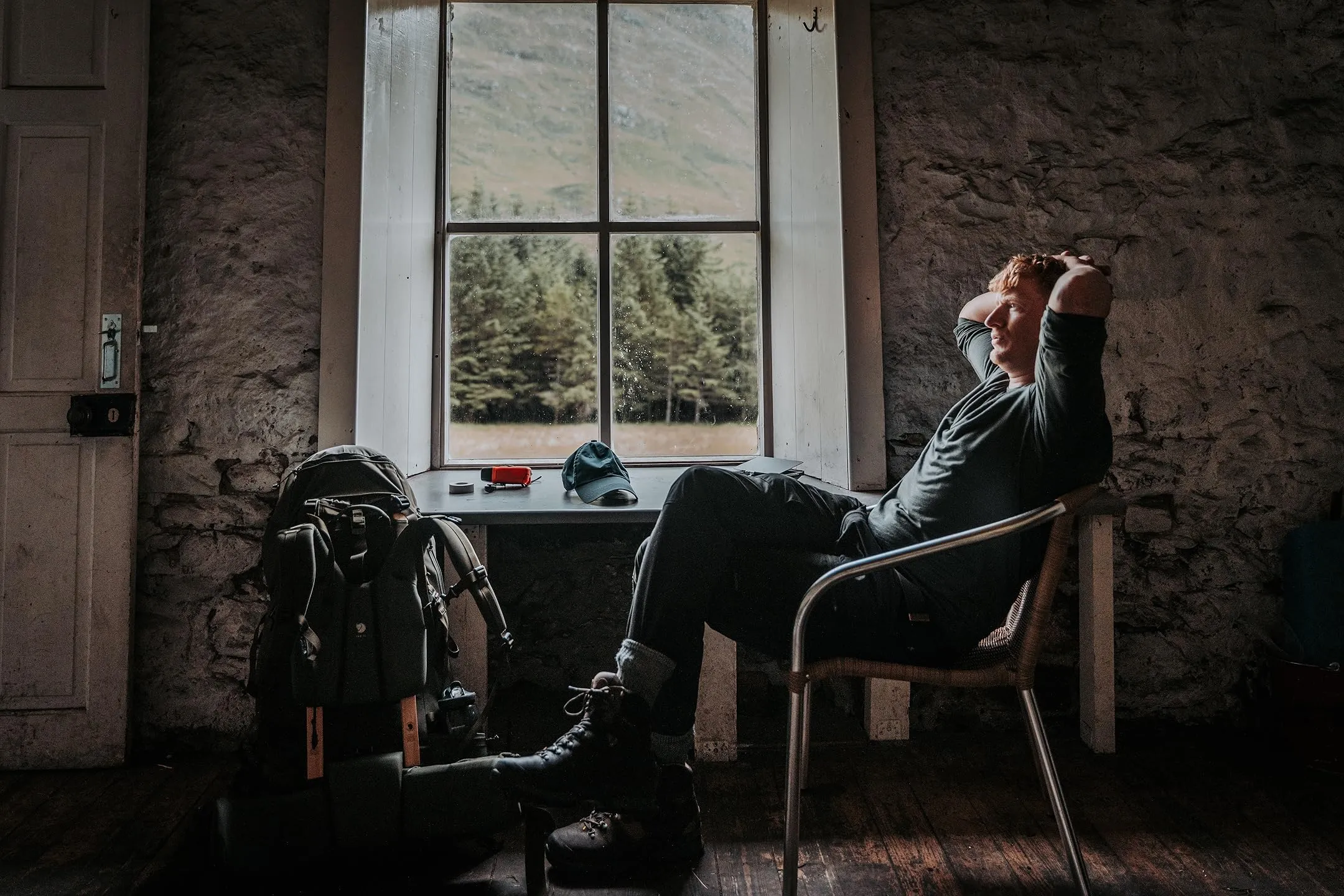
This commitment gives the film a haptic quality, a friction of reality that audiences can almost feel in their bones. Twan Peeters’ cinematography elevates this realism into a deliberate philosophical statement.
Sweeping, wide shots render the two men as insignificant figures against a backdrop of geological time, a visual argument for the triviality of human drama when measured against a mountain. This is nature as an indifferent absolute, a concept recalling the awe and terror of the sublime in Romantic painting.
This rigorous realism is amplified by the stark sound design, or rather, the lack of a traditional score. By refusing musical cues until its final moments, the film denies us emotional signposting. We are not told how to feel. Instead, we are forced to listen to the world as the characters do—the howl of the wind, the squelch of a boot in mud, the strained rhythm of breathing.
The river does not swell to match a dramatic beat; the wind offers no comfort. This is a powerful anti-Hollywood choice, stripping away layers of artifice to expose a raw, unmediated experience. The environment is not a supporting character; it is the unwavering, impartial context in which all human feeling occurs.
Walking as Thinking
The North rejects conventional narrative structure in favor of what might be called “narrative erosion.” The film is not building a plot in the traditional sense; it is wearing down its characters’ facades through the rhythmic, repetitive motion of walking. The monotony is the point. It is a tool for deconstruction, a process that mirrors the slow, grinding power of nature itself.
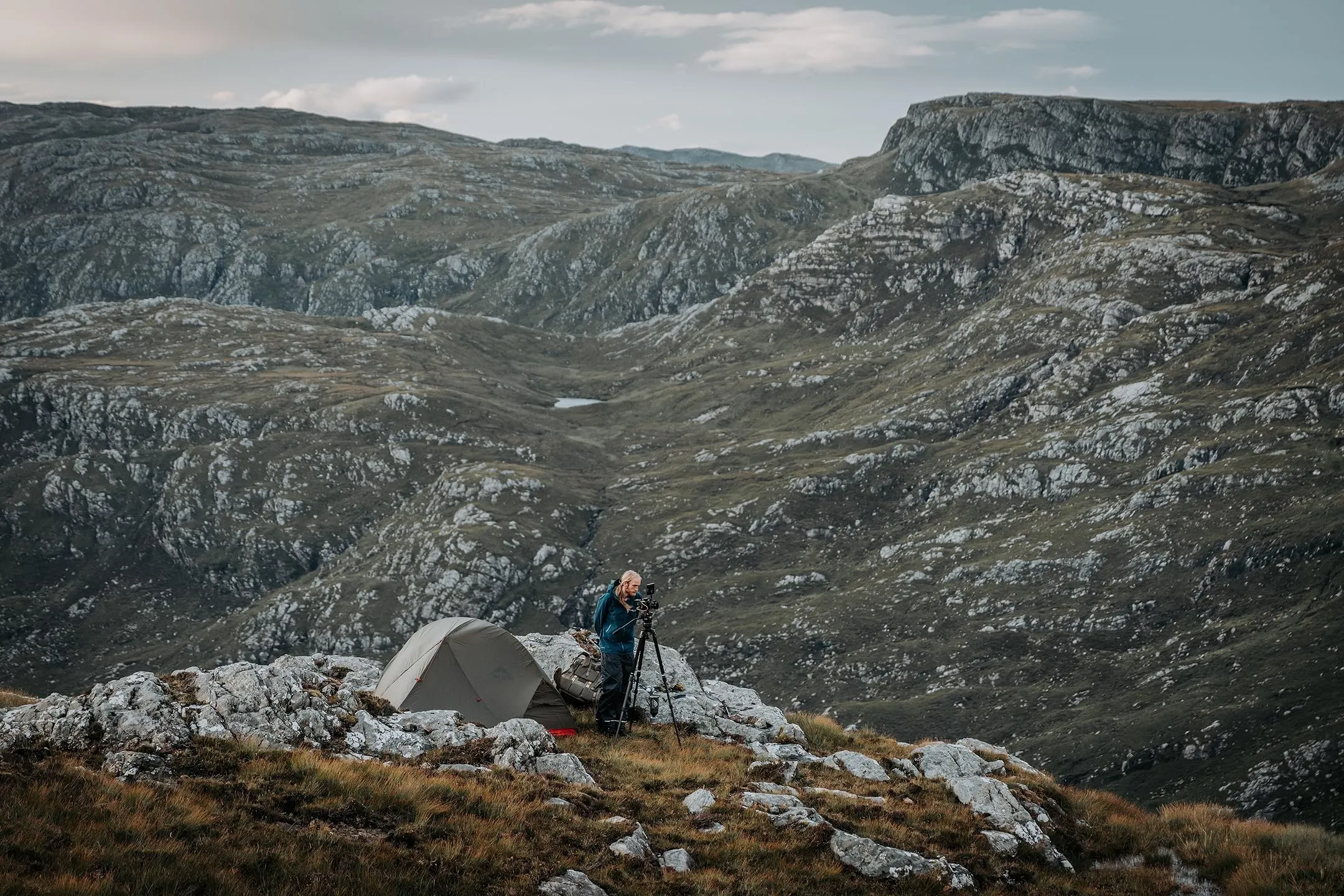
In this, the physical trial becomes a pilgrimage for a secular age. In a period of fractured belief systems, humanity seeks out new forms of transcendence, and the endurance trek is a modern monastery—a space for self-examination through physical duress.
The film keenly observes what happens when the stoic masculine ideal collapses under this pressure. The wilderness does not reward Chris’s ambition or Lluis’s intellectual angst. It demands a primal vulnerability that both men are ill-equipped, at first, to offer.
The story’s moments of revelation—a sudden health scare, a startling emotional breakdown on an empty beach—do not arrive as cathartic climaxes. They are fissures, rupturing the surface of civility without warning. They are messy, unresolved, and more akin to geological events than to crafted plot points.
This reflects a more existential understanding of personal change: it is not a neat arc but a series of untidy ruptures. The film offers no simple catharsis, no tearful reconciliation under a rainbow. The walk does not magically resolve their differences. It does, however, fundamentally change the quality of their shared silence, suggesting that true connection lies not in fixing things, but in the simple, profound act of enduring them together.
“The North,” an adventure drama film, premiered on May 31, 2025, and is streaming worldwide.
Full Credits
Director: Bart Schrijver
Writers: Bart Schrijver
Producers: Bart Schrijver
Executive Producers: Arnold Louis, Tom Holscher, Kees de Jong
Cast: Bart Harder, Carles Pulido, Olly Bassi
Director of Photography (Cinematographer): Twan Peeters
Editors: Gijs Walstra
The Review
The North
The North is a profound and demanding piece of cinematic asceticism. It substitutes traditional narrative for a deeply immersive, atmospheric experience that uses the punishing beauty of the Scottish Highlands to conduct a forensic study of masculine friendship and modern malaise. A testament to the power of showing over telling, its meditative pace and refusal of easy catharsis will not be for everyone, but for those willing to take the trek, it offers a rare and resonant truth.
PROS
- A deeply authentic and realistic depiction of a long-distance hike.
- Stunning cinematography that uses the landscape to create philosophical weight.
- Masterfully subtle and naturalistic lead performances.
- A profound, unflinching exploration of friendship, communication, and vulnerability.
- Bold and immersive sound design that eschews a traditional score.
CONS
- The extremely deliberate pacing and lack of conventional plot may prove challenging for some viewers.
- Its intellectual, observational style can create an emotional distance.
- The film’s refusal to provide easy answers or a neat resolution can feel unsatisfying.