


























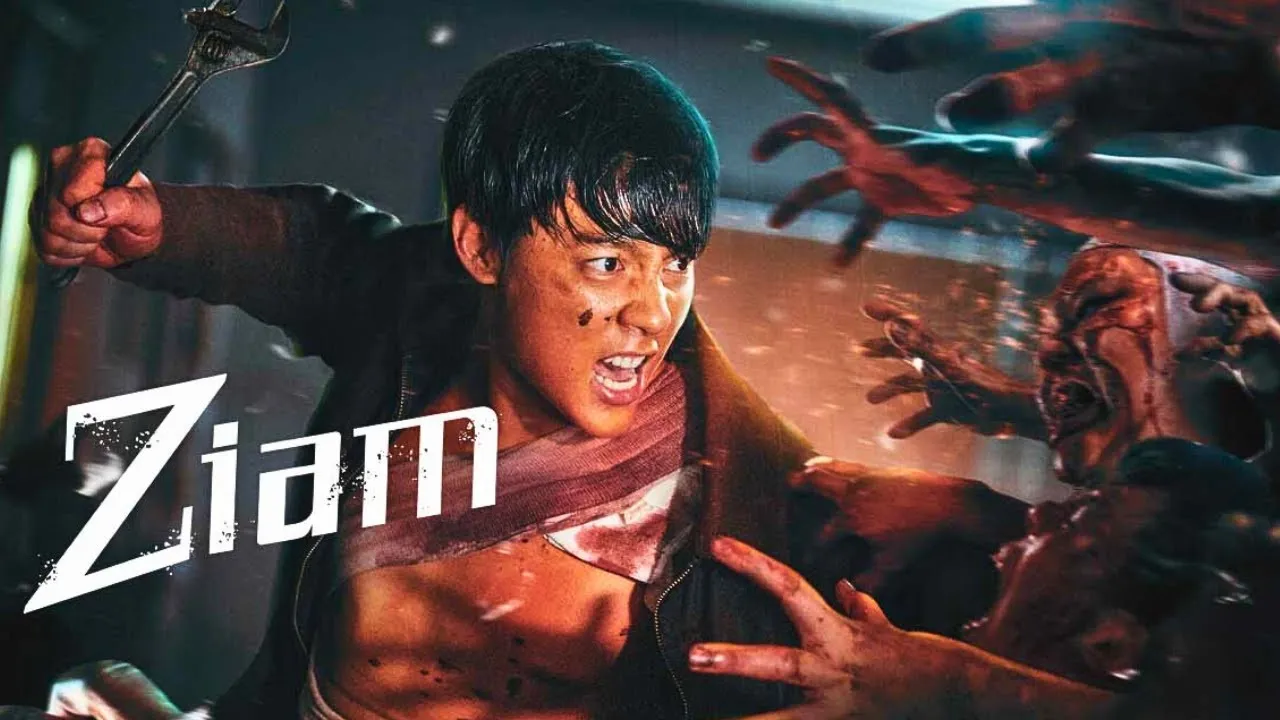

The zombie film, as a genre, has long served as society’s favorite eschatological playground. It offers a space to ask what we do when the world ends, but Ziam poses a different, more direct question: what if the proper response to the apocalypse is simply a well-placed elbow to the skull? The film presents a high-energy fusion of ferocious undead and the brutal art of Muay Thai, framing its violence not as a last resort but as the only logical answer.
Its setting is a near-future Thailand, a nation already brought to its knees by a global famine born from a climate crisis. This is a world of desperation, where smugglers like our protagonist, Singh, make their living in the shadows. He is a man hardened by this reality, his formidable fighting skills a product of his environment.
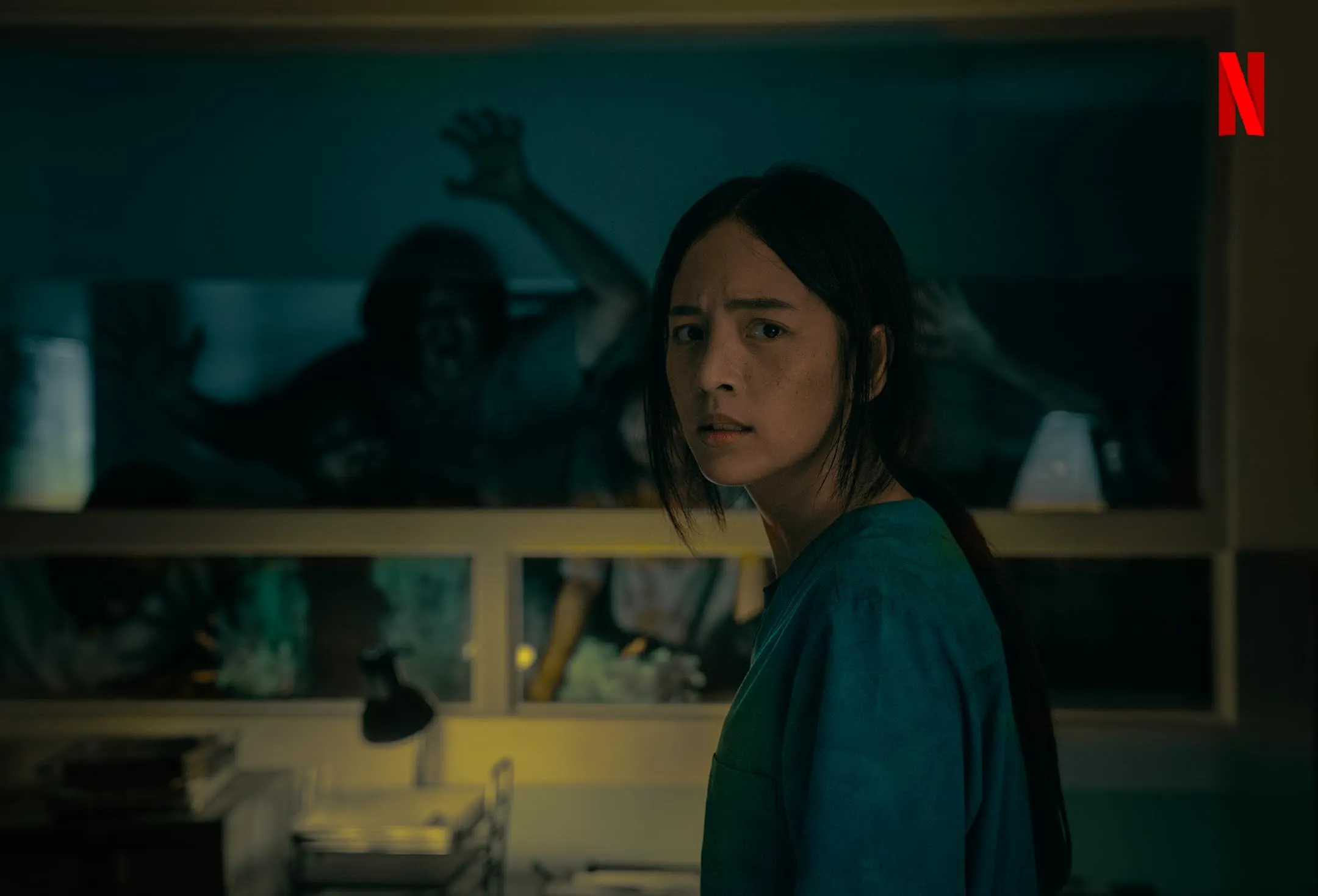
The catalyst for our story is a viral outbreak erupting in a city hospital, a building that swiftly becomes a tomb. Inside is Singh’s girlfriend, Rin, a doctor. With the facility under military lockdown, Singh’s objective becomes brutally simple: he must fight his way through a vertical nightmare of the infected to save her.
A Dystopia for Window Dressing
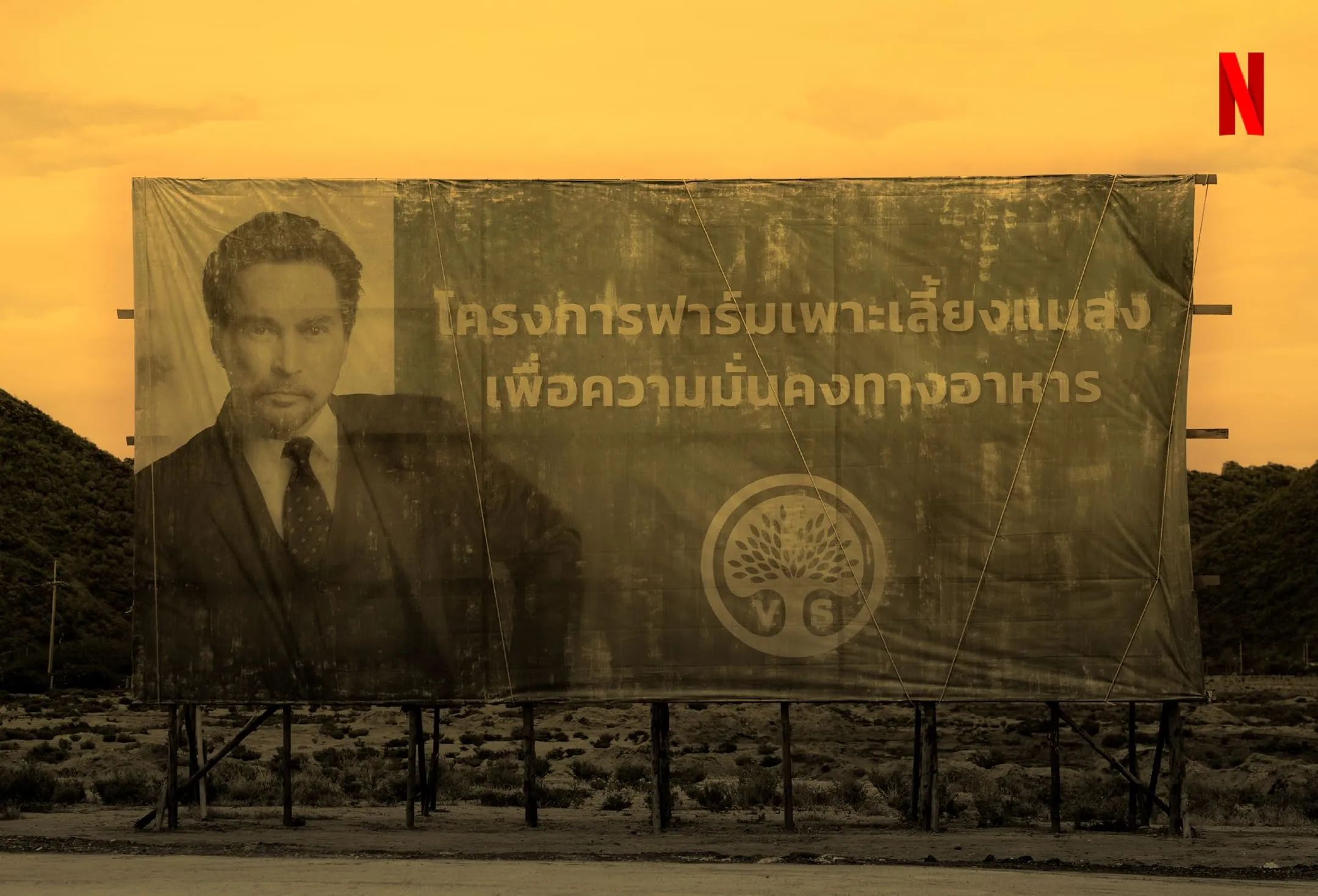
Ziam builds its foundation on a bed of fascinating, if familiar, dystopian ideas. We are shown a world where melted ice caps have unleashed ancient bacteria, destroying marine life and triggering a worldwide famine. The government’s solution is a combination of strict isolationism and the mass production of insect-based nutrition bars (a grim echo of other cinematic futures).
The film gestures toward a potent commentary on social stratification, presenting unsubtle montages of the impoverished masses scrounging for food while the elite secretly dine on forbidden delicacies like fish. This is thematic tourism; we are shown the sights of a complex societal critique without ever being asked to unpack our bags.
The irony, of course, is that this very symbol of status and greed becomes the mechanism of doom. The outbreak begins when a wealthy industrialist, Mr. Vasu, illegally imports a tainted fish, believing it holds a cure for his ailing wife. His private act of hubris, a capitalist’s attempt to purchase a solution to a natural problem, unleashes a very public plague.
It is a sharp, if underdeveloped, critique of a system where personal wealth is seen as a shield against systemic decay. Yet, after establishing this rich socio-political backdrop, the film seems to lose interest in its own ideas. The class struggle and government malfeasance become little more than set dressing, a textured wallpaper against which a much simpler story of punching and kicking unfolds.
The Kinetics of a Clobbering
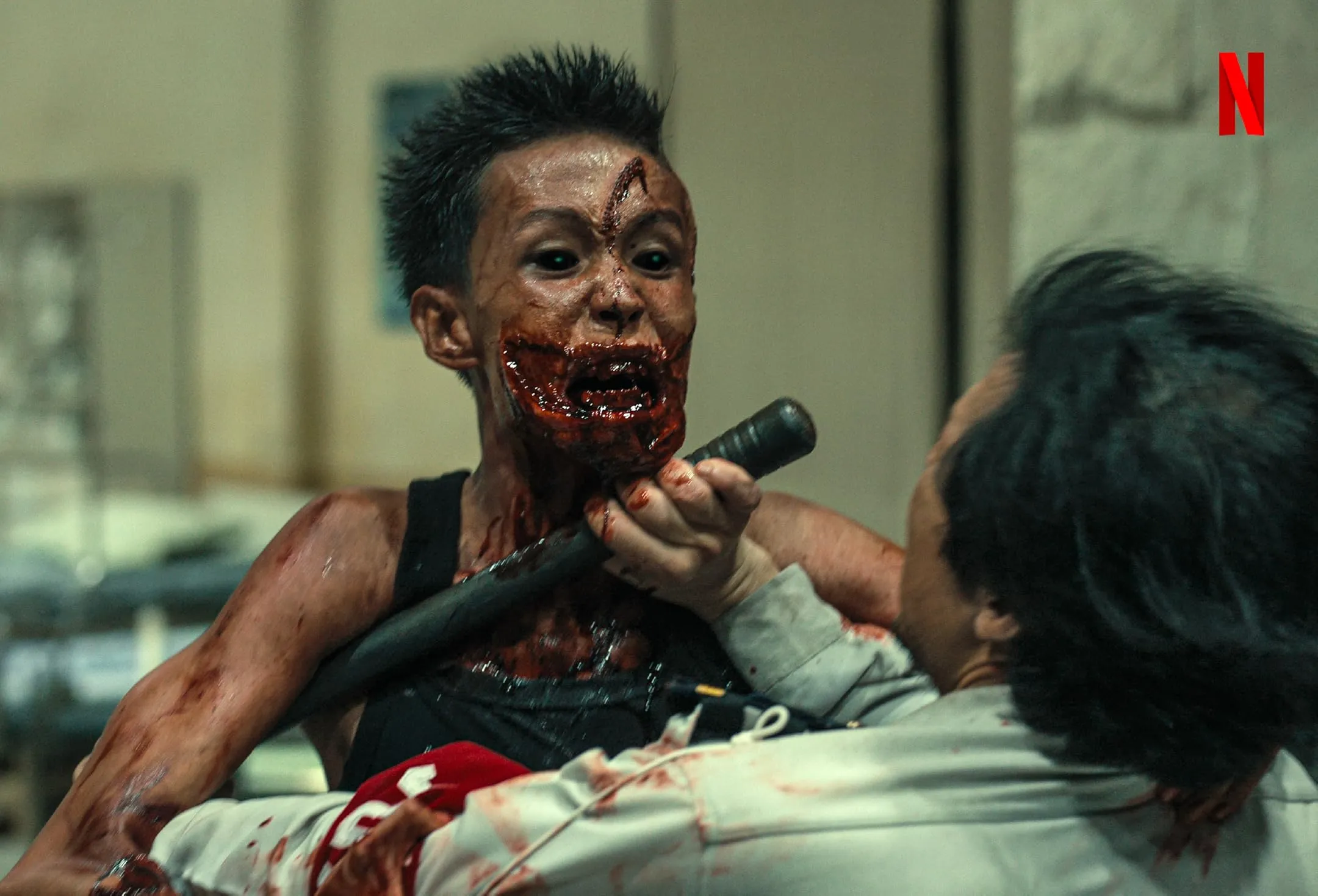
The film’s main attraction is its “one-man army” concept, a showcase for Singh applying the eight limbs of Muay Thai to the undead. The choreography is defined by its brutal intimacy; this is not the detached work of firearms, but the close-quarters reality of knees, elbows, and feet connecting with rotting flesh with a percussive wetness.
When Singh fights other living humans—the bandits at the start, a key antagonist later on—the action has a spark of tension. We are watching a contest between equals, a physical dialogue where pain is a shared language. The stakes feel immediate because the vulnerability is mutual.
The zombie fights are another matter. While initially thrilling, the sheer volume of the undead turns the action into a repetitive exercise in pest control, a kind of apocalyptic fatigue for the viewer. Singh moves through identical hospital hallways and parking garages, dispatching enemies that are little more than snarling obstacles. The filmmaking itself sometimes conspires against the spectacle, with hyperactive editing and shaky camerawork that turn a precise martial art into a staccato blur of motion.
A greater problem is the film’s complete disregard for the established logic of its own subgenre. Singh fights with his bare hands, punching infectious creatures in the mouth without a second thought for his own safety (he does not even, say, find a pair of gloves). He is not a character; he is a biological impossibility, wrapped in a thick coat of what might be called “choreographic invincibility.” This decision, while enabling the film’s core premise, strips away the sense of peril that gives action its meaning and horror its teeth.
A Hero Without a Heart?: Character & Relationships
Singh is less a character and more a human anvil: hard, immovable, and possessing no discernible inner life. He is useful, even necessary for the task at hand, but one does not form an emotional connection with an anvil.
His reaction to witnessing the dead rise is so muted one assumes this must be a regular Tuesday for him. He is defined entirely by his physical skill and his singular mission, making him a difficult figure to emotionally invest in. He is a machine for accomplishing a goal, not a person experiencing a nightmare.
This emotional vacuum extends to the central romance. The connection between Singh and Rin is perfunctory, a flimsy narrative placeholder for motivation. Their scenes together lack any genuine spark, rendering her a classic damsel-in-distress with little agency of her own for most of the runtime. The relationship is assumed rather than earned.
Oddly, a more authentic relationship emerges from the chaos. When Singh takes a young, asthmatic boy named Buddy under his protection, the film finds an accidental heart. This bond, born of immediate necessity and shared terror, feels far more organic and emotionally resonant than the primary love story.
It is a connection forged in the crucible of the moment, not one dictated by script conventions. It is in these moments—brief and underdeveloped as they are—that Singh shows a flicker of humanity, suggesting a man exists somewhere beneath the fighting machine.
Monsters with a Fishy Aftertaste
The film’s infected are of the fast, agile, and feral variety, spreading their contagion through bites and gouts of black, infectious blood. There is no shortage of gore, and the makeup effects are consistently effective in their gruesome presentation.
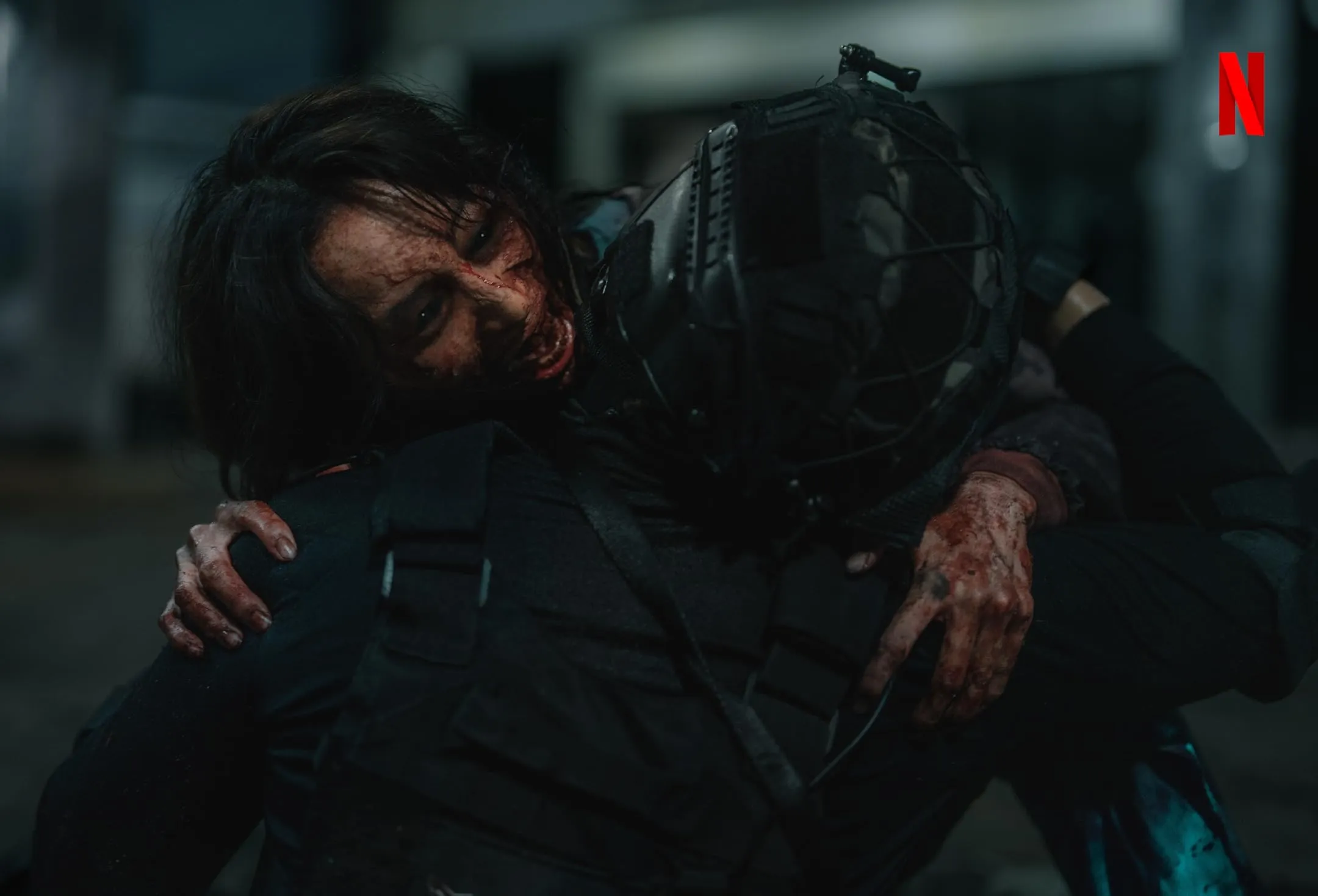
Ziam also deserves credit for its small, creative flourishes. A zombie trapped in a wheelchair, another still clad in a children’s ward Easter bunny costume—these strange, memorable sights give the horde a flicker of personality and a touch of the absurd.
The film’s most original contribution to zombie lore arrives in its final act. The creatures begin to evolve, their jaws distending into grotesque, fish-like mandibles. This is a brilliant visual stroke, tying the monsters’ physical form directly back to the story’s origin—the world’s ecological sin made manifest. The dead fish that started the plague are now, symbolically, being worn on the faces of the dead.
Yet, for all its visual creativity, the film struggles to maintain suspense. The middle section sags under the weight of its own repetition, with endless scenes of characters running through corridors. The horror is consistently undercut by our hero’s indestructibility. When the protagonist can wade through a sea of monsters without any real risk, the monsters themselves cease to be truly frightening. Horror requires a sense of vulnerability, and this film methodically eradicates it.
A Brutal, Brainless Ballet
Ziam succeeds entirely on the strength of its elemental promise. It is a film about a man using Muay Thai to fight zombies, and it delivers that spectacle with satisfying brutality. The inventive monster designs and some well-executed fight scenes are its undeniable high points, offering a visceral, kinetic pleasure.
The film is hobbled, however, by its thinly sketched characters, its unexplored societal themes, and action sequences that eventually become monotonous. It is a movie for the genre purist, the viewer who desires kinetic violence without the attendant baggage of a thoughtful plot or emotional depth.
It is a serviceable B-movie experience, a fun but ultimately forgettable exercise in gory entertainment. As of this writing, on July 30, 2025, it stands as a perfect distraction for a quiet night, provided one expects nothing more than a simple, bloody show.
“Ziam” is a Thai action horror film that premiered globally on Netflix on July 9, 2025. It blends martial arts and zombie survival horror, focusing on a former Muay Thai fighter battling a zombie outbreak within a hospital to save his girlfriend.
Full Credits
Director: Kulp Kaljareuk
Writers: Kulp Kaljareuk, Nut Nualpang, Weerasu Worrapot, Vatanyu Ingkavivat, Chonnatee Pimnam
Producers: Nattapong Suriya
Executive Producers: Nattapong Suriya
Cast: Prin Suparat, Nuttanicha Dungwattanawanich, Wanvayla Boonnithipaisit, Johnny Anfone, Pimmada Boriruksuppakorn, Jason Young, Suphachai Saenpong
The Review
Ziam
Ziam is a visceral and straightforward action-horror hybrid that delivers on its simple, brutal premise. While its inventive monster designs and satisfying Muay Thai choreography provide a gory spectacle, the film is ultimately let down by a paper-thin plot, emotionally vacant characters, and a frustrating lack of suspense. It’s a fun, mindless ride for genre enthusiasts who prioritize kinetic violence over narrative substance, but offers little else to chew on once the credits roll.
PROS
- Creative and visually interesting zombie designs, especially the final-act evolution.
- The core concept of "Muay Thai vs. Zombies" is entertaining and well-executed in moments.
- The action scenes, particularly human-on-human fights, are brutal and competently choreographed.
- The film has some unique and memorable individual zombie encounters.
CONS
- Extremely underdeveloped protagonist and supporting characters.
- The central romantic relationship lacks chemistry and emotional weight.
- Interesting world-building and social commentary are introduced but never explored.
- Repetitive action sequences in the middle section hurt the pacing.
- The hero's complete invulnerability removes any real sense of danger or suspense.