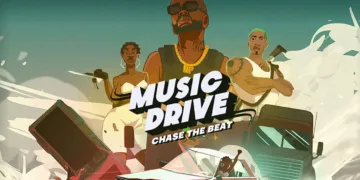



























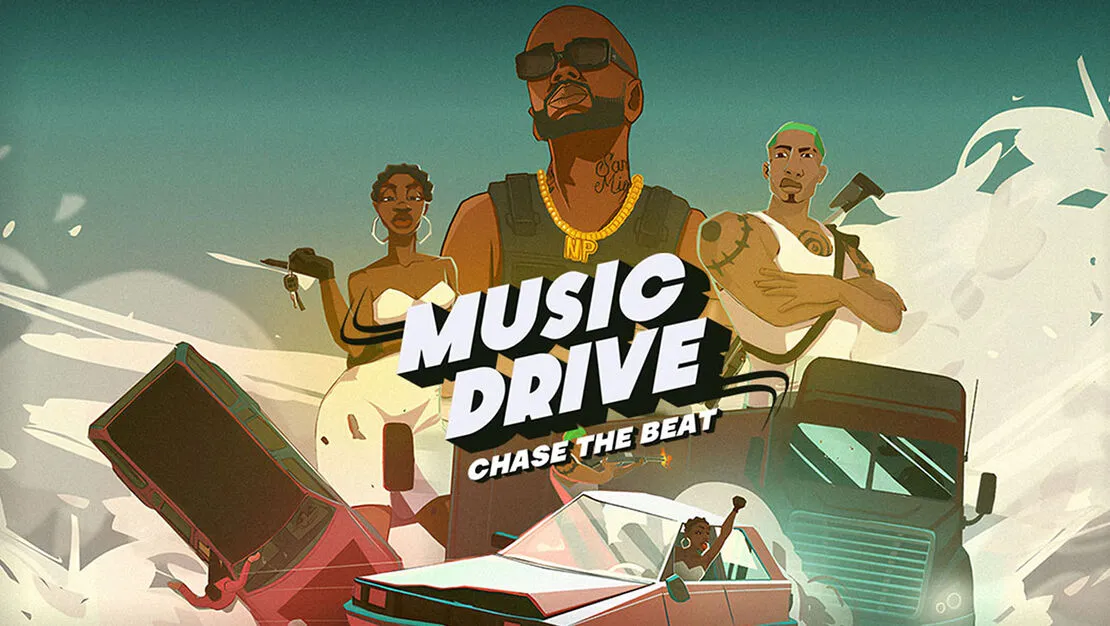

Music Drive: Chase the Beat presents a concept that feels ripped straight from the PlayStation 1 era. It puts you in the driver’s seat as Tina, with her partner Tunner riding shotgun, on a mission to reclaim the soul of their city’s music scene.
The premise is simple and compelling: rival gangs have stolen unreleased rap mixtapes, and it’s your job to get them back. This isn’t a racing game; it’s a vehicular combat title that channels the spirit of early Driver and Grand Theft Auto through a distinctly Brazilian lens.
With its blocky, pixelated visual style and a narrative rooted in street culture, the game sets itself up as a nostalgic, arcade-style action experience. It promises straight-line chases, explosive takedowns, and a killer soundtrack, aiming for the kind of immediate fun that defined a generation of gaming.
The Repetitive Rhythm of the Streets
The entire experience of Music Drive is built upon a rigid, two-part cycle that lacks meaningful evolution from the first mission to the last. The “Pursuit” phase tasks you with destroying target vehicles to grab the tapes inside. Player agency in combat is minimal; your primary role is simply to pilot the car.
Get close to an enemy, and Tunner automatically handles the shooting. This design choice reduces complex combat scenarios to a simple proximity check, making the player feel more like a chauffeur for the real hero than an active participant. Ramming offers a slight tactical alternative, but the core action remains unchanged. After securing the tapes, the mission immediately shifts to a “Delivery” phase on the same map, where you must race through checkpoints while enemies spawn to attack you.
This loop is cemented by an economic system that forces repetition. The cash earned from completing a stage once is deliberately insufficient for purchasing the car or weapon upgrades required to tackle the next. Further, some cars have a larger capacity for tapes, which act as an entry fee for later levels. This mechanic inextricably links progression to grinding.
You aren’t replaying levels for high scores or for fun; you are replaying them because the game’s structure demands it. Unlike arcade classics that made repetition compelling through dynamic encounters, Music Drive’s loop feels static and obligatory, quickly turning what should be exciting car chases into a monotonous chore.
Gearing Up for an Unbalanced War
Progression in Music Drive initially appears to offer choice, but this is largely an illusion. You earn money to purchase new vehicles and weapons, but the selection is sparse, with about five cars and three guns available. Each can be upgraded to improve stats like speed, resistance, and firepower. However, the system is so poorly balanced that strategic choice is replaced by a mathematical certainty.
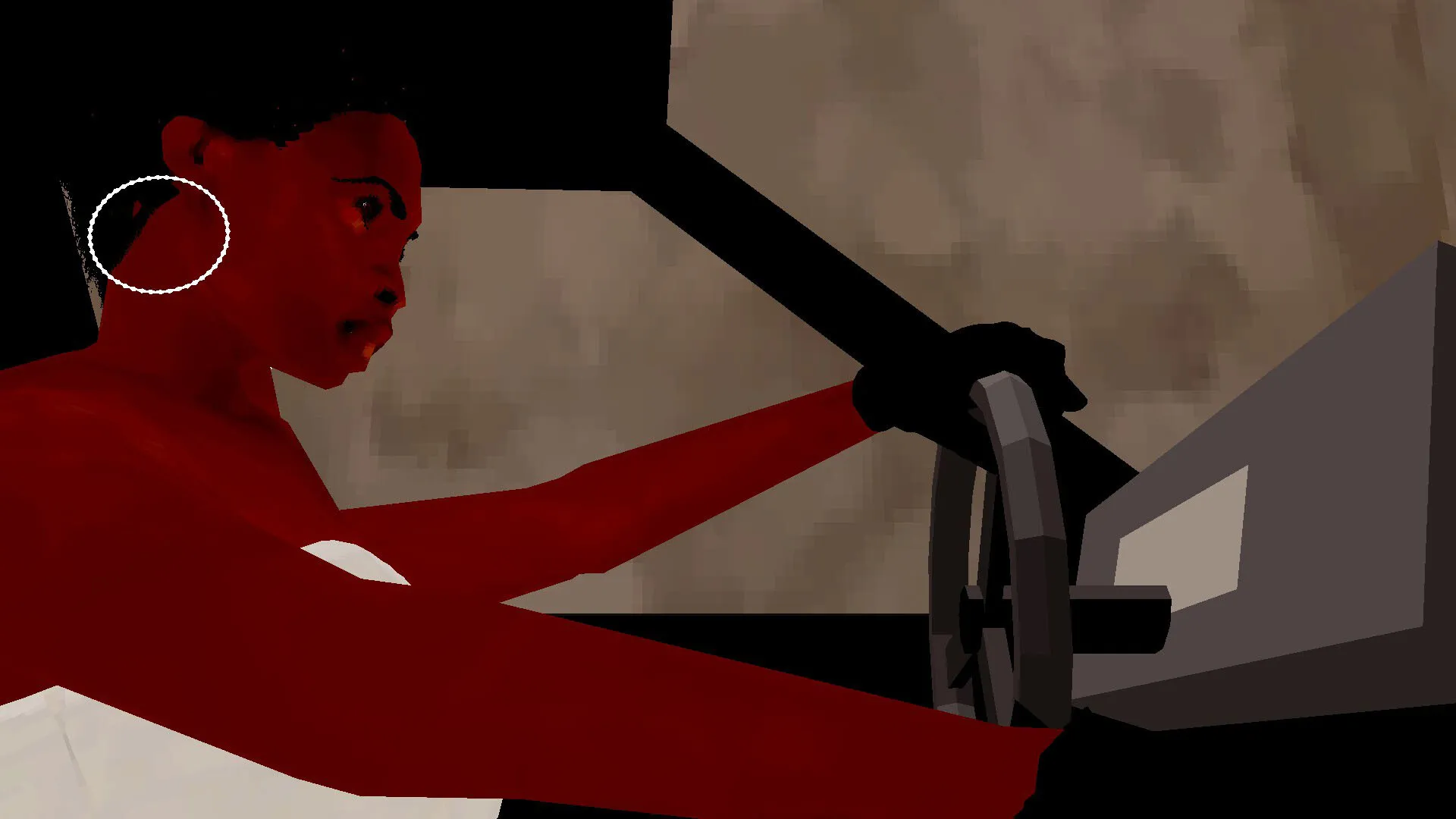
The slow but durable truck, for instance, transforms most combat encounters into trivial ramming sessions, making Tunner’s sharpshooting almost entirely redundant. Similarly, once you can afford the shotgun and its upgrades, the pistol and rifle become completely obsolete. Player progression isn’t about crafting a unique playstyle; it’s a linear race to acquire the single best loadout that breaks the game’s difficulty.
This problem is compounded by an erratic difficulty curve. The game’s “threat level” system increases enemy toughness with each successful run, creating a sharp difficulty spike in the middle stages that feels punishing and unfair. To counteract this, the game offers a “bribe” mechanic—a high-priced option to reset the threat level to zero.
This feels less like a strategic tool and more like a developer’s admission of a flawed system. The player is caught in a frustrating bind: spend precious cash on permanent upgrades to eventually overcome the difficulty, or spend it on temporary relief just to survive the next run. Once you finally save up enough to buy the optimal gear, the challenge completely evaporates, and the final levels are completed with almost no resistance.
A Sonic Success in a Generic World
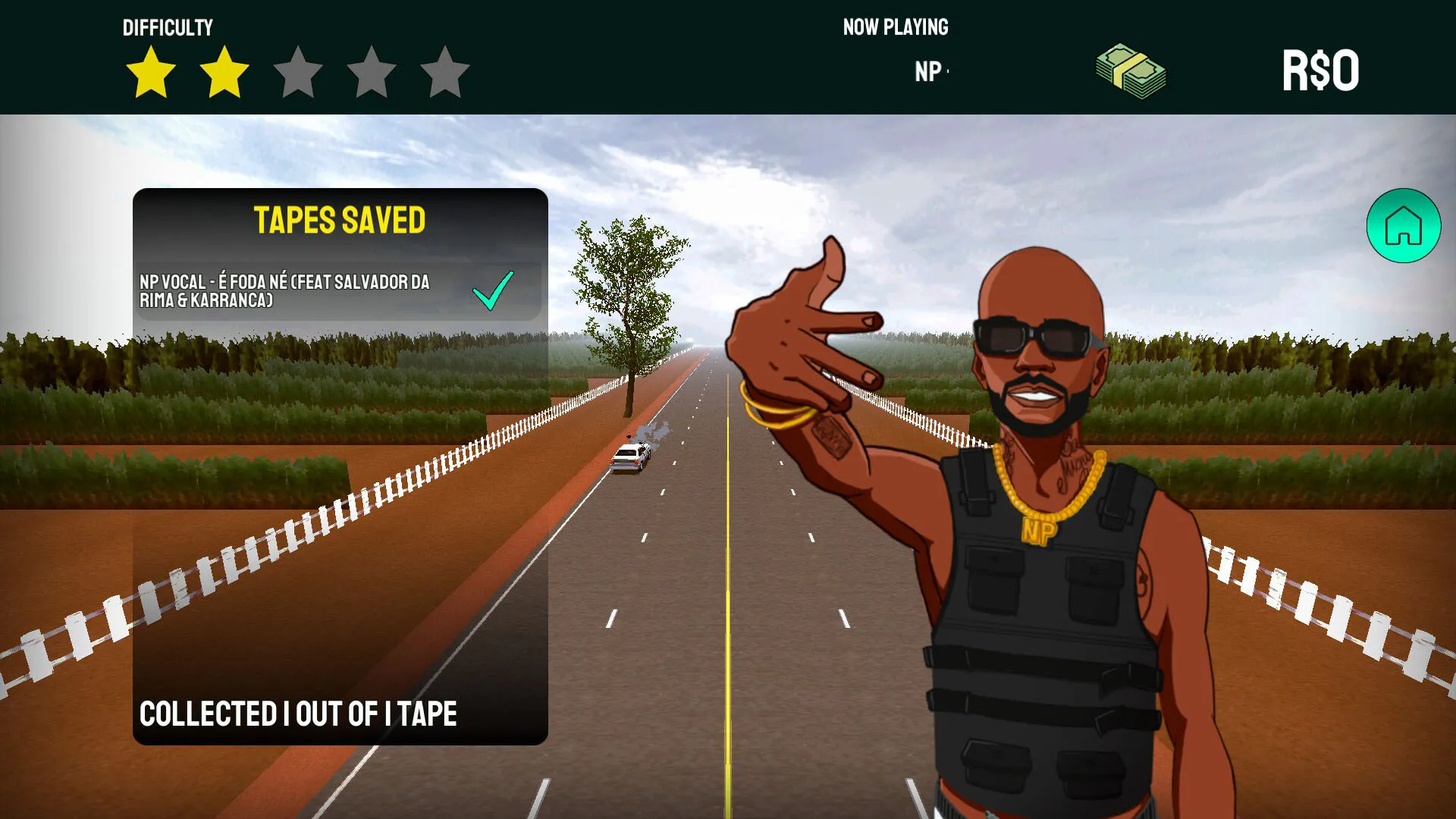
The game’s most triumphant feature is its soundtrack. The score is a stunning collection of authentic Brazilian hip-hop, with artist NP Vocal providing tracks that pulse with an energy and identity the rest of the game sorely lacks. The music is not just background noise; it is the main protagonist, injecting a sense of style and cultural authenticity that carries the entire experience.
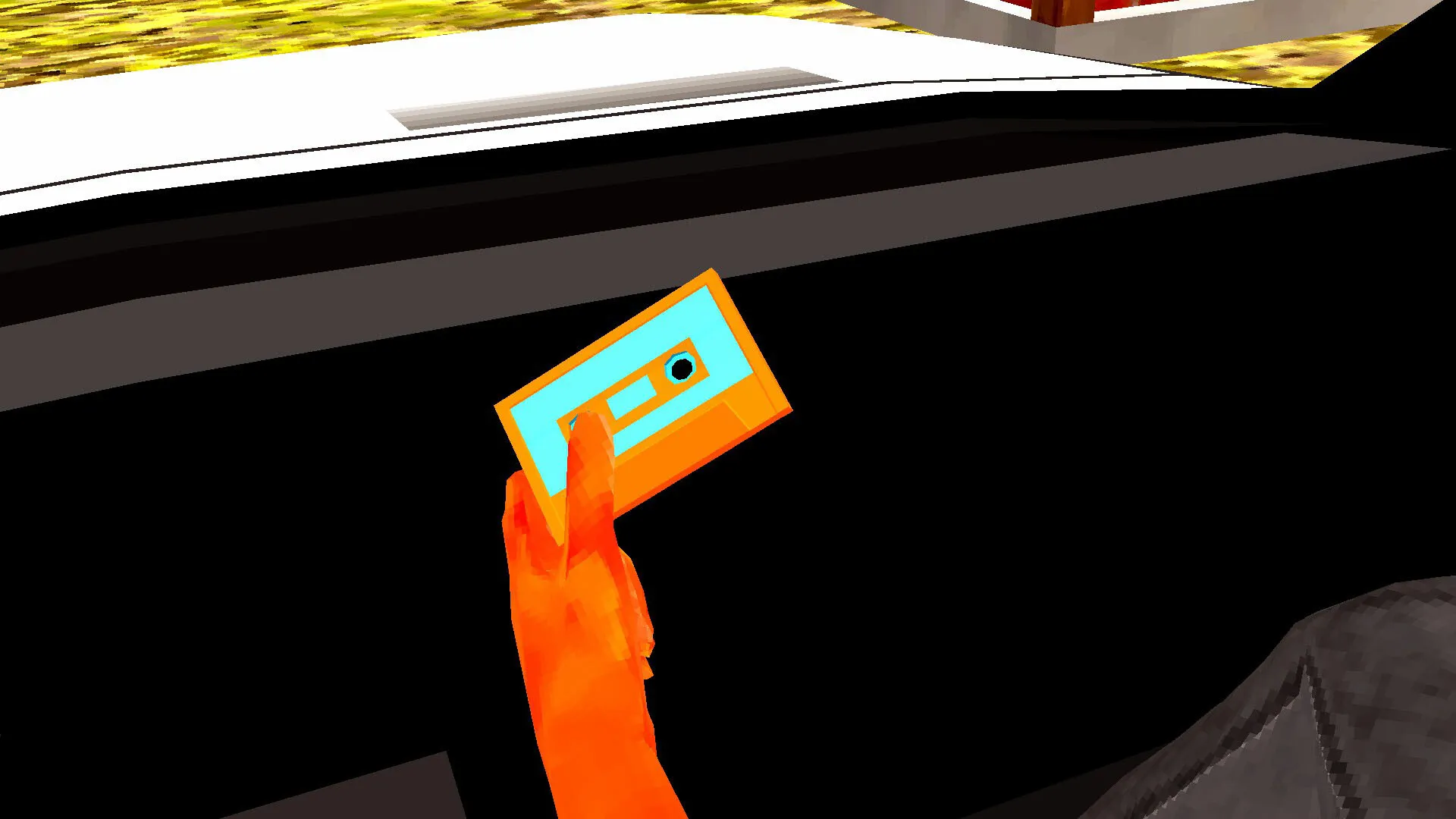
This makes the visual presentation all the more disappointing. The game aims for a retro PS1 look, which is a fine stylistic choice, but the execution is bland and uninspired. Instead of the dense, vibrant urban sprawl promised by the theme, players drive through sterile, generic landscapes.
You will see endless stretches of empty highways, flat fields, and repetitive, two-dimensional orange groves. There are no cluttered alleys, potholed streets, or unique architectural details that would sell the fantasy of a Brazilian street war.
This failure of world-building extends to the user interface, which appears amateurish. Navigation arrows are garish and distracting, while the menus and typography look like unpolished placeholders. The visual package feels disconnected from the game’s thematic core, creating a jarring dissonance.
The audio tells you that you are in a cool, specific, and exciting place, but your eyes show you a generic, empty, and lifeless world. This profound disconnect between the sound and the sights means the game never establishes a cohesive atmosphere, leaving its strongest asset to do all the heavy lifting.
A Short, Forgettable Joyride
In the end, Music Drive: Chase the Beat is an experience that lasts only two or three hours, and its initial charm fades long before the credits roll. It succeeds for a fleeting moment as a simple, “pick-up-and-play” arcade shooter, but its foundations are too shallow to support sustained engagement.
The core gameplay loop is inherently repetitive, the progression system offers no real choice, and the world design fails to realize the potential of its fantastic premise. The brilliant soundtrack stands as a testament to what this game could have been: a stylish, confident action title with a strong sense of identity.
Instead, it is a raw, unrefined product where a great idea is let down by a lack of depth and polish. It provides a brief flash of fun but is ultimately too insubstantial to be memorable, a faint echo of a much better game.
The Review
Music Drive: Chase the Beat
Music Drive: Chase the Beat has a killer concept and a phenomenal soundtrack that provides a powerful sense of identity. Unfortunately, this is wasted on a shallow, highly repetitive gameplay loop, poor progression balancing, and generic world design that fails to deliver on its thematic promise. What starts as a fun arcade throwback quickly becomes a monotonous grind, leaving a raw, unpolished experience that is ultimately forgettable.
PROS
- An absolutely outstanding Brazilian hip-hop soundtrack.
- Simple, easy-to-learn arcade action.
- A strong and compelling initial premise.
CONS
- The core gameplay loop is extremely repetitive.
- Progression and difficulty are poorly balanced.
- World design is generic, empty, and lacks personality.
- The user interface feels unpolished and amateurish.