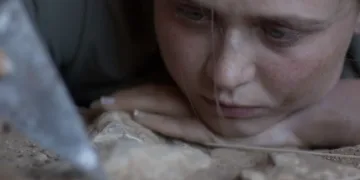






















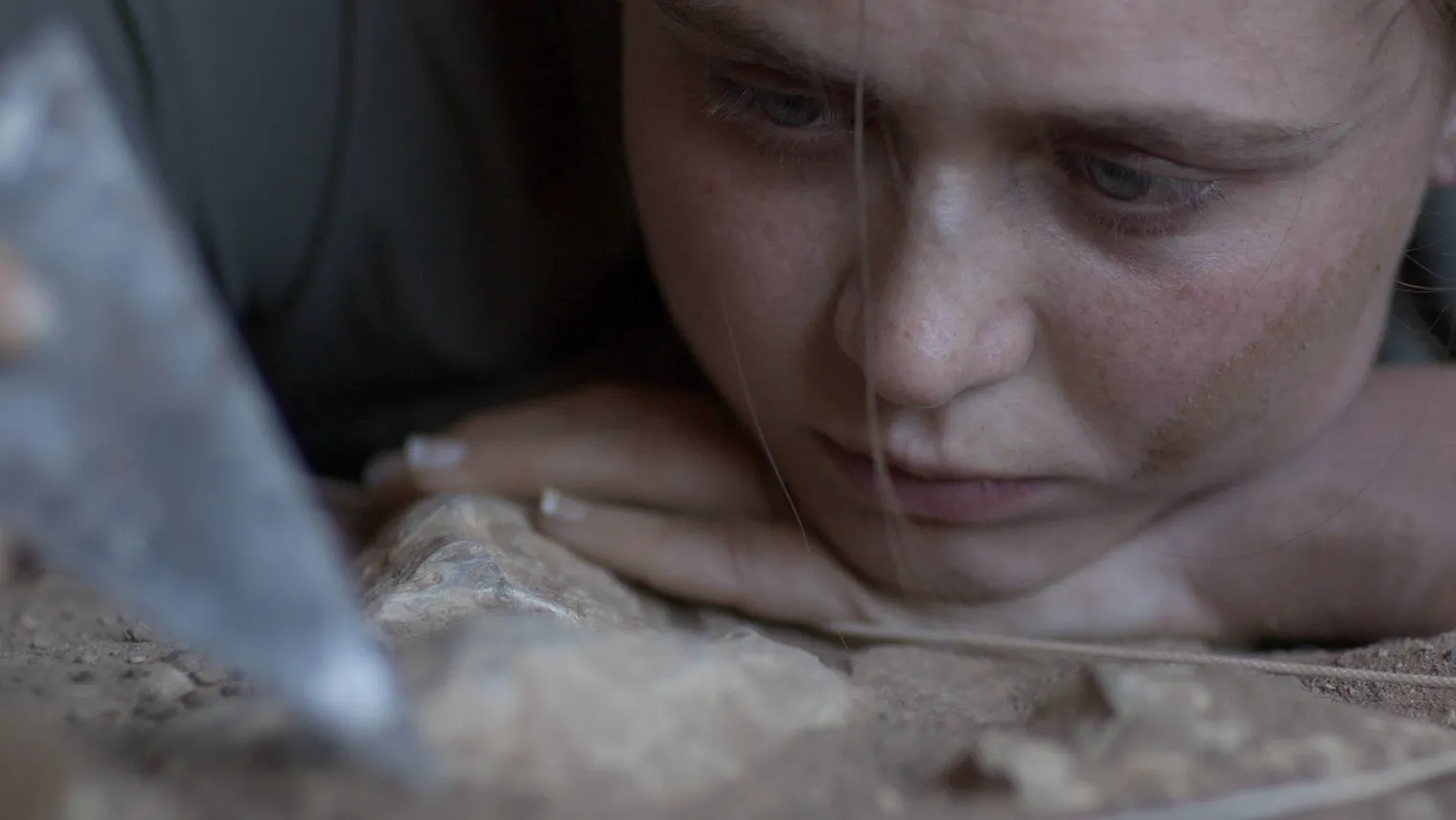

The film opens not with an act, but with its impression. First, a figure rendered as a mere shadow against sun-bleached rock, then a sudden, punishing cut. A high-angle shot pins Gaia, a young archaeology student, under our gaze, her face a mask of torment the camera is determined to solve.
An awful event has occurred, something involving her boyfriend, yet director Pere Vilà Barceló denies us the vulgarity of a flashback. We are left, like her father, to decipher the meaning of her profound silence and his own impotent concern.
The tension is immediate and thick. Be advised, this is not a procedural seeking culprits or a thriller promising resolution. This is a quiet, meticulous study of a psychic wound and the difficult, unglamorous work of living inside it.
The Archaeology of Pain
Recovery, in Barceló’s hands, is not a straight line. The film’s narrative structure rejects clean arcs, presenting Gaia’s healing as a jagged, erratic process. She oscillates between explosions of volatile anger and long stretches of numb withdrawal, her progress measured in millimeters, not miles.
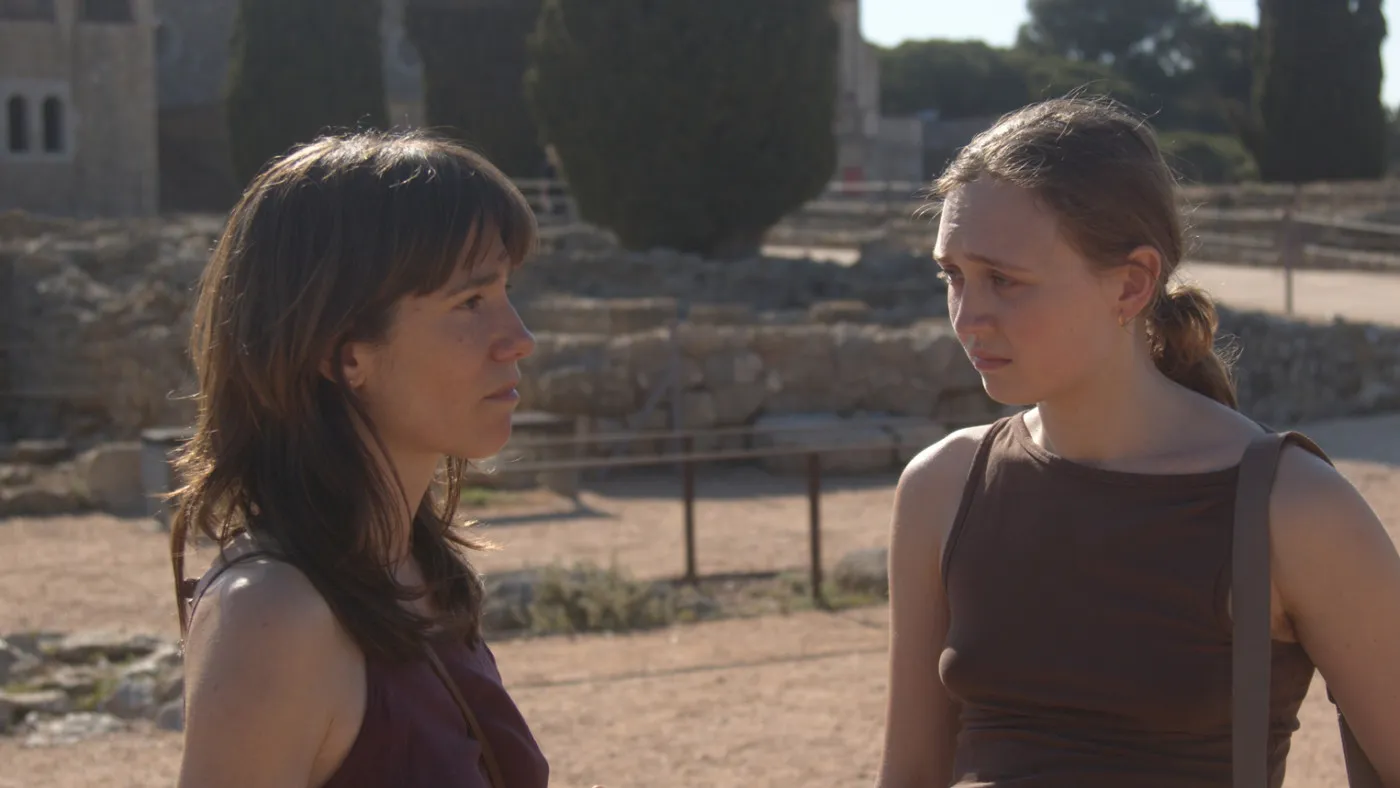
The film demands a specific kind of patience, its three-hour runtime a deliberate choice to make the audience experience the wearying duration of trauma itself. It is a formidable commitment. By electing to keep courtrooms and therapy sessions off-screen, the camera’s focus becomes intensely personal, locking us inside Gaia’s lonely psychological space.
Lest we miss the intellectual framework, the film presents archaeology as its central metaphor. The patient work of translating fragmented, ancient texts is meant to mirror Gaia’s attempt to find a language for her own fractured self. It is a tidy parallel, perhaps a bit too tidy.
The Gravity of Others
Gaia’s world is a small solar system defined by the gravitational pull of a few key figures. Her relationship with her father is central; his deep, protective love is a heavy blanket, offering warmth but also threatening to suffocate.
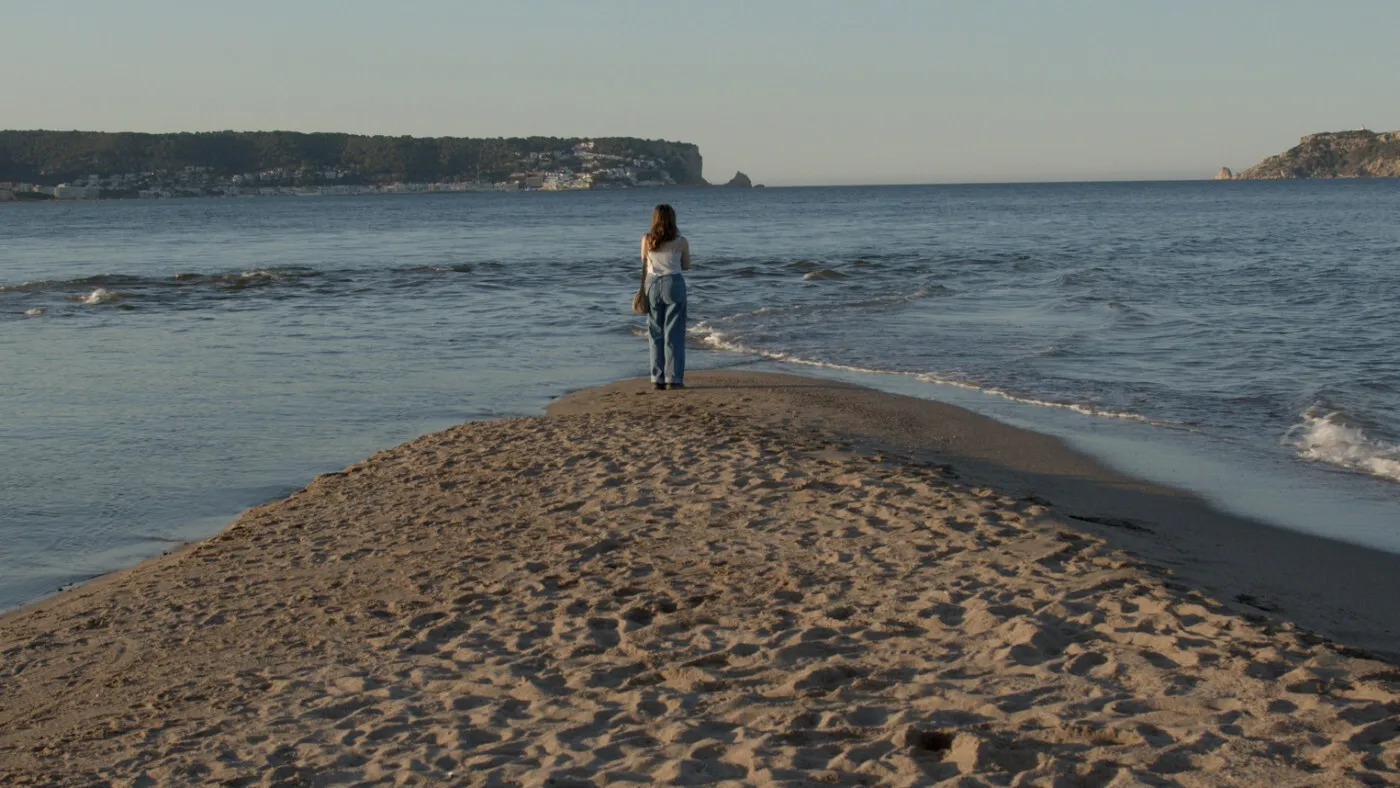
Their shared home becomes a claustrophobic stage for this friction between her need for solitude and his impulse to monitor. A university professor provides a different kind of anchor. She does not offer solutions but nomenclature, giving Gaia the precise word—assault—that begins to map the territory of her experience. The story is equally shaped by what is absent.
The perpetrator remains an unseen phantom, his power magnified by his non-presence. The lack of a mother figure creates a vacuum, intensifying the focus on the fraught father-daughter bond. A brief appearance by the attacker’s mother introduces another trapped figure, a woman lost in the moral ambiguity of the event’s aftermath.
A Study in Stillness and Fury
The film rests entirely on the shoulders of Claud Hernández, whose portrayal of Gaia is its unstable, volatile core. She is remarkable, shifting from catatonic stillness to unfiltered rage with a credibility that forces you to stay with a difficult, often unlikable, character.
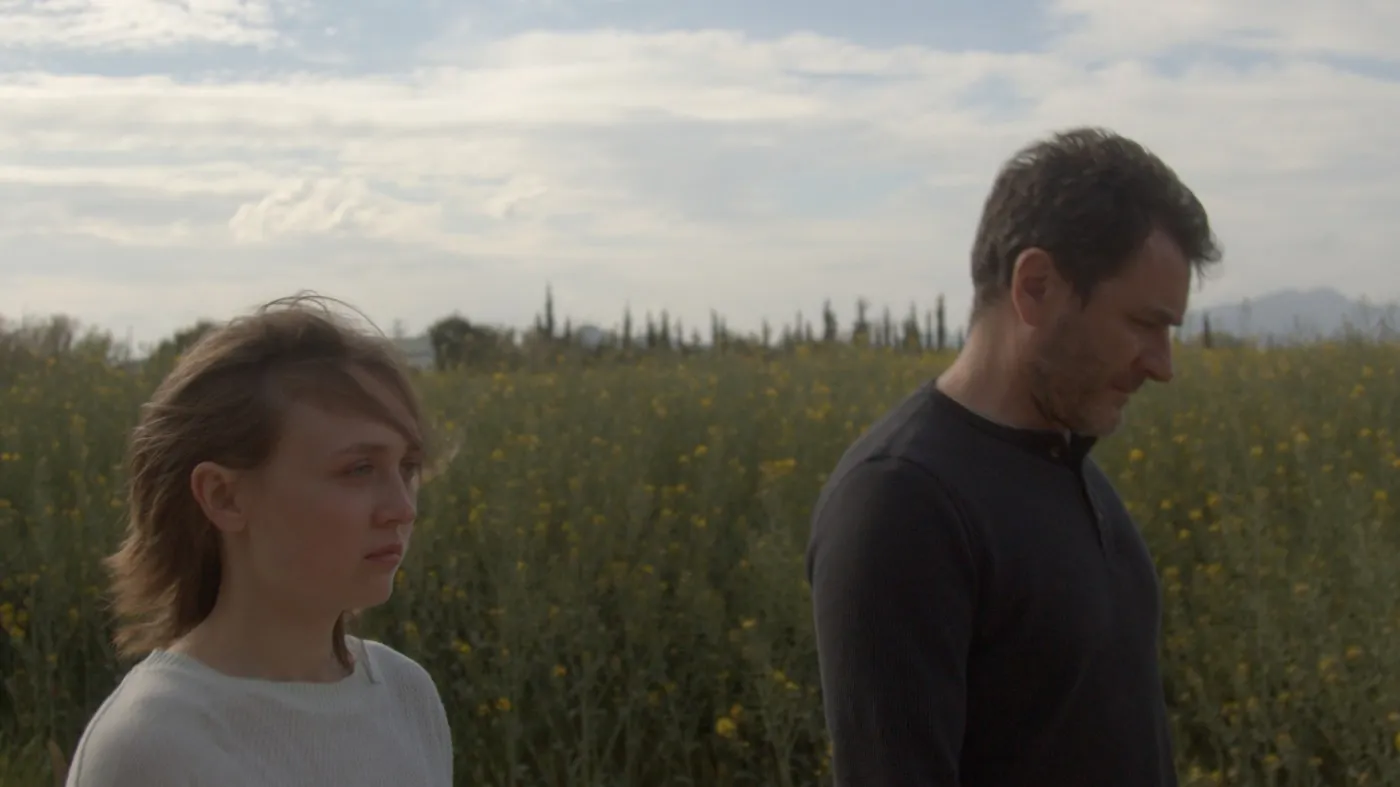
As her father, Àlex Brendemühl provides the weary anchor, his performance a masterclass in quiet desperation. Barceló’s direction is patient and observational, his long takes designed to make the viewer sit in the discomfort of a moment.
The question is whether this austere patience occasionally curdles into dramatic stasis. The film’s empathetic eye sometimes blinks, falling back on worn signifiers. A crisis of this magnitude, for instance, naturally requires a new haircut; some cinematic laws appear immutable.
The cinematography follows suit. Ciril Barba’s tight close-ups are invasive and effective, yet many wider compositions feel visually inert, lacking a texture to match the psychological complexity on screen.
When a River Becomes the Sea is a Spanish drama film that premiered at the Karlovy Vary International Film Festival on July 8, 2025.
Full Credits
Director: Pere Vilà i Barceló
Writers: Pere Vilà i Barceló, Laura Merino
Producers: Xavier Pérez Díaz
Cast: Àlex Brendemühl, Claud Hernández, Laia Marull, Bruna Cusí
Director of Photography (Cinematographer): Ciril Barba
Editors: Xavier Pérez Díaz, Pere Vilà Barceló
The Review
When a River Becomes the Sea
Pere Vilà Barceló has crafted a demanding, psychologically exacting film that commits fully to its bleak premise. While its formidable length and occasional use of overt symbolism may alienate some, its unwavering focus and the raw power of Claud Hernández’s central performance make it a significant, if difficult, piece of cinema. It is a slow, unflinching look into the quiet echo of a violent act.
PROS
- A powerful and credible lead performance from Claud Hernández.
- An unflinching and psychologically honest depiction of trauma.
- Patient, observational direction that creates an immersive atmosphere.
- Intelligent use of off-screen absence to build tension.
CONS
- The deliberate pacing and three-hour runtime can feel sluggish.
- Occasional reliance on overly direct metaphors and cinematic clichés.
- Cinematography that can feel visually plain in some sequences.
- Its intense, claustrophobic focus may test audience endurance.