









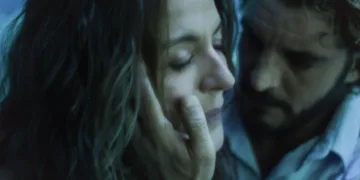













What happens after the world ends? Not the globe itself, but the private world of a self, targeted for annihilation. Maris Curran’s documentary Jeannette begins in this silent aftermath. The film considers Jeannette Feliciano, a woman whose identity is a collection of strong nouns: mother, bodybuilder, trainer, lesbian, Puerto Rican.
A survivor of the Pulse nightclub shooting, she exists now in the echo of that violence. The film does not revisit the horror. It has no interest in the spectacle of the event. Instead, it poses a starker, more existential question: How does a person continue to be when their very being has been marked for erasure?
The film’s quiet, observational posture follows Jeannette’s attempt to answer this through the structuring of a new life around a singular goal: returning to the competitive bodybuilding stage. Her recovery becomes a narrative of physical form, a project of careful, deliberate reconstruction in the face of formlessness.
The Repetition of Form
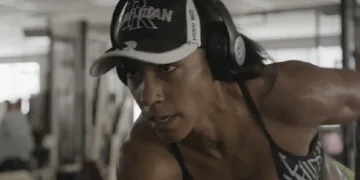
The gym is a secular temple, a space of controlled variables where the only ghosts are the lingering memories she actively sweats out. Here, inside this sanctuary of steel and strained breath, Jeannette rebuilds. For her and other survivors who train alongside her, each lifted weight is an act of defiance, a small negation of the void that threatened to consume them.
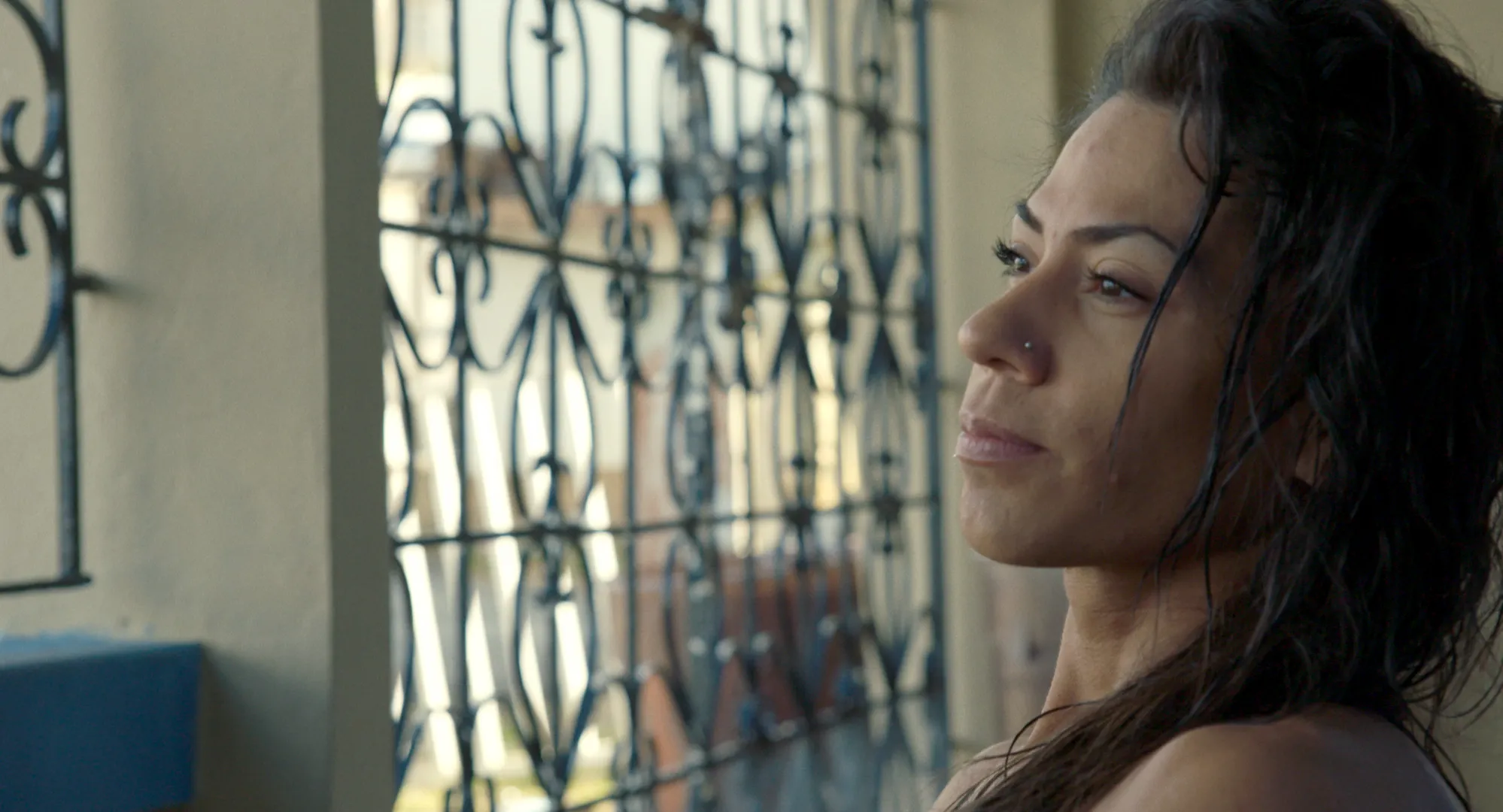
The act of bodybuilding, so often seen as purely aesthetic, is reframed here as a philosophy of survival, a physical manifestation of an existential choice. It is a method for containing the chaos of memory within the rigid discipline of the body. Her intense focus on a training regimen becomes a way to impose order on a life permanently disordered, to give shape to a future that was almost denied.
Curran’s camera is a patient, non-judgmental witness, its verité style refusing to provide the comfort of narration. We are left alone with the sounds of the gym, the metallic clank of weights and rhythmic breathing, the raw audio of a life being re-forged. We see her guide others as a trainer, a person showing the way out of a darkness she still inhabits.
Her words of motivation seem directed as much to herself as to her clients. The film rejects tidy emotional arcs. Her trauma is not a mountain to be conquered but a low, persistent hum. It surfaces in small fissures of anxiety, a momentary tremor in her composure before she returns to the physical task at hand, the heavy anchor of the present moment.
Breaches in the Citadel
No sanctuary is absolute. The world outside the gym’s walls inevitably intrudes, puncturing the fragile peace she constructs with methodical effort. Her life as a mother reveals the bleak inheritance of trauma, the fear that becomes a legacy.
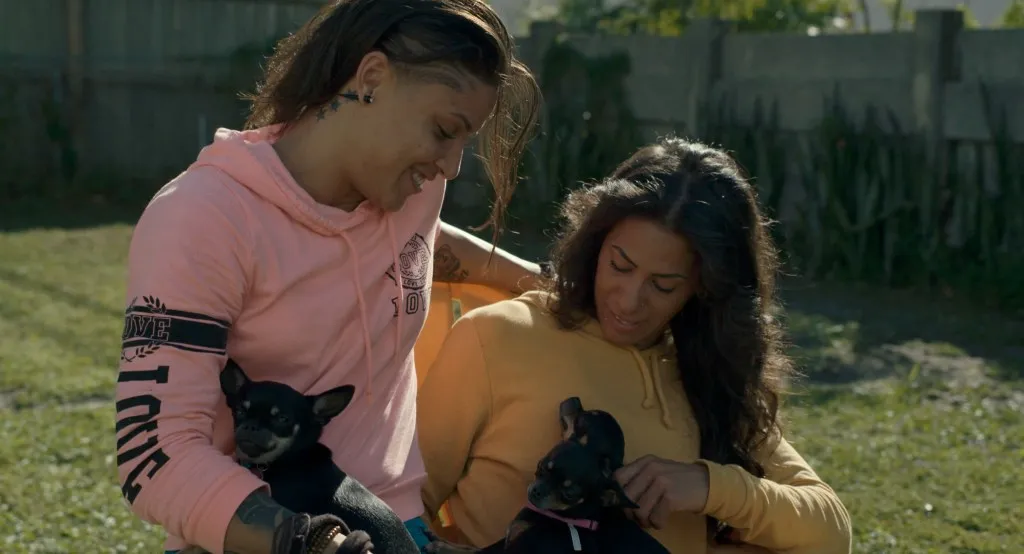
When she teaches her son, Anthony, the mechanics of boxing and the protocols of firearm safety, the actions are heavier than their practical purpose. It is a transfer of knowledge born from a harrowing experience, a lesson in how to navigate a world that has proven its capacity for brutal hostility. The search for a safe haven, a foundational human need, is shown to be a mirage. Even the family home offers no quarter.
A confrontation with her mother, whose rigid faith dictates a stark rejection of Jeannette’s identity, shows that old wounds remain open and that safety is never guaranteed. This intimate conflict underscores her existential solitude.
The film layers this personal friction with larger, impersonal crises. Hurricane Maria devastates her family’s home in Puerto Rico, and she channels her energy into clearing debris, another form of heavy, meaningful labor that mirrors her internal project.
The news of the acquittal of the shooter’s widow arrives like a stray bullet from the past, proving that history is never truly over and justice is not an inevitability. Her life is a confluence of difficulties, a portrait of a person required to bear an impossible load from every direction.
The Unseen Stage
A competition demands a winner, a clear resolution that can be neatly packaged. The film denies us this simple catharsis. Jeannette’s bodybuilding event is strangely muted, almost an afterthought in the film’s emotional landscape. The outcome feels irrelevant next to the immense effort of her arrival.
We see her on stage, covered in a dark, artificial tan that renders her both a spectacle and a stranger. She is a figure made alien by the very performance of strength, a bronze armor that seems to seal her off. It is a fleeting image, a performance that masks the deeper truth of her condition.
The film’s true emotional climax arrives later, in a moment of quiet, unadorned collapse. When she finally confesses her profound loneliness, the strain of being a pillar of strength for so many becomes painfully clear. It is not a moment of weakness, but one of radical honesty that repudiates the myth of the unshakable survivor.
This is what it costs. The final scenes, of Jeannette finding a moment of release in a club, feel earned through this painful authenticity. The film is not a simple story of triumph. It is a document of endurance, a quiet meditation on the difficult, continuous, and often thankless work of simply living. It suggests resilience is not a destination one arrives at, but the unending, imperfect process of carrying on.
Full Credits
Director: Maris Curran
Writers: Maris Curran, Logan Hill
Producers: Maris Curran, Jon Coplon
Executive Producers: Jen Rainin, Rivkah Beth Medow, Penelope Wong, Crystal Gurin
Cast: Jeannette Feliciano, Yvens Carrenard, Anthony McCoy
Director of Photography: Jerry Henry
Editors: Eduardo Serrano, Katrina Taylor
Composers: Leonardo Heiblum, Jacobo Lieberman
The Review
Jeannette
Jeannette is a demanding, deeply philosophical film that offers no easy comfort. It sidesteps the conventions of the trauma documentary to present something more honest and unsettling: a quiet, intimate observation of the unending labor of survival. By refusing to sensationalize its subject or her pain, the film becomes a powerful meditation on what it means to carry on in a world that has marked you for erasure. It is a profound document of human endurance, rewarding the patient viewer with a glimpse into the architecture of a rebuilt life.
PROS
- An intensely intimate and respectful character study.
- A quiet, observational style that avoids sensationalism.
- Presents a complex and honest depiction of psychological recovery.
- Thematic depth in its exploration of the body, memory, and security.
CONS
- The slow, verité approach may feel inaccessible to some viewers.
- A tight focus on its subject may leave some wanting more context on surrounding people.
- Refuses to provide conventional narrative resolutions or emotional peaks.