












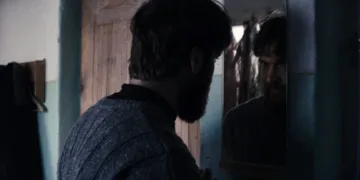
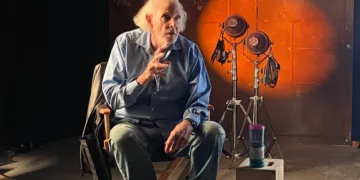
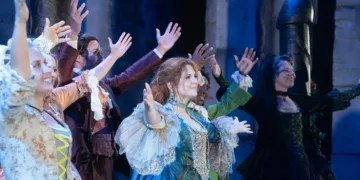












A town can be a memory held in common, a shared dream of peace. In the documentary Lynden, this dream is given a name and a location. We see it first in the faultless green of its lawns, in the quiet dignity of its main street shaded by oaks, all watched over by the cold, white indifference of Mt. Baker. This is the idyllic stage, a construction of tranquility so perfect it seems to demand a rupture.
The film acts as that rupture, a patient, unflinching examination of what lies beneath the placid surface of a community when a national reckoning arrives at its door. The catalyst is Amsa Burke, a seventeen-year-old high school student adopted from Ethiopia.
Her existence is a quiet question posed to the town’s homogeneity. In the heated summer of 2020, in the wake of George Floyd’s murder, she decides to give that question a voice, organizing a small “March for Black Lives.” The response is not a conversation but a tremor, a violent shudder that cracks the town’s carefully maintained self-image.
The Architecture of Silence
To understand the tremor, one must first understand the ground it shakes. Lynden’s identity is built upon deep, historical foundations, a cultural bedrock of Dutch Reformed conservatism that prizes order and neatness. This is a community whose peace has been maintained through a delicate, unspoken architecture of silence.
The film reveals a place with long-practiced divisions, polite fissures that run between the church-going descendants of Dutch settlers and the other residents they call “Americans.” This tension finds its annual theater in the rivalry between the Christian school and the public high school, a symbolic clash of two worlds coexisting uneasily.
It is a predominantly white landscape where the lives of Hispanic migrant workers or the nearby Lummi and Nooksack peoples have existed largely in the periphery, their labor accepted but their stories unintegrated into the town’s central myth. This myth, that Lynden is a place apart, insulated from the disquiet of the wider world, is its most cherished belief.
It is a moral certainty that leaves no room for critique, transforming any challenge into an existential attack. We see this transformation even in the town’s geography, the old department store that served farm families now a boutique hotel, the newspaper office now a trendy bar. The town’s very function has shifted from a lived reality to a curated image, a fantasy of itself that it sells to its own residents.
The Sound and the Fury
At the story’s center is the existential condition of Amsa Burke. Raised by a loving white family, her life is a testament to a certain kind of American hope. Yet, this love cannot erase the dissonance of her experience, a state of being she describes as feeling like a white person with black skin.
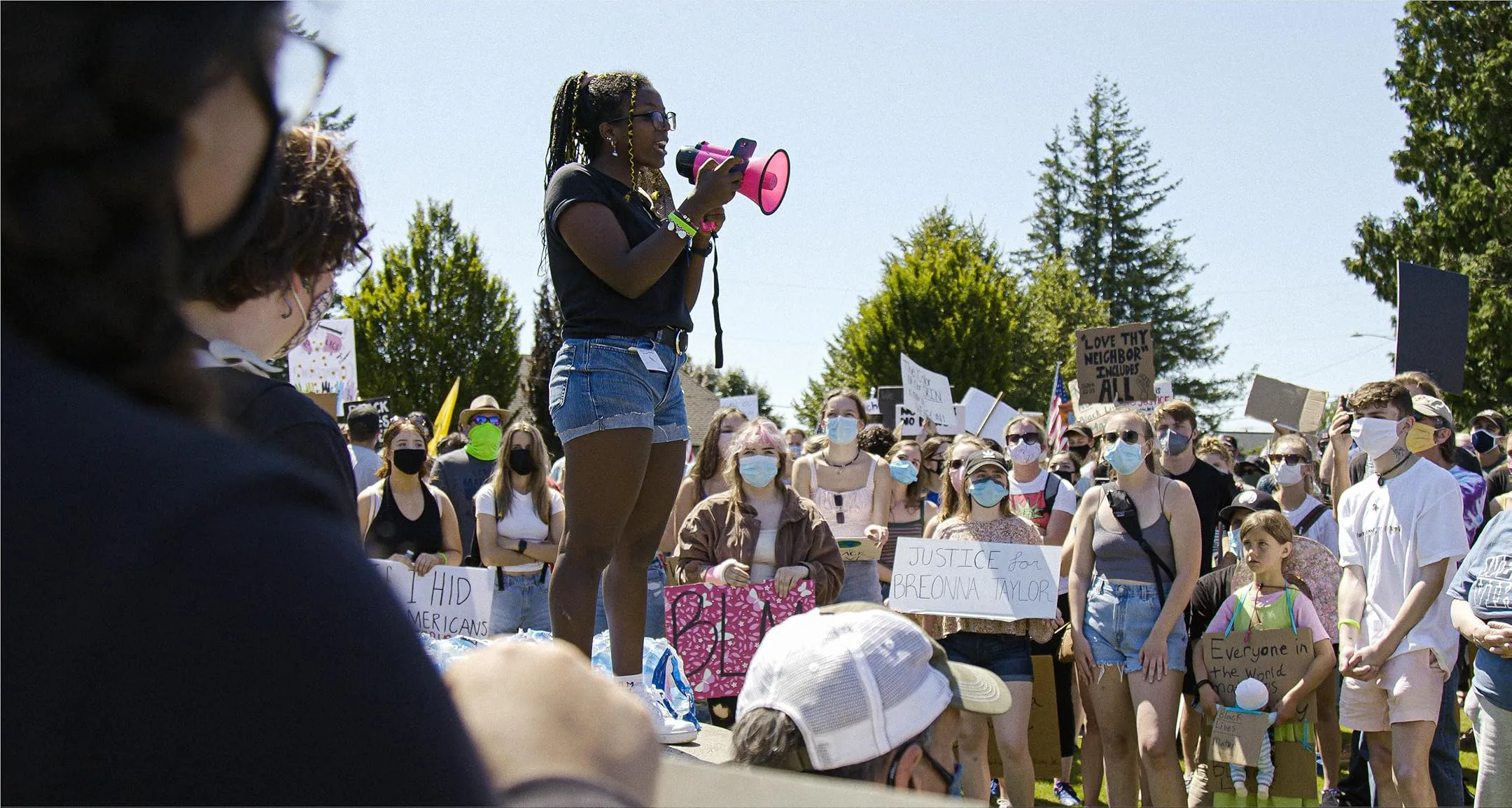
The film follows her on a visit back to Ethiopia to meet her birth father, a journey that deepens her complex sense of self, caught between two worlds. This internal landscape is something the town is unprepared to witness. Her awakening is punctuated by moments of casual cruelty from classmates, remarks that are not just insults but denials of her reality. Her decision to organize a march is an attempt to make her internal world visible, to reconcile her identity in a place she loves. Her request for recognition is met with a collective terror.
Social media channels ignite with phantoms of an Antifa invasion, a conjuring of faceless enemies to avoid confronting the face of a neighbor. Into this psychic storm steps Wylin Tjoelker, a local dance instructor who embodies a desperate, nostalgic dream of America. On July 5, this philosophical conflict becomes terrifyingly physical. Amsa’s small group is met by a wall of rage.
Pickup trucks modified to foul the air with soot “roll coal” over the marchers. Men stand with assault rifles, their presence a promise of violence. Amsa attempts to speak, to tell her story, but her voice is consumed by a percussive, overwhelming chant: USA, USA, USA. It is a ritual designed to reaffirm a threatened identity by erasing the individual who questions it.
Reflections in a Shard of Glass
The day after the protest, the film shows us clean, empty streets. The silence that returns is more haunting than the noise it replaced, for it is the sound of a question left unanswered. Lynden presents its namesake town as a fractured mirror for a divided nation.
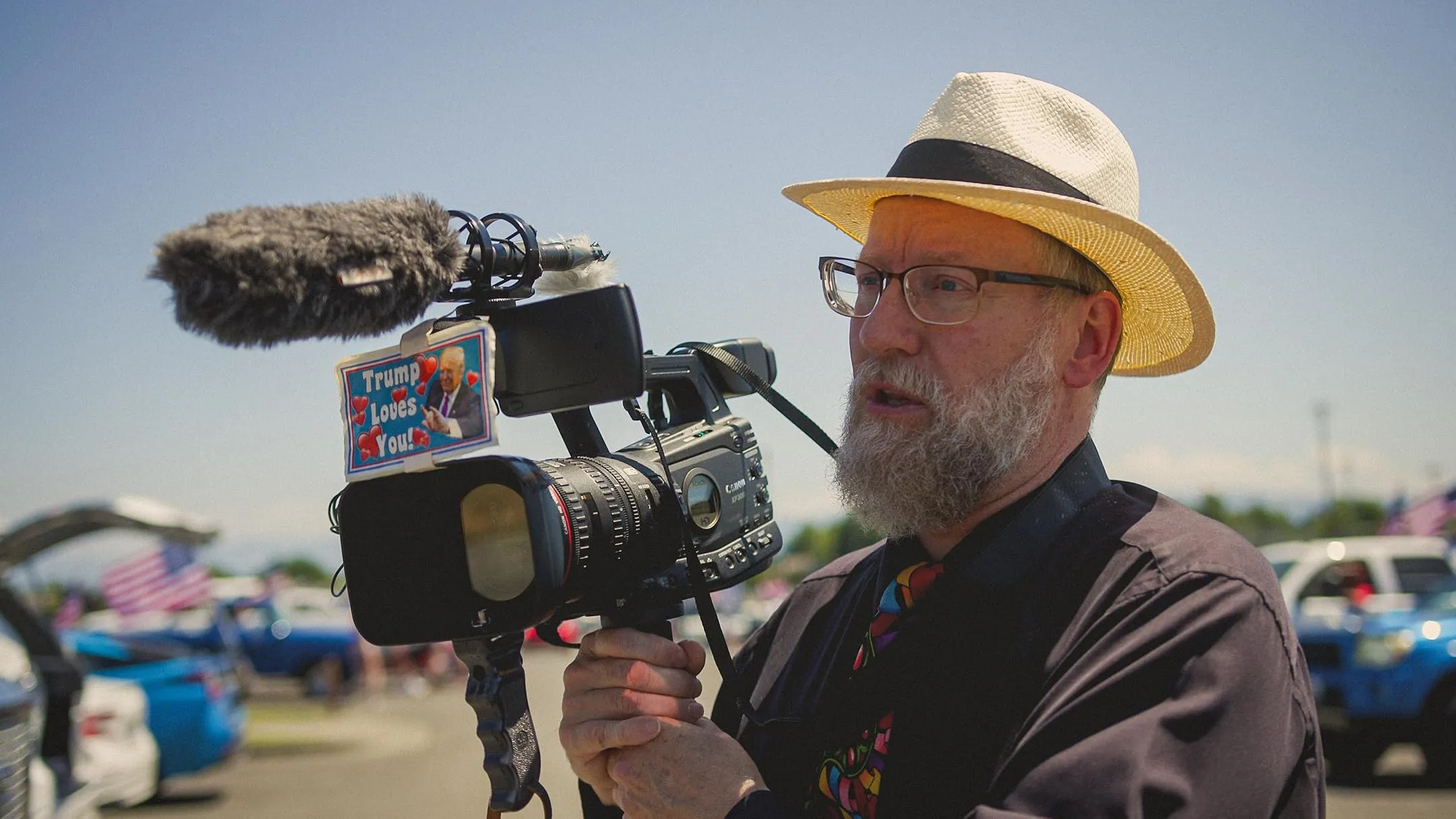
We are forced to witness an essential failure of listening, a willful deafness where personal testimony is invalidated because it disrupts a comfortable narrative. The counter-protesters were not seeking truth; they were defending a reality. The film’s final irony is devastating. The men with rifles who claimed to be protecting Lynden’s peace are the very agents who shatter it.
The young marchers, accused of being destroyers, are the ones performing the most profound act of civic love: asking their community to be better. In the aftermath, a group called Racial Unity Now forms, a fragile seed planted in hostile soil.
Yet the film ends on a note of profound ambiguity. We watch Amsa Burke leaving for Howard University, an act of self-preservation that is also a quiet indictment. Her departure poses the final, unsettling question: what becomes of a place that cannot hold its own children when they speak the truth? The town loses a voice it desperately needed, choosing the comfort of its dream over the difficulty of reality.
Lynden is a documentary film that had its premiere in 2024 and was made available for pre-order as a digital copy on Apple TV, beginning August 26, 2025. It has also been showcased at several film festivals, including a viewing in Bellingham, Washington, where one of the directors and cast member Amsa Burke attended for a Q&A session.
Full Credits
Director: Chris Baron, Bryan Tucker
Producers and Executive Producers: Chris Baron, Brian Lee, Bryan Tucker (Producers), Patti Imhof (Executive Producer)
Cast: Amsa Burke, Wylin Tjoelker
Director of Photography (Cinematographer): Chris Baron, Brian Lee, Bryan Tucker
Editors: Bryan Tucker
The Review
Lynden
Lynden is an unflinching and necessary document. It is a quiet tragedy that uses one small town to X-ray the fractures of a nation, revealing the fear that festers beneath a carefully constructed peace. The film offers no easy answers, only the haunting quiet that follows a refusal to listen. It is not a story about a protest; it is a profound meditation on the American soul itself, making it a devastating and essential piece of filmmaking.
PROS
- Focuses on the compelling and deeply human story of its central figure, Amsa Burke.
- Presents a balanced perspective by including footage from the counter-protesters, revealing their motivations.
- Effectively uses a local conflict to serve as a microcosm for the broader American political divide.
- Praised for its direct, "matter-of-fact" documentary style that avoids overt manipulation.
- Brave and conscientious filmmaking that handles a sensitive subject with transparency.
CONS
- May assume a degree of local knowledge, potentially leaving a wider audience wanting more context on regional politics.
- The film’s exploration of deep-seated division can be a difficult and unsettling viewing experience.