















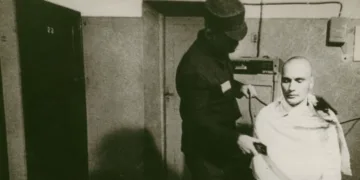









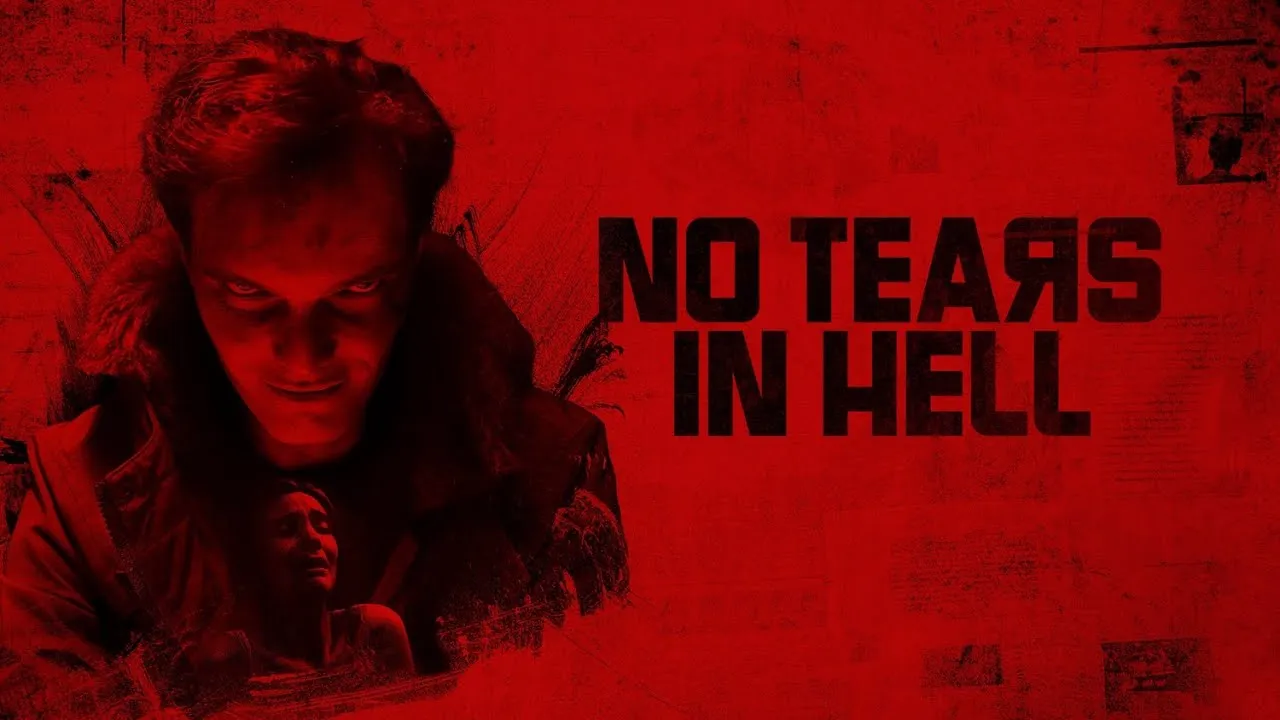

No Tears in Hell is not a film that seeks to entertain with conventional scares. It is a work of profound discomfort, a slow, methodical examination of human depravity. The film’s atmosphere is immediately cold and grim, mirroring its isolated Alaskan setting where a mother and her son, Alex, carry out a routine of murder and cannibalism.
Drawing its inspiration from a harrowing true story, the film amplifies its horror by grounding it in a plausible, everyday reality. This approach feels reminiscent of the unflinching social realism seen in Indian Parallel Cinema, which often stripped away melodrama to confront harsh truths. The film’s deliberate, observational style prepares the audience for a difficult descent into a world where evil is not an event, but a quiet, persistent condition of being.
The Architecture of Dread
The film’s effectiveness rests heavily on the shoulders of its two lead actors, who build a terrifying dynamic from quiet complicity. Luke Baines delivers a controlled and chillingly detached performance as the killer, Alex. His portrayal of evil feels mundane, a series of methodical actions devoid of theatricality. This choice is far more disturbing than any monstrous caricature.
This concept of banal evil recalls the work of actors like Nawazuddin Siddiqui in Raman Raghav 2.0, who portrayed a killer not as a raging beast but as a man acting on a warped, internal logic. Baines achieves a similar effect; his Alex is frightening because he is comprehensible in his monstrosity. His quiet voiceovers, which grant the audience unwelcome access to his worldview, make the experience deeply personal and claustrophobic.
Supporting him, Gwen Van Dam gives a deceptively calm performance as the complicit mother. Her casual participation in covering up crimes and preparing meals from victims normalizes the horrific acts, adding a unique layer of disturbance. Her character embodies a terrifying form of enabling, a quiet partnership in atrocity that makes the horror feel generational and inescapable.
Director Michael Caissie constructs this dreadful world with an unflinching, observational camera. The visual palette, dominated by muted tones of cold blues and grays, reinforces the bleak, purgatorial setting, draining the world of warmth and life. This clinical style is a stark contrast to the expressive, vibrant color schemes often found in mainstream Indian cinema.
The sound design is a masterclass in brutal intimacy; the crisp, realistic sounds of a saw cutting through bone or blood being wiped from a surface are presented without sensationalism. This technique, prioritizing raw audio over a manipulative musical score, forces the viewer into the role of a direct witness, making the violence feel immediate and sickeningly authentic.
Cracks in the Ice
For all its atmospheric strengths, the film’s narrative structure is deeply flawed. Its deliberate pace, while effective initially, eventually becomes its main weakness. The narrative’s slow burn verges on becoming numbing, and the 105-minute runtime feels bloated with repetitive shots of Alex smoking or staring into space.

These moments fail to add psychological depth and instead stall the momentum, a critical failure in a character-focused piece. The script also shows significant strain in its characterizations beyond the central duo. The victims are written as one-dimensional stereotypes, existing only to suffer.
This lack of depth makes it difficult for the audience to invest in them, lessening the emotional weight of their suffering. It stands in sharp contrast to Indian crime dramas like Talvar or Delhi Crime, which take great care to humanize the victims, understanding that the tragedy is magnified when a full life is shown to be extinguished.
The film’s most glaring flaw, however, is its failure to create a convincing world. The choice to transplant a Russian story to Alaska feels arbitrary and is undermined by a lack of authenticity. This is a critical misstep, especially when compared to the rich sense of place vital to so much of Indian regional cinema. Where a film like The Lunchbox makes Mumbai a living, breathing character, the Alaska of No Tears in Hell feels generic.
It is a land of plot contrivances, where characters wear light clothing in a supposed winter and a neighbor in a crowded apartment block hears no screams. This carelessness breaks the immersion the film works so hard to build. A tacked-on monologue about capitalism feels similarly shallow, a missed opportunity for the kind of sharp societal critique that often elevates the crime genre.
A Horror That Lingers
No Tears in Hell is, by design, an emotionally exhausting and punishing watch. It succeeds completely in its goal to disturb, which makes it a difficult recommendation for a general audience. The film finds its place within the global rise of true crime narratives, yet its approach feels distinctly nihilistic when compared to many of its international counterparts.

Where a series like India’s Delhi Crime channels outrage into a story about systemic failure and the quest for justice, this film offers no such catharsis. It presents evil as a closed system, a self-perpetuating horror from which there is no escape and no lesson to be learned. Its power is therefore undeniable, but its purpose is ambiguous.
The film is a memorable experience for a specific viewer: the fan of methodical, psychological horror who prefers a slow descent into depravity over a conventional thriller. Its impact is hard to shake because it refuses to offer easy answers, moral clarity, or a sense of closure.
It simply looks directly at monstrous acts and refuses to flinch, leaving the viewer with the cold, lingering silence of its reality. It doesn’t ask for understanding or condemnation; it merely demands to be witnessed.
No Tears in Hell is a horror film based on the terrifying true story of Russian serial killer Alexander Spesivtsev, also known as the Siberian Ripper. The film is set in the frozen darkness of an Alaskan winter and focuses on a mother and son who lure victims into a twisted web of abuse and cannibalism. It explores the dark themes of true crime and depravity. The movie is available on VOD and digital platforms as of August 12, 2025. You can rent or buy No Tears in Hell on platforms like Apple TV and Prime Video.
Full Credits
Director: Michael Caissie
Writers: Michael Caissie, Alexander Nistratov
Producers & Executive Producers: Michael Caissie, Stephen Durham, HemDee Kiwanuka, Bernard Salzmann, Michael Tadross Jr., Alexander Nistratov
Cast: Luke Baines, Gwen Van Dam, Tatjana Marjanovic, Audrey Neal, Gabriella Westwood, Erik Fellows, Gary Kasper, Princess Elmore
The Review
No Tears in Hell
No Tears in Hell is a technically accomplished horror film that succeeds entirely in its mission to disturb. Anchored by two chillingly restrained lead performances and a masterful, bleak atmosphere, it is an effective descent into the mundanity of evil. Its power is significantly undercut by sluggish pacing, underdeveloped victim characters, and a script that fails to build a convincing world. This is a punishing, unforgettable film made for a very specific audience prepared for its unflinching, nihilistic gaze.
PROS
- Chilling and powerfully understated lead performances.
- Superb creation of a bleak, unsettling atmosphere through cinematography and sound design.
- An unflinching, non-sensationalized approach to its dark subject matter.
- Effective and brutally realistic practical effects.
CONS
- Extremely slow pacing and a runtime that feels bloated.
- Underdeveloped, one-dimensional supporting characters.
- A lack of authenticity in its world-building and setting.
- A narrative that offers no resolution or deeper commentary.