







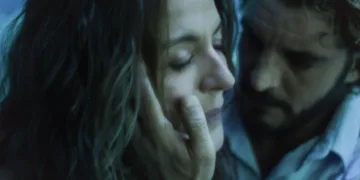








Some figures haunt the cultural imagination, returning from the mists of pulp and celluloid like persistent ghosts. Red Sonja is such a specter, a name that carries the clang of steel and the scent of a forgotten, savage age. This new incarnation finds her reborn not in triumph, but in solitude.
She is a lone warrior moving through a mythic wilderness, her existence a quiet communion with the earth until the shadow of a nascent empire falls upon her. The film’s premise is a familiar descent into darkness. The lone wolf is caged by the forces of a malevolent emperor, Draygan, and thrown into the gladiatorial pit where survival is performance and death is sport.
From this crucible of blood and sand, a rebellion must be forged. The work carries the spirit of an older kind of filmmaking, a raw and unpolished tale of sword and sorcery that feels exhumed from a previous era, its brutal heart still beating.
A Wilderness of Self and Steel
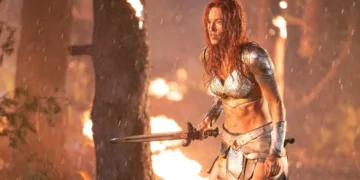
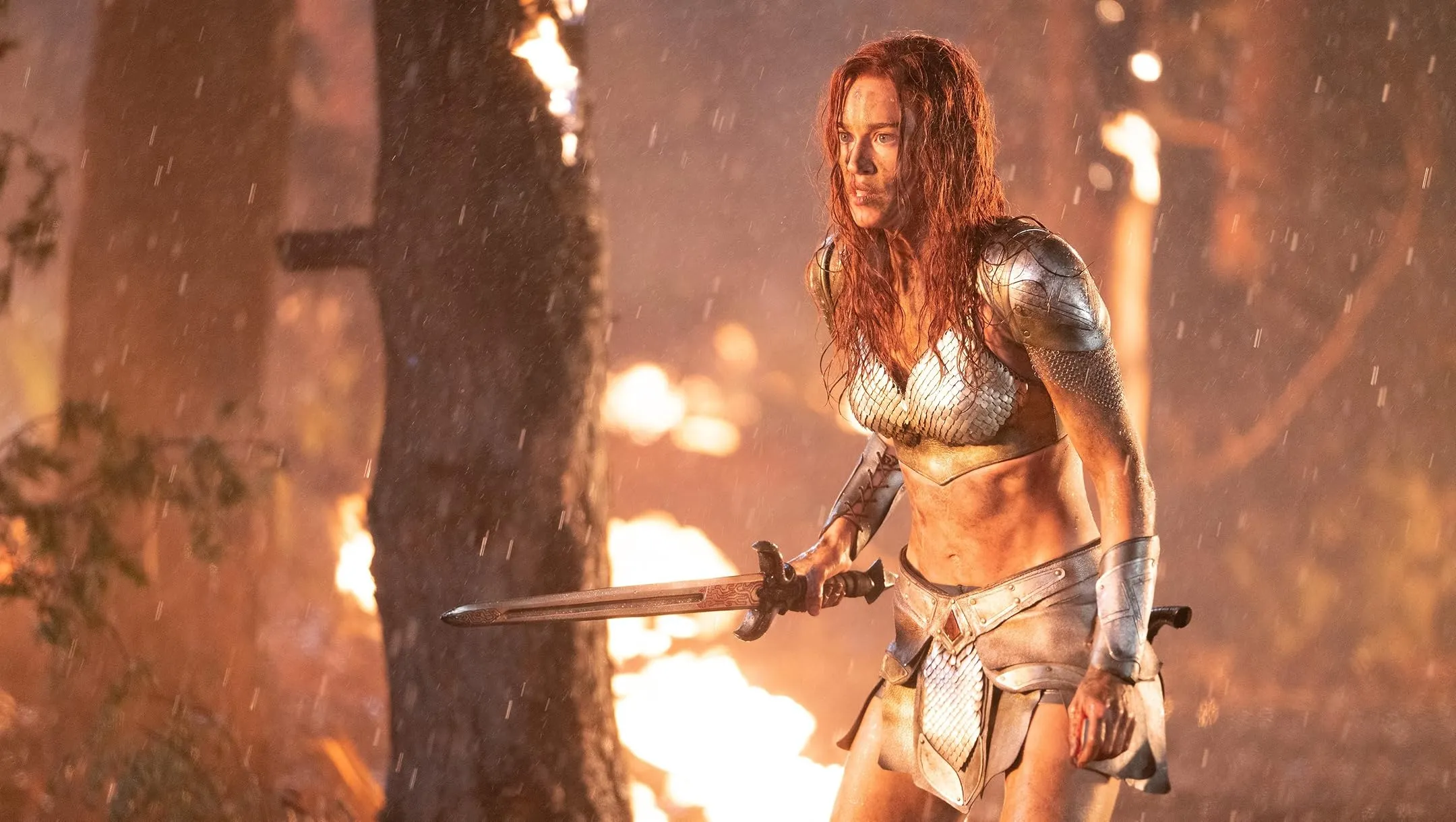
The Sonja we meet is a creature of the forest, a being defined not by a throne or a title, but by the silence of the trees and the cold clarity of spring water. Matilda Lutz embodies her as a whisper of violence, a departure from the expected amazon of thunderous physicality. This warrior’s strength is in motion and resilience, a predator’s grace honed by a life of solitude.
Her backstory is a void, an existential wound; the sole survivor of a village erased by fire, she roams in search of a scattered people who may no longer exist. Her quest is less for reunion than for an anchor, a proof of self in a world that has already rendered her a ghost. She is a figure of pure naturalism, eating honey from the comb, her life measured by seasons, not clocks.
Opposing her is the architect of the new age, Emperor Draygan. Robert Sheehan portrays him not as a titan but as a festering wound of ambition. He is a spoiled, weaselly ruler whose cruelty is born of deep insecurity, a man who builds monstrous machines of war to shield his fragile ego from the world’s elemental truths. His vision of progress is a colonialist creed, razing the past to erect a future of cold logic and mechanical force.
Yet, he is a man of profound contradiction, hunting for a lost half of a sacred book to affirm a prophecy that names him master of all. He is a conqueror who enslaves the world with technology while remaining a slave to superstition. Their world, Dyrkania, is a fractured, breathing landscape where epochs bleed into one another.
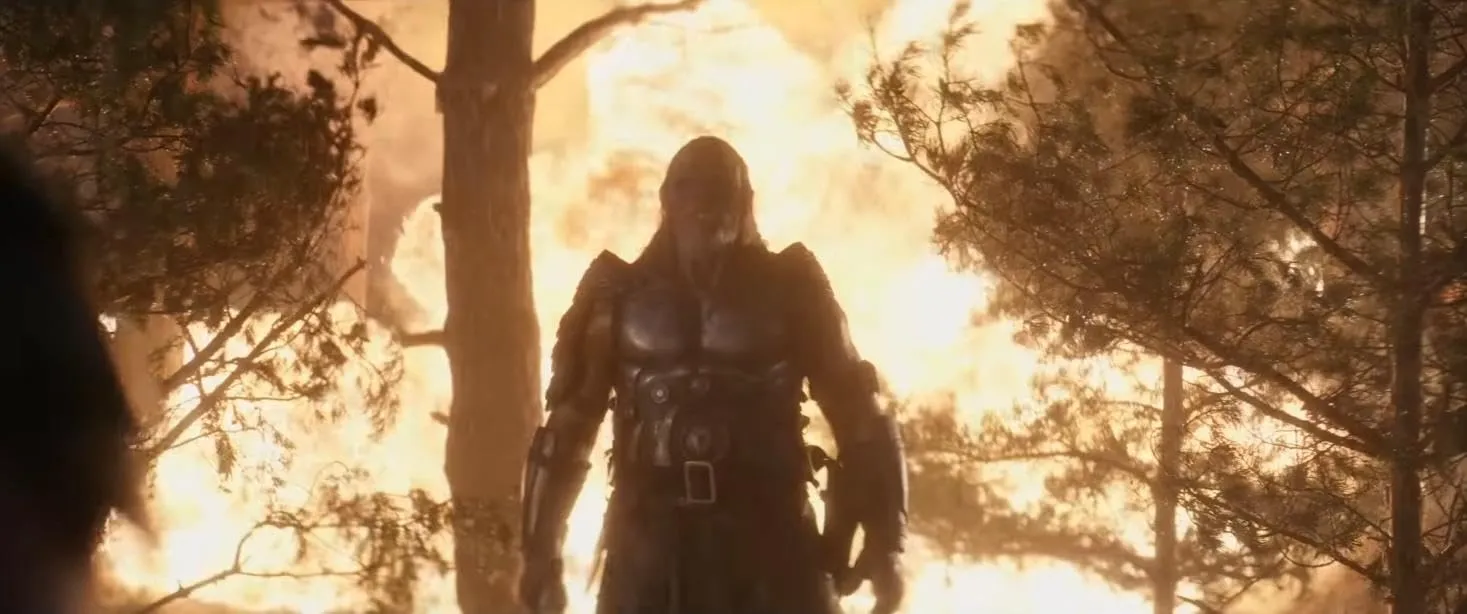
Ancient gods are worshipped, and towering, buffalo-sized scorpions skitter through the sands. The film presents this reality without apology. The simian General Karlak and his ape-like soldiers exist without exposition, forcing an acceptance of a world indifferent to human logic, a place where myth is not a story but the very soil underfoot.
Rhythms of Rebellion
The narrative path is a well-worn track through the dust of cinematic history, a ritual of oppression and uprising that echoes the grand tragedies of the arena. Sonja’s descent from free hunter to chained gladiator and finally to revolutionary icon follows a predictable, almost liturgical, cadence.
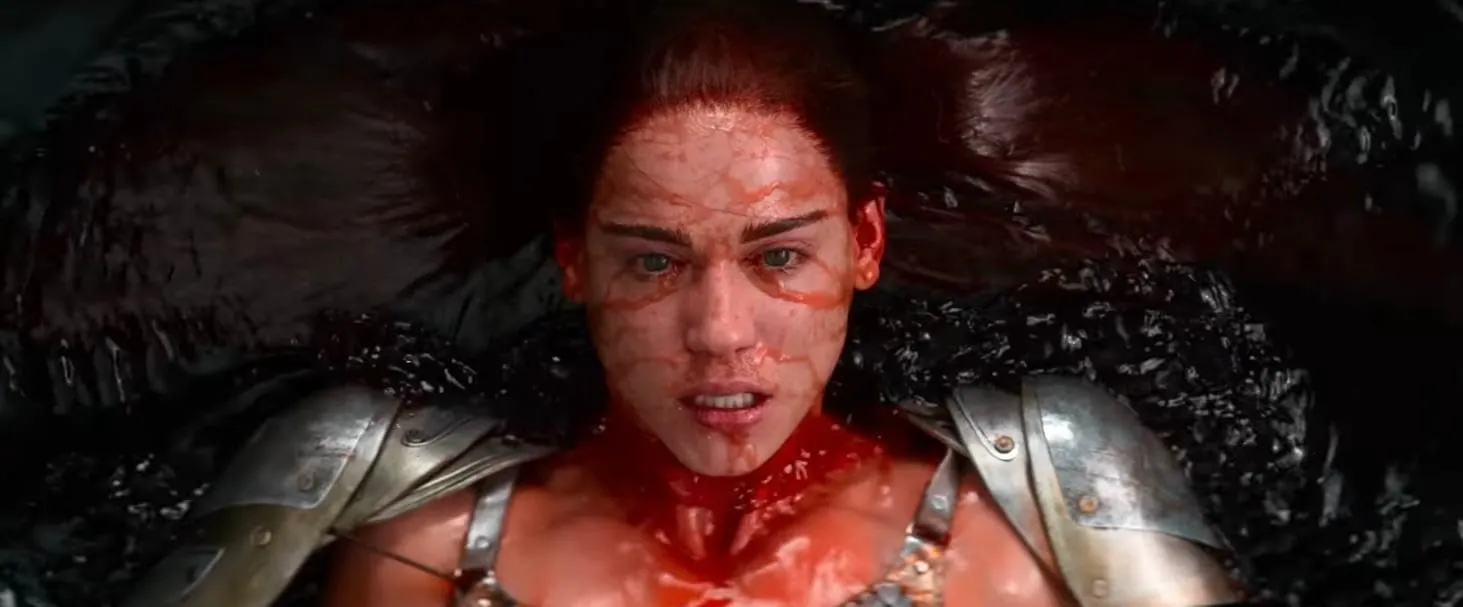
One must question if this familiarity is a weakness, a story trapped in the amber of its influences like Gladiator or Braveheart, or if it is a deliberate evocation of mythic archetypes. The story finds its sharpest edge when it confronts its own legacy.
The character’s signature chain mail bikini, a relic of a more voyeuristic age, is introduced not as practical armor but as a misogynistic joke from an armament dealer. It is the worst armor, offered to the newest, most vulnerable slave.
By choosing to wear it and then dominating her opponents, Sonja performs a potent act of alchemy. She transforms an object of objectification into a symbol of defiance, a tool of misdirection that turns an enemy’s prejudice into a fatal weakness.
Beneath the surface of its plot, the film stages a conflict of being. Sonja represents a primal, chaotic existence, while Draygan embodies a sterile, destructive order. His ideology of progress is a form of nihilism that hollows out tradition and spirit, yet his methods reveal a deep fear of meaninglessness.
He uses the arena not just for sport but as a political tool, a grand distraction to keep his subjects from examining the cruelty done in their name. This clash is not merely of swords but of philosophies: the wild, untamable soul of nature against the rigid, brittle cage of industrial tyranny. Draygan seeks to prove the gods are not real, yet he needs a prophecy to believe in himself, revealing the hollow core of a man who would be God.
Faces in the Firelight
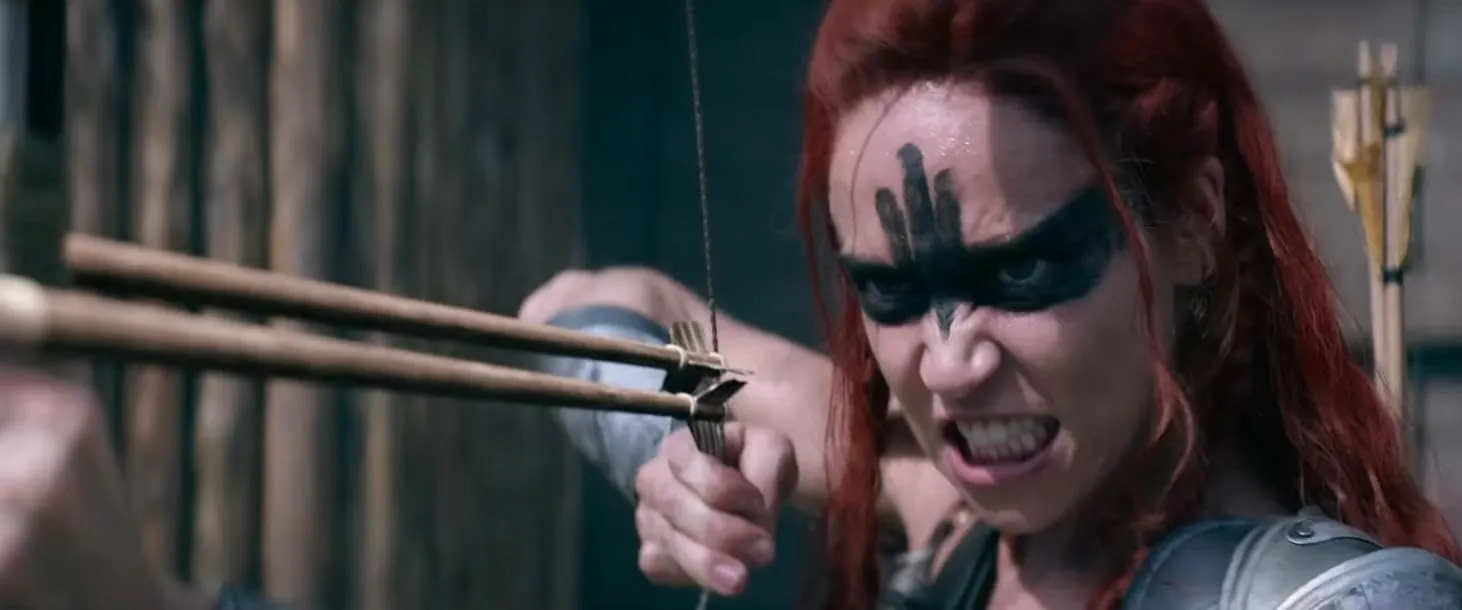
In a film of fire and steel, the human face can become the most compelling landscape. Matilda Lutz’s performance as Sonja is one of fierce stillness, her quietude containing a storm of grief and rage. Her physical commitment to the role, born of intense training, is undeniable.
She moves with a dancer’s deadly grace. Yet an emotional restraint permeates her portrayal, a placid fury that hovers between a deliberate character choice for a traumatized soul and a limitation of the performance itself. Does her emotional armor protect her, or does it prevent us from seeing the full cost of her war?
Robert Sheehan crafts Emperor Draygan as a memorable king of ashes. His is a masterful portrait of petulance magnified by power, a villain whose megalomania is a thin, cracking shell over a core of profound weakness. His cruelty is that of a spoiled child given a hammer.
The supporting cast flickers with potential. Wallis Day’s Annisia, the emperor’s haunted bride-to-be, is a particularly striking figure. With her pale hair and eyes that see the ghosts of those she has slain, she is a chilling mirror, a vision of the warrior remade into a beautiful, broken tool of power. She is the path Sonja did not take.
Others, like the noble gladiator Osin, serve their narrative purpose as sparks of hope in the darkness, but they remain archetypes, their presence reinforcing Sonja’s fundamental isolation even when surrounded by allies. They are faces in the firelight, vivid for a moment before being consumed by the encroaching shadows of the central conflict.
The Ghost in the Machine
To build a world from nothing is an act of cinematic faith, and Red Sonja dreams of a vast, savage age. It reaches for grandeur, using sweeping natural locations and legions of extras to paint a canvas of epic scale. This ambition, however, collides with the hard reality of its budget. The seams of its creation are often painfully visible.
The digital beasts that roam its world, from a towering cyclops to giant scorpions, feel like phantoms of code. They lack weight and texture, their presence a reminder of the artifice that underpins the fantasy. Sets, while large, lack the lived-in detail that sells an illusion, and some gory acts of violence conspicuously occur just off-screen, a likely concession to budgetary or technical limits.
The action sequences are a frantic poetry of motion, a flurry of chaotic editing and close-quarters combat. The choreography commits to Sonja’s agility, a welcome departure from the trope of the impossibly strong heroine.
Yet the fights are often filmed with such rapid cuts that they obscure the visceral truth of the violence, becoming a confusing blur of steel rather than a clear display of skill. One questions if this choice is meant to heighten the frenzy or to hide a lack of confidence in the stunts.
The film’s aesthetic is a deliberate return to the pulpy fantasy cinema of the 1980s, a nostalgia for a harsher, less polished form of storytelling. This creates an inconsistent tone. Moments of grim seriousness sit uneasily next to flashes of camp. The film cannot seem to decide whether to laugh at its own absurdity or to weep at the bleakness of its world, leaving the viewer caught in the disorienting space between the two.
Red Sonja is a 2025 American sword and sorcery film based on the comic book character. The film is distributed by Samuel Goldwyn Films. It premiered in Russia on July 31, 2025, and was released theatrically in the United States on August 13, 2025. It will be available on video on demand starting August 29, 2025. You can also rent or buy the movie on platforms like Apple TV and Amazon Video.
Full Credits
Director: M.J. Bassett
Writers: Tasha Huo, Robert E. Howard (characters), Roy Thomas (characters adapted by)
Producers & Executive Producers: Avi Lerner, Joe Gatta, Yariv Lerner, Mark Canton, Courtney Solomon, Joey Soloway, Luke Lieberman, Les Weldon, Christa Campbell, Lati Grobman, M.J. Bassett, Jeffrey Greenstein, Jonathan Yunger, Trevor Short, Darina Pavlova, Boaz Davidson, Tanner Mobley, Dorothy Canton, Scott Karol, Heidi Jo Markel
Cast: Matilda Lutz, Wallis Day, Robert Sheehan, Michael Bisping, Martyn Ford, Eliza Matengu, Rhona Mitra, Veronica Ferres, Katrina Durden, Manal El-Feitury, Kate Nichols, Danica Davis
Director of Photography (Cinematographer): Lorenzo Senatore
Editors: Andrew MacRitchie, Veselin Lazarov, Jeffrey Steinkamp
Composer: Sonya Belousova, Giona Ostinelli
The Review
Red Sonja
Red Sonja is a flawed artifact, a film of sincere ambition wrestling against the constraints of its budget and the ghosts of its genre. It reaches for mythic grandeur with its compelling lead and thoughtful themes, but is pulled back to earth by a conventional script and uneven execution. The result is a curiosity, a bleak and occasionally beautiful adventure more memorable for the questions it asks about heroism and history than for the answers it provides. It is a cinematic echo, faint but fascinating.
PROS
- A physically committed and intense central performance from Matilda Lutz.
- Ambitious thematic explorations of nature versus industrialization and faith versus pragmatism.
- Intelligent re-contextualization of iconic elements from the character's past.
- Robert Sheehan delivers a nuanced portrayal of a complex, cowardly villain.
- The raw, throwback aesthetic captures the spirit of older sword-and-sorcery films.
CONS
- Visible budget limitations detract from the visual effects, sets, and overall scale.
- The narrative follows a predictable, clichéd structure.
- An inconsistent tone that shifts awkwardly between serious drama and camp.
- Action choreography is sometimes obscured by chaotic editing.
- Supporting characters are mostly underdeveloped archetypes.